In August 2025, U.S. Department of Agriculture host its week‑long Great American Farmers Market on the National Mall in Washington, D.C.
What was billed as a celebration of American agriculture brought farmers from across the country together with corporate sponsors and fed into deep debates about how the federal government supports farmers, runs its agency, and engages with local food systems.

The mix of farm vendors, high‑profile sponsorships, and employee protests made this event far more than a typical farmers market. It revealed disagreements about the future of U.S. agriculture and the way public agencies should support it.
What the Great American Farmers Market Was?
The Great American Farmers Market was held from August 3 to August 8, 2025 on the National Mall in Washington, D.C., during National Farmers Market Week.
It replaced the USDA’s longstanding weekly farmers market that had operated for more than three decades outside the agency’s headquarters but did not open this year.
This newer event featured around 60 booths with farm and food vendors from many states, including producers of popcorn, jerky, rice, and other packaged goods, alongside sponsor tents from major corporations like Chobani, Tractor Supply Company, John Deere, and Visa.
The market was tied to the national celebration of America’s 250th anniversary and the USDA’s broader effort to highlight the role of agriculture in American culture and economy.
The official USDA description emphasized that the event was meant to honour farming heritage, “reinforce commitments to Make Agriculture Great Again and Make America Healthy Again,” and showcase direct market access for farmers from across the country.
Who Showed Up and What They Sold?
Farmers and producers from many U.S. regions displayed their goods at the event. Some came from large, established operations; others were small‑scale producers who do farmers markets regularly in their local communities.
They offered a mix of non‑perishable and fresh products, though the number of fresh produce vendors was relatively small because only vendors close enough to transport dairy, meat, and produce safely were able to participate.
Typically, state or regional farmers’ markets feature a wide range of produce and farm products each week, connecting local growers directly with consumers without intermediaries.

That longstanding market did not open this year, leaving some traditional vendors without their usual Washington market platform.
This year’s version in Washington was different in scale and in style.
Where farmers markets usually emphasize local food and community, this event included corporate tents and national marketing messaging alongside the farm vendors, leading to mixed reactions from participants and observers.
Why the USDA Shifted to a National Celebration?
The USDA’s decision to hold the Great American Farmers Market was tied to national celebrations and political priorities. It was part of the America250 initiative marking 250 years since the founding of the United States.
The administration described it as an opportunity to honor the country’s agricultural roots and connect rural America to the nation’s capital.
Secretary of Agriculture Brooke Rollins said the event was meant to celebrate “the self‑sacrifice and patriotism that have been exhibited by American farming families for generations.”
The USDA press releases in the days leading up to the event detailed daily themes such as faith, fellowship, and heritage, and featured announcements of fun activities, live music, educational displays, and interactive booths.
These activities were designed to draw tourists and locals alike to view agriculture and farmers as central to American identity.
Corporate Sponsors and What That Meant
One notable feature of the market was its corporate sponsorship. Companies like Chobani, Tractor Supply, John Deere, and Visa had booths with free giveaways and branding.
In some public discussions, these sponsorships raised questions about the appropriateness of corporate visibility at a government‑hosted event.
Critics pointed out that corporate sponsorship can blur the line between public service and private influence, especially when agriculture is tied to policy debates and federal support programs.

Corporate involvement in federal events is not unprecedented, but bringing corporate branding into a farmers market that is supposed to celebrate small producers sparked debate about whose interests were being highlighted.
Some farm advocates said it promoted large commercial entities over small independent farmers who struggle without equivalent marketing budgets.
The Employee Protests Inside the Event
Perhaps the most striking element of the market was something that did not involve the farmers themselves but USDA employees.
As USDA Secretary Rollins and Health and Human Services Secretary Robert F. Kennedy Jr. appeared on stage to open the event for “MAHA Monday,” a small group of USDA workers protested.
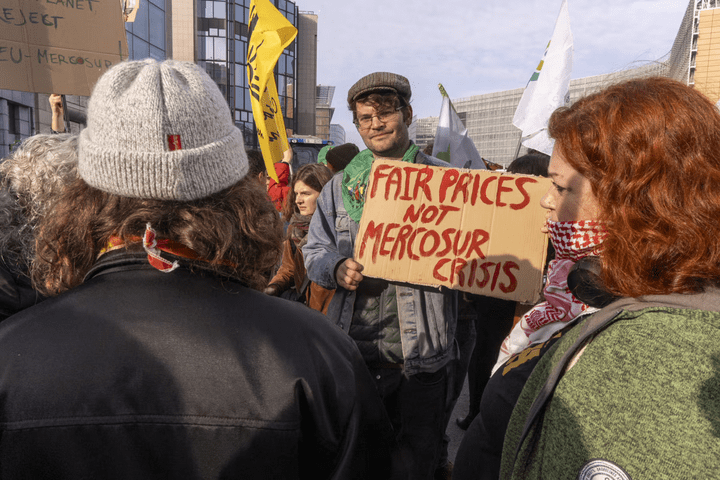
About a dozen current USDA staff members stood up in the audience with signs reading “A weaker USDA hurts farmers” and “Support USDA unions, support American farmers,” while booing or chanting in protest.
Many wore hats, glasses, and masks to protect their identities, fearing possible retribution.
These employee protests were about internal agency issues: staffing cuts, reassignment or relocation threats tied to a major USDA reorganisation, and broader concerns that the agency was being hollowed out.
Some employees saw the staffing changes and budget pressures as weakening USDA’s ability to support farmers and carry out essential services.
The appearance of employee protesters during a high‑profile federal event underscored tensions within the USDA and raised questions about the disconnect between policy messaging and staff morale.
Broader Policy Context

To understand why these protests happened, it helps to look at broader trends affecting the USDA and agriculture today.
1. Funding and Staffing
The USDA’s 2025 budget and staffing levels were under pressure, as overall federal budgets tightened.
According to the USDA’s budget summary, many programs saw flat or reduced funding compared to previous years, and staff numbers in some mission areas were declining.
This has real consequences for farmers. USDA staff carry out essential services such as inspections, research, disaster response, farm support programs, and nutrition assistance.
When staffing is cut or reorganized, farmers may have fewer people to answer questions, process loans, or help with regulatory compliance.
2. Shift from Traditional Farmers Markets
Traditional USDA farmers markets had provided a steady venue for local producers to sell directly to consumers for decades. Their absence this year was tied in part to the agency’s staffing changes and the new focus on the one‑week festival.
Small farms that traditionally counted on the weekly markets saw their selling opportunities reduced, even as the national event drew attention to agriculture at a symbolic level.
3. SNAP Policy Changes Announced at the Event
At the market, USDA leaders also signed waivers allowing additional states to restrict the use of Supplemental Nutrition Assistance Program (SNAP) benefits for certain items like soda or unhealthy food. These policy moves were part of broader debates on nutrition policy and government support for food access.
Such moves often draw both support and criticism from public health advocates and food justice groups, reflecting broader policy challenges shaping agricultural and food systems.
Dietary Guidelines Timeline
Also announced at the event was a timeline for the release of the 2025 dietary guidelines, with agencies projecting publication by the end of September.
These guidelines influence federal nutrition programs, school lunches, and consumer education on healthy eating.
1. What Farmers Say?
Farmers who participated in the market had mixed feelings. Many were glad for the opportunity to showcase products in the nation’s capital and connect with customers who rarely see farm vendors outside their own regions.
They appreciated the chance to tell the story of their work and share food that reflected their local communities.
At the same time, many small producers said they were frustrated that the traditional weekly farmers market did not happen and that USDA funding cuts had made it harder for them to participate in consistent market opportunities.
Some expressed concern that the national celebration seemed more like a promotional event than a meaningful platform for farmers who depend on direct sales for income.
2. What It Means Going Forward?
The Great American Farmers Market highlighted several important issues:
Public Celebration vs Everyday Support
A one‑week festival can draw attention to agriculture, but it is not a substitute for reliable, regular market access that farmers depend on to sell produce and earn income.
Corporate Sponsorship at Federal Events
The presence of corporate sponsors raised debates about how public agricultural celebrations should be funded and whether they should prioritize small producers over major brands.
Internal Agency Health Matters
The employee protests reminded us that the state of the USDA itself affects farmers’ lives and the administration of key services.
Policy Announcements in Mixed Settings
Announcing SNAP waivers and dietary guideline timelines at a farmers market blurred lines between celebration and policy debates, underscoring how food policy touches multiple aspects of public life.
These issues show that agriculture in the United States is not just about planting and harvesting crops. It is deeply connected to federal budgets, agency support, nutrition policy, market access, and how we value farmers in our national story.
Conclusion
What started as an event to honour American agriculture became a snapshot of larger tensions within the U.S. food system.
The Great American Farmers Market brought farmers from across the country to Washington, showed corporate presence at a federal event, and exposed internal disagreements over staffing, funding, and policy direction.
As someone who has watched these debates unfold, I see this episode as a reminder that public celebrations of farming cannot replace the everyday support farmers need.
The voices raised in protest at the market were not just about a single event. They reflected deeper concerns about how agriculture is supported, represented, and sustained in the United States.