When I first started gardening, I wanted beautiful flowers without the hassle of replanting each year. That’s when I discovered perennial bulbs; plants that multiply on their own, giving more blooms each spring.
Planting them once became a game-changer for my garden, creating a vibrant, ever-growing display that required minimal effort.
How Perennial Bulbs Work?
Perennial flower bulbs are more than just underground storage; they’re nature’s life-sustaining engines.
When I first planted my daffodils and crocuses, I didn’t realize that each bulb carries all the nutrients it needs to sprout, bloom, and even create new bulbs.
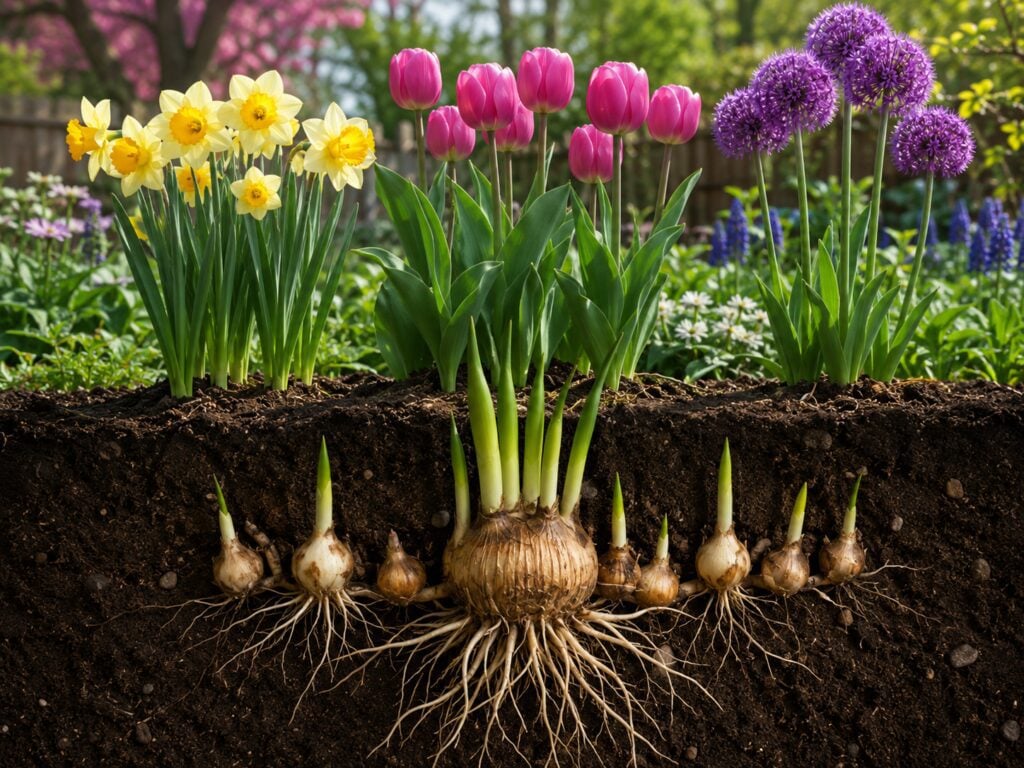
Over time, these bulbs split or send out offsets, multiplying quietly beneath the soil. This natural propagation ensures that every spring brings a richer, fuller bloom without any additional planting.
Choosing the Right Bulbs for Your Garden
Selecting bulbs suited to your climate and soil is key. Based on my hands-on experience, here are some favorites:
- Daffodil: Bright yellow blooms that reliably return each spring and naturalize well in clusters.
- Crocus: Early bloomers that add delicate color to lawns and borders. I often plant mixed colors for visual impact.
- Allium: Tall, globe-shaped flowers that add dramatic structure to flower beds.
- Fritillaria: Distinctive bell-shaped blooms that thrive in well-drained soil.
- Siberian Squill: Tiny, star-like flowers that spread rapidly, forming carpets of blue.
- Grape Hyacinth: Dense clusters of blue flowers, perfect for mass planting.
- Snowdrop: Elegant early bloomers, signaling the end of winter.
- Autumn Crocus & Cyclamen: Extend flowering into fall, adding color when other blooms fade.
Each of these bulbs has its own requirements for sunlight, soil type, and moisture, which I carefully matched to their locations in my garden.
Preparing Your Soil and Planting Bulbs
The secret to success lies in proper preparation. I start by loosening the soil, adding compost to enrich nutrient levels. Bulbs need good drainage, so I avoid low spots where water collects.
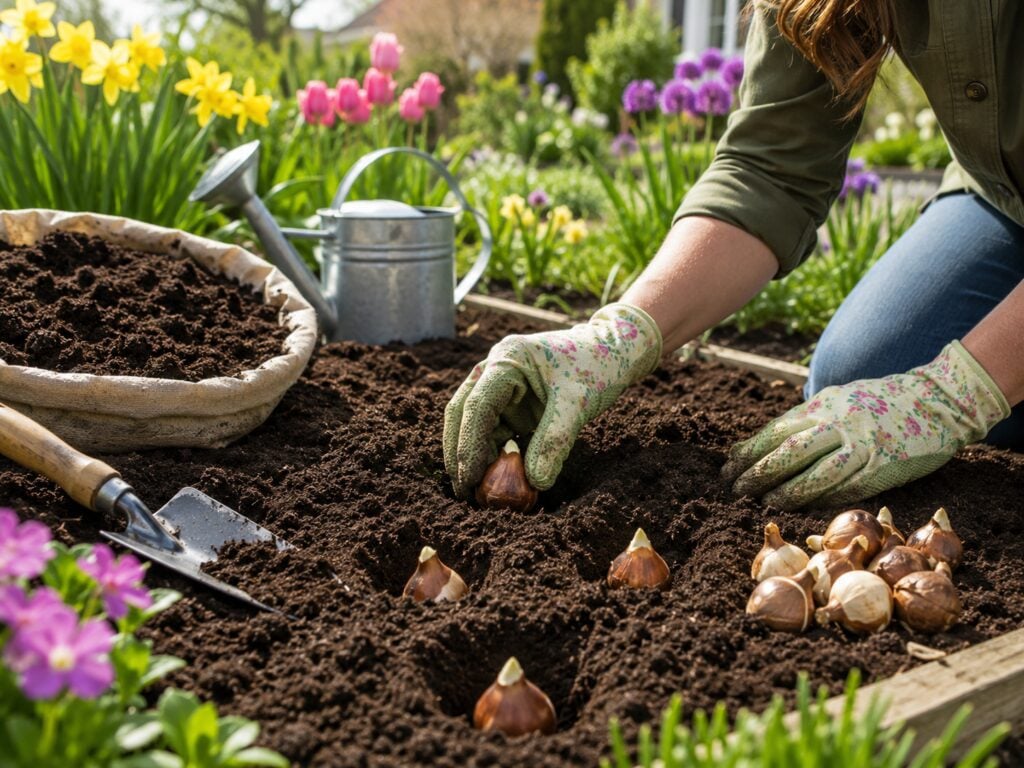
Planting depth varies by species; as a rule of thumb, I plant bulbs about two to three times as deep as their height. For example, my daffodils go 6 inches deep, while smaller crocuses sit just 3 inches below the surface.
Spacing is equally important. Crowded bulbs can inhibit growth and flower production, so I leave sufficient room for each to expand over the years.
Once planted, a layer of mulch helps maintain moisture, regulate temperature, and protect the bulbs from pests.
Caring for Bulbs After Planting
One of the joys of perennial bulbs is how little ongoing care they require. I water them during dry spells and remove weeds around them to reduce competition.
After flowering, I let the foliage die back naturally.
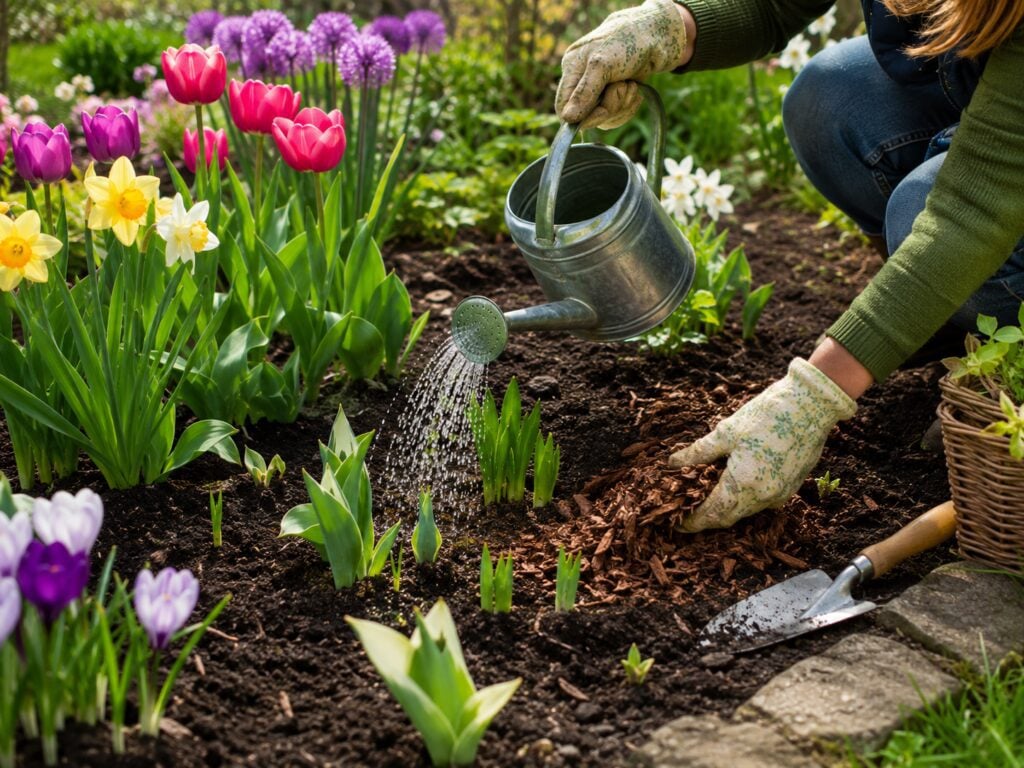
This process allows the leaves to photosynthesize and feed the bulb for next year’s bloom. I’ve learned that cutting foliage too early can reduce bulb strength and flower production.
Occasionally, bulbs need division. Every few years, I dig up crowded clumps, separate the offsets, and replant them. This simple step refreshes the planting and encourages more prolific blooming.
Seasonal Highlights: Spring and Beyond
Perennial bulbs create a dynamic, ever-changing garden landscape. I love watching crocuses and snowdrops emerge as the first signs of spring.
Daffodils and Siberian squill follow, bringing color and life.
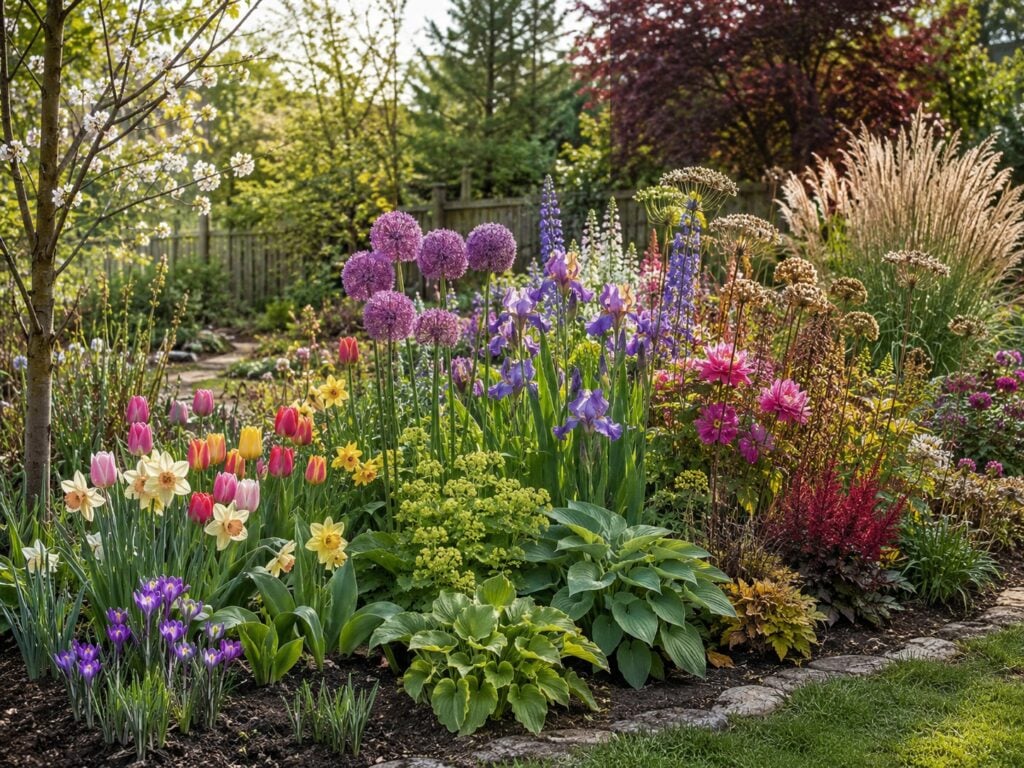
By late spring, alliums tower above the smaller blooms, adding vertical interest. In autumn, cyclamen and autumn crocus keep the garden colorful long after summer flowers fade.
This cycle creates continuity in my garden; each season layered with color and texture, making it a living, breathing artwork.
Naturalizing Bulbs for Long-Term Beauty
One of my favorite strategies is naturalizing bulbs; allowing them to spread and grow in naturalistic patterns. I plant them in clusters, under trees, and along pathways.
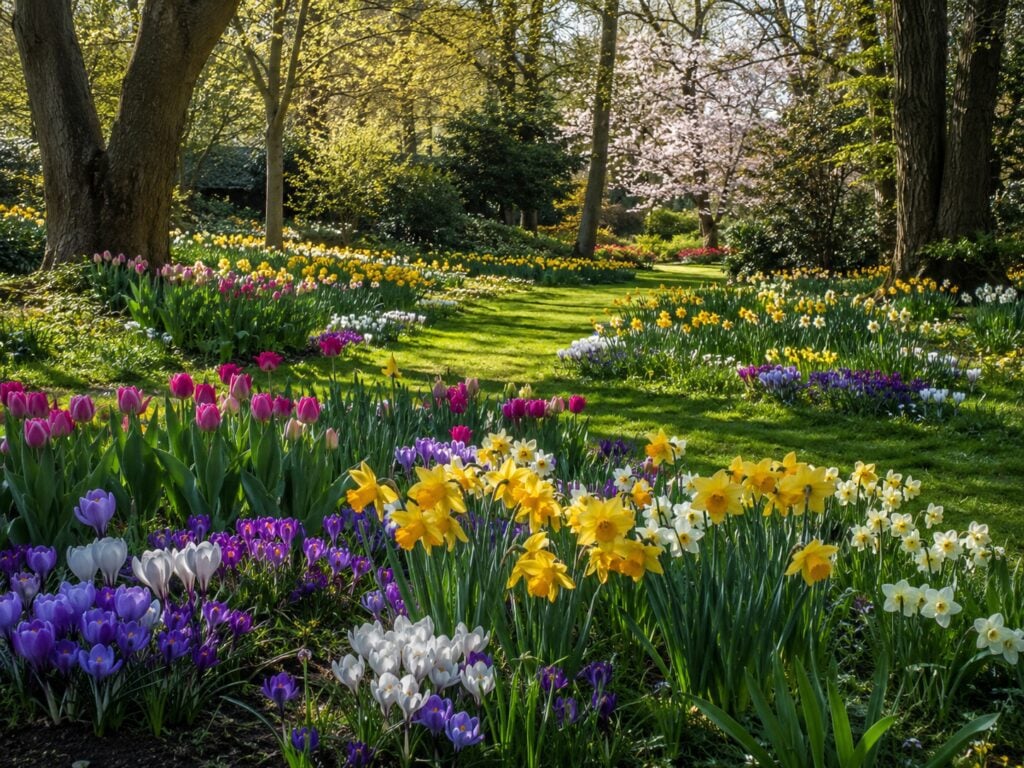
Over several years, bulbs multiply, forming flowing carpets and random groupings that feel organic rather than formal.
I’ve seen my original 20 bulbs grow into hundreds without extra planting, demonstrating nature’s remarkable ability to propagate itself.
Wildlife and Ecosystem Benefits
Beyond aesthetics, perennial bulbs support local ecosystems. Bees, butterflies, and other pollinators are attracted to early blooms, providing essential food sources.
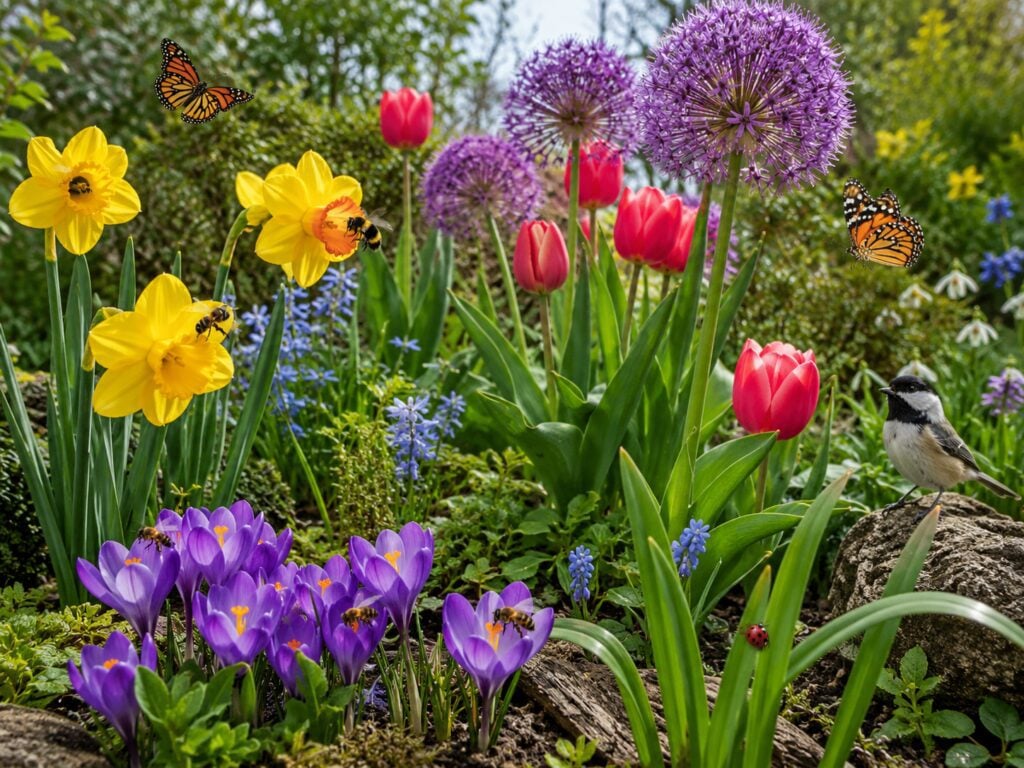
Some bulbs, like alliums and fritillaria, have mild pest-repellent properties, reducing garden damage naturally.
By planting bulbs once, I’m not only enhancing the beauty of my yard but also contributing to a healthier garden environment.
Troubleshooting Common Bulb Problems
Even hardy bulbs sometimes encounter issues. I’ve faced problems with:
- Rodents: Squirrels and voles may dig up bulbs. I use wire mesh or plant deterrents to protect them.
- Fungal Diseases: Bulbs can rot in overly wet soil. Ensuring good drainage and avoiding excessive watering has minimized this risk.
- Crowding: After several years, some bulbs need division to prevent overcrowding. I carefully lift and separate bulbs to maintain vitality.
Addressing these problems promptly ensures my bulbs continue multiplying successfully year after year.
Tips for Gardeners: Making Bulbs Thrive
From my personal experience, here’s how to get the best results:
- Mix early and late bloomers for continuous color.
- Plant in groups rather than single bulbs for visual impact.
- Leave foliage after bloom to feed bulbs for the next season.
- Amend soil with organic matter before planting.
- Rotate planting locations every few years if bulbs become crowded.
These small steps have made a huge difference in my garden’s beauty and bulb longevity.
A One-Time Investment for Lasting Beauty
Planting perennial flower bulbs is one of the most rewarding actions a gardener can take. A single planting grows into a vibrant, multiplying garden, providing color, wildlife support, and low-maintenance enjoyment.
From daffodils and crocuses to autumn cyclamen, these bulbs bring life to every season.
By planting once and letting nature do its work, I’ve created a garden that grows richer and more beautiful each year; a living testament to the power of perennial flower bulbs.