In December 2025, people watched widespread protests by farmers sweep from rural areas in southern France to the heart of Brussels. Farmers from across Europe were not just upset. They were angry, frustrated, and determined to make their voices heard.

Their protests reflected deep concerns about European Union policies, disease control measures, global trade deals, and the future of farming itself. What I saw was not just isolated demonstrations but a movement tied to long‑standing economic and political pressures facing farmers today.
This article explains, in clear and direct language, what triggered these protests, how they unfolded, why they mattered, and what they mean for the future of European agriculture.
What Happened?
In mid‑December 2025, farmers from several European countries gathered in large numbers to protest in both southern France and Brussels. In France, protests began with strong reactions to government measures for controlling a cattle disease outbreak and quickly expanded to include broader frustrations over economic conditions and trade policies.
In Belgium’s capital, Brussels, more than 7,000 farmers drove tractors into the streets, blocked major roads, and marched toward the European Parliament during a summit meeting of EU leaders.
At times, the demonstrations were peaceful. At other moments, they turned tense and chaotic.
Protesters set piles of tires on fire, burned wooden pallets, and threw stones, potatoes, and other objects.
Police responded with tear gas, water cannons, and crowd‑control tactics to clear streets around government buildings. By evening, clashes had taken place near key EU institutions, leaving at least one person seriously injured and public infrastructure damaged.
Why People are Protesting?
1. Disease Control Policies Sparked Local Anger
The initial spark for protests in southern France was the government’s response to an outbreak of lumpy skin disease among cattle. This viral disease can quickly spread and devastate herds, and the government required entire herds to be culled when even a single infection was detected.
Many farmers saw this policy as cruel and economically destructive, wiping out livelihoods and leaving little support for rebuilding.
For farmers with small or mid‑sized operations, culling entire herds was more than a disease control measure. It felt like a crisis that ignored their economic reality and emotional investment in their animals.
2. Trade and Competition Concerns
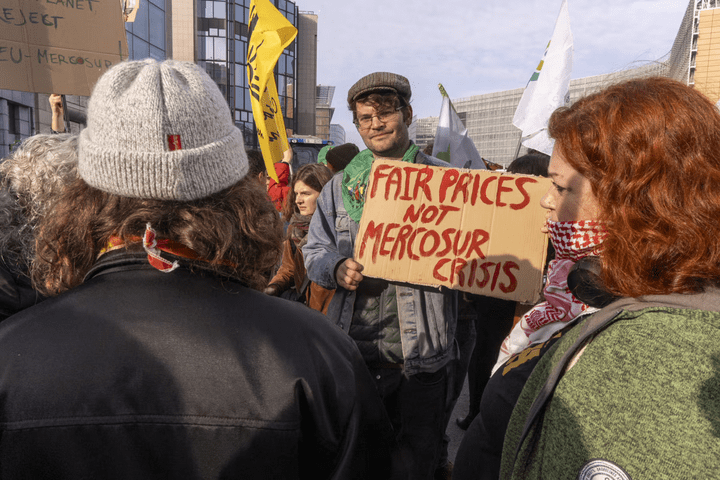
Almost immediately, protests broadened beyond disease policy to include strong opposition to the European Union’s planned free‑trade agreement with the Mercosur bloc, which includes South American countries such as Brazil, Argentina, Paraguay, and Uruguay.
This deal has been negotiated for decades and would reduce tariffs on many goods traded between the EU and Mercosur countries.
Farmers told me they fear this deal could flood the European market with cheaper agricultural products, including beef, sugar, rice, honey, and soybeans, which could undercut local producers.
They argue that products grown under different regulatory standards in South America could pose unfair competition for European farmers who must meet strict environmental and health regulations.
3. Economic Pressures and Rising Costs
Farmers at these protests also spoke loudly about declining incomes, rising production costs, and the feeling that their profession is undervalued.
Fertilizer prices, diesel costs, and general input expenses have climbed, while crop prices and demand have stagnated or fallen in many sectors. This squeeze has made farming a precarious way of life for many families.
The threat of cheaper imports under the Mercosur deal added to these economic pressures. Farmers believe that allowing lower‑priced foreign food into the EU market could weaken their already fragile economic position.
4. Calls for Policy Reform
Beyond trade and disease control, protesters demanded reform of the EU’s Common Agricultural Policy, which governs subsidies, support measures, and rules for farming across Europe.
Many farmers want better income support, simplified regulations, and more investment in rural infrastructure. They argue that current policies do not reflect the challenges of modern agriculture or the realities of working on the ground.
In France, unions like the FNSEA and Coordination Rurale played prominent roles in organizing protests and articulating these broader demands.
How the Protest Unfolded?

The protest movement had several phases:
1. Early December in Southern France
Protests began with roadblocks, burning barricades, and tractor convoys in the south, particularly in regions hard hit by lumpy skin disease outbreaks.
The anger was initially focused on disease policies but quickly incorporated broader grievances.
2. Mid‑December Expansion
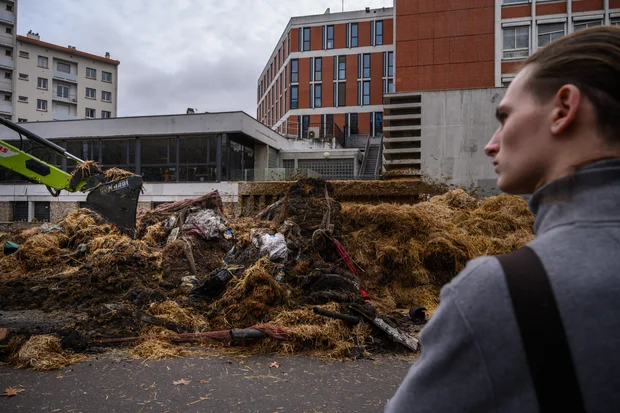
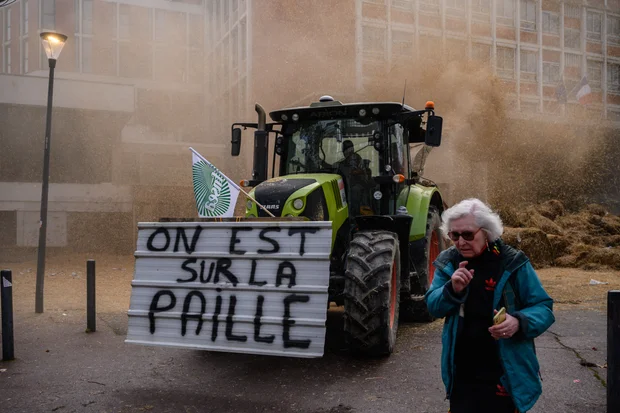
Farmers from across France, Belgium, and other EU nations mobilized, organizing convoys of tractors, blocking motorways and local roads, and constructing symbolic displays representing rural distress.
3. Brussels Demonstration
On December 18, more than 7,000 farmers arrived in Brussels during an EU summit attended by leaders from 27 member states.
Tractors blocked major roads near the European Parliament, and protesters tried to march closer to key political buildings. When clashes erupted, police used water cannons and tear gas to contain the crowd.
4. Aftermath Cleanup
Once protests ended, city crews in Brussels had to clear more than 50 tonnes of waste, including burnt debris, spilled crops, and damaged infrastructure.
Authorities also reported arrests and injuries among both police and protesters.
Below is a simplified timeline to help visualize the sequence:
| Date | Location | Key Actions |
|---|---|---|
| Early December | Southern France | Tractor blockades, grassroots protests over disease control |
| Mid December | France wide | Expansion of protests to include trade and policy issues |
| December 18 | Brussels | Large demonstration, roadblocks, clashes near EU summit |
| December 19 | Brussels cleanup | Cleanup, assessment of damage and political reactions |
Responses from Officials and Authorities

As the protests unfolded, political leaders and institutions responded in different ways.
1. European Union Leaders
At the EU summit in Brussels, leaders were meeting to discuss, among other topics, the Mercosur trade deal.
Faced with the protests and political resistance from key member states, the signing of the agreement was postponed until January. This delay was framed as an opportunity to address concerns and build consensus, though it did not satisfy many farmers.
Some EU officials defended the trade deal as beneficial for broader economic goals, such as strengthening the EU’s position in global markets and reducing reliance on foreign imports outside tariffs.
They argue that the Mercosur agreement could create growth opportunities for European industries as well as agriculture, if paired with appropriate safeguards.
2. National Governments
France took steps to address protests directly. The government deployed the army to assist in cattle vaccination campaigns, aiming to contain the disease outbreak and reduce the need for mass culling.
This effort involved military veterinarians and logistical support to reach remote farms.
French President Emmanuel Macron also pressured for stronger safeguards in the Mercosur deal and emphasized that France was not ready to sign the agreement without addressing farmers’ concerns.
In Belgium, police actions reflected an attempt to balance public order with the right to protest.
Law enforcement used tear gas, water cannon, and crowd control tactics when clashes broke out near European Parliament buildings.
3. Broader Context
The protests in 2025 reflect longer trends in European agriculture. Farmers have protested repeatedly over the past few years in response to environmental regulations, fuel and input costs, trade policies, and competition from imports.
In 2024 and 2025, protests occurred in multiple countries, including France, Belgium, Germany, and the Netherlands. These movements have sometimes involved blockades, demonstrations, and calls for policy change.
These protests also intersect with wider debates on climate policies and the European Green Deal, which aims to reduce emissions across sectors including agriculture.
Some farmers view environmental regulations as an additional burden that increases costs without sufficient support.
What It Means Going Forward?
The spread of farmer protests from southern France to Brussels signals more than isolated discontent. It shows deep structural concerns among agricultural communities about economic survival, fairness in trade, and the future of rural life.
The postponement of the Mercosur trade deal highlights that coordinated protest can influence high‑level political decisions.
However, delaying a vote is not the same as resolving the underlying issues farmers have raised.
Going forward, key questions remain:
- Will the EU and national governments create meaningful policy changes that address farmers’ economic concerns?
- Can safeguards be implemented to protect local producers while still engaging in global trade?
- How will climate regulations be balanced with farmers’ need for economic viability?
The coming weeks and months will be crucial as negotiations continue and as farmers decide whether to maintain pressure or pursue new strategies to influence policy.
Conclusion
What we saw unfold from southern France to Brussels in December 2025 was a major moment for European agriculture.
Farmers came together to voice their frustrations about disease policies, trade deals, and economic uncertainty. Their protests were at times peaceful and at times confrontational, but they were unified by a deep sense of urgency about the future of farming.
Understanding these events requires looking beyond headlines to the real pressures animated by global markets, climate change, and political choices affecting food production everywhere.
The protests are a reminder that the agricultural sector remains central to economic stability, cultural identity, and public policy debates in the European Union.