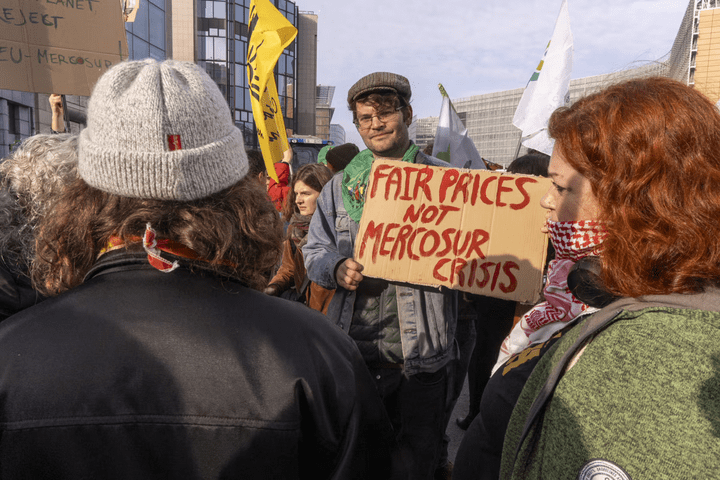
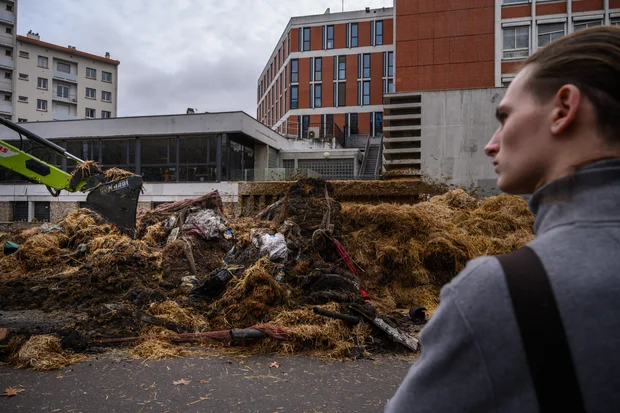
In December 2025, farmers across southwest France carried out powerful, pungent protests in Toulouse by dumping piles of manure and rotting produce in front of government buildings and blocking major roads with tractors.
The demonstrations were driven by deep dissatisfaction with agricultural government policies, rising costs, and rules related to livestock disease control. The protests drew national and international attention because they highlighted serious challenges facing France’s agricultural sector and reflected broader frustrations in rural communities.

In this article, I explain what happened in Toulouse and other parts of France, why the farmers protested in this way, what specific policies they are contesting, how the government responded, and the wider implications for French agriculture.
The aim is to present the events clearly and professionally, using straightforward language and explaining relevant terms so readers without a background in agriculture or French politics can understand.
What Happened in Toulouse?
In early December 2025, nearly 400 tractors and around 1,000 farmers from across southwest France organized a demonstration that significantly disrupted the city of Toulouse.
They rallied before dawn at various meeting points and then drove into the city, honking horns and blocking traffic on major roads, causing significant jams and forcing city officials to reroute buses and advise residents to avoid central areas.
Once they reached administrative buildings in the centre of Toulouse, farmers dumped large quantities of manure, hay, and rotting fruit outside the regional authority office.
The smell and visual impact of these heaps of organic waste were intended to draw public and political attention to their grievances.
The nature of the protest was direct and physical. Farmers also took action in other towns in the region, including spraying manure in public spaces and continuing roadblocks on highways in southern France.
These protests were part of a broader series of demonstrations that had been occurring sporadically throughout the year in response to multiple agricultural pressures.
Why Farmers are Protesting?
Farmers in France have several interconnected concerns that led to this intense protest. At the core of their grievances are government policies they feel are unfair, economically damaging, and unresponsive to the realities of running a farm today.
One major issue is taxation and social charges. Farmers say increasing taxes and fees make it harder to earn a sustainable income, especially when combined with rising costs for essential inputs such as fuel and animal feed.
These rising costs put added pressure on already tight profit margins in a sector where earnings can be unpredictable.
Another critical factor is how the authorities have handled outbreaks of livestock diseases, especially a recent wave of lumpy skin disease among cattle. This disease, which affects bovines and is spread by insects, requires special responses because there is no risk to humans but it can seriously weaken or kill animals.
Recently, French regulations have mandated the culling of entire herds when even a single infected animal is detected. Culling means slaughtering all animals in a herd to stop the disease from spreading further.
Many farmers argue that this policy is too severe and economically devastating for livestock owners.
Farmers have also expressed concern about competition from foreign agricultural products, particularly those entering the European Union under various trade agreements.
Many feel that imports produced under lower international regulatory standards undercut their ability to compete on price. These broader economic pressures contribute to a sense that domestic agricultural policies do not adequately protect local producers.
How the Protests Spread?
Although the manure dumping in Toulouse was a focal event, protests were not limited to that city.
Farmers have staged protests throughout southern France and other regions, including roadblocks with tractors and spray actions where manure was thrown against government buildings and in public squares.
In some areas, protest actions included blocking major transport routes, which not only disrupted local travel but also symbolized farmers’ frustration that crucial agricultural concerns were not being sufficiently addressed by national or local authorities.
Such demonstrations echo earlier protests in France and other European countries where farmers have blocked highways to signify their economic distress and demand policy changes.
These protests have often been spontaneous and loosely organized, involving both unionized farmers and independent producers.
Groups such as the Coordination Rurale (a rural coordination group) have been active, but many farmers involved are not officially part of major unions, indicating wide grassroots support for the actions.
The Lumpy Skin Disease Crisis
A central element of the protests in 2025 is the outbreak of lumpy skin disease in French cattle. This disease causes nodules on the skin and can reduce milk production, weaken animals, and lead to economic loss. It does not affect humans directly, but its impact on animals and farm economics can be serious.
To control the spread of the disease, French authorities have enforced policies that require the culling of entire herds when an infection is detected.
Farmers claim that this approach is overly drastic and economically ruinous, especially for smaller producers.
Instead of culling whole herds, many farmers want more targeted responses, such as wider vaccination programs and improved disease detection.
The French government has responded by deploying the army and military veterinarians to help administer large-scale vaccination campaigns and deliver hundreds of thousands of vaccine doses to remote farming areas. This effort seeks to inoculate as many as 750,000 cattle against the disease and slow its spread.
Despite these efforts and official statements that the outbreak is under control, many farmers remain frustrated and suspicious of government direction, particularly when culling policies still stand in some regions or when workers feel their livelihoods are threatened by regulatory measures.
Government Response and Public Debate
The French government has faced pressure to balance disease control with economic support for farmers. In addition to veterinary and vaccination initiatives, authorities have been asked to reconsider regulations that impose heavy economic burdens without clear compensatory measures.
Public officials, including the Prime Minister, have been urged to intervene and negotiate with protesters to find a solution that protects animal health without destroying farm businesses.

These protests have unleashed broader public debate in France about the role of agriculture in the national economy and society. Agriculture remains a significant part of French identity and cultural heritage, with wine, dairy, and livestock production seen as emblematic of rural life.
However, economic pressures, demographic shifts in farming populations, and global trade forces have put immense strain on farmers, contributing to rural discontent.
As the protests continued into December 2025, there were calls for dialogue between farmers and government officials. Some political leaders acknowledged the need for adjustments in policy to support farmers more effectively.
Meanwhile, critics of the protests have expressed concern about the methods used, particularly when protests block roads or involve dumping waste in public spaces.
Economic Pressures on French Farmers
The challenges facing French farmers extend beyond disease control and regulatory policies. Many farmers say they are struggling with low incomes, rising input costs, and competition from imports.
Factors such as increasing prices for fuel, fertilizers, and animal feed contribute to reduced profit margins, making it harder for farmers to sustain their operations.
In recent years, profitability in farming has been squeezed as global markets push for lower food prices, often at the expense of domestic producers.
French farmers argue that European and global trade agreements often favor large international producers who operate under different regulatory standards. These economic disparities have intensified feelings of insecurity in the agricultural sector.
Additionally, demographic shifts show that fewer young people are entering farming, leading to concerns about who will continue feeding the country in the future.
In some rural areas, family farms that once supported multiple generations are disappearing. This longer‑term challenge compounds the immediate frustrations expressed in the protests.
Broader Context of French Farmer Protests
The manure protests in Toulouse and other recent actions are part of a larger movement of agricultural demonstrations in France and across Europe over the past few years.
These protests have included road blockades, convoys of tractors, and other symbolic acts aimed at drawing attention to longstanding grievances about agricultural policy, subsidies, environmental regulations, and income security.
French farmers have protested in previous years over different issues such as proposed cuts to diesel subsidies, environmental regulations, and pricing pressures from large supermarket chains.
While each protest has specific triggers, they share underlying themes of economic hardship and perceived lack of political support for sustainable farming.
What This Means for France’s Agricultural Future?
The protests in Toulouse and other regions highlight the deep tensions between modern agricultural policy and the economic realities faced by French farmers.
The sector is central to France’s economy and cultural heritage, but it is under strain from multiple directions—disease outbreaks, rising costs, regulatory complexity, and global competition.
Finding solutions that protect animal health without causing economic ruin, while also strengthening farm incomes and supporting the next generation of farmers, will require sustained dialogue and policy innovation.
The manure protests have made it clear that many farmers feel unheard and unsupported, and that their demands for change cannot be ignored.
As discussions continue into 2026, watching how the government and agricultural communities negotiate these complex issues will be important for understanding the future resilience of French agriculture.