
When I first started gardening, I looked at fallen logs as nothing more than yard waste, something to be removed to keep my garden tidy.
Over time, I discovered a fascinating truth: those dead logs are teeming with life.
They act as microhabitats, feeding, housing, and supporting hundreds of species that I never even knew existed.
Yard Logs vs. Homes: A Shift in Perspective
At first glance, a fallen log may seem like clutter. I remember seeing one on my lawn and thinking it was just debris. But through closer observation, I realized it’s a bustling home.
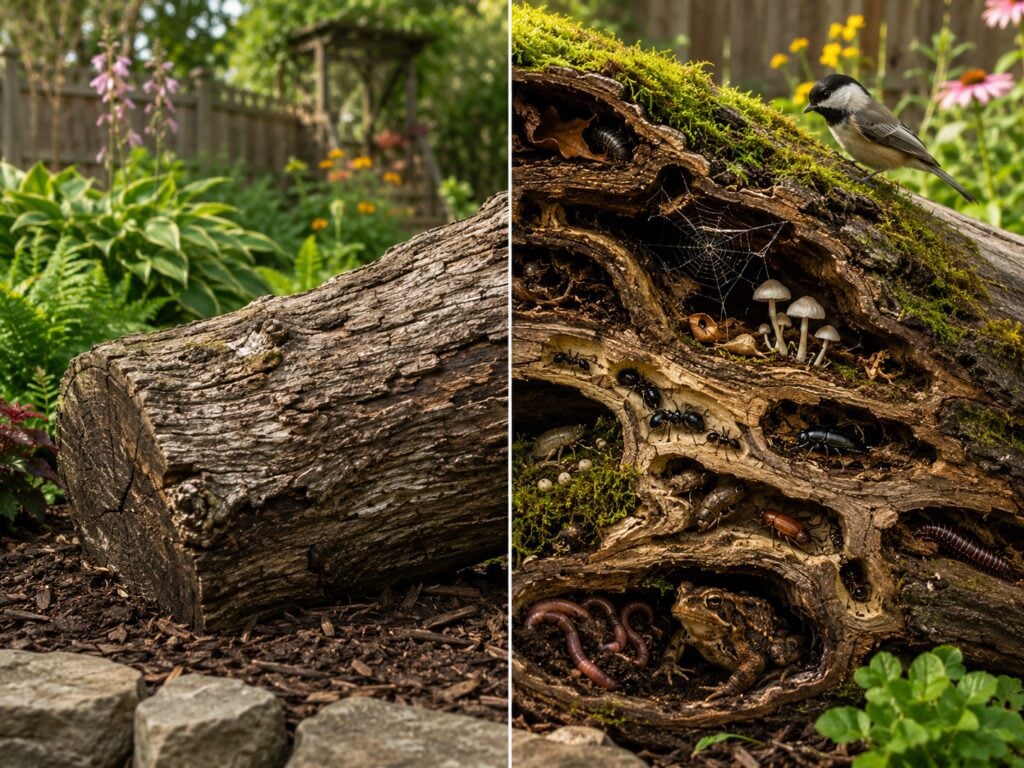
Over 300 species, from insects and fungi to small mammals, depend on logs for survival. Once I began noticing the subtle movements and signs of life, my perspective shifted.
What I once saw as waste, I now understand as a vital part of my yard’s ecosystem.
The Layers of Life Inside a Log
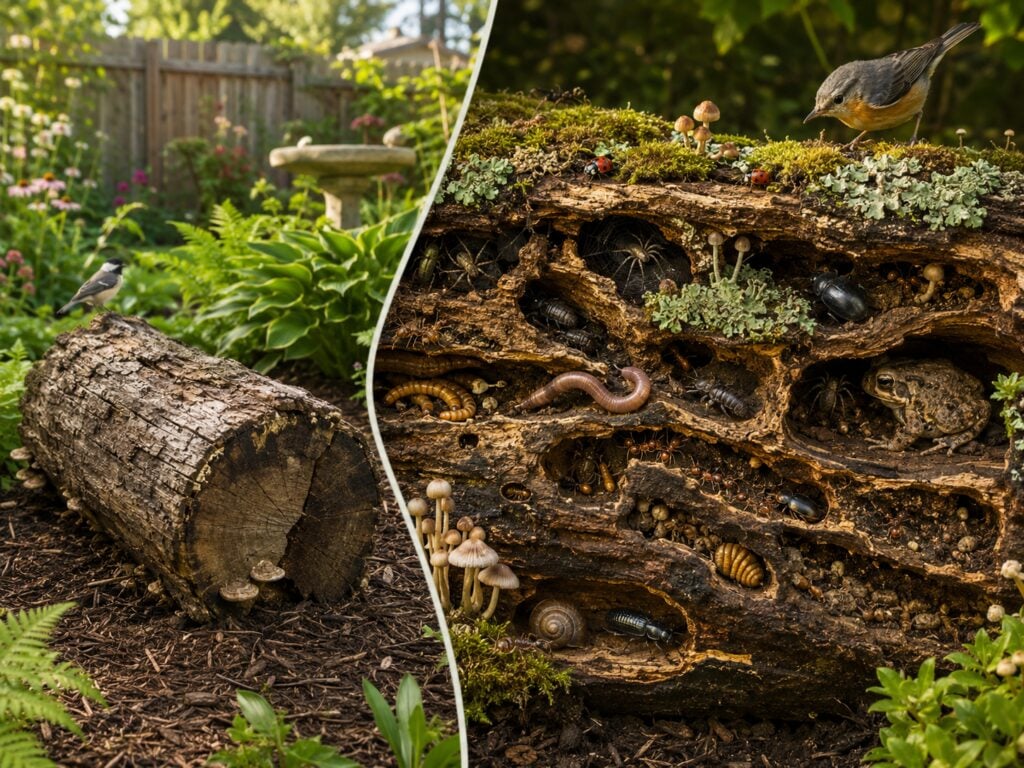
Each log has a unique structure that supports different types of life:
- Bark Layer: This outer shell is home to overwintering beetles, ladybugs, and ground beetles. I’ve often seen ladybugs tucked into crevices, conserving energy during colder months.
- Sapwood: Just beneath the bark, this softer layer supports beetle larvae and parasitic wasps, which drill to find their larvae. Observing these interactions gave me insight into natural pest control mechanisms in the garden.
- Heartwood: The dense core may appear inert, but it houses fungi like white rot, which break down the wood into nutrient-rich soil, and sometimes a mouse nest in hollowed sections. Watching this decay process has shown me nature’s efficiency in recycling resources.
Tiny Architects: Insects and Their Roles
One of the most fascinating aspects of yard logs is the small creatures that act as architects and landscapers:
- Carpenter Ants: They carve intricate galleries, almost like subway tunnels, allowing airflow and further decay. I often pause to marvel at their engineering skills.
- Beetle Larvae: Chewing galleries through the wood, these larvae accelerate decomposition and create food sources for other species.
- Parasitoid Wasps: These remarkable wasps drill into the wood with precision, locating larvae to lay eggs. Their work is a prime example of nature’s checks and balances at play.
Each species contributes to a network of survival that maintains the ecological balance within the log.
Amphibians and Small Mammals
It wasn’t just insects that captivated me. In moist pockets of sapwood, I discovered red-backed salamanders hiding. Their presence indicated a healthy, humid microclimate essential for their survival.
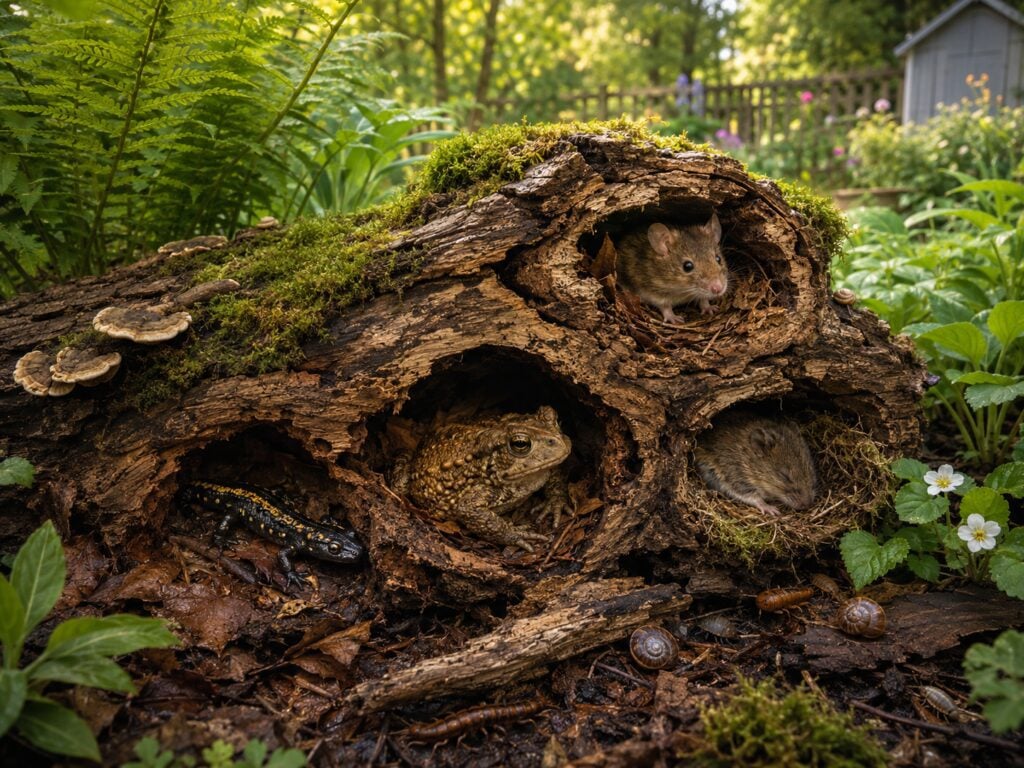
Deep within the hollow heartwood, I once observed a mouse nest. This small mammal relies on logs for shelter, proving that even vertebrates are integral to these microecosystems.
Nature’s Decomposers
No yard log is complete without fungi. White rot fungi play a crucial role, breaking down tough lignin and cellulose into nutrients that enrich the soil.
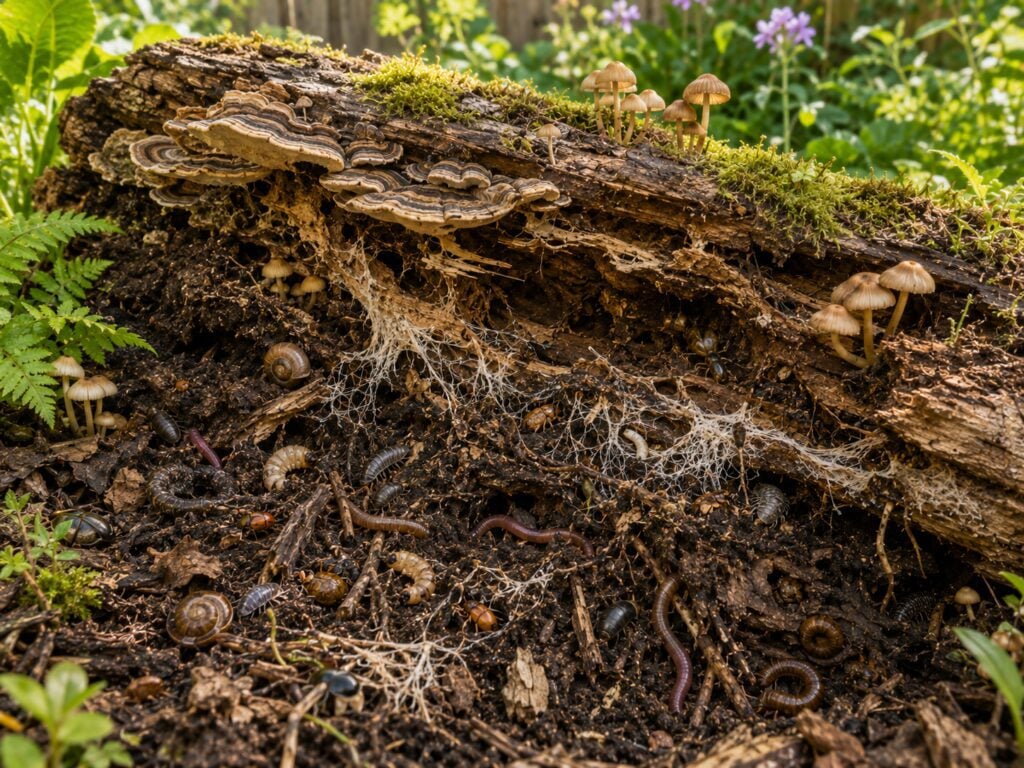
I’ve seen millipede eggs nestled in fungal pockets, a perfect synergy where decomposers create fertile zones for new life. The log itself becomes a nursery and a nutrient factory, all while blending seamlessly into the natural rhythm of the garden.
Soil Connection and Nutrient Cycling
Logs in direct soil contact become even more vital. Earthworms create cocoon-rich moisture zones at the base, while mycorrhizal fungi spread through the soil, feeding living trees nearby.
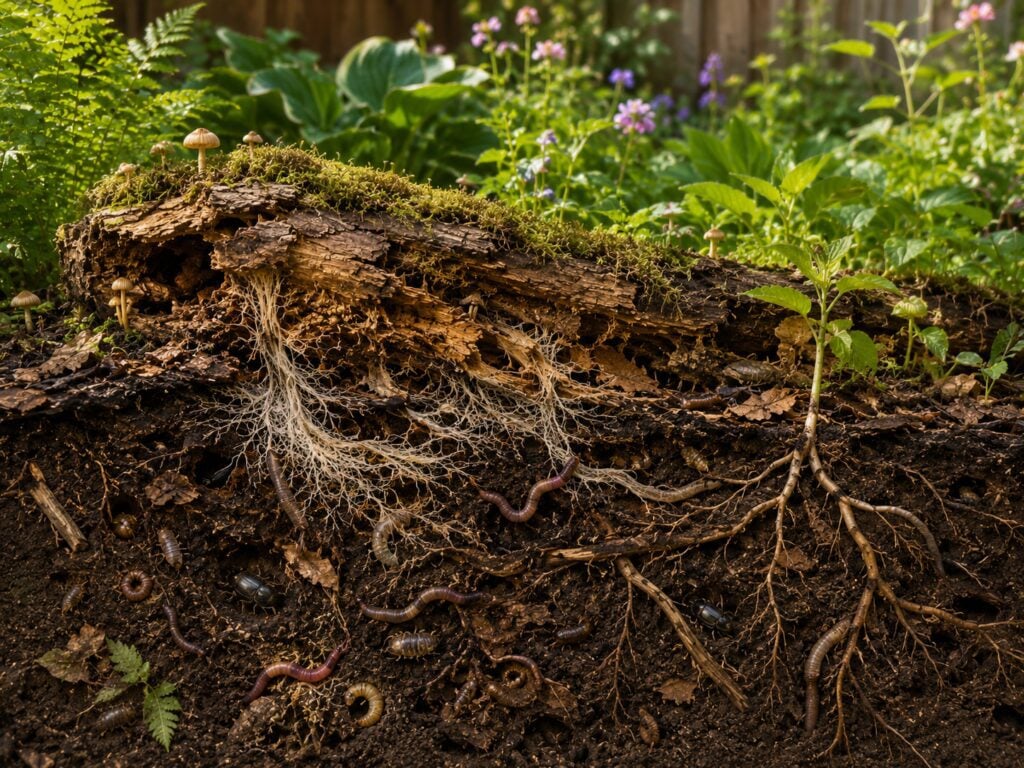
I was surprised to learn that the log slowly integrates with the soil, feeding surrounding plants and boosting biodiversity. The concept of “waste” is completely inverted here; the log is a life-giving structure.
Why You Should Leave Yard Logs in Place?
After seeing the incredible diversity that a single log can support, I never remove them unnecessarily. They act as:
- Microhabitats for insects, fungi, amphibians, and mammals
- Natural pest control systems
- Decomposers, enriching the soil
- Structural support for soil networks and mycorrhizal fungi
By leaving yard logs in place, you’re allowing nature to maintain itself. Every inch of decay serves a purpose, contributing to a resilient, healthy garden ecosystem.
Maximizing the Benefits of Yard Logs
Based on my personal experience, here’s how to integrate yard logs safely and effectively:
- Choose logs strategically: Place them in shaded areas with some moisture for optimal biodiversity.
- Avoid chemical treatments: Pesticides or fungicides can disrupt the natural ecosystem.
- Rotate logs if needed: Over time, logs decompose. Adding new logs ensures continuous habitats.
- Observe and learn: Take time to watch how different species interact. You’ll be amazed at the hidden life that unfolds.
I often spend a few minutes each morning observing the movements, tunnels, and fungi growth. It’s a simple habit that has deepened my understanding of ecology.
From Waste to Wonder
My journey with yard logs has completely reshaped how I view “waste” in the garden. What appears dead is in fact brimming with life, offering shelter, nourishment, and ecological balance.
By leaving logs in your yard, you’re not just saving a piece of wood—you’re cultivating a thriving, natural ecosystem that supports over 300 species.
Next time you see a fallen log, pause. Observe. Respect.
You’re looking at one of nature’s most vibrant communities, right in your own backyard.


