
When I first started designing my garden, I focused mostly on color and plant type. It wasn’t until I studied garden design texture that I realized how dramatically texture could influence perception.
Texture in plants (the size and arrangement of leaves) can make a garden feel expansive or intimate.
By understanding and applying texture strategically, I learned to control the visual flow, making small areas feel larger and spacious gardens feel cozier.
What is Garden Texture?
Garden texture refers to the visual feel of plants, primarily determined by the size, shape, and density of leaves. I noticed that plants with tiny leaves create a delicate, fine texture, whereas plants with large leaves appear bolder and coarser.
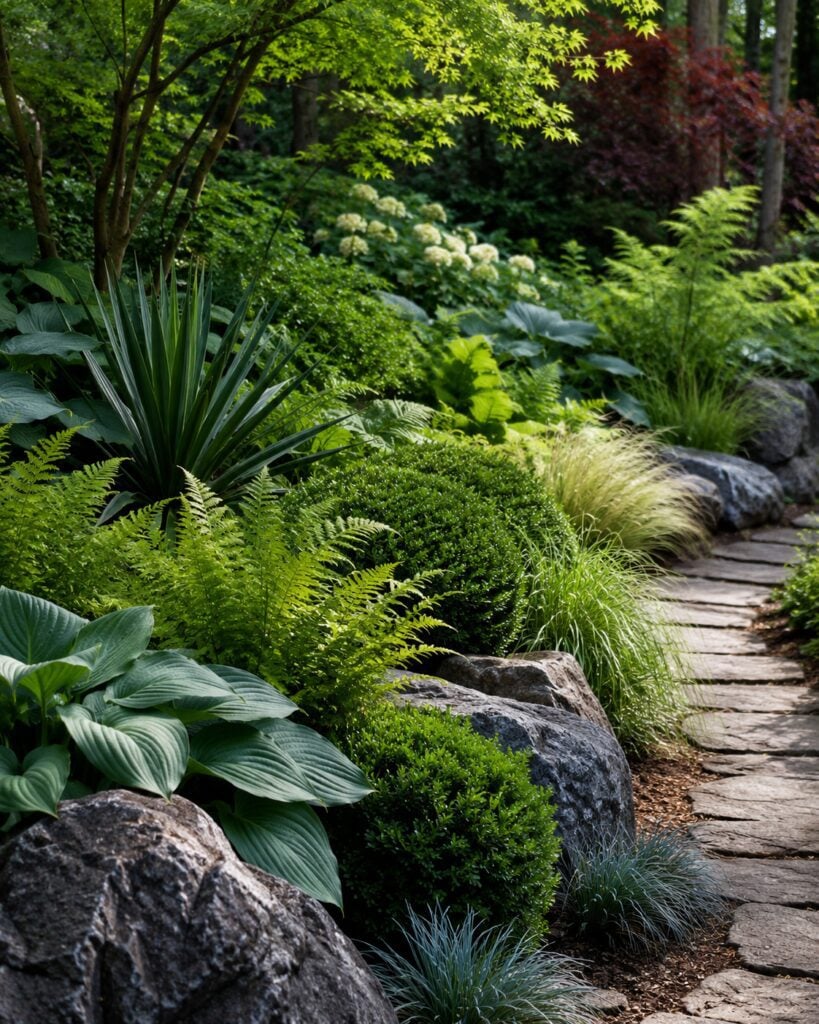
Fine textures give a garden an airy, open feeling, while coarse textures tend to dominate a space and create a more intimate, enclosed atmosphere.
Recognizing these patterns was a revelation for me, allowing me to manipulate the sense of scale in my garden.
Using Fine Texture to Make Spaces Look Bigger
The first principle I learned was that fine-textured plants placed along the garden’s perimeter can make the space appear larger.
Tiny leaves blend more seamlessly with the background, allowing the eye to travel further, creating the illusion of depth. For example, I planted delicate ferns and small-leafed shrubs along the edges of my garden.
The effect was subtle but dramatic; the space seemed to expand naturally without needing walls or additional landscaping.
Fine textures encourage visual openness and are perfect for narrow yards or tight garden areas.
How Coarse Texture Creates Intimacy?
Conversely, I experimented with coarse textures to make large, open gardens feel cozier. Placing plants with big, bold leaves along borders draws the eye inward, effectively reducing the perceived size of a space.
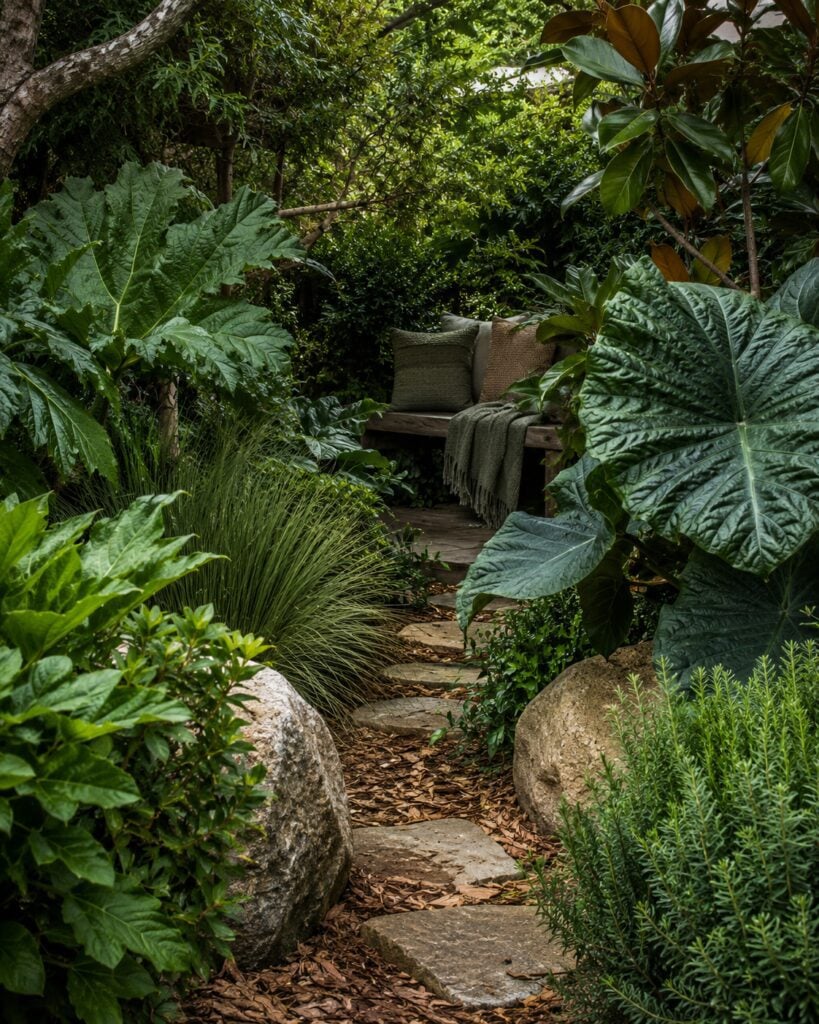
For instance, giant-leafed hostas or broad-leafed tropical plants create a strong visual presence. I found that combining coarse textures with medium-sized foliage in front establishes depth while maintaining a cozy atmosphere.
Coarse textures work exceptionally well in outdoor lounge areas or patios where you want a sense of enclosure.
Layering Textures for Balance
Layering fine, medium, and coarse textures is key to creating harmony in a garden. I typically start with fine-textured plants at the back or along the edges, medium-textured plants in the middle, and coarse-textured plants closer to the viewer.
This layering technique guides the eye naturally from background to foreground, creating visual interest and dynamic depth.
I’ve also noticed that connecting plants of different textures encourages continuity, making the garden feel cohesive rather than disjointed.
Practical Examples from My Garden
In my own garden, I placed a row of tiny-leafed boxwood shrubs along the perimeter. These shrubs gave the illusion that the garden stretched further than it actually did.
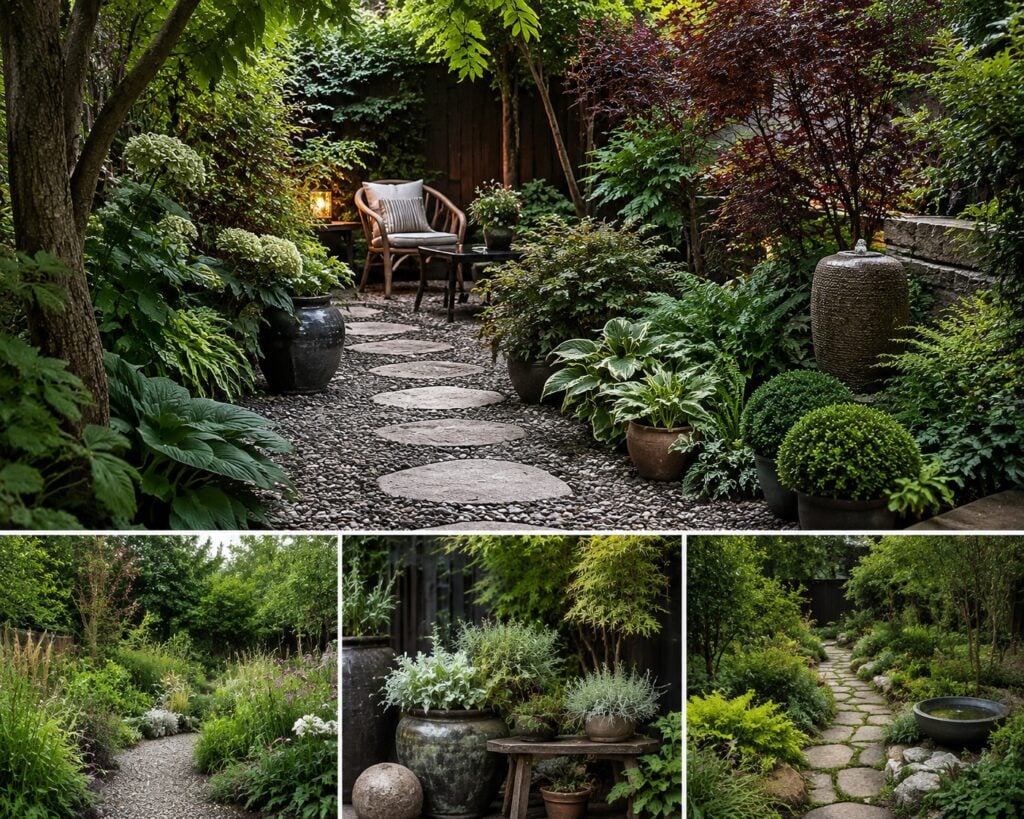
Then, I added medium-leafed plants such as Japanese maples and ferns to create a mid-layer that blended seamlessly.
Finally, I planted coarse-textured plants like elephant ears near the main seating area to add drama and define space.
This strategic arrangement has transformed my garden into a visually layered masterpiece that feels both expansive and intimate depending on where you stand.
Texture and Visual Flow
Another insight I gained was the effect of texture on visual flow. Fine textures allow the eye to glide effortlessly across the garden, making the area feel continuous and fluid.
Coarse textures act as anchor points, providing visual stops that draw attention. I strategically used coarse textures near pathways and seating areas to provide visual interest without overwhelming the space.
Observing how these textures interact helped me guide visitors’ eyes, ensuring they experience my garden in a way that feels natural and balanced.
Choosing Plants by Leaf Size
Selecting the right plants is crucial. Tiny-leafed plants, such as lavender, rosemary, or small ferns, are excellent for creating fine textures. Medium-leafed plants like hostas, Japanese maples, and hydrangeas create transition zones.
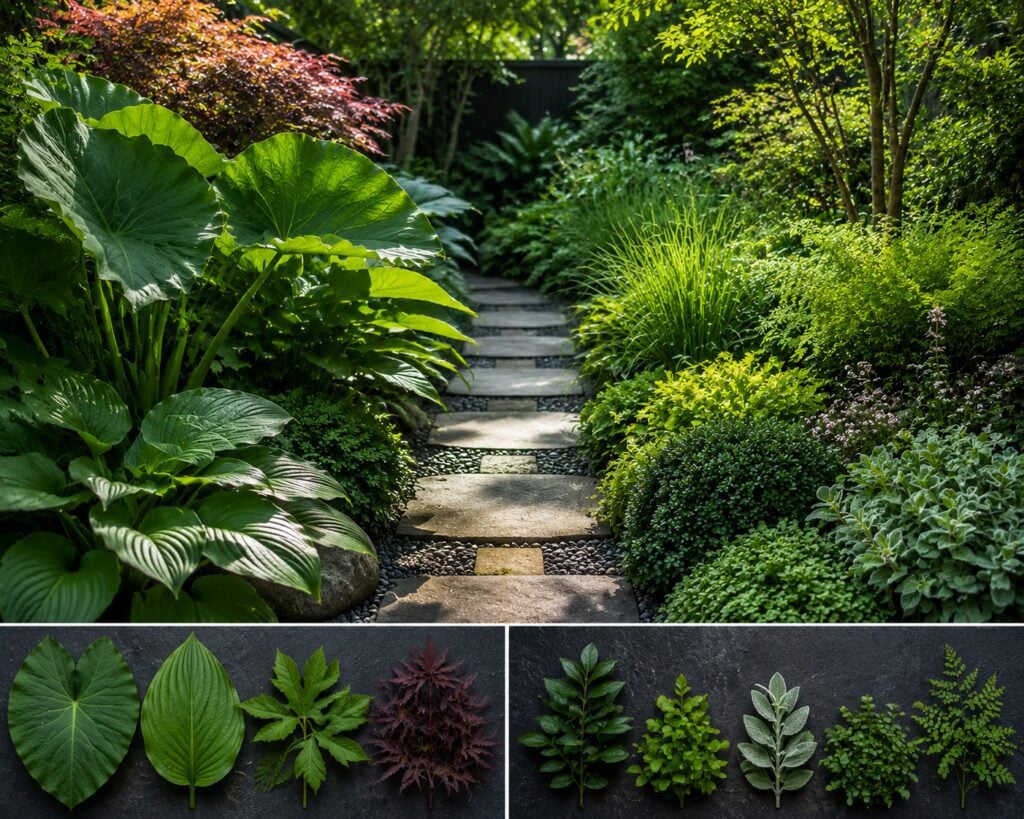
Large-leafed plants, including elephant ears, banana plants, and large tropical foliage, provide coarse textures that dominate space.
I personally mapped my garden on paper first, plotting each plant’s texture category to ensure a balanced and visually pleasing arrangement.
Combining Texture with Color and Height
Texture alone is powerful, but its effect amplifies when combined with other design elements like color and height. I learned that pairing fine textures with lighter colors enhances the feeling of openness, while coarse textures with darker or more saturated colors add depth and intimacy.
Height variations also influence perception. Tall coarse-textured plants anchor a space, while shorter fine-textured plants maintain a sense of expansiveness.
This combination of factors allows for a versatile garden design that can feel both expansive and welcoming.
Mistakes to Avoid
I’ve also learned from my mistakes. Placing coarse-textured plants along the perimeter of a small garden makes the space feel crowded and overwhelming.
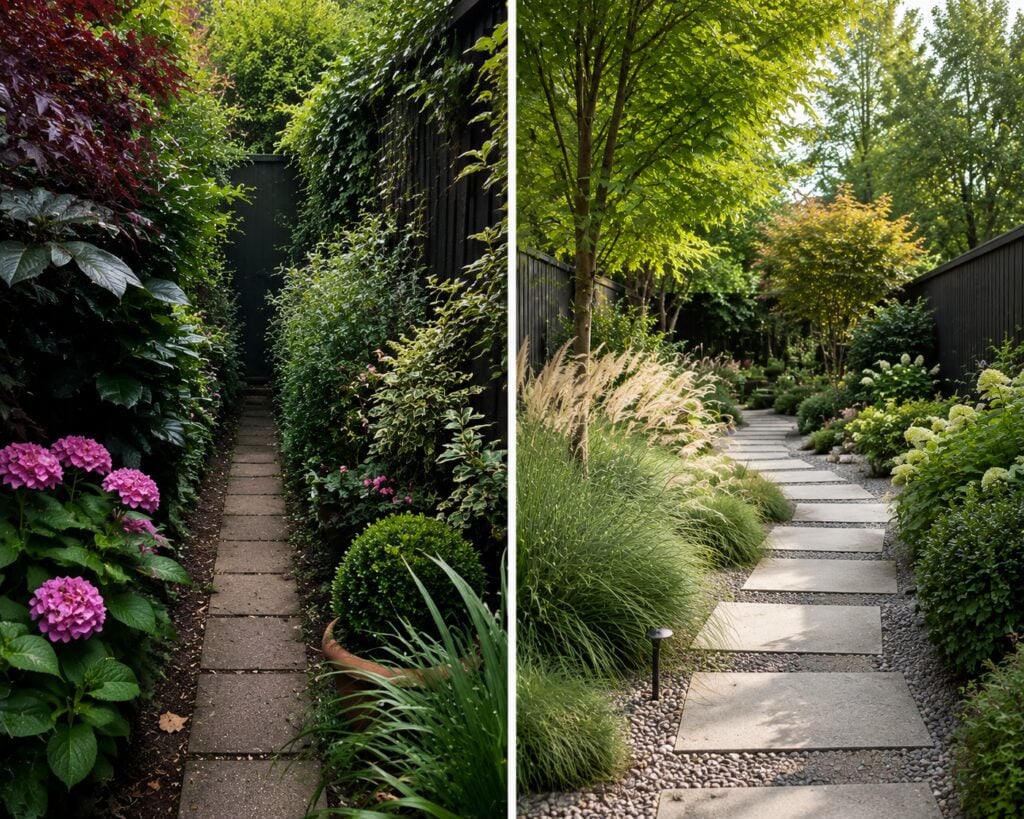
Conversely, using only fine textures in a vast garden can make the area feel sparse and unstructured. Another common error is ignoring the transitions between textures.
Sudden shifts from coarse to fine can be jarring. I now ensure gradual blending and repetition to maintain visual flow.
Maintenance Considerations
Texture also influences maintenance. Fine-textured plants often require more trimming and shaping to maintain their delicate appearance. Coarse-textured plants are generally low-maintenance but can dominate a space if not pruned periodically.
I schedule my garden maintenance around these needs, ensuring each texture retains its intended visual effect while remaining healthy and vibrant.
Observing the Impact Over Time
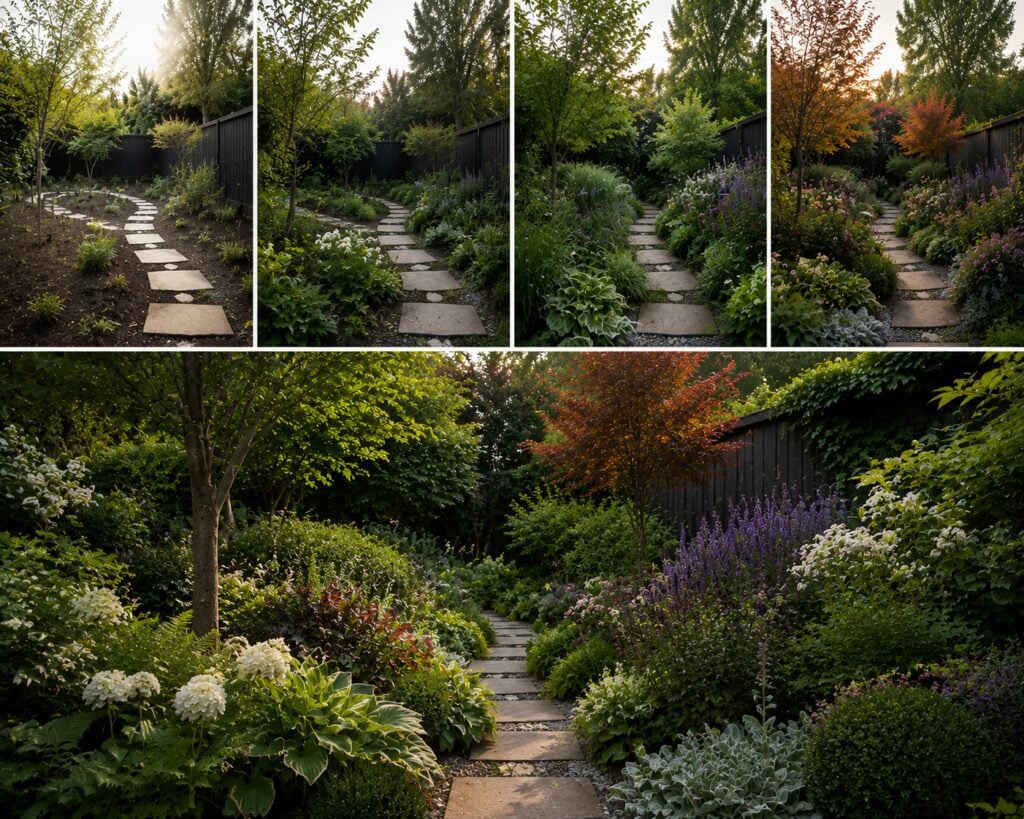
One of the most satisfying parts of using texture strategically is seeing the long-term impact. Over seasons, the layering of fine, medium, and coarse textures continues to guide perception.
In my garden, pathways feel longer, seating areas feel intimate, and the overall space appears visually balanced.
Texture not only adds aesthetic appeal but also creates a subtle psychological effect, shaping how visitors experience the space.
Transform Your Garden with Texture
Garden design texture is more than just an aesthetic choice; it is a tool to manipulate perception, create depth, and define spaces. Fine textures expand areas, coarse textures contract them, and layering creates harmony.
By carefully selecting and arranging plants according to leaf size, combining with color and height, and observing how textures interact, I transformed my garden into a balanced, visually engaging, and welcoming environment.
Texture has become an essential element of my garden design strategy, and I encourage every gardener to explore its potential.


