When I first read reports about farmers protesting “climate capitalism,” I realized that many people are struggling to connect the terms in the headlines with their everyday experience of farming.

Farmers are not only upset about weather change. They are also angry about how economic systems, global trade, government environmental policies, and corporate agriculture squeeze their livelihoods.
What Farmers Protesting About?
When farmers talk about “climate capitalism,” they describe a system where environmental rules aimed at fighting climate change clash with economic pressures that already strain their operations. They feel caught between two forces:
- Environmental regulations that require changes in how they farm.
- Economic systems that favour large corporate farms and cheap imports.
- Global markets that make it hard for small and medium farmers to survive.
The phrase climate capitalism refers to the idea that climate policy and capitalist markets are intertwined.
Farmers see that environmental goals are increasingly tied to market incentives and regulatory frameworks that sometimes feel disconnected from their economic realities.
For many farmers, the protests are not anti‑environment. They are anti‑the way current environmental and economic policies are structured.
Farmers say that richer, larger corporate farms benefit most from the status quo, while smaller producers bear the brunt of expensive compliance, lower prices, and greater risk.
Where the Protests Have Happened?
Farmer protests related to climate capitalism and broader agricultural policy have appeared in many places. By spring 2024, large scale protests by farmers had spread across multiple countries, notably in Europe:
- France
- Belgium
- The Netherlands
- Germany
- Poland
- Czech Republic
- Spain
- Greece and others
These protests often involved tractor convoys blocking roads, demonstrations in capital cities, and mass gatherings at key political sites. Farmers have taken these actions to express frustration with how distant policymakers seem to understand their challenges.
One thing that stands out is how these movements connect local grievances with broader national and international policies.
Why Farmers Say They are Fed Up?
1. Rising Costs and Falling Farm Incomes
Farmers say that prices they receive for crops and livestock have not kept up with the rising cost of fuel, fertilizer, energy, and equipment. When production costs climb, profits shrink.
This makes farming financially precarious. Globally, many farmers feel that markets are stacked against small and mid‑sized producers trying to stay afloat.
2. Global Trade Pressures
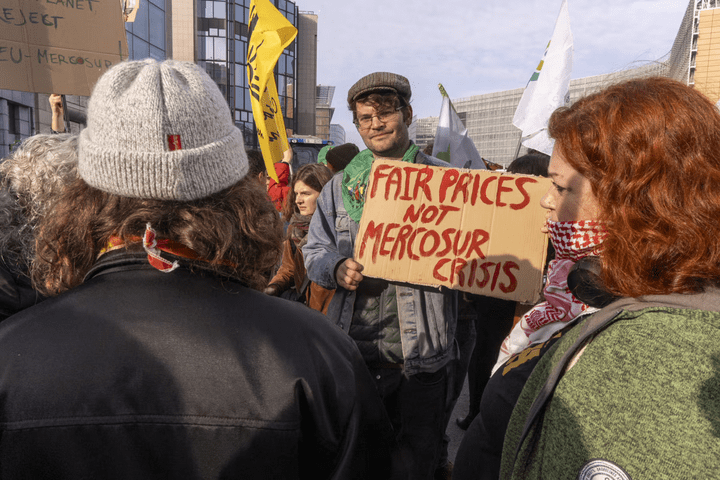
Farmers frequently mention competition from imported food as a key concern. In Europe, for example, cheap grain and meat imports from countries like Ukraine or members of the Mercosur bloc (Brazil, Argentina, Paraguay, Uruguay) are seen as undercutting local prices.
Farmers say these imports often come from places with different environmental or labor standards, making fair competition difficult.
3. Burdensome Environmental Rules
Environmental policies aimed at reducing carbon emissions, pesticide use, or water pollution are often seen by farmers as add‑on costs, not supportive tools.
For example, rules requiring changes in land use or limits on fertilizers can increase their expenses without guaranteeing better prices for their products.
Farmers have said these rules feel like extra red tape from distant city‑based policymakers who do not face the same daily realities of weather, debt, and markets.
4. Perceived Advantage for Big Agribusiness
Many farmers talk about corporate mega‑farms and powerful agricultural corporations that seem to benefit from economies of scale. These larger players can better absorb costs, negotiate supply contracts, and access global markets, leaving smaller farms struggling.
This perception of unequal benefit is central to the idea of climate capitalism as a system that prioritizes profit and growth over small farm survival.
How the Protests Have Unfolded?

Based on what I have read and analysed, farmers’ protests have included a range of actions:
1. Tractor Rallies and Road Blockades
Farmers have driven tractors into city streets and major roads, slowing traffic and drawing attention to their demands.
These blockades are often symbolic: tractors represent the backbone of rural life and food production, and their visibility highlights how essential farmers are.
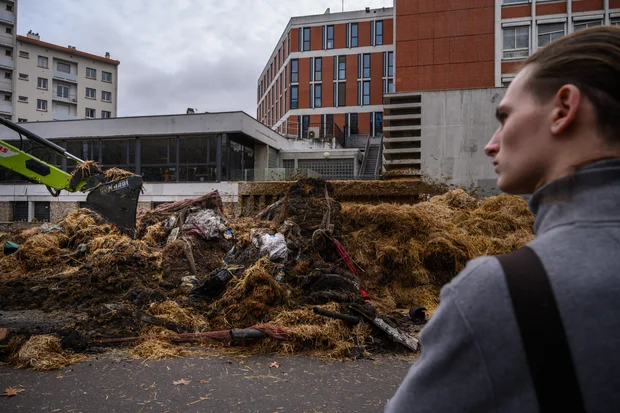
2. Manure and Vegetable Demonstrations
In some protests, farmers have dumped manure or thrown vegetables like beets and potatoes at government buildings or near political offices.
These acts are dramatic but symbolic, intended to show frustration over low prices and what they see as unfair policy pressures.
3. Gatherings in Capital Cities
Farmers have convened near parliaments and European Union offices to directly voice their grievances to policymakers.
This includes large demonstrations in Brussels, where thousands of tractors and supporters assembled during major EU meetings.
4. Political Engagement
In other cases, farmers have made their voices heard in political arenas with formal statements, union negotiations, and alliances with sympathetic lawmakers. This reflects a strategy that mixes protest with policy negotiation.
Below is a simplified table of protest actions and their locations:
| Location | Actions Taken | Key Complaints |
|---|---|---|
| France | Road blockades, tractor rallies | Environmental rules, low prices, deregulation |
| Belgium | Tractor convoy to Brussels | Trade deals and cheap imports |
| Netherlands | Nitrogen tax protests | Emissions limits and land use |
| Poland | Border blockades with grain spill | Cheap imports and policy burdens |
| Greece | Roadblock expansion plans | Rising costs and climate impacts |
How Climate Change Plays Into It?
While farmers are protesting economic pressures and regulations, climate change is an underlying reality they cannot ignore. Droughts, floods, heatwaves, and unpredictable seasons directly affect crop yields, livestock, and farm infrastructure.
Even though some of the farmers’ complaints are about policy and economics, the climate crisis influences their sense of risk and financial stability.
Farmers also say that while climate policies aim to reduce environmental harm, they need support for climate adaptation, such as improved irrigation systems, drought‑resistant crops, and insurance against extreme weather events.
Without these supports, they feel like they are being pushed to fight climate change without safety nets.
Political and Social Impacts
One thing I have noticed is that farmers’ protests have political ripple effects beyond the agricultural sector. In Europe, for instance, widespread farmer unrest has influenced debates within the European Union about environmental policy, trade agreements, and even election strategies.
Some policymakers have rolled back or delayed green measures in response to protest pressure, arguing that farmers’ concerns must be addressed before implementing climate policies.
This has created a broader debate about how societies balance climate goals with economic fairness.
While environmental groups worry that weakening rules undermines global climate commitments, farmers and their advocates argue that unrealistic policies risk destroying rural livelihoods. This tension highlights the complex interplay between climate action, economics, and social stability.
What the Protests Tell Us?
From my perspective, these protests are not just about one policy or one country. They reveal deeper structural issues in agricultural systems and society:
- Unequal power between small farmers and large agribusiness interests. Many small farmers see policies favouring large corporate competitors.
- A mismatch between environmental ambitions and on‑the‑ground realities. Climate policies are necessary, but many farmers want policies that are practical, funded, and fair.
- The emotional and cultural importance of farming. These protests show how deeply farmers value their work and resist feeling marginalized in national and global debates.
- Political consequences. Farmer unrest can influence broader political trends and election outcomes in ways that reshape future policy choices.
What It Means Going Forward?
If I had to distil what these protests mean for the future, it would be this: farmers want a seat at the table where climate, trade, and economic policies are made. They are not against environmental goals.
They are saying that goals must be paired with real support, fairness, and recognition of their challenges.
Policymakers may need to rethink how climate action intersects with rural economies. This could involve:
- More support for climate adaptation measures for farms
- Fair trade rules that protect local producers
- Incentives that reward sustainable practices without overwhelming costs
- Open dialogue that respects farmers’ voices in environmental planning
Final Though
Farmers protesting climate capitalism are doing more than resisting change. They are pushing for a better understanding of how economic systems, environmental policy, and rural livelihoods intersect. What they want is not a rollback of climate action but a just transition that balances sustainability goals with fair economic treatment.
These protests, spread across countries and communities, show how interconnected agriculture is with broader global challenges.
Whether through tractors on city streets, demonstrations at parliaments, or calls for policy reform, farmers are asking for policies that work for people as well as for the planet. That message deserves clear attention as we shape policies for the decade ahead.