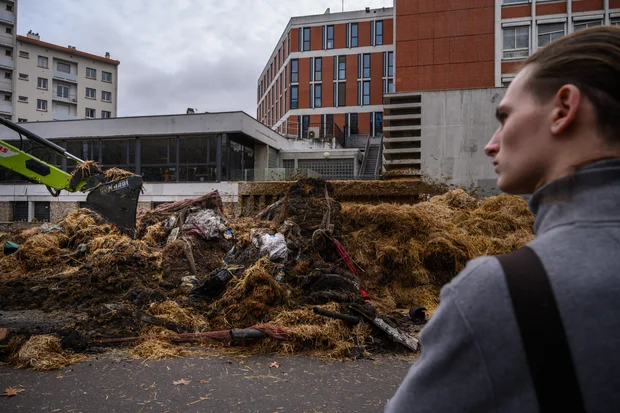
During December 2025, tense and growing standoff unfold between the French government and farmers across the country.
What began as protests over how the government is handling a cattle disease quickly expanded into broader anger over trade policies and economic stress in the agricultural sector.

As the year’s festive season approached, the government publicly warned farmers not to disrupt public spaces and highways with blockades during the Christmas holiday but faced mixed reactions from the farmers themselves.
What Sparked the Protests?
1. Lumpy Skin Disease and Cattle Culling
Initially, farmers took to the roads in protest over how the government was trying to contain an outbreak of lumpy skin disease. This virus affects cattle and can spread rapidly without effective containment.
The official policy required that if even one cow was infected, an entire herd would be culled to prevent further spread.
To many farmers, this response seemed overly severe and economically devastating, especially for small and medium‑sized operations that depend on every animal for their income and future.
Farmers voiced that when even isolated infections triggered mass slaughtering, they felt their livelihoods were being treated as expendable.
They also pointed out that vaccination, rather than mass culling, could be a viable alternative, especially when clean and healthy cattle were otherwise at low risk of spreading the virus.
This frustration grew quickly into broader action as farmers began to block key highways and rural roads, making it difficult for holiday travelers and essential deliveries to reach their destinations.
2. Economic Strain and Trade Deal Concerns
As the lumpy skin disease issue took root, so too did deeper economic grievances. French farmers have faced years of rising costs for fuel, fertilizer, energy, and labor, while revenues for many agricultural products have been stagnant or falling.
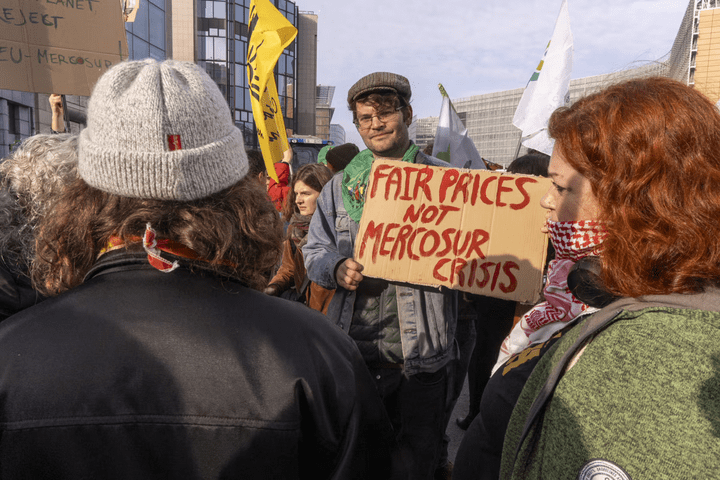
In this context, the controversial EU‑Mercosur free trade agreement became another core point of anger.
The Mercosur agreement, which the EU had negotiated with Brazil, Argentina, Paraguay, and Uruguay, aims to reduce tariffs and increase trade flows between the regions.
Many French farmers argue that this would allow cheaper agricultural imports that do not meet European environmental, animal welfare, or food safety standards, undermining local production and driving down prices that farmers rely on for survival.
Although the formal signing of the trade deal was postponed until January 2026 due to political pressure, farmers continued to push their opposition as part of the protest.
How the Protests Spread?
The protests were not uniform across the country but took shape in various regions with slightly different focuses and actions.
In southwestern France, farmers organised more than 80 blockades on major roads and motorways, including routes that connect cities and deliver goods to and from Spain. In some areas, they blocked access to ski resorts, creating economic ripple effects in the tourism sector.

In villages and towns throughout regions like Gironde, Ille‑et‑Vilaine, Haute‑Savoie, and Auvergne‑Rhône‑Alpes, farm unions and independent producers held demonstrations in front of local government offices, agricultural administration centres, and other symbolic locations.
In northern France, around the seaside town of Le Touquet, some farmers even positioned symbolic items like a coffin adorned with messages about the perceived death of agriculture and opposition to Mercosur, showing how emotionally charged the situation had become.
The protests drew support not only from traditional agricultural unions such as FNSEA, Jeunes Agriculteurs, Coordination Rurale, and Confédération Paysanne but also from local grassroots farming groups, non‑unionised producers, and sympathetic rural inhabitants.
Many participants told me they felt pushed beyond patience and needed their voices heard in a dramatic way.
Government Response and Christmas Warning
Faced with widespread disruption and the approach of the holiday season, the French government entered into negotiations with key agricultural unions.
Prime Minister Sébastien Lecornu held multiple meetings with union leaders to hear their demands and attempt to calm the situation.
The government then issued a public appeal for a Christmas truce, encouraging farmers not to stage blockades during the festive period.
Officials made it clear that they saw continued blockades as unacceptable, especially on major roads that families use to travel to see loved ones and that are vital for the delivery of food, medicine, and other essentials.
Government spokespersons said that authorities would take whatever actions were necessary to prevent further disruptions, including removing blockades if they continued through the holidays.
They emphasized a need for calm, dialogue, and respect for public order.
The government’s position was rooted in both practical concerns and political calculations. With Christmas approaching, there was pressure to ensure that travel, commerce, and public services could proceed unimpeded.
Officials also wanted to show that they were listening and willing to negotiate more deeply after the holiday period without letting protests become disruptive.
Farmers’ Mixed Reactions
When the government called for this Christmas truce, reactions among farmers and union leaders were mixed.
Some unions, including the FNSEA and Jeunes Agriculteurs, expressed support for the idea of a temporary pause in blockades to allow families to celebrate Christmas peacefully.

These groups said the key factor would be the content of the government’s written response to their demands, particularly around disease management policies and economic support measures.
However, other unions such as Coordination Rurale and Confédération Paysanne were much more skeptical. They said they saw little progress from national leaders in addressing the demands for halting mass culling without better vaccination strategies, improving access to vaccines, and reinforcing protections against unfair trade competition.
These groups have left the decision on whether to continue blockades up to local chapters, meaning that protests could still persist in certain regions.
Farmers on the ground often told me they supported a truce in principle but only if it was backed by real commitments that would address their core concerns.
Mere promises of dialogue, they said, were not enough when their families’ futures and local agricultural traditions felt threatened.
Broader Context
To fully understand this conflict, it helps to see it in the wider context of French and European agricultural movements.
Protests by French farmers are not new. Throughout the 2020s, agricultural communities have mobilised on multiple occasions, including road blockades, demonstrations, and targeted campaigns against policies seen as harmful to their interests.
Issues have ranged from diesel fuel taxes to competition from foreign imports and stricter environmental rules.
The current wave of protests is part of a broader pattern that includes not only national economic concerns but also debates about the identity and sustainability of European farming.
Many farmers feel that global trade pressures and heavy regulation make it harder to maintain traditional farming methods and rural livelihoods.
At the same time, public opinion polls in France showed that a majority of citizens supported farmers’ concerns about disease management and economic conditions, even if they did not endorse all protest tactics.
This public sympathy has made it more complex for political leaders to respond strictly with law enforcement rather than negotiation.
What This Means Going Forward?

As 2025 draws to a close, the situation remains unsettled. A Christmas truce may or may not hold, and the true test will be how the government responds to farmers’ demands in January and beyond.
Several key questions remain:
- Will the government revise disease containment strategies to favour vaccination and more humane practices that farmers find acceptable?
- Can France and the EU provide stronger economic safeguards for local agriculture in future trade deals?
- How will the broader agricultural community adapt to rising costs, global competition, and changing climate conditions?
The coming months will be crucial in determining whether this episode becomes a turning point in French agricultural policy or another chapter in ongoing rural unrest.
It also highlights how deeply farmers care about their land, animals, and way of life, and how strongly they will fight to protect them.
Conclusion
The French government’s warning to protesting farmers against Christmas blockades was not just a matter of public order. It reflected a larger clash between rural communities feeling ignored and political leaders trying to balance public needs, economic realities, and international obligations.
Farmers protested because they felt that policies on cattle disease, trade deals, and economic pressures threatened their livelihoods and the future of farming in France. The government responded with negotiation and a call for peace during the holidays, but the underlying issues remain unresolved.
As I see it, this conflict shows the importance of meaningful dialogue, structural support, and policy reforms that respond to real challenges faced by agricultural workers. Whether through blockades or talks, the voices of farmers will continue to shape the future of French and European agriculture in the years ahead.