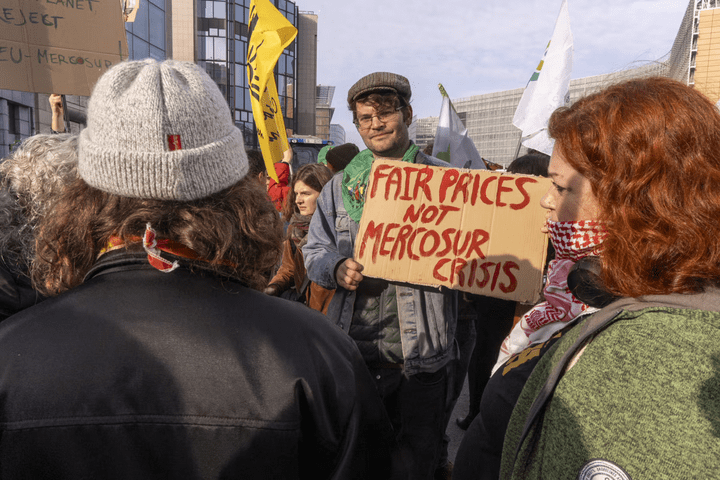
In late 2025, Greece is experiencing one of the most intense rural uprisings in recent memory, with thousands of farmers across the country protesting against the government over delayed European Union agricultural subsidies, systemic mismanagement, and broader economic grievances.
What began as demonstrations over late payments has evolved into a political crisis that threatens to erode the long‑standing support that rural communities once offered to the ruling New Democracy party.

As farmers block highways, borders, ports, and even airports, questions mount: Has the government genuinely lost the farmers — and if so, what does that mean for Greek politics, the rural economy, and the future of agriculture?
This issue matters not only because it reveals deep frustrations within the agricultural sector, but also because it highlights broader challenges facing Greece’s governance; from corruption scandals to rising production costs and socio‑economic divides between urban and rural voters.
The Roots of Rural Discontent
1. Delayed EU Subsidies and the OPEKEPE Scandal
The immediate catalyst for the protests has been prolonged delays in European Union Common Agricultural Policy (CAP) subsidy payments. These funds are critical for many farmers, often comprising nearly half of their annual income.
In 2025, delays worsened after a corruption scandal involving the state agency OPEKEPE, which administers EU agricultural funds in Greece, came to light. Investigations revealed that fraudulent claims had siphoned off millions of euros in EU aid, leading to a freeze on payments and intense scrutiny.
Farmers allege that the government’s handling of the scandal unfairly punished honest producers while undermining trust in state institutions.
As a result, protestors argue that routine subsidy processes have become slower, more opaque, and more politically fraught, leaving many without vital liquidity in the crucial agricultural season.
2. Broader Economic Pressures on Farmers
Delayed payments aren’t the only issue. Farmers are also grappling with high production costs, including expensive fuel, fertiliser, pesticides, and energy; expenses that have surged in recent years and squeezed profit margins.
Low producer prices for crops and livestock further aggravate financial pressures, driving many producers to the brink.
Layered on top of these economic stresses are extraordinary events such as livestock disease outbreaks (including sheep pox), natural disaster impacts like extreme weather, and rising input costs — all of which have amplified discontent with the government’s rural economic policies.
How Protests Have Escalated?
1. Mobilization Across the Country
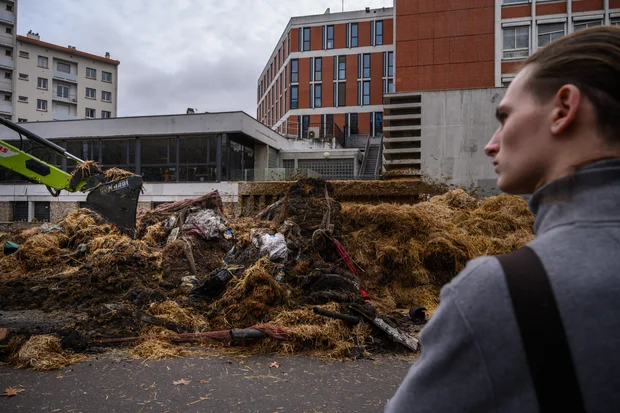
What began as regional demonstrations quickly grew into nationwide protest actions. Farmers have deployed thousands of tractors and trucks to block major highways (including the Athens‑Thessaloniki route) border crossings with Bulgaria, Turkey, and North Macedonia, and even occupied parts of airports, such as Heraklion’s international airport, at times halting flights.
These tactics signify a strategic escalation: not just local protests, but disruptions to national transport, trade corridors, and critical infrastructure, signaling the depth of farmers’ frustrations and their determination to press for decisive government response.
2. Political Fallout and Widening Rift
The protests have had visible political ramifications. Polling indicates that the farmers’ unrest has eroded government support in rural areas, where New Democracy once enjoyed strong backing.
Electoral shifts show that traditional allegiances are weakening, especially as protest leaders openly criticize government responses and promise further mobilization after the holiday lull.
Internal divisions within the ruling party have also emerged.
Some New Democracy members advocate for a harder line against blockades, viewing them as disruptive to everyday life and economic activity, while others call for deeper concessions and dialogue with protest leaders.
Government Responses (Dialogue, Aid, and Limits)
1. Calls for Talks and Negotiation
Recognizing the political and economic stakes, the government has repeatedly asserted its willingness to engage in dialogue with farmer representatives.
Prime Minister Mitsotakis and senior officials have called on protest leaders to enter negotiations and cease disruptive blockades, indicating that some appeals are coming from within protest networks for moderated engagement.
Deputy Prime Minister Kostis Hatzidakis recently highlighted that record levels of subsidies (€3.82 billion in 2025) have been disbursed to farmers, emphasizing expanded support for challenged sectors like livestock and cotton producers.
This package, officials argue, is evidence of government commitment to supporting agricultural livelihoods.
2. Government Tough Stance and Conditions
Despite offers of dialogue and record subsidy payments, the government has also demanded an end to blockades and more constructive engagement before advancing further concessions; framing continued roadblocks as unacceptable disruptions to national life and economic activity.
The administration has signaled that support measures have already been implemented and that no further extraordinary conditions will be met while disruptions persist.
This dual approach — combining support packages with conditionalities — seeks to balance appeasing rural grievances and maintaining public order, but has so far failed to mollify protest leaders who reject talks without tangible policy shifts.
Real‑World Impacts: Economic, Social, and Beyond
1. Economic Consequences
The ongoing protests and blockades have inflicted significant economic ripple effects. Disrupted supply chains, congested borders and roads, and delayed freight movements have caused losses in sectors far beyond agriculture.
Freight queues at customs stations and blocked highways have impacted commerce, tourism, and logistics, costing millions of euros per day in lost productivity, according to chamber estimates.
While farmers aim to highlight rural hardships, the economic fallout reverberates throughout Greece’s broader economy, raising concerns among urban populations and business groups.
2. Social and Community Impacts
The protests have deepened perceptions of a rural‑urban divide in Greece. Rural areas have long felt marginalised in national policy discourse, and the current standoff reinforces narratives of abandonment and neglect.
Younger farmers, in particular, are concerned about the future of farming as a viable livelihood; some are leaving rural regions altogether in search of opportunities elsewhere.
Communities directly affected by blockades also face day‑to‑day challenges, such as limited access to markets, healthcare, and services.
While solidarity within rural networks remains strong, external perceptions are mixed; with some urban residents sympathizing with farmers’ plight and others frustrated by the disruptions.
Core Demands and Government Positions
| Farmers’ Core Demands | Government Position |
|---|---|
| Immediate payment of delayed EU subsidies | Payments being disbursed, record support provided |
| Tax‑free agricultural diesel | Not yet agreed; broader cost support discussed |
| Electricity price cap for farming | Under negotiation, with conditional dialogue |
| 100% compensation for natural disaster losses | Expanded but contested |
| Guaranteed minimum producer prices | Not accepted; seen as EU rule conflict |
| Structural reform of subsidy agency OPEKEPE | Agency restructured; government emphasises oversight |
A Political and Social Crossroads
The question posed in Athens (“Has the government lost the farmers for good?”) touches on deeper fractures within Greek society. Long‑standing political loyalties are eroding as rural voters express overt frustration with both policy outcomes and political leadership.
What started as protests over delayed EU subsidy payments has evolved into a broader challenge to governmental legitimacy in rural Greece.
The farmers’ protests and the government’s handling of them illustrate a complex interplay between economic vulnerabilities, administrative failures, political trust, and structural reforms.
As protests continue and negotiations stall, both sides face mounting pressure to find common ground; not only to ease immediate tensions but to restore confidence in agricultural policy, rebuild rural economic resilience, and bridge the widening rural‑urban divide.
Looking ahead to 2026, the Greek government’s ability to navigate these challenges (through transparent dialogue, responsive policy, and credible reform) will be central to its political future and to the stability of the rural economy.
Failure to do so may have lasting implications for electoral politics, social cohesion, and the survival of small and medium‑sized farms across the Greek countryside.