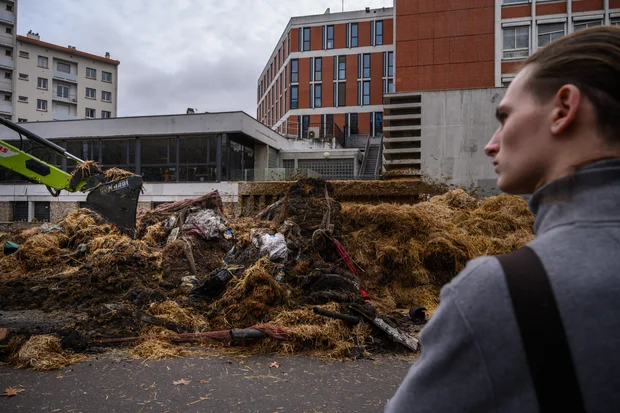
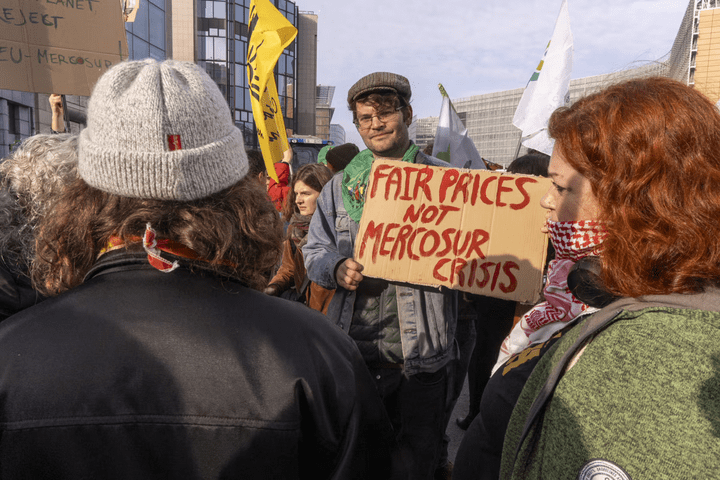
In December 2025, France face a growing crisis as farmers across the country took to the roads to protest government policies. What started as anger over how the government handled an outbreak of cattle disease soon blended with broader concerns about trade disputes, economic pressures on farming families, and frustration with national and European agricultural strategies.

By mid‑December, the situation had escalated to the point where the government publicly called for a Christmas truce, urging farmers not to block roads and disrupt travel during the holiday season.
The call for a truce was meant to ease tension and protect public movement, but it also revealed how deep the divide has become between farmers and policymakers.
What Sparked the Protests?
The protests that have swept across France this December were not spontaneous. They were rooted in a series of policies and events that farmers saw as threatening their way of life.
1. Lumpy Skin Disease and Mass Culling Orders
The immediate trigger was the outbreak of lumpy skin disease, a contagious viral condition affecting cattle. French authorities responded by ordering the culling of entire herds when the disease was detected in any part of a herd.
For many farmers, this policy felt excessive, destructive, and disproportionate. It meant that a single infected animal could lead to the loss of well‑managed herds built up over years, possibly decades.
Farmers told me they felt that their livelihoods were being sacrificed in the name of rapid disease control without sufficient regard for the economic and emotional cost to families working the land.
The pain of losing an entire herd to protect against the disease was compounded by a feeling that alternatives, such as accelerated vaccination campaigns, were not being fully supported early in the outbreak.
2. Broader Discontent Over Trade and Policy
Beyond the disease response, the protests quickly came to include broader frustrations. A key issue was the European Union’s proposed trade deal with the South American Mercosur bloc, which includes Brazil, Argentina, Uruguay, and Paraguay.
Farmers fear that cheaper agricultural imports under such a deal could undercut their prices and flood the French market with products produced under lower environmental and animal welfare standards.
The expected signing of the Mercosur agreement was postponed to January 2026 amid political pressure from France and other EU states concerned about its impact on domestic agricultural sectors.
Still, the uncertainty and fear surrounding the deal added fuel to the protests and widened the scope of farmer grievances.
Farmers have long expressed frustration with broader pressures including rising costs of fuel and fertiliser, increasingly complex regulations, and competition from cheaper imports.
In this context, the disease policy became a catalyst that drew attention to wider economic and political concerns within French agriculture.
How the Protests Unfolded?
When I followed the news and reports from the ground, I saw a pattern of escalating action almost every day across different regions of France.
1. Blocking Roads and Spread of Actions
From the southwest to the north, farmers used their tractors and equipment to block major motorways and regional roads.
The A64 motorway, connecting Toulouse to Bayonne, became one of the most affected routes, with tractors and makeshift barricades slowing or halting traffic for days in a row.
Additional blockades spread to parts of the A63, A65, A20 and A89, complicating travel for both residents and holiday travellers heading toward ski resorts, airports, and rail hubs as Christmas approached.
The disruptions triggered responses from regional tourism boards and local businesses who tried to provide real‑time information for travelers while expressing sympathy for the farmers’ situation.
2. Dramatic Symbolic Actions
Protesters also employed bold symbolism to make their point. In northern France, tractors gathered in front of President Emmanuel Macron’s residence in Le Touquet with a coffin labelled “RIP Agri” and “NO Mercosur,” signifying what farmers saw as the death of French agriculture under current policies.
In the southern town of Avignon, farmers even threw potatoes at public buildings in a dramatic display of dissent.
Farmers across the country made it clear: what they were protesting was not limited to cattle disease policy but tapped into a deeper sentiment of rural distress and feeling unheard by national leaders.
Government Response and the Christmas Truce
Faced with ongoing disruptions and rising public concern, the French government stepped in with a two‑pronged approach: negotiation and a public appeal for a Christmas truce.
1. Negotiations with Unions
Prime Minister Sébastien Lecornu held talks with key farm union leaders to hear their concerns and explore solutions. These discussions were a critical part of the government’s attempt to show responsiveness and begin rebuilding trust.
According to union representatives, Lecornu committed to sending a detailed written response addressing various agricultural issues, including cattle disease policies and economic support measures.
The unions said that this response would be decisive in determining whether protests would be paused or continue.
Farm organisations such as the FNSEA, Coordination Rurale, and Confédération Paysanne played a role in these talks, though they were divided in their willingness to support a pause in actions.
Some groups expressed disappointment with the progress of discussions, especially regarding limits on the mandatory culling policy. Others said the protests would continue unless substantial policy changes were offered.
2. Christmas Truce Appeal
To ease travel disruption during the festive season, the government appealed for a Christmas truce. Officials, including spokespeople, emphasized that blockades could not continue if they would impede movement and essential services during holiday week.
They warned that authorities were prepared to take necessary actions to prevent future blockades and ensure safety on major routes.
The FNSEA and some other organizations said they were open to a temporary pause in protests to respect public travel needs, but they also maintained their overall opposition to the policies they were protesting.
Other unions, especially those with more hardline positions, left decisions about actions up to regional members, meaning that protests could persist in some areas despite the truce call.
Wider Impact and Public Reaction
1. Effects on Travel and Local Economies
The protests and resulting blockades had real‑world effects on travel and local economies. Roads clogged with slow‑moving tractors delayed holiday departures, interrupted logistics and freight transport, and made travel around southwestern France more unpredictable.
Tourists and local travelers faced long delays, and transport agencies urged people to allow extra time for journeys.
Local businesses, from ski hire shops to restaurants and service providers along major travel routes, were caught between supporting the farmers’ cause and coping with the economic disruption caused by blocked roads.
2. Public Sympathy and Political Dimensions
Public reactions were complex. Many people expressed sympathy for farmers’ struggles, especially in rural communities and provinces directly affected by disease outbreaks and economic anxiety.
However, frustration also grew in some urban areas where travel disruption and logistical challenges hit daily life for commuters and holiday travelers.
The protests also took on political dimensions, as farmers’ concerns intersected with debates over national sovereignty, food security, and the role of global trade agreements.
Farm leaders spoke of defending French agricultural identity, while critics questioned whether the government had done enough to balance public health needs, economic stability, and rural concerns.
Broader Agricultural Context
The unrest in France is not an isolated incident but part of a broader pattern of farmer protests in Europe that have been building over several years.
Since late 2023, farmers in several EU countries have protested trade deals, environmental regulations, and economic pressures that they see as threatening their livelihoods. These movements have included road blockades, demonstrations in capital cities, and coordinated actions coordinated across borders.
The French protests of 2025 reflect both long‑standing rural frustrations and new pressures from disease outbreaks, rising input costs, and uncertainty over trade deals like the Mercosur agreement.
Farmers are challenging not just specific policies but the structure of agricultural support systems and the place of rural producers in national and international decision‑making.
What It Means Going Forward?
As 2025 ended and the Christmas season approached, the situation remained unresolved. The Christmas truce was an attempt to reduce disruption, but many of the fundamental disputes remain on the table.
Farmers, unions, and policymakers would return to discussions in January, hoping either to find compromise or face renewed demonstrations.
The core demands include:
- Revising disease control policies to prioritise vaccination and protect herds without unnecessary economic loss
- Clarifying terms and safeguards in trade agreements to prevent cheap imports from undercutting domestic agriculture
- Providing stronger financial support and structural reforms to address rising costs and rural economic pressures
The outcome of these negotiations will likely shape French agricultural policy and its relationship with the EU in the months and years ahead.