A remarkable event unfold in Brussels that many people around the world might not fully understand yet. Thousands of farmers from across Europe converged on the Belgian capital to protest a planned European Union trade agreement with the Mercosur bloc of South American countries.

They brought tractors, blocked major roads, clashed with police, and made clear statements about what they fear this deal would mean for their future.
Their actions helped create such political pressure that EU leaders postponed the signing of a long‑negotiated agreement until early 2026.
What is the Mercosur Trade Deal?
The Mercosur bloc includes Brazil, Argentina, Paraguay and Uruguay. The proposed agreement with the EU is one of the largest trade deals in history by market size.
If it is ratified, most tariffs between the EU and the South American bloc would be phased out over a number of years, creating a free‑trade zone covering about 780 million people and nearly a quarter of global economic output.

Supporters of the deal say it would diversify EU trade, helping Europe reduce reliance on a small number of partners like China, and offer new export opportunities for European goods such as machinery, cars, wine and spirits.
They also argue that tariffs cuts would make EU producers more competitive in global markets.
However, critics, especially farmers and agricultural unions, argue that the deal will let cheaper South American agricultural products, such as beef, poultry, sugar, rice, honey and soybeans, into the European market.
They say these imports often come from producers that do not meet the same environmental, health or animal welfare standards as EU farmers, creating what they call unfair competition that could weaken rural economies.
Why Farmers Chose to Protest in Brussels?
1. Economic Fear of Being Undercut
European farmers, especially in livestock and crop sectors, told me they worry that cheaper imports under the Mercosur deal could flood European markets. They believe this would drive down prices, cutting into farm income.
For years they have struggled with rising costs for fuel, fertilizer, machinery and labor while retail prices for many farm products have not kept pace.
For a Belgian farmer, the fear was that cheaper meat and soybeans from Brazil and Argentina would displace locally produced goods because producers there operate under different rules and lower costs. He said the deal could destabilize European agriculture at a time when farmers were already under pressure.
2. Uneven Production Standards
Farmers also said they felt it was unfair that products from Mercosur countries might not meet stricter European environmental and health standards.
European rules on pesticide use, animal welfare, land protection and food safety are among the toughest in the world. Many farmers told me they saw the negotiated deal as a threat to the European model of sustainable family farming.
3. Broader Agricultural Frustrations
The protest was not just about the trade deal. Farmers in France and Belgium have been demonstrating for many months over agricultural policies, including how governments handle disease outbreaks among livestock and disputes over the Common Agricultural Policy reforms after 2027.
These protests now link national issues to a larger European decision, showing how rural communities feel sidelined by policymakers.
What Happened in Brussels?
On 18 December 2025, the streets around the European Parliament, the Europa Building and Place du Luxembourg fill with tractors and farmers from many EU countries.
Estimates suggest up to 10,000 demonstrators participated in various actions around the EU summit.
1. Road Blocks and Tractors
Hundreds of tractors were driven into central Brussels and parked on major avenues, blocking traffic and access routes around EU institutions.
Farmers wanted their actions to be visible and unavoidable for both EU leaders and the media.
2. Symbolic Actions and Clashes
Some protesters threw potatoes and eggs, and some set off fireworks as police attempted to keep order. In certain areas, tensions rose and police used water cannons and tear gas to push back crowds.
There were reports of demonstrations involving fire and smoke from tires and other materials as a dramatic expression of frustration.
3. Messages Directed at Leaders
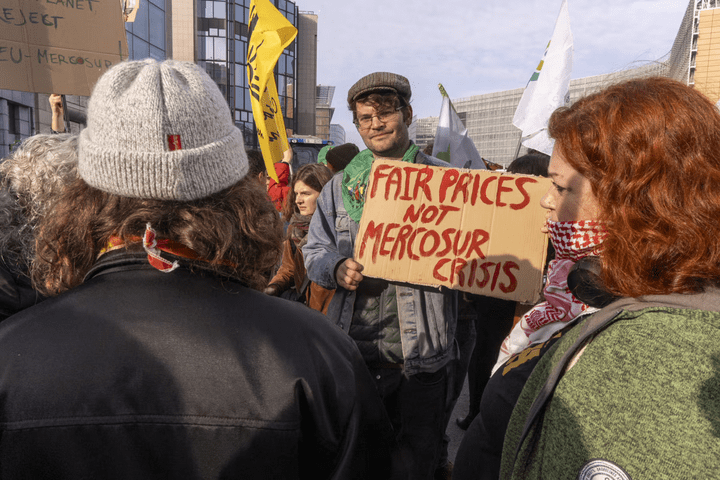
Many farmers gathered near the official buildings where EU leaders were meeting. Their slogans were simple: “No to Mercosur,” “Protect European farmers,” and “Fair competition now.”
These protests were timed to coincide with the summit precisely because farmers wanted to influence leaders while they were discussing whether to sign the trade pact.
The mood was intense. Some participants who said they were not simply protesting one deal but were pointing to a broader pattern: that European agricultural policy has often ignored the realities of rural life and the needs of small and medium producers.
Government and Official Response
The farmers’ actions had an immediate political impact. Originally, the long‑negotiated Mercosur trade agreement was expected to be signed at or around the summit.
But facing strong resistance from farmers, ministers in key EU capitals such as Paris and Rome, and public opinion about the deal’s impact on agriculture, leaders decided to delay the signing until January 2026.
European Commission President Ursula von der Leyen and European Council President António Costa remained publicly committed to the trade pact, emphasizing its importance for diversifying EU trade and strengthening ties with Latin America.
Yet, the need for unanimous approval by EU member states and the strong opposition from France and Italy made it difficult to proceed.
Some governments, especially in Germany, Spain and the Nordic countries, argued that the agreement would benefit European industries overall and reduce reliance on trade with China or other dominant markets.
However, these economic arguments had to be balanced against political sensitivity toward rural constituencies.
The delay did not mean rejection, but it did mean that EU leaders and the European Commission would have to rethink how the deal is framed and what assurances they can offer to farmers.
Farmer Diversity of Opinion
One aspect that emerged when I examined who participated is that not all farmers across Europe oppose the trade deal in the same way.
In France, protests also reflected pent‑up frustration from earlier demonstrations related to disease control and government agricultural policy. In Belgium and Eastern Europe, farmers were critical about how cheap imports from outside the EU, including Ukraine, have affected markets over the past years.
Some sectors, particularly in dairy and wine, see opportunities in expanded markets if the deal is carefully structured. These farmers argue that access to a larger market could help them sell products abroad.
But the loudest voices on the streets, especially among beef, sugar and grain producers, have been those who fear losing ground to cheaper imports with lower production costs and fewer environmental constraints.
This diversity of views shows that European agriculture is not monolithic and that internal debates continue even within farming communities.
Broader Context of European Farmer Protests
The Brussels protest fits into a wider wave of farmer activism across Europe throughout the 2020s. Farmers have rallied over issues ranging from low food prices and high input costs to new environmental measures under the EU’s Green Deal and concerns about imports from non‑EU countries.
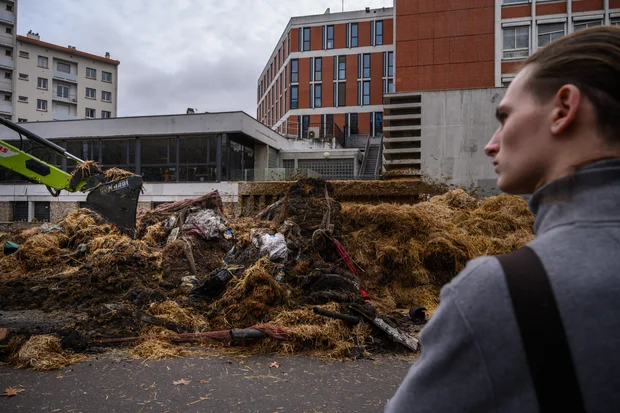
Tractor blockades, manure dumps and symbolic actions have become familiar tactics in multiple nations.
These movements often reflect underlying tensions between rural and urban priorities, economic pressures on small‑scale producers, and debates about how environmental and trade policies should be implemented without harming local communities.
What It Means Going Forward?
As we look ahead to early 2026, negotiators will likely revisit key concerns flagged by farmers and EU governments. These include:
- Reciprocity of standards so that imported products meet environmental and health requirements similar to EU rules.
- Safeguard mechanisms in the agreement that allow temporary suspension of tariff benefits if a sensitive sector suffers sudden damage.
- Stronger monitoring and enforcement of food safety and production standards at EU borders.
- Compensation or support measures for farmers adversely affected by increased competition.
The way these issues are addressed will determine whether the deal can go forward without further large‑scale protests.
Farmers have also shown they can be politically influential as a group when mobilized, and this may affect broader European debates around trade, climate policy and agriculture funding for years to come.