French farmers escalate their protests across the country in a way that disrupted daily life, blocked major motorways and even affected train services.

What began as growing anger over the government’s handling of a cattle disease outbreak quickly spread into a broader movement about trade, regulation and the future of rural life.
The scale of the blockades surprised many people, but when you look closely at what farmers are reacting to, it becomes clearer why this moment has become so intense and visible.
How the Protests Started and Spread?
What kicked off the unrest was frustration over the government’s policy in response to lumpy skin disease in cattle.
Under current health rules, even a single infected animal can trigger the culling of an entire herd, a requirement that many farmers see as both economically devastating and unnecessary.
Farmers feel that these policies destroy years of investment and irreplaceable livestock quickly. That kind of loss is not just financial it hits at the heart of family farms and local rural economies.
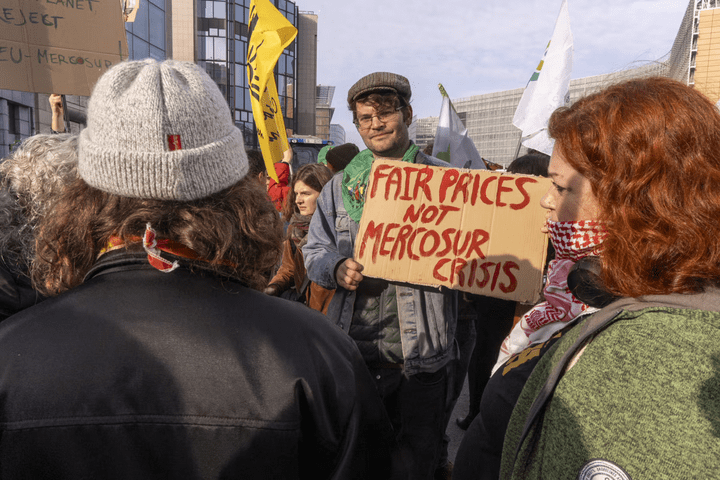
Their anger about the cull policies became a rallying point, combining with long‑standing economic pressures and discontent over international trade deals like the EU‑Mercosur agreement.
Before this week’s escalation, protests had spread from cattle‑rearing regions in the southwest of France to other areas, indicating that what started as a local agricultural dispute had become a nationwide issue.
What Has Changed This Week?
Over the past several days, the action intensified in several clear ways:
1. Blockades on Major Motorways
Farmers organized blockades on key motorways across southern and central France. Tractors, hay bales and other equipment were parked in lanes, slowing or stopping traffic.
Authorities reported multiple motorway blockages on December 17 and 18, especially on routes that are vital for holiday travel and freight transport.
For example:
| Motorway | Region | Type of Disruption |
|---|---|---|
| A64 | Southwest | Protests slowed traffic between Toulouse and Bayonne |
| A63 | South‑West near Bordeaux | Full blockages reported |
| A9 | Southern junctions | Delays and slow‑downs |
| A54 | Garons | Entrances and exits affected |
| RD135 | Nîmes area | Localised closures |
These blockades were not just symbolic. They caused real delays for commuters, freight hauliers and travelers, especially as France entered the pre‑Christmas travel season.
2. Train Services Disrupted
In addition to road blockades, there were reports that farmers’ actions affected train lines and access to stations in some areas.
Trains were delayed or slowed because access to tracks was impeded near critical junctions, forcing rail operators to adjust schedules and passengers to endure disruption.
For travellers, especially those planning holidays, this has meant uncertainty and longer transit times. Airlines and buses generally continued to operate normally, but reaching airports or stations became more difficult when road access was limited or slowed.
3. Roundabout Blockades and Symbolic Actions
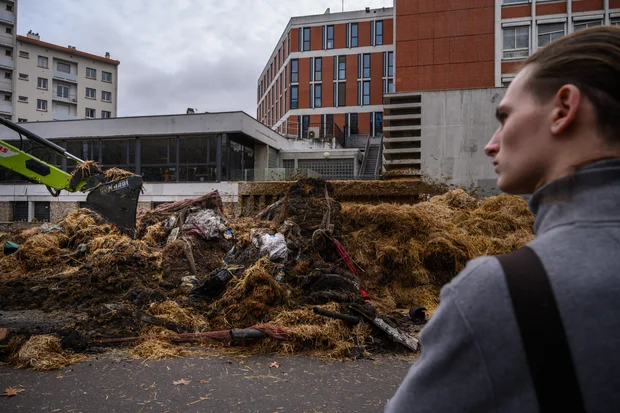
Farmers also used smaller local actions like blocking roundabouts near town centres and building straw or hay barricades.
These demonstrations often included symbolic gestures like piling farm waste near public buildings, echoing protests seen earlier in the month.
Why Farmers Say They are Escalating?
From what I have gathered through reports and union statements, several key grievances lie behind the escalation:
1. Lumpy Skin Disease Policies
Cattle farmers in particular are furious at the blanket policy that requires entire herds to be slaughtered when even one animal tests positive for lumpy skin disease.
They argue this strategy ignores modern veterinary science and devastates farm operations economically. Many feel a vaccination‑first approach would be more rational, humane and economically sensible.
Farm unions and individual farmers have said that fear of losing everything from one small infection has pushed them to take more dramatic action.
2. Economic Pressures in Farming
Even before the disease outbreak, farmers faced rising costs for fuel, fertiliser, equipment and labour, while prices for their products have stagnated or sometimes fallen. This long‑term economic pressure has left many rural producers feeling squeezed.
For many, the disease policy was a tipping point after years of feeling undervalued and economically insecure.
3. Opposition to EU Free Trade Deals
Another major concern is the Mercosur trade deal between the EU and South American countries.
Farmers fear that opening markets to cheaper imports from Brazil, Argentina and other Mercosur nations could undercut domestic prices and add competition that local producers are not equipped to handle. These trade fears have resonated with farmers across France, not just those raising cattle.
The Mercosur deal has been delayed until early 2026 in part because of these protests and political pressure, showing how agricultural unrest is influencing European‑level decisions.
Broader Rural Frustration
Farmers feel that national and EU leaders make decisions about agriculture without listening to life on the ground.
Many believe that policies are shaped more by urban priorities or global trade goals than by the realities of farming communities. This sense of exclusion and misunderstanding has contributed to the scale of current protests.
How Authorities are Responding?
The French government has taken a mixture of negotiation and caution in trying to manage the protests without allowing major social disruption.
1. Christmas Truce Negotiations
Prime Minister Sébastien Lecornu and government officials held talks with major farm unions, including the FNSEA and Jeunes Agriculteurs, in an attempt to broaden dialogue and reduce tensions.
In public statements, union leaders expressed some openness to a Christmas truce if concrete proposals came from the government that addressed their key demands.
However, not all organizations supported a complete pause, and groups such as Coordination Rurale and Confédération Paysanne signalled they might continue or resume protests after any unofficial break.
2. Government Messaging and Warnings
Officials have also warned that continued blockades and disruptions could be cleared if they threaten public safety, especially on key transport routes during holiday travel.
They emphasized the importance of allowing families to reach destinations safely during Christmas and urged farmers to consider that broader public impact.
3. Vaccination Efforts
To address the disease outbreak itself, authorities drafted in military support to accelerate large‑scale vaccination efforts in affected cattle regions, particularly in southwest France.
This included transporting hundreds of thousands of doses to reach more animals quickly.
Impact on Daily Life and the Public
As someone closely following this situation, I can say these protests are more than agricultural news. They have real impacts on people’s daily routines.
1. Travel Disruptions
Motorway blockades have made travel unpredictable. People planning to drive to see family, go skiing or reach airports and stations have had to allow more time, reroute journeys or, in some cases, cancel plans altogether.
Freight trucks carrying goods between regions and across borders face delays as well.
Logistics companies have warned that deliveries could be slowed and that supply chain disruptions may increase costs for businesses.
2. Public Reaction
Public sympathy for farmers is significant in rural areas, where many people live close to agriculture. However, in urban centres affected by travel delays, frustration has also grown.
Many people say they understand farmers’ grievances but worry about the social cost of prolonged blockades during a key holiday season.
Broader Historical Context
These protests are not happening in a vacuum. France has a long history of farmers demonstrating when they feel cornered by policy.
Groups such as FNSEA, Coordination Rurale and Confédération Paysanne have led actions over subsidy changes, environmental rules and market pressures in the past.
In the early 2020s we saw repeated protests across Europe around agricultural policies, including concerns about nitrogen emissions and rural wages.
The current movement shares some of those underlying themes but is distinct in how it combines disease management, trade deal opposition and wider economic frustration.
What Comes Next?
As we move into 2026, the talks between farmers, unions and government will be crucial.
The Mercosur trade deal vote uncertainty gives policymakers space to negotiate protections and concessions that might satisfy both agricultural interests and broader economic goals.
Farmers are closely watching whether policy shifts will address their specific demands on disease control, economic compensation and trade safeguards.
For many, this is not just a seasonal protest but a sign of deep structural challenges in French and European agriculture.