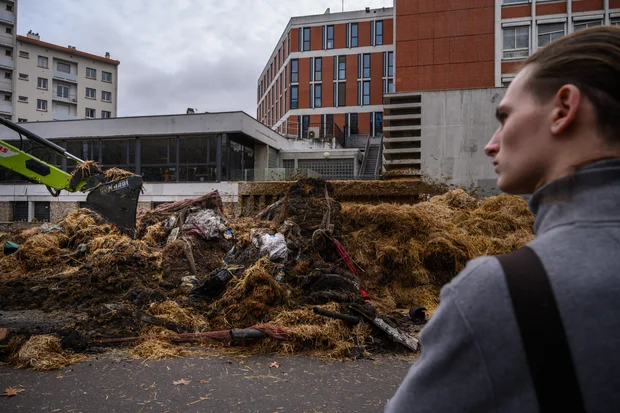
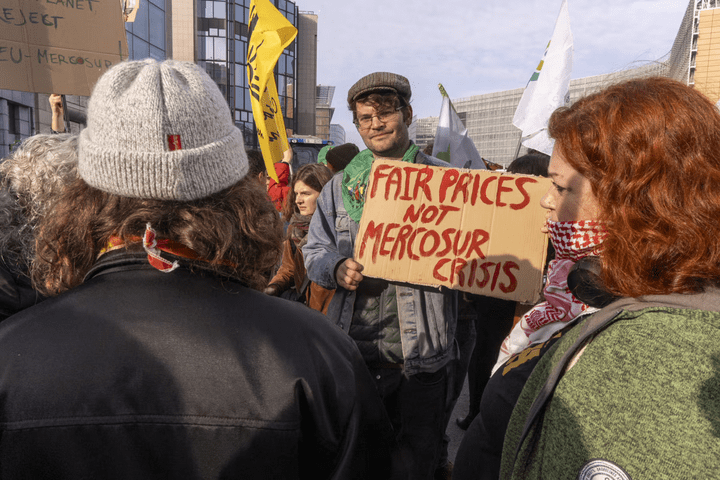
Greece is experiencing one of its most drawn‑out and disruptive farmers’ protests in years. Across the country, agricultural producers have been blocking roads and highways, demanding solutions to deep‑rooted economic issues that threaten their livelihoods.
In late December 2025, Prime Minister Kyriakos Mitsotakis publicly reiterated the government’s willingness to enter into dialogue with the farmers; but with a caveat: no agreement on what officials call “unreasonable” demands.

The dispute matters because it touches on fundamental questions about economic fairness, rural sustainability, and social stability in a country where agriculture remains a critical sector, not just for food production, but for regional economies and national identity.
The standoff has disrupted transport and commerce, tested public patience during the holiday season, and raised broader questions about how the state balances competing pressures from European Union policies, domestic budget limits, and grassroots protest movements.
What Prime Minister Mitsotakis Said?
In a weekly Sunday message posted on social media, Prime Minister Mitsotakis made a clear statement:
“We are open to dialogue, but not to the unreasonable.”
— Kyriakos Mitsotakis, December 21, 2025
According to his message, farmers submitted 27 demands to the government — of which:
- 16 have been satisfied or are being positively addressed
- 4 are under review or discussion
- 7 cannot be resolved due to conflicts with EU rules (specifically the Common Agricultural Policy) or because they are financially infeasible for the state.
This framing positions the government as responsive but fiscally responsible, emphasizing the complexity of balancing farmers’ needs with broader economic and regulatory constraints.
Background: What’s Fueling the Protests

1. Delayed EU Subsidy Payments
One of the main sparks for the protests has been delays in subsidy payments owed to farmers under the European Union’s Common Agricultural Policy (CAP).
Payments from the Greek agency OPEKEPE were held up after investigations into fraudulent claims led to scrutiny and suspension of funds — leaving many farmers without expected income at a critical point in the season.
Historically, EU subsidies make up a large portion of Greek farmers’ annual revenue, and delays create immediate cash‑flow problems for producers already squeezed by high costs.
2. High Production Costs
Farmers are also demanding relief from rising costs, especially energy prices, fuel, fertilizer, and other inputs. Many argue these costs make farming economically unviable without substantial government support or tax relief.
3. Livestock Health Crises and Compensation Issues
Greece has recently faced sheep pox and other livestock health emergencies, forcing culls and quarantines with farmers claiming insufficient state compensation.
These outbreaks have intensified frustrations, especially among livestock breeders who see inadequate support and delayed payments compounding their financial vulnerabilities.
The Protests on the Ground
1. Widespread Road Blocks and Disruption
Farmers have taken their protests nationwide, using tractors and farming equipment to block major highways, border crossings, and even ports and airports.
These blockades have disrupted transportation and logistics chains, particularly along the Athens‑Thessaloniki corridor, one of the country’s most critical routes.
Some farmers agreed to temporarily reopen routes during the Christmas holiday period to reduce civilian hardship, but many remain camped in permanent or rotating shifts at key locations.
2. Escalations and Resistance to Dialogue
Despite government calls for talks, many farmers have been skeptical. Some unions and protest committees have rejected overtures for meetings unless specific demands are acknowledged beforehand; such as minimum guaranteed prices, tax breaks on diesel, and full compensation for natural disaster losses.
In some areas, farmers have even signaled intentions to intensify blockades after the holidays, with preparations underway to return strong and unified when protests resume.
Government Response; Dialogue vs. Limits

1. Willingness to Talk
The Mitsotakis administration has repeatedly stated its readiness to engage in meaningful discussions with farmer representatives and has invited them to formal talks through the Ministry of Rural Development and Food.
Officials have also announced additional support measures, such as extra funding for specific crops like alfalfa and compensation for production losses due to disease or market disruption.
2. Rejecting “Unreasonable” Requests
The government’s emphasis on avoiding “unreasonable” demands is significant. It reflects concerns about:
- Budgetary feasibility
- EU regulatory constraints
- Setting precedents that could complicate fiscal policy
This tension between fiscal and regulatory boundaries on one hand, and grassroots urgency on the other, is a familiar dynamic in Greek political debates; particularly in sectors like agriculture that are traditionally seen as socially sensitive but economically tenuous.
Perspectives from the Fields
1. Farmers’ Viewpoint
Many farmers feel that the government has not done enough; particularly on rapid payment of owed subsidies and meaningful long‑term relief against rising costs.
Some view the government’s offers as incremental and insufficient relative to the scale of their financial pressures.
Statements from grassroots leaders emphasize a sense of economic abandonment and existential threat to farming livelihoods, echoing sentiments that without major concessions, many producers face ruin.
There is also internal variation among farmers: while some are open to negotiation and compromise, others advocate for tougher resistance and an escalation of protest tactics.
2. Government and Policymaker Perspective
Government officials defend their stance as balanced and responsible, arguing that dialogue remains open where feasible and that many demands have already been met or are actively under review.
They stress that some requests; especially those that contravene EU regulations, cannot be fulfilled without risking adverse legal or budgetary consequences.
Officials have also hinted at exploring contingency measures if the protests intensify, including administrative actions to manage disruptions.
The Broader Impact

1. On the Public
The protests have directly affected everyday Greek life; especially travel and logistics during the high‑traffic holiday season.
Blockades forced drivers onto detours, delayed freight shipments, and in some cases contributed to tensions between rural and urban populations.
2. On the Economy
Agriculture is an important sector in Greece; not only economically but socially. Prolonged unrest threatens crop delivery schedules, export earnings, and supply stability for both domestic and international markets.
The disruptions could have downstream effects on food prices and rural investment.
3. On Politics
This standoff comes at a time when the government is under broader pressure from economic headwinds and public scrutiny.
Mishandling of farmer grievances could have political costs, particularly in regions heavily dependent on agriculture. How the government navigates this conflict may shape voter attitudes and rural political dynamics.
Where Do Things Go From Here?
The December 2025 confrontation between Greek farmers and the government illustrates the volatile intersection of grassroots protest and public policy.
While the Mitsotakis administration insists on dialogue, it has firmly drawn a line against what it labels “unreasonable” demands — a stance that has so far failed to satisfy all protesting groups.
The path forward remains uncertain. Key factors include:
- Whether farmer representatives are willing to enter negotiations without preconditions
- How the government frames concessions within EU policy limits
- The potential for protest escalation after the holiday pause
- How public opinion and economic conditions evolve
What is clear is that both sides are currently entrenched, and resolution will likely require not just negotiation on specific demands, but a deeper process of trust‑building and policy innovation that addresses the structural challenges facing Greek agriculture.
As winter gives way to 2026, the coming weeks could determine whether this protest becomes a historical turning point or another chapter in Greece’s long‑running debates over rural policy, economic equity, and democratic expression.