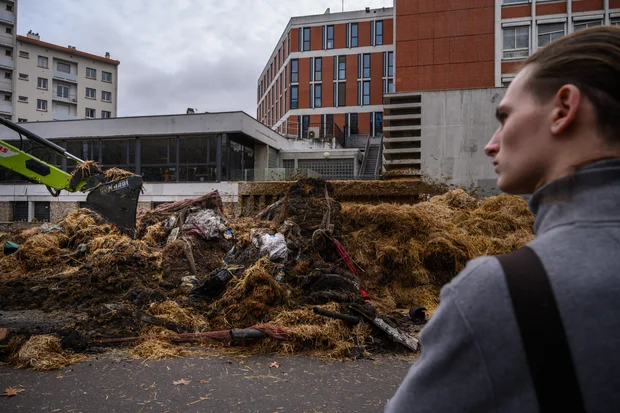
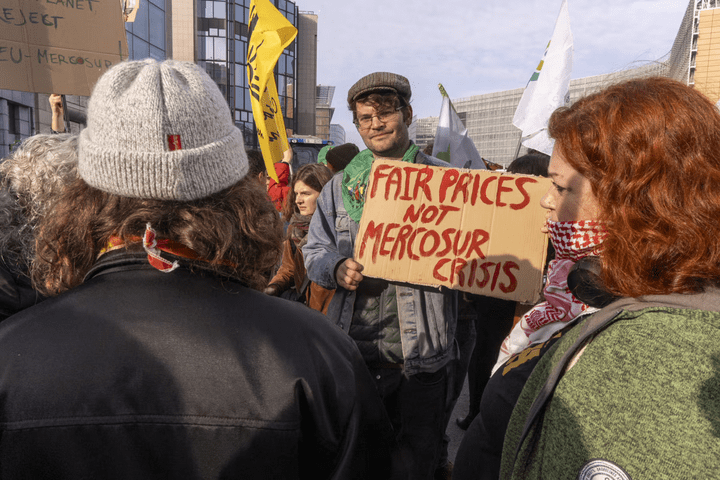
In December 2025, many people witnessed one of the most significant farmer demonstrations in recent European history when thousands of farmers from across the continent descended on Brussels to protest the European Union’s proposed trade agreement with the Mercosur bloc.

What made this moment so striking was that it occurred at the same time EU leaders were meeting in the Belgian capital for a major summit.
Farmers brought tractors, blocked roads, and made powerful statements about the future of European agriculture and rural life. Their actions helped delay the signing of a trade deal that had been negotiated for more than two decades.
What Sparked the Brussels Protest?
The protests in Brussels grew out of deep concerns about the European Union’s Mercosur trade agreement. This long‑negotiated pact would open up EU markets to a significant volume of agricultural products from the South American trade bloc Mercosur, which includes Brazil, Argentina, Paraguay and Uruguay.
Farmers fear that cheaper imports under this deal could undercut local production, threaten farm incomes, and weaken European standards on environmental protection and food safety.

The deal has been under negotiation for more than 25 years. Supporters argue it would create one of the world’s largest free‑trade areas and boost exports of European industrial and agricultural products.
Critics, including many farmers, social movements and environmental groups, say the pact may lead to unfair competition and environmental harm, especially if imported food does not meet the EU’s strict production standards.
In the weeks before the summit, farmer discontent had already been boiling over in several European countries, including France, where agricultural protests related to disease control and trade concerns have drawn national attention.
The Brussels demonstration brought together these international frustrations at a single moment.
Why Farmers Were So Angry?
When I looked into the farmers’ motivations, their concerns fell into several key areas:
1. Fear of Unfair Competition
At the heart of the protests was fear that the Mercosur deal would allow large quantities of beef, poultry, sugar, soy and other agricultural products to enter the EU at lower tariff rates than before.
Many European farmers believe these imports could be priced far below what EU producers can afford to supply, given Europe’s higher environmental, animal welfare and food safety standards.
Farmers argue that even if tariff reductions only apply to a relatively small share of total market volume, co‑ops and larger corporate players could use this as leverage to further depress prices overall, squeezing small and medium‑sized farms.
2. Concerns Over Standards
Protesters also worried that foreign agricultural products would not be held to the same health, environmental and labour standards that EU farmers must follow.
European food safety and animal welfare regulations are among the strictest in the world, and many farmers felt this agreement could erode that advantage.
3. Broader Economic Pressures
The trade deal was only part of the picture. Farmers are also facing tight profit margins due to rising fertilizer, fuel and energy costs. Many feel that agricultural policy in the EU has not done enough to protect family farms or offer fair economic support in a rapidly changing global market.
Worries about the EU’s Common Agricultural Policy funding and environmental tax changes also fed into the discontent.
4. Sense of Being Ignored
Finally, farmers told me they felt their voices were not being heard in high‑level trade discussions that have been happening for decades.
Negotiations often take place far from farms in Brussels or foreign capitals, leaving producers feeling disconnected from decisions that impact their livelihoods directly.
How the Protest in Brussels Unfolded?

By dawn on 18 December 2025, farmers began driving tractors and farm vehicles into the central district around the European Parliament and the Europa Building in Brussels, where EU leaders were beginning their summit.
1. Road Blockades
Tractors and agricultural equipment were stationed on major avenues, effectively blocking traffic into and around the European district. This was a deliberate strategy to ensure the protests could not be ignored and to signal the seriousness of farmers’ concerns.
2. Throwing Food and Clashes
In some moments, demonstrators threw potatoes, beets and eggs as symbolic gestures against their precarious economic situation.
Police responded with tear gas and water cannons at certain points when tensions escalated. Reports also mentioned the use of fireworks and stones by some protesters, though many participants remained peaceful.
3. Large Turnout
Organizers and media sources estimate that between 7,000 and 10,000 farmers from countries including France, Belgium, the Netherlands, Germany and others participated in the demonstration.
They came not only to block roads but also to make their presence felt right where EU decisions are made.
4. Rallying Near Negotiations
Many farmers positioned themselves near designated EU buildings to ensure their message reached policymakers.
Speakers made statements calling for “fair trade,” better agricultural protections and a clear no to the Mercosur deal in its current form.
Government and Official Reactions
The protests had immediate political consequences. European Commission President Ursula von der Leyen and EU leaders publicly acknowledged the strength of opposition, and by the end of the summit, the planned signing of the Mercosur trade agreement was postponed until January 2026.
Member states like France and Italy had also voiced their resistance, amplifying farmer concerns in Brussels.

This postponement was significant because the deal had been years in the making. It showed that coordinated pressure from farmers and opposition from key EU governments could influence the timing and possibly the content of major trade agreements.
Officials from member states that support the deal, including Germany and Spain, argued that the agreement would help diversify trade and strengthen economic ties. They pointed to broader geopolitical benefits, particularly in a world of shifting alliances and tariff pressures.
However, many farmers and some national leaders insisted that reciprocity of standards and agricultural safeguards had not been sufficiently addressed.
Broader Context of European Farmers’ Protests
To understand the Brussels protest, it helps to see it as part of a broader pattern of agricultural activism in Europe that stretches back several years. Farmers across the EU have protested over issues such as trade agreements, environmental regulations, input costs and competition from cheaper imports.
These demonstrations are not isolated but reflect deep structural concerns within the European farming community.
For example, French farmers have staged road blockades for unrelated agricultural policies in 2024 and 2025.
Polish farmers have also protested tariff‑free grain imports and EU regulatory burdens. These movements often mobilize tractors, produce and symbolic acts to make their point.
Why This Protest Matters?
From my perspective, the Brussels protest was more than a one‑off demonstration. It marked a moment where farmers absolutely placed agricultural policy and trade concerns at the center of European political attention.
The scale and coordination of European farmers from multiple countries show that concerns about trade deals like Mercosur extend well beyond national borders.

The postponement of the trade deal was a clear demonstration that protests can influence high‑level negotiations when combined with political opposition at the member state level.
Whether this delay leads to deeper revisions in the pact remains to be seen, but it represents a significant tactical victory for farm organizations.
Farmers’ clear message was that they are open to trade, but trade must be fair and respect European production standards. They warned that opening markets without strong safeguards could undermine rural economies, weaken food sovereignty, and damage environmental protections.
What It Means Going Forward?
The immediate focus now is on negotiations in January 2026, when EU leaders hope to revisit the Mercosur deal.
Farmers and their unions will be paying close attention to whether safeguards are strengthened, whether quotas or tariffs are adjusted, and whether environmental and health standards are protected.
Farmer organizations, such as the agricultural lobby group COPA‑COGECA, are likely to remain active voices in these discussions, leveraging collective action and political advocacy to push for favorable outcomes.
At the same time, these protests signal a broader shift in how farmers engage with policy.
Rather than limiting themselves to local or national protests, they are increasingly using coordinated, cross‑border demonstrations to influence EU‑wide decisions that affect their livelihoods.