
Raising chickens taught me something very quickly. Feeding them every day is not as simple as just throwing grain on the ground and filling a bowl with water.
In the beginning, I wasted so much feed because the chickens scratched everything everywhere.
Their water became dirty within hours, especially during hot and dusty days. I constantly felt like I was cleaning, refilling, and checking everything over and over again.
That was when I started looking for a better solution.
One afternoon, while looking around my backyard, I noticed a few empty plastic bottles near my storage area. I suddenly had an idea to turn those bottles into an automatic feeder and waterer for my chickens.
At first, I honestly thought it would look messy or not work very well. But after trying it myself, I realized this simple DIY project completely improved my daily routine.
Not only did it save time, but it also reduced food waste, kept the feeding area cleaner, and made my chickens more comfortable throughout the day. What surprised me most was how affordable and easy it was to build.
Why I Decided to Build a DIY Chicken Feeder and Waterer?
Keeping chickens becomes much easier when you simplify the small daily tasks.
Before making this setup, I used ordinary bowls and containers for feeding and watering. The problem was that chickens naturally scratch the ground while eating.
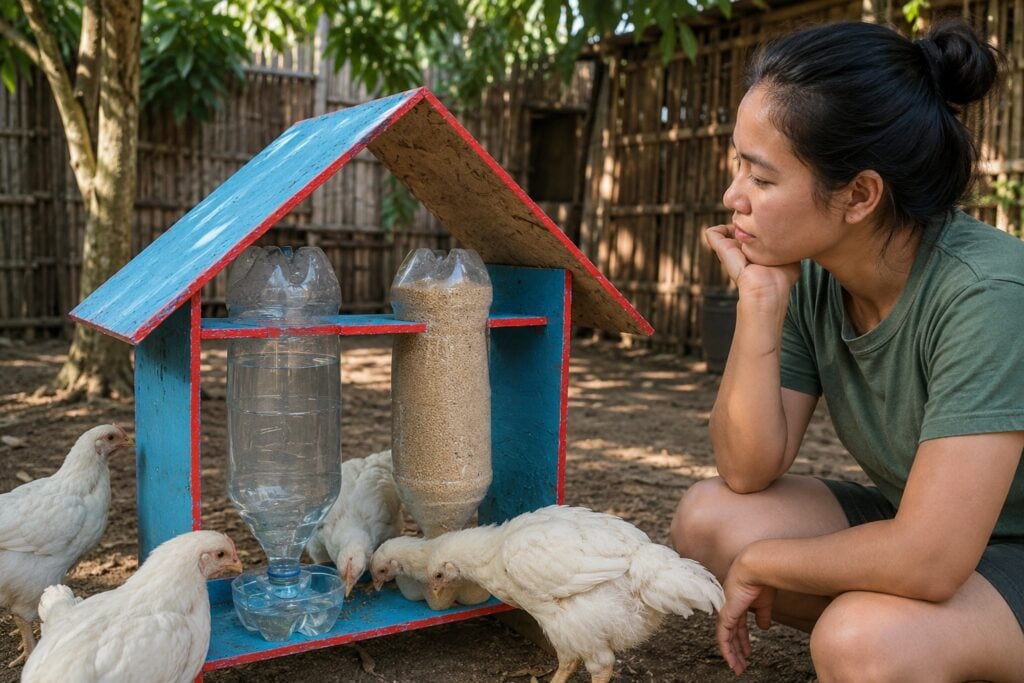
Every morning, I found grain scattered everywhere. Sometimes half the feed ended up mixed with dirt.
Water was another frustrating issue. Chickens would step inside the bowl, knock it over, or fill it with soil and feathers. During warm weather, algae also formed quickly.
I spent more time maintaining the feeding station than actually enjoying raising chickens.
I wanted something that could:
- Reduce feed waste
- Keep water cleaner
- Last throughout the day
- Be inexpensive to make
- Use recycled materials
- Require very little maintenance
That was when I decided to experiment with plastic bottles.
The Simple Design That Worked Surprisingly Well
The beauty of this project is how basic the design really is.
I used two large plastic bottles. One bottle was filled with water, while the other held chicken feed. Both bottles were attached upside down inside a small wooden shelter.
Gravity slowly released the feed and water into shallow trays underneath, allowing the chickens to eat and drink whenever they wanted.
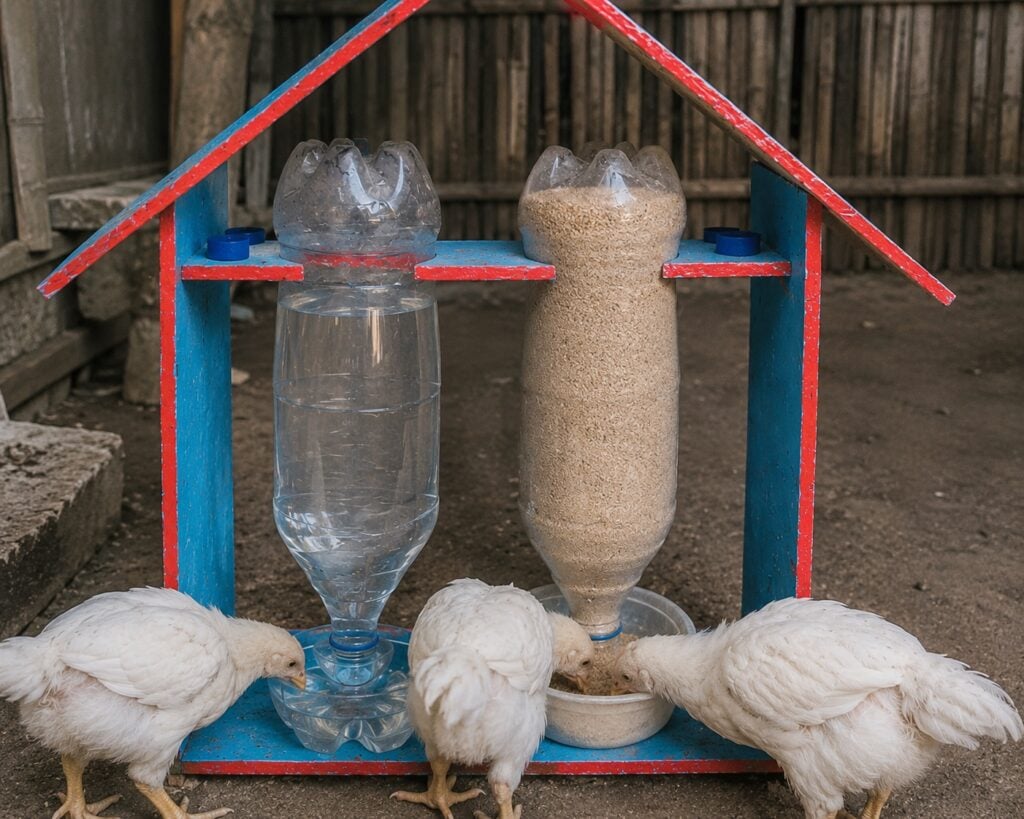
What I loved most was that the bottles automatically refilled the trays as the chickens used them. I did not need electricity, expensive tools, or complicated parts.
Everything worked naturally through simple positioning.
The small roof also protected the bottles from direct sunlight and rain. That detail made a huge difference because the feed stayed dry and the water remained cleaner much longer.
At first, I only built it as a temporary experiment. But after seeing how effective it was, I realized I would probably never go back to ordinary bowls again.
Materials I Used for This DIY Project
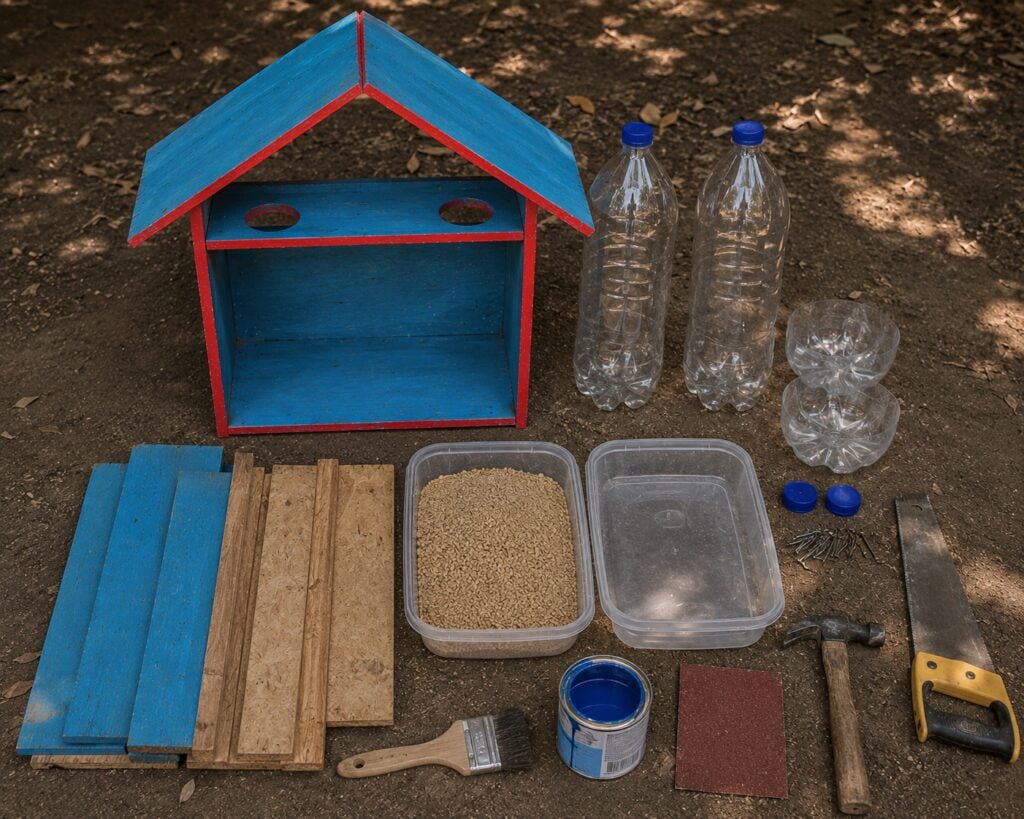
One reason I recommend this project to beginners is because almost everything can be found at home.
Here are the basic materials I used:
- Two large plastic bottles
- Small wooden boards
- Nails or screws
- Shallow plastic trays
- Paint for weather protection
- Basic cutting tools
- Sandpaper
I already had most of these materials lying around, which made the project extremely affordable.
Even if you buy everything new, the total cost is still much cheaper than purchasing commercial chicken feeders and automatic water systems.
Another thing I appreciated was the opportunity to recycle old plastic bottles instead of throwing them away. It felt satisfying to turn waste into something genuinely useful.
Building the Wooden Shelter
The wooden shelter became one of the most important parts of the entire setup.
In the beginning, I thought I could simply hang the bottles outside without protection. But I quickly realized that direct sunlight heats the water too much and rain can ruin the feed.
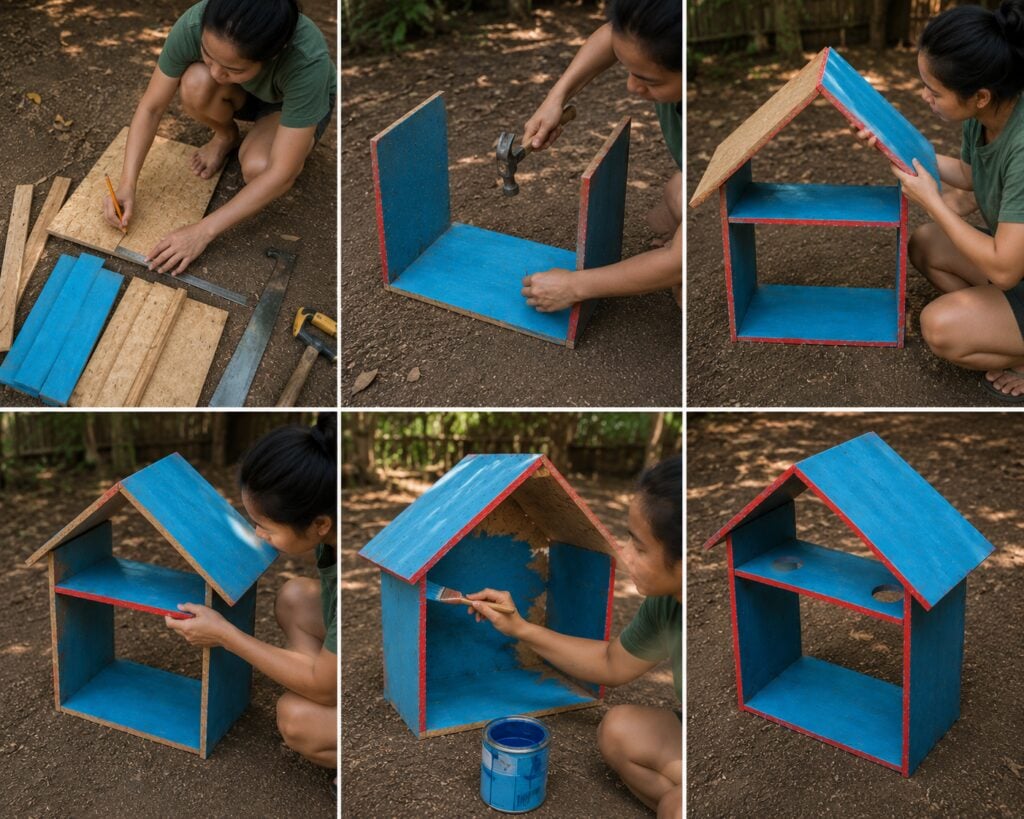
Chickens also tend to bump into loose containers.
So I built a small wooden structure shaped almost like a tiny house. The roof provided shade while the sides helped support the bottles securely. I painted the wood to make it more resistant to outdoor conditions and to give it a cleaner appearance.
The shelter also made the entire setup look organized instead of messy. Honestly, it became a charming little feature in my backyard.
How the Automatic Water Bottle Works?
The water system was much easier than I expected.
I filled the bottle with clean water and placed it upside down into a shallow tray. As the chickens drank the water from the tray, more water slowly flowed out from the bottle opening.
Once the tray reached a certain level, air pressure naturally stopped the flow.
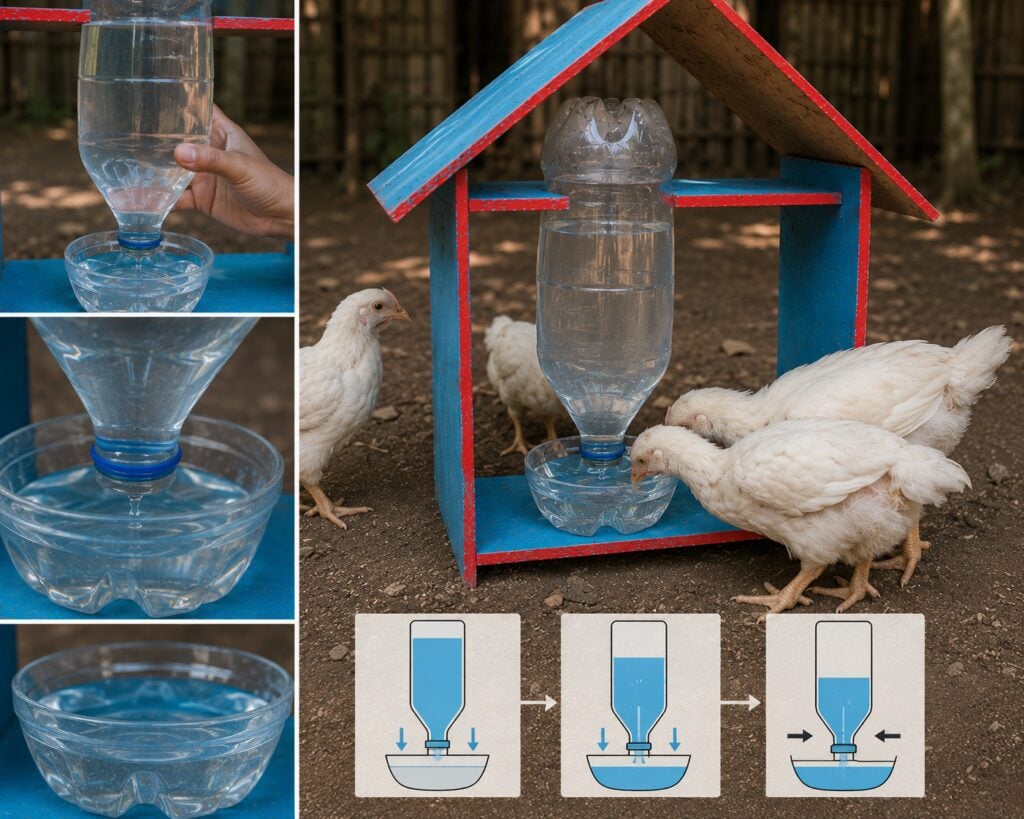
This simple principle kept fresh water available throughout the day without overflowing.
One thing I noticed immediately was how much cleaner the water stayed. Since the main water supply remained sealed inside the bottle, dirt and debris could not easily contaminate it.
On hot days, this became especially helpful because my chickens always had access to water even when I was busy or away for several hours.
How the Chicken Feeder Reduced Food Waste?
The feeder side ended up saving more grain than I expected.
Normally, chickens scatter feed everywhere while searching for the pieces they want. But with the bottle feeder, only a small amount of grain was available in the tray at one time.
The rest remained safely stored inside the bottle.
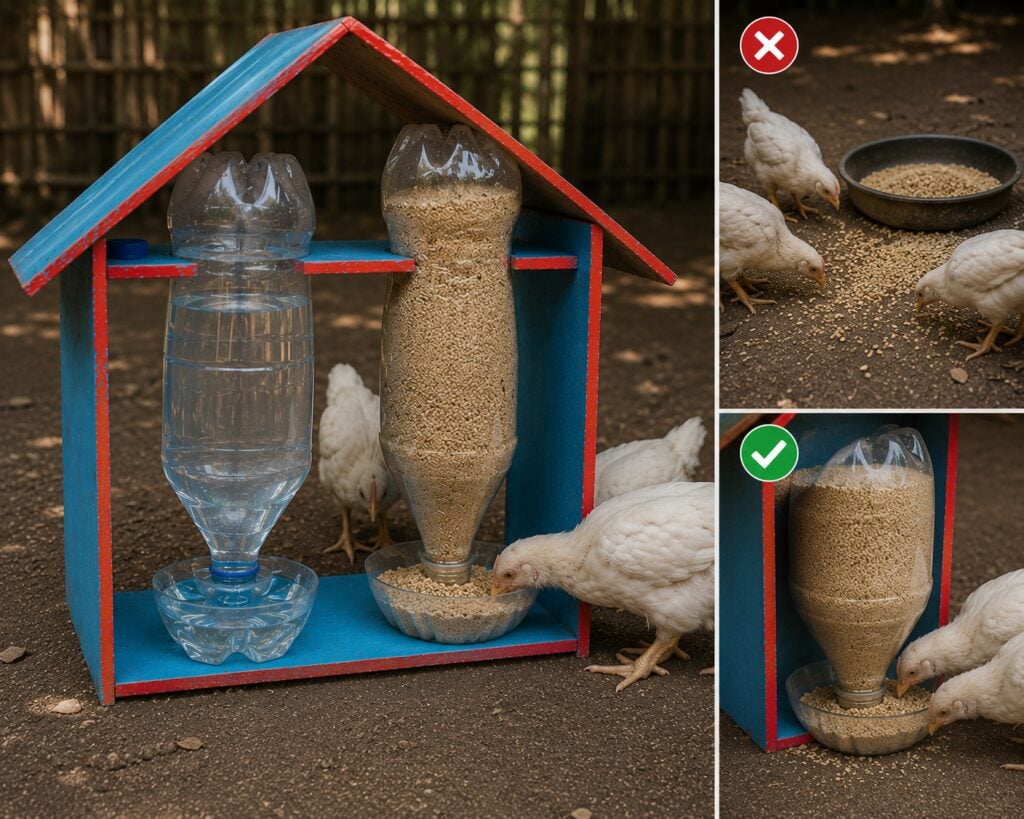
This reduced unnecessary scratching and prevented large piles of feed from spilling onto the ground.
I also noticed fewer insects around the feeding area because less grain was left exposed. That alone made the backyard feel cleaner and healthier.
Over time, I realized I was spending less money on chicken feed because so much less was being wasted every day.
What I Learned After Using It for Several Weeks?
Sometimes the simplest projects end up making the biggest difference.
After using this DIY chicken feeder and waterer for several weeks, I noticed several improvements:
- My chickens appeared calmer during feeding time
- The feeding area stayed cleaner
- Water remained usable longer
- Daily maintenance became easier
- I spent less money replacing wasted feed
- The setup handled light rain surprisingly well
Of course, no system is perfect. I still clean the trays regularly to prevent bacteria buildup. During extremely windy weather, I also check that the structure remains stable.
But overall, the system worked far better than I expected from such inexpensive materials.
Why I Think Every Backyard Chicken Owner Should Try This?
Backyard chicken keeping does not need to be expensive or complicated.
One thing I learned from raising chickens is that practical solutions often matter more than fancy equipment. Many expensive automatic systems online look impressive, but simple homemade designs can work just as well for small backyard flocks.
This project is especially useful for:
- Beginner chicken owners
- Families with small backyard coops
- People trying to save money
- Sustainable living enthusiasts
- Anyone interested in recycling projects
Even if you have never built anything before, this is still a manageable project because the design is straightforward and forgiving.
You do not need professional woodworking skills. You simply need patience and a willingness to experiment.
The Environmental Benefit I Did Not Expect
What surprised me most was how this small project changed the way I looked at waste.
Before this, empty plastic bottles usually went directly into recycling bins or trash bags. But turning them into something functional made me realize how many useful materials already exist around us.
The project reduced plastic waste while also helping me create a more sustainable chicken care routine.
It may seem like a small thing, but these little changes add up over time. Reusing materials, reducing wasted feed, and simplifying daily chores all contribute to a more environmentally friendly lifestyle.
That part honestly made the project feel even more rewarding.
Tips If You Want to Build Your Own
A few small adjustments can make your DIY feeder work much better.
If you decide to try this project yourself, here are some tips I learned through experience:
1. Use Strong Bottles
Thin plastic bottles can collapse under heat or pressure. Larger, sturdier bottles work much better outdoors.
2. Keep the Structure Elevated
Raising the feeder slightly above ground level helps keep dirt and mud away from the trays.
3. Add a Roof
The roof is extremely important because it protects both food and water from rain and direct sunlight.
4. Clean Regularly
Even automatic systems still require cleaning. Wash the trays often to keep bacteria away.
5. Test the Flow First
Before placing it in the coop, test how quickly the water and feed flow into the trays. Small adjustments make a big difference.
My Final Thoughts About This DIY Chicken Feeder and Waterer
I honestly did not expect such a simple project to improve my daily routine so much.
What started as a quick experiment using leftover plastic bottles turned into one of the most useful things I have built for my chickens. It reduced waste, saved time, kept the area cleaner, and made feeding much more efficient.
Most importantly, it reminded me that practical ideas do not always require expensive materials or complicated systems.
Sometimes the best solutions are the ones built from creativity, observation, and simple everyday items.
Now every time I refill the bottles and watch my chickens calmly eat and drink, I feel satisfied knowing this small homemade project genuinely made life easier for both me and my flock.


