Monstera plants quickly became one of my favorite houseplants because of their dramatic leaves, tropical look, and surprisingly rewarding growth. But when I first started growing Monsteras, I made one major mistake that slowed everything down.
I used regular potting soil without understanding how important airflow and drainage were for this plant.
At first, the plant looked fine. But after a few months, I noticed slow growth, yellowing leaves, and soil that stayed wet far too long. That was when I realized Monsteras are not like many common indoor plants.
They need a chunky, airy soil mix that allows roots to breathe while still holding enough moisture to support healthy growth.
After experimenting with different combinations, I finally found a balanced monstera soil mix that completely changed the way my plants grew.
The roots became healthier, the leaves became larger, and the plant started producing beautiful fenestrations much more consistently.
Why Soil Matters So Much for Monsteras?
When I first bought my Monstera, I assumed light and watering were the only important factors. But over time, I learned that soil affects nearly everything about the plant’s health.
Monsteras naturally grow in tropical environments where their roots are surrounded by loose organic material, tree bark, and airy forest debris. In nature, the roots are not trapped inside dense compact soil.
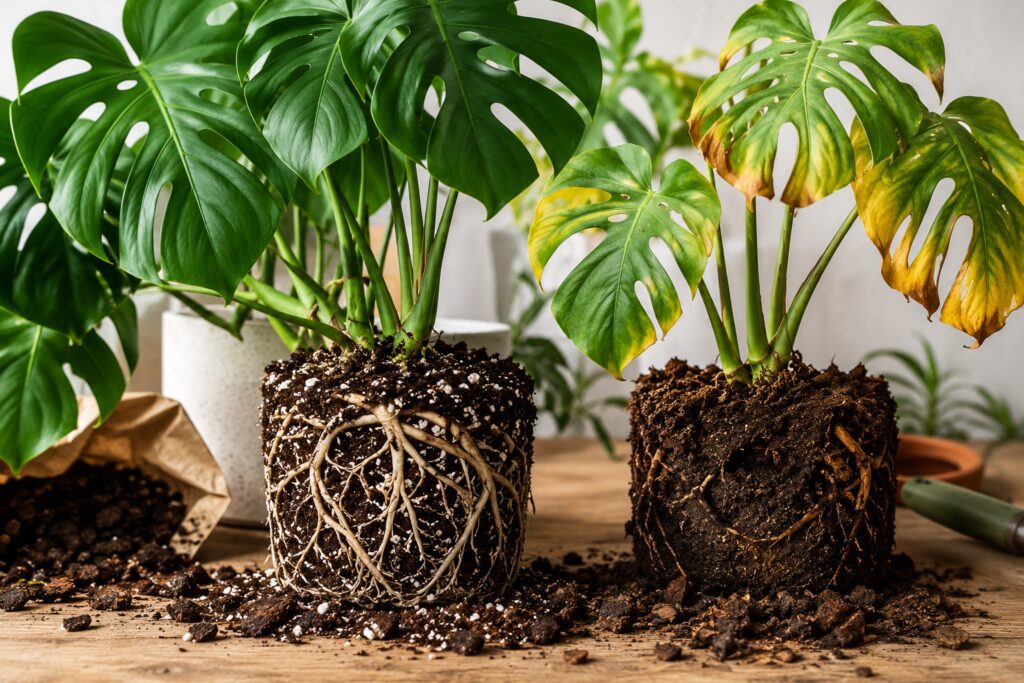
That means regular heavy potting mix can easily suffocate the roots indoors. Poor drainage often leads to root rot, fungal issues, weak growth, and stressed leaves.
Once I switched to a chunkier soil blend with better airflow, the difference was immediate. Water drained properly, roots stayed healthier, and the plant became much easier to care for.
Good monstera soil should do three important things:
- Hold enough moisture for the roots
- Drain excess water quickly
- Allow plenty of oxygen around the root system
Balancing these three factors is the secret to growing a thriving Monstera.
The Soil Mix Formula I Personally Use
After plenty of trial and error, I settled on a simple formula that consistently gave me excellent results.
The mix shown in the image contains:
- Potting mix and worm castings 10%
- Orchid bark or bark chips 25%
- Coconut coir 20%
- Perlite 25%
- Activated charcoal 10%
This combination creates a loose, breathable, moisture balanced soil that closely mimics the natural growing conditions Monsteras love.
What I like most about this recipe is that it works well in many indoor environments. It drains quickly while still holding enough moisture so the roots do not dry out too fast.
Every ingredient serves a specific purpose, and understanding each one helped me become much more confident with plant care.
Potting Mix and Worm Castings Help Feed the Plant
The first part of the mix contains potting soil combined with worm castings. Even though it only makes up a smaller percentage of the recipe, it plays an important role.
Potting mix acts as the nutritional base of the soil. It helps anchor the roots and provides moisture retention.
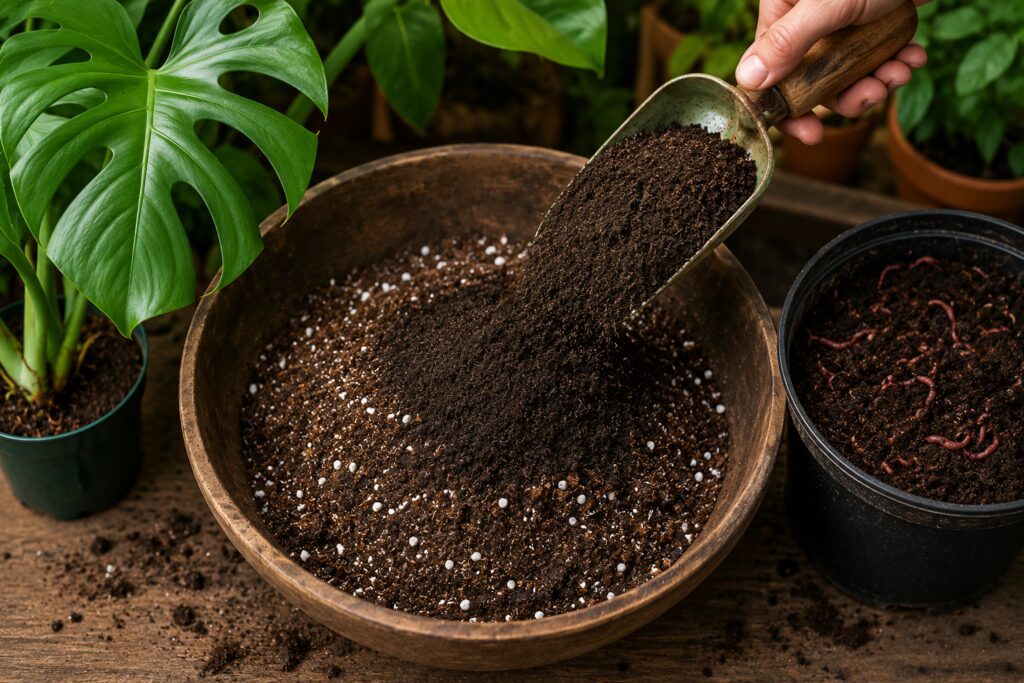
However, I learned not to use too much because dense soil can easily compact around Monstera roots.
Worm castings became one of my favorite natural additions because they provide gentle nutrients without overwhelming the plant. Unlike strong fertilizers, worm castings slowly release beneficial nutrients over time.
I noticed healthier leaf color and more consistent growth after adding worm castings to my mix. The plant simply looked more vibrant overall.
This layer provides the foundation for the soil while still keeping the mixture relatively lightweight.
Orchid Bark Creates Airflow and Better Drainage
One of the biggest improvements in my Monstera care happened when I started using orchid bark. At first, it felt strange adding chunky bark pieces into houseplant soil, but then I realized Monsteras actually prefer this kind of airy structure.
Orchid bark helps create pockets of air throughout the soil.
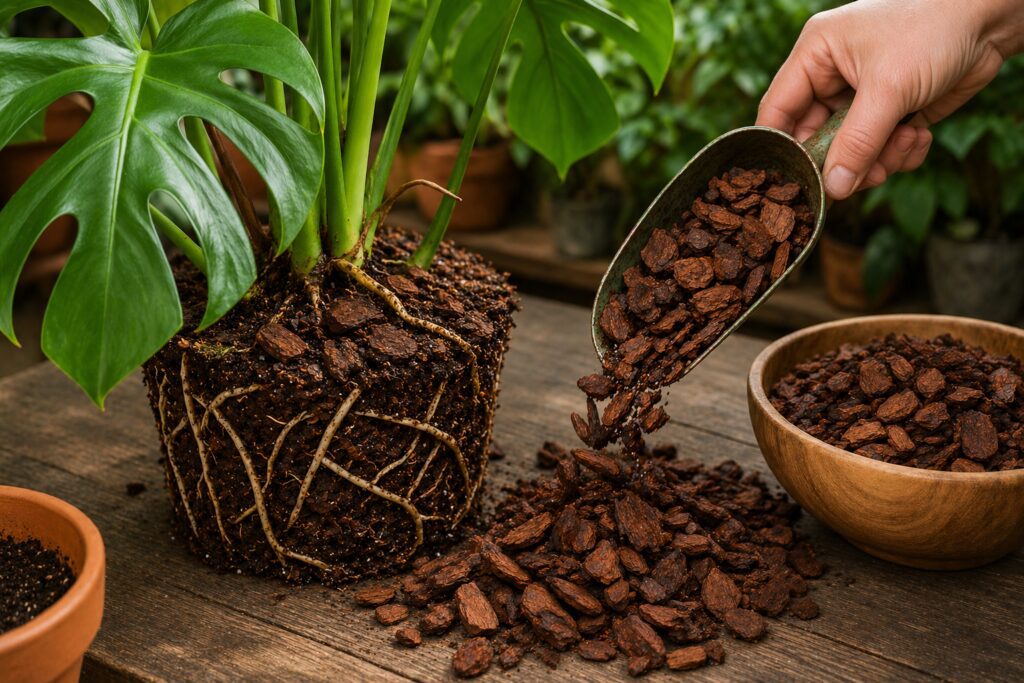
These air gaps prevent the roots from staying wet for too long, which greatly reduces the risk of root rot.
The bark also breaks down slowly over time, adding organic matter while maintaining drainage.
When I repotted my Monstera into a bark rich mix, the roots immediately looked healthier during future inspections. Instead of mushy roots sitting in wet soil, I found thick white roots spreading actively throughout the pot.
Bark chips are especially useful for indoor growers because indoor conditions often dry more slowly than outdoor environments.
Coconut Coir Helps Maintain Moisture Balance
One challenge with chunky soil mixes is making sure the plant still gets enough moisture. That is where coconut coir became incredibly useful for me.
Coconut coir holds water efficiently while still remaining airy and loose.
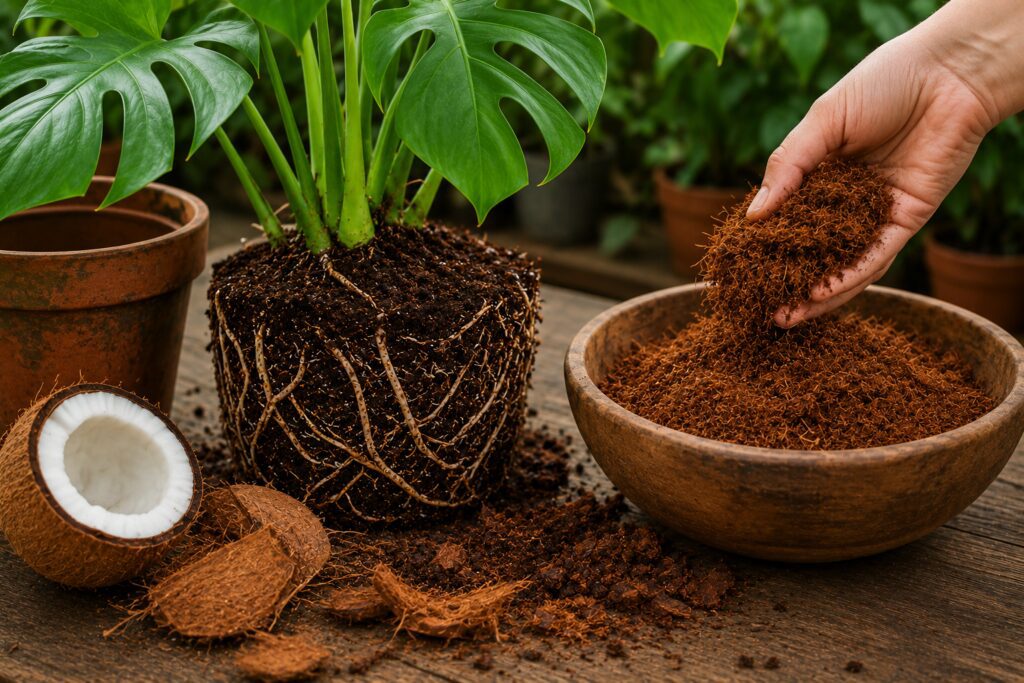
Unlike some peat based products, it does not compact as heavily over time.
I found that coir helped stabilize the moisture level in the pot. The roots stayed evenly hydrated without becoming waterlogged.
Another reason I like coconut coir is because it rewets more easily than dry peat moss. Some soils become difficult to hydrate once they dry out completely, but coir absorbs water much more consistently.
For Monsteras, maintaining that balance between moisture and airflow is extremely important, and coconut coir helps achieve that balance beautifully.
Perlite Keeps the Soil Light and Breathable
Perlite quickly became one of the most essential ingredients in my houseplant mixes.
Those small white particles may look simple, but they dramatically improve drainage and aeration. Perlite prevents the soil from becoming too dense and compacted over time.
Before using perlite, I noticed my old soil mixtures often stayed soggy for too long after watering. The roots struggled because oxygen could not move freely through the soil.
Once I increased the amount of perlite, watering became much easier to manage. Excess water drained faster while the roots stayed healthier.
Perlite also makes the overall pot lighter, which helps when moving larger Monsteras around the house.
For tropical plants like Monsteras, airy roots are happy roots, and perlite helps create that environment.
Activated Charcoal Helps Keep the Soil Fresh
Activated charcoal was something I initially ignored because it seemed unnecessary. But after using it, I understood why so many indoor plant growers recommend it.
Charcoal helps absorb impurities, reduce odors, and improve overall soil freshness.
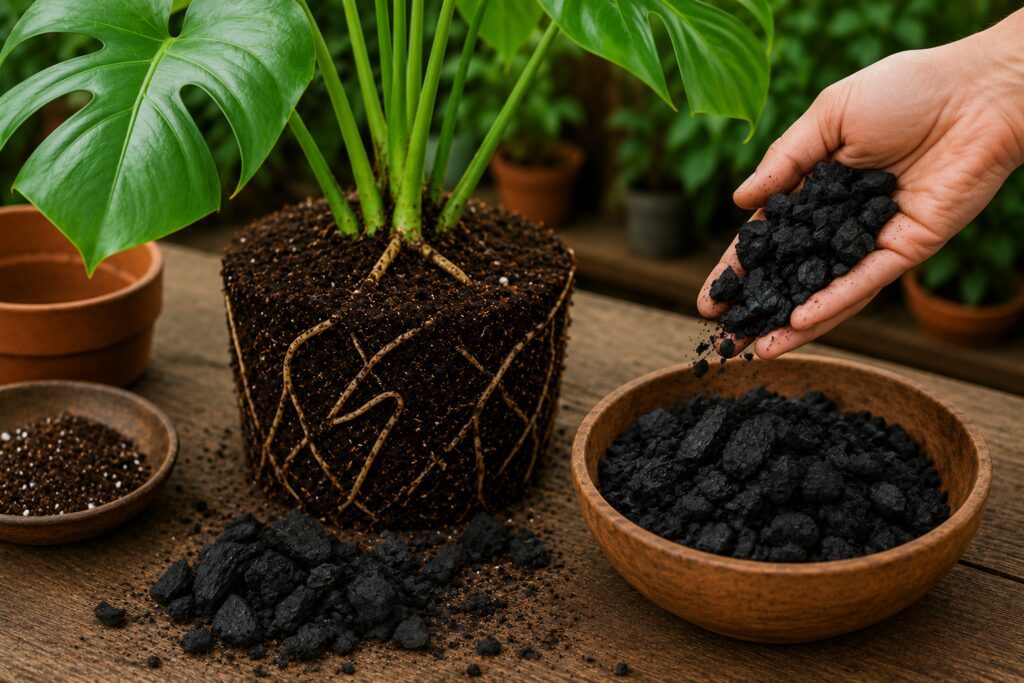
It can also help reduce harmful bacteria buildup inside moist indoor pots.
While it is not a magical ingredient, I noticed that soil mixes containing charcoal tended to stay fresher longer, especially in humid indoor conditions.
Charcoal also improves drainage slightly because of its chunky texture. I especially like using it in decorative indoor planters where airflow may already be somewhat limited.
Even though it only makes up a smaller portion of the recipe, it contributes to a healthier overall root environment.
How I Mix Everything Together?
When preparing my monstera soil mix, I prefer combining everything inside a large container or storage bin.
I first add the chunky ingredients like bark, perlite, and charcoal before mixing in the finer materials such as potting mix and coconut coir.
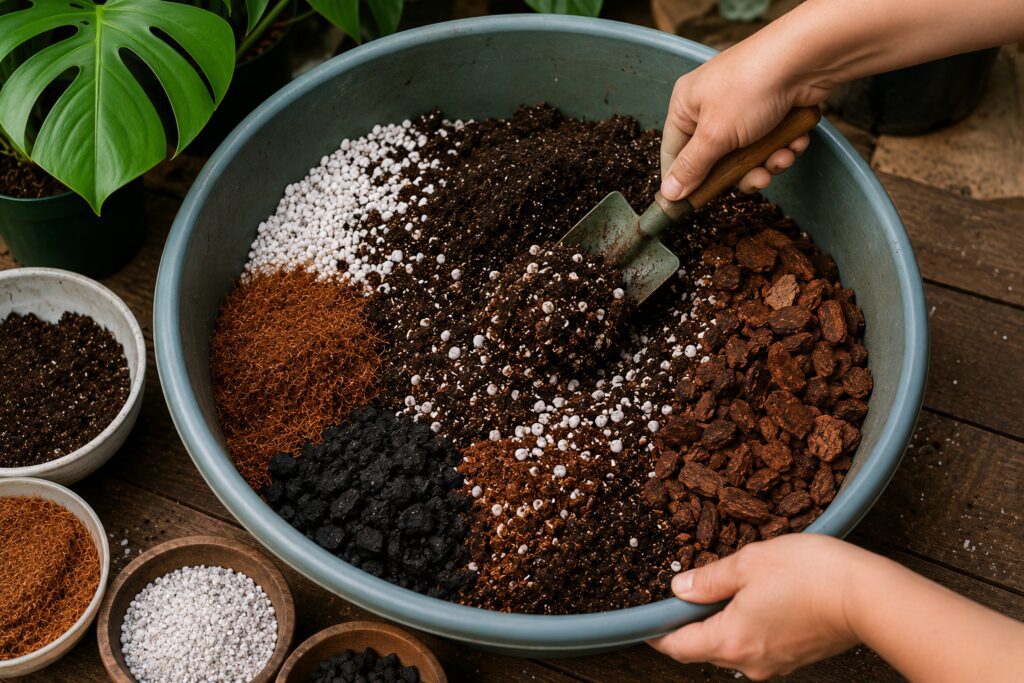
Mixing thoroughly is important because it ensures the texture stays evenly distributed throughout the pot.
The final consistency should feel chunky, loose, and airy rather than dense or muddy. When I grab a handful, it should crumble apart easily instead of clumping heavily together.
This texture helps create the perfect environment for Monstera roots to spread and grow actively.
How I Know the Soil Mix Is Working?
One of the best parts about improving soil quality is how quickly Monsteras often respond.
After switching to this mix, I noticed:
- Faster new leaf growth
- Healthier root development
- Better drainage after watering
- Larger leaves
- Fewer yellow leaves
- More fenestrations
- Reduced risk of root rot
The plant also became much easier to water because the soil behaved more predictably.
Instead of staying wet for a week or more, the mix dried at a healthier pace while still retaining enough moisture for the roots.
Healthy roots usually lead to healthy foliage, and that became very obvious after upgrading the soil.
Common Mistakes I Made With Monstera Soil
Before finding the right mix, I made several mistakes that caused unnecessary stress for my plants.
The biggest mistake was using heavy dense soil with poor drainage. I also overwatered because the soil stayed wet too long.
Another mistake was choosing decorative pots without proper drainage holes. Even the best soil mix struggles if excess water cannot escape properly.
I also underestimated how important airflow is for tropical plants indoors. Now I focus on creating an airy environment both above and below the soil surface.
Good soil alone will not solve every plant problem, but it creates the foundation for healthier growth.
Final Thoughts on Building the Perfect Monstera Soil Mix
Learning how to build the right monstera soil mix completely changed my experience with indoor plants.
Before understanding soil structure, I constantly worried about yellow leaves, slow growth, and watering problems. But once I focused on drainage, airflow, and moisture balance, caring for Monsteras became much simpler and far more enjoyable.
This recipe works because every ingredient has a clear purpose.
The bark creates airflow, the perlite improves drainage, the coconut coir maintains moisture, the charcoal keeps things fresh, and the potting mix with worm castings provides nutrients.
The result is a healthy root environment that encourages strong growth and beautiful foliage.
If your Monstera has been struggling, the soil might be the missing piece. Sometimes improving the roots changes everything above the soil too.