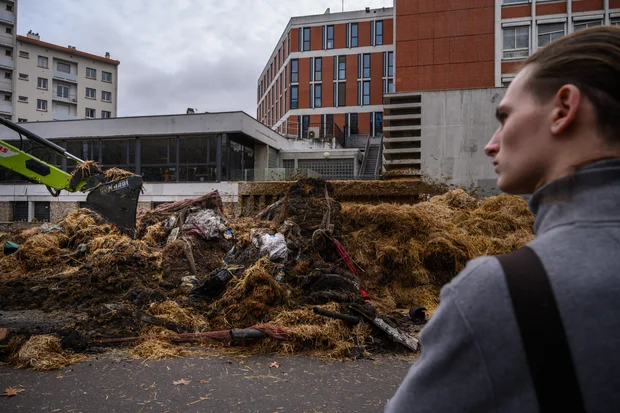
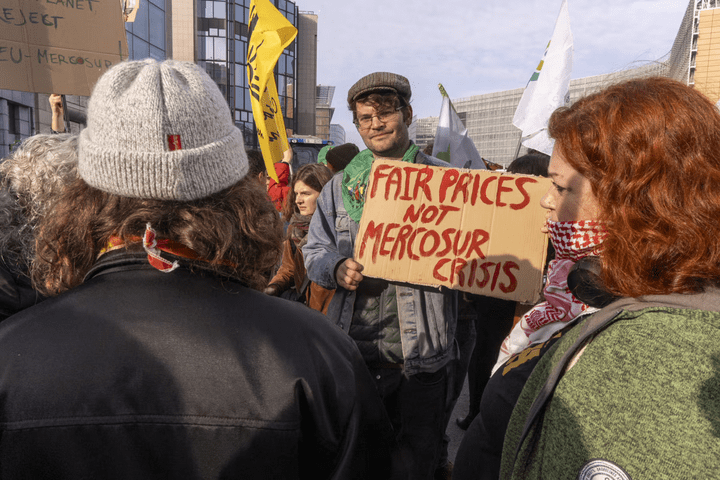
In late 2025, Greece found itself at the center of one of its most intense domestic disputes in years; a widespread protest movement by farmers and agricultural workers demanding urgent government action on economic issues that threaten their livelihoods.
Prime Minister Kyriakos Mitsotakis publicly stated that his administration is “open to dialogue” with the protesters but firmly rejected what it described as “unreasonable demands.”

This standoff has deeply affected transportation, commerce, and daily life across the country; underscoring the urgency of finding a resolution that addresses the immediate needs of farmers while balancing economic and legal constraints.
Why This Matters?
Agriculture remains a foundational sector of the Greek economy, providing food security, employment in rural regions, and social stability. When farmers take to the streets; or to the highways with tractors, to protest, it signifies systemic pressures deep enough to disrupt everyday life and national supply chains.
The stakes include not just delayed EU subsidies but also broader concerns about rising input costs, climate impacts, and structural support for rural economies.
The confrontation matters for policymakers, citizens, and observers of European agricultural policy because it reflects tensions between domestic socio‑economic needs and supranational regulatory frameworks, particularly the European Union’s Common Agricultural Policy (CAP).
Background: Roots of the Conflict

The OPEKEPE Scandal and Subsidy Delays
A central trigger for the protests has been the delay in EU agricultural subsidy payments due to a major scandal involving Greece’s agricultural payments agency, OPEKEPE.
Investigations revealed widespread fraud in land and livestock declarations, prompting the European Commission to freeze funds; reportedly around €600 million, until audits were completed.
This sudden withholding of funds left many farmers without liquidity at a critical point in the growing season.
Farmers view this freeze as unfairly punishing legitimate producers for the misdeeds of others, sparking outrage and a loss of confidence in institutions intended to safeguard agricultural support.
Ongoing Economic Pressures
Even before the subsidy issues came to a head, Greek farmers faced longstanding economic pressures:
- Rising production costs; including energy, fuel, and fertilizers, squeezed already thin profit margins.
- Low producer prices for key commodities such as olive oil compounded financial strain, leading some growers to protest price failures and insufficient market returns.
- Livestock health crises such as sheep pox and small ruminant diseases added further burdens, with farmers demanding adequate compensation and preventative measures.
These chronic problems have been simmering for years, but the combination of subsidy uncertainty, rising costs, and lack of compensation for losses pushed thousands of farmers to escalate their actions in late 2025.
The Protests: Actions and Escalation
Beginning in late November 2025, farmers across Greece mobilized in mass demonstration tactics that included:
- Blocking national highways with tractors and equipment
- Closing border crossings and customs points
- Occupying or disrupting ports and airports
- Refusing dialogue until specific demands were addressed
Timeline of Key Protest Actions
| Date | Event |
|---|---|
| Late Nov 2025 | Farmers begin coordinating and setting up blockades on major highways. |
| Early Dec 2025 | Dozens of tractor blockades appear nationwide, from Thessaly to Macedonia and western Greece. |
| Dec 8–12, 2025 | Protests intensify with disruptions at Crete’s airports and Thessaloniki’s port; tensions with police escalate. |
| Mid Dec 2025 | Farmers refuse initial government invitations for dialogue, demanding concrete answers first. |
| Dec 20, 2025 | Protesters signal temporary easing during Christmas holidays but warn of harsher actions after if demands aren’t met. |
| Dec 21, 2025 | Prime Minister reiterates openness to dialogue but rejects unreasonable demands. |
The protest movement has been highly organized, with a Panhellenic Committee of Blockades and federation representatives coordinating actions.
Farmers have insisted that meaningful negotiation requires prior acknowledgement and partial fulfillment of their demands; a stance that has at times conflicted with government overtures.
Government Response: Dialogue with Boundaries

1. Openness to Talks
Prime Minister Mitsotakis has made several public statements emphasizing that the government is ready to engage in dialogue with farmer representatives.
He highlighted that 16 out of 27 farmer demands have been satisfied or are under active consideration, with another four undergoing review or discussion.
Only seven demands have been deemed either financially unfeasible or contradictory to EU rules and the Common Agricultural Policy.
This framework attempts to balance farmer needs with fiscal responsibility and compliance with European frameworks.
2. Red Lines and Public Balance
Mitsotakis and other officials have been careful to articulate what they see as red lines:
- No compliance with demands that contravene EU policy
- No fiscally unsustainable concessions
- No dialogue under threat of continued blockades or ultimatums
Government sources have warned that prolonged blockades affect national supply chains, public support, and broader economic activity, suggesting that there is a cost to both inaction and escalation.
One senior government narrative; framed in public remarks, is that while the grievances are real, the methods and some demands risk undermining broader societal support if they cause too much disruption.
Perspectives from the Field

1. Farmers’ Viewpoint
Most protest leaders argue that without substantive action on subsidy payments, production cost relief, and structural reforms to agencies like OPEKEPE, dialogue would be hollow.
They have submitted detailed lists of demands including tax relief, price guarantees, and comprehensive compensation for losses. Many see government offers as incremental and insufficient given the scale of their financial pressures.
This sentiment is especially acute in rural communities where farming is not only an economic activity but a family tradition and social identity.
The repeated cycles of protest and partial government responses have fueled a sense of cumulative frustration among producers.
2. Criticisms and Alternative Views
Critics of the protests emphasize the impact on the wider public and economy; particularly as blockades have snarled traffic, delayed goods, and strained public patience.
Some commentators argue that protest tactics risk alienating middle‑class support and threaten unity.
Others; including analysts in economic and policy circles, caution that exceptional concessions could set precedents that distort markets or violate EU rules, ultimately harming the sector’s competitiveness.
Real‑World Impacts
1. On Communities
The disruptions have hit rural towns and border regions especially hard, affecting supply chains and local markets.
Transport delays have increased costs for trucking companies, international trade movement has been constrained at border crossings, and daily commutes have been frustrated for millions.
2. On the Environment and Supply Chains
Blockades have also created logistical bottlenecks that impact perishable goods movements. Cumulative delays in distribution can increase food waste and stress supply chains; an added cost to an already stretched agricultural system.
A Crossroads for Greek Agriculture
The clash between Greek farmers and the government is emblematic of broader tensions in modern agricultural policy: economic survival versus regulatory frameworks; grassroots demands versus political pragmatism.
While the government claims openness to dialogue, its refusal to accept demands it deems unreasonable highlights deeper structural fault lines.
The eventual resolution will likely require not only negotiation on payment delays and financial support, but also institutional reforms that rebuild trust in subsidy systems; especially after scandals like OPEKEPE.
As the protests continue into early 2026, the path chosen by policymakers and farmer leaders alike will have lasting consequences — not just for agricultural production, but for national cohesion and public confidence in democratic negotiation.