At Waite Ranch on the Oregon coast, a levee once kept hundreds of acres of former estuary separated from the Siuslaw River and the ocean tides.
In May 2026, that barrier was breached, allowing water to return to land that had been cut off for more than a century.
What moves me about this project is the patience behind that moment. The water returned quickly, but the recovery took years of planning, construction, cooperation, cultural stewardship, and science.
Led with the involvement of CTCLUSI, the McKenzie River Trust, the Siuslaw Watershed Council, and many partners, the project reconnects a 217-acre property to tidal movement.
Around 180 to 200 acres of wetland habitat could be renewed.
For salmon, lamprey, birds, native plants, and the wider estuary, this is more than water coming back. It is a place remembering how to breathe again.
A Historic Landscape Begins to Breathe Again
Waite Ranch was shaped by tides long before dikes, drainage channels, and tide gates kept the water out for farming and dairy use. Those changes supported agriculture, but they also cut fish, wildlife, and wetland plants off from habitat they once depended on.
After the McKenzie River Trust acquired the property in 2010, restoration became a slow process of rebuilding what the landscape had lost.
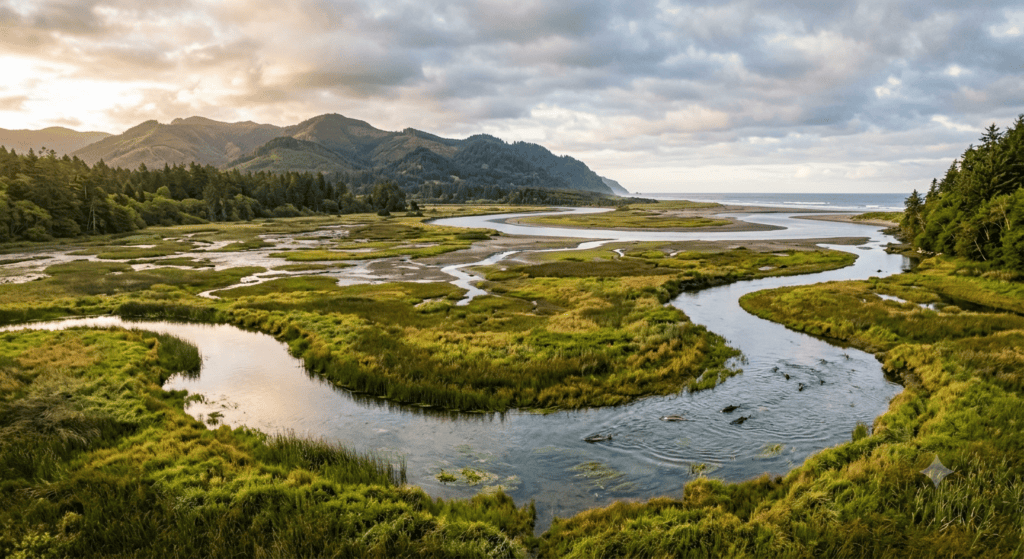
Crews reshaped land, created tidal channels, filled old drainage ditches, and prepared the site for water to return.
Then, on May 29, 2026, the old earthen levee was breached. The Siuslaw River began moving back into channels that had been disconnected for about 150 years.
To me, that moment was more than construction. It was a landscape being given permission to remember what it used to be.
Why Estuaries are So Important for Young Salmon?
Before a young salmon reaches the ocean, it needs a place to become ready for it.
That is why estuaries matter so much. They are not just the end of a river. They are living transition zones where freshwater meets salt water, creating channels, marshes, mudflats, and sheltered places for fish to rest, feed, hide, and grow.
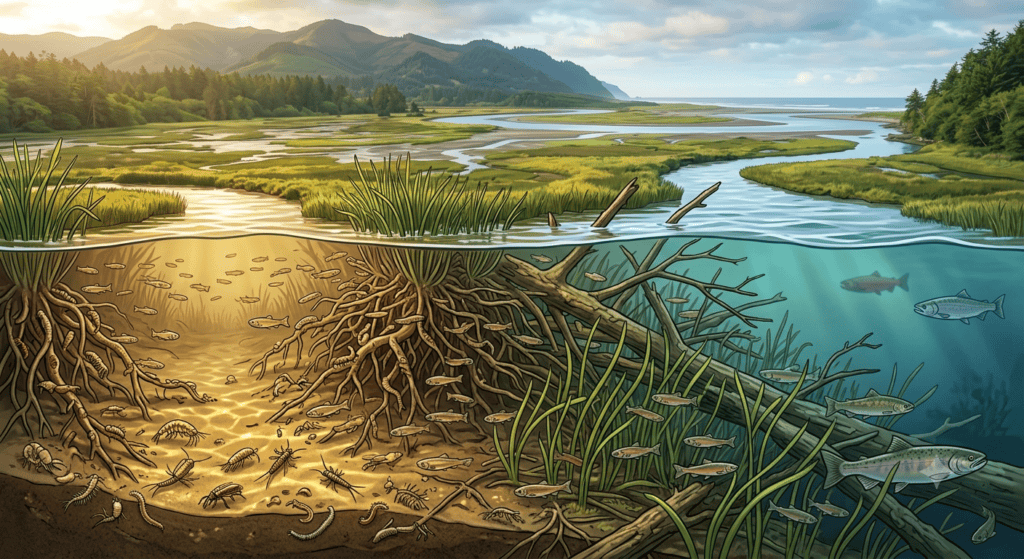
At Waite Ranch, the restoration is designed to rebuild about six miles of feeding and rearing habitat for Oregon Coast coho salmon, Chinook salmon, steelhead, coastal cutthroat trout, and other aquatic species.
Pacific lamprey may benefit too, adding another layer of ecological and cultural importance.
What stands out to me is the connection. Salmon conservation is not only about protecting spawning streams. These fish depend on many linked habitats throughout their lives.
A river may begin the journey, but a healthy estuary can help prepare salmon for everything that comes next.
Returning More Than Water to the Land
At Waite Ranch, restored tidal flow can change soil, move nutrients, deposit sediment, support wetland plants, and reconnect fish, birds, insects, microorganisms, and small aquatic life into a growing food web.
Some changes may appear quickly.
Fish may enter new channels, birds may find fresh feeding areas, and plants may begin reclaiming parts of the landscape. But a mature estuary does not return in a single season.
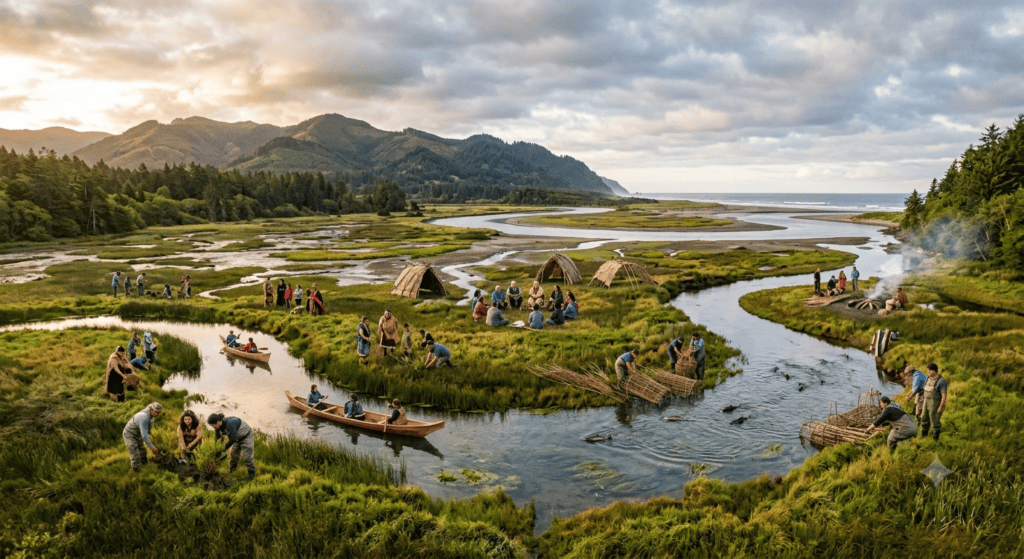
Recovery happens in layers, through monitoring, patience, and repeated natural cycles.
NOAA describes the wider effort as restoring more than 200 acres of former tidal wetlands and riparian habitat, while improving water quality, supporting complex food webs, and building resilience to climate-related change.
What encourages me most is the shift in approach. Instead of controlling the landscape forever, restoration teams are giving tides, sediment, plants, and wildlife the chance to help shape it again.
A Project Rooted in Tribal Stewardship
Some places are restored by rebuilding habitat. Others are restored by renewing a relationship.
In 2024, CTCLUSI renamed Waite Ranch haich ikt’at’uu, meaning “heart of the river.” The name reflects what this project truly represents: not just environmental repair, but cultural reconnection.
During the levee breach, Tribal members entered the newly restored estuary by canoe, placed seeds and traditional materials in the water, and returned salmon remains to the river.
These actions honored generations of responsibility, gratitude, and connection to the land.
To me, this project shows that conservation is strongest when science and Indigenous knowledge work together. Sometimes restoration is not about creating something new.
It is about healing what was interrupted.
What We Can Learn From the Waite Ranch Restoration?
You do not need to restore 217 acres to learn something from Waite Ranch.
The first lesson is that nature depends on connection. Rivers feed wetlands, wetlands support estuaries, and estuaries connect to the ocean. When one link is blocked, the effects can spread through the entire ecosystem.
The second lesson is patience. It took more than 15 years of planning, funding, engineering, and cooperation before tidal water returned. Restoration rarely happens through one dramatic action.
It happens through steady work that continues even when results are slow.
The third lesson is partnership. Tribal leaders, conservation groups, engineers, agencies, contractors, and local communities each contributed something essential.
To me, Waite Ranch proves that meaningful change does not require one person to do everything. It requires people to stay connected, remain patient, and keep moving toward the same goal.
A New Chapter for Oregon’s Coastal Wildlife
Restoring haich ikt’at’uu will not solve every threat facing Oregon’s salmon. Habitat loss, warmer water, migration barriers, development, and changing ocean conditions still remain. But giving fish more healthy places to feed, grow, and rest can improve their chances of survival.
As tidal water moves through the estuary, young salmon and lamprey may return, native plants may spread, and birds and other wildlife may reclaim the landscape.
Each tide will reshape the channels, move sediment, and create new possibilities for life.
To me, the most powerful part of this restoration is that the land is not finished. It is alive, changing, and beginning to heal itself.
After generations of separation, the river and estuary are connected again, carrying renewed hope for wildlife, Tribal traditions, and the entire Siuslaw River ecosystem.