In a world where oceans are steadily warming, one patch of the North Atlantic is doing the opposite.
South of Greenland and Iceland, a mysterious area known as the cold blob has continued to cool, raising concerns among scientists about changes deep within the ocean.
Rather than offering relief from global warming, this unusual chill may be a warning that one of Earth’s most important climate systems is beginning to weaken.
A Strange Cold Spot in an Increasingly Warm World
A colder patch of ocean in a warming world sounds like good news, until you understand what may be causing it.
South of Greenland and Iceland, part of the North Atlantic has cooled by nearly 1°C since around 1900. This “cold blob” is not proof that climate change is easing.
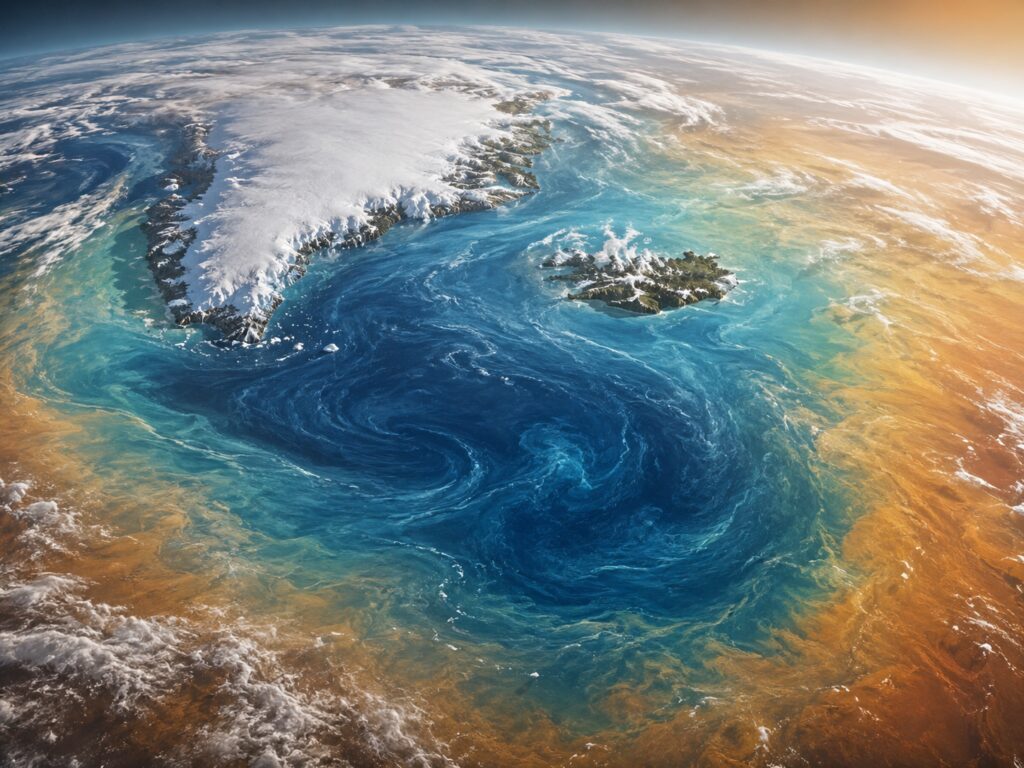
It may signal that a major ocean circulation system is weakening or shifting.
That matters because Atlantic currents help move heat around the planet. Even a small disruption can influence storms, rainfall, coastlines, and marine life.
What looks like one cold patch may actually be the ocean showing us that something much larger is changing beneath the surface.
The Ocean Conveyor Belt That Helps Regulate Our Climate
I picture the AMOC as the Atlantic’s hidden conveyor belt, carrying warm water north and cold water back through the deep ocean.
As warm, salty water moves toward Europe, it releases heat into the atmosphere.
Farther north, it cools, becomes heavier, and sinks before flowing south again.
This circulation quietly moves heat, oxygen, nutrients, and carbon across the planet. If it weakens, rainfall, weather, sea levels, and regional temperatures could all shift.
That is why scientists watch it so closely.
The AMOC is not just an ocean current. It is one of the systems helping keep Earth’s climate in balance.
How Greenland’s Melting Ice Could Slow the Current?
Greenland’s melting ice is not only raising sea levels. It may also be weakening the engine of the Atlantic Ocean.
Freshwater pouring into the North Atlantic dilutes the colder, saltier water that normally becomes dense enough to sink. When that sinking slows, the AMOC can lose strength and carry less tropical heat northward.
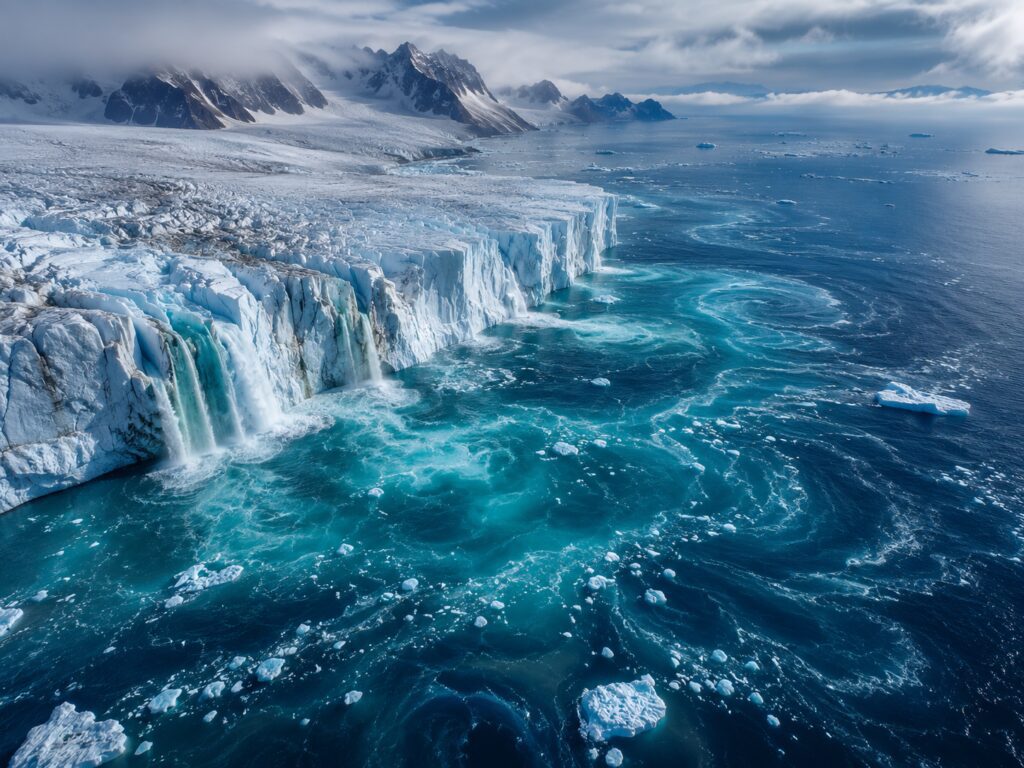
I picture it as water slipping into the gears of a giant conveyor belt. The system keeps moving, but with less power.
That slowdown may help explain the cold patch south of Greenland, and why melting ice in the Arctic can reshape climate far beyond it.
Why the Cooling Is More Than a Surface Effect?
The most worrying part of the cold blob may be what lies beneath it.
Winds and clouds can cool the ocean surface for a while, but observations suggest this change reaches deeper. That points to something larger than temporary weather: less warm water may be reaching the region as Atlantic circulation weakens.
A surface anomaly can fade. A deep shift in ocean movement is far harder to undo.
To me, that is the real warning.
Climate change is not only warming the air. It may be altering ancient ocean systems that have helped regulate the planet for thousands of years.
What an AMOC Collapse Could Mean?
The AMOC may not be on the verge of collapse, but even a major slowdown could reshape life far beyond the Atlantic.
Europe could face colder winters, rainfall and monsoon patterns may shift across Africa and Asia, and parts of the US East Coast could experience faster sea-level rise.
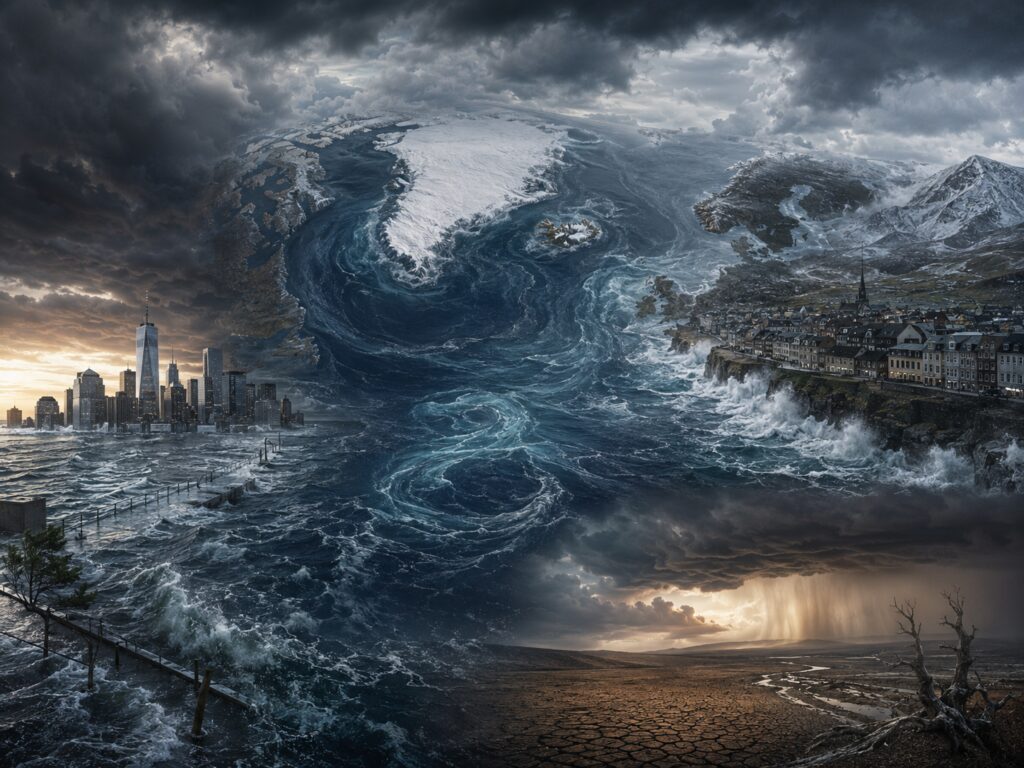
Global warming would not stop. It would become more uneven and unpredictable.
Scientists are still working through the exact risks, but uncertainty is not the same as safety.
When one ocean system influences weather, farming, coastlines, and water supplies across several continents, even a partial disruption deserves serious attention.
Why Tipping Points Matter?
A tipping point is the moment a system stops bending and begins to break in a new direction.
I picture it like leaning back in a chair.
At first, balance is easy to recover. But once the weight passes a certain point, gravity takes over.
Scientists are studying whether the AMOC could behave this way as melting ice, warmer oceans, and shifting rainfall weaken its circulation. The exact threshold is still uncertain, but that uncertainty is not comforting.
The cold blob may be one sign of growing pressure. Waiting for absolute proof could mean waiting until the system has already crossed the point where recovery becomes far harder.
What We Can Personally Do without Feeling Powerless?
No one person can repair an ocean current, but that does not make individual action meaningless.
I focus on what is practical: wasting less energy, choosing lower-carbon options when possible, supporting credible climate policies, and learning which risks matter most where I live.
Personal choices alone are not enough.
Governments and industries must also move faster on clean energy, fossil-fuel reduction, and protecting natural carbon sinks.
Most importantly, I try to replace panic with informed concern. The goal is not to fear an immediate collapse. It is to recognize the warning early enough to still change the outcome.
A Warning We Should Not Ignore
The North Atlantic cold blob is a reminder that climate change does not always look like heat.
South of Greenland, colder water may be revealing a deeper problem: the Atlantic is carrying less warmth northward as melting ice dilutes seawater and weakens the sinking that helps drive the AMOC.
Scientists are still uncertain about how quickly this system is changing, so claims of an imminent collapse would go too far. But uncertainty is not a reason to look away.
This ocean circulation influences weather, rainfall, coastlines, farming, and ecosystems across continents.
To me, that is what makes the cold blob so unsettling. It looks like a small patch on a map, yet it may be the ocean quietly warning us that the machinery of Earth’s climate is shifting.