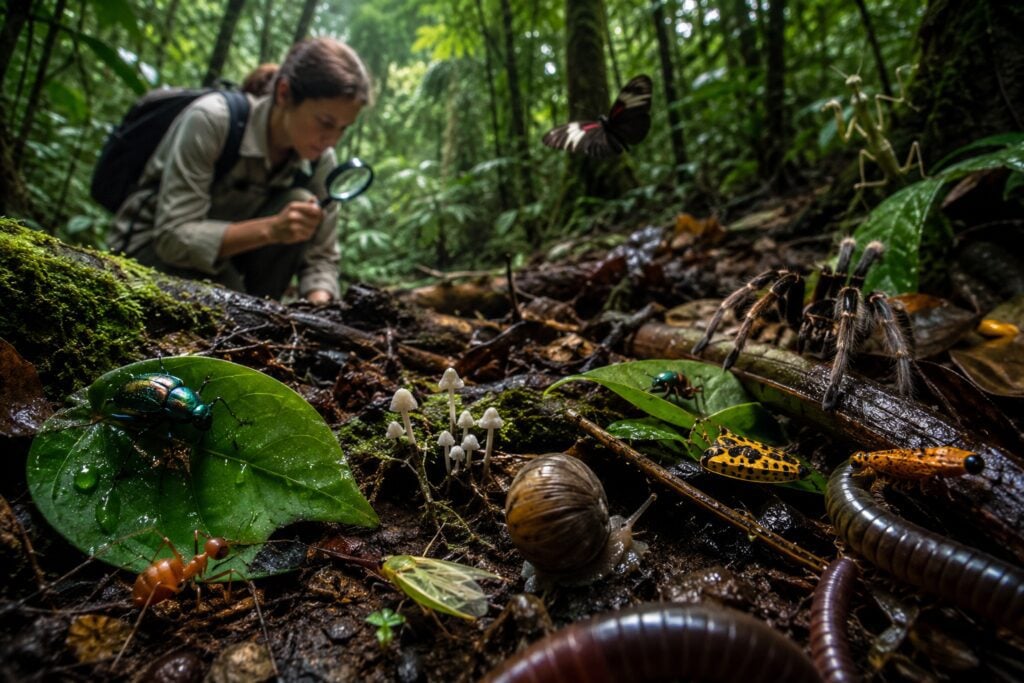
In northern Australia’s rainforests, scientists discovered a tiny spider that builds a spring-loaded silk structure. When a green tree ant bites it, the trap releases and throws the ant into a larger web above.
Researchers nicknamed the spider the “ballista” after an ancient siege weapon. What fascinates me is how precisely its hunting system seems adapted to such dangerous prey.
The discovery is a reminder that some of nature’s most ingenious designs may be hidden inside creatures small enough to overlook.
A Tiny Spider with a Powerful Hunting Strategy
After dark, the tiny ballista spider lowers itself beneath leaves and creates a cone-shaped trap from dozens of tightly stretched silk lines. The finished structure stores tension like a loaded spring.
When a green tree ant bites the silk, the trap releases and throws the ant into a larger web above.
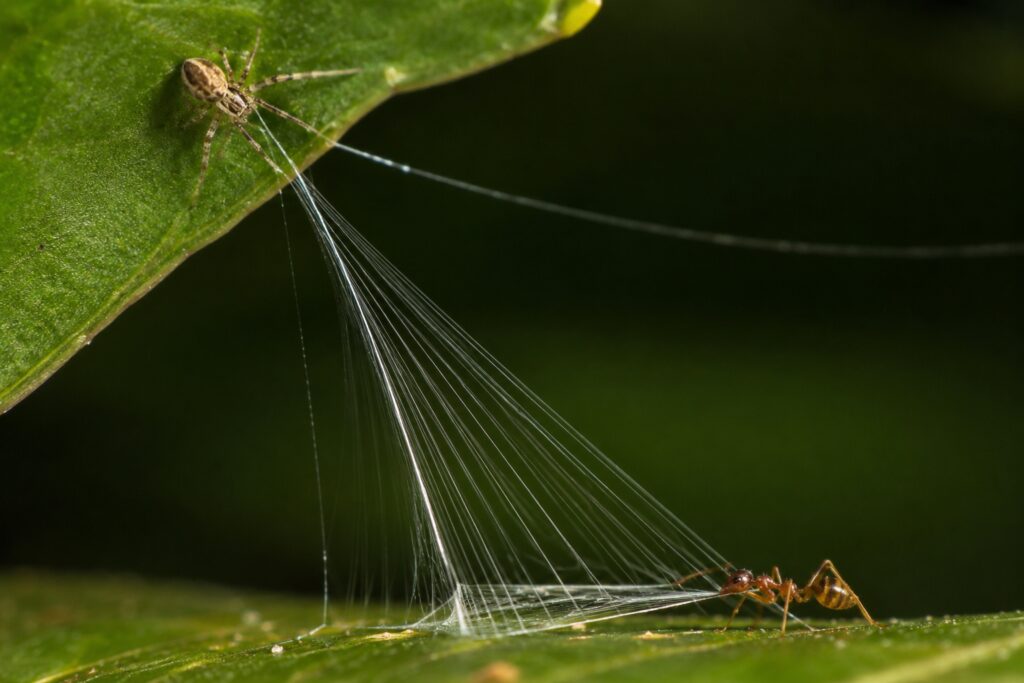
What fascinates me is how the spider avoids a dangerous fight altogether. It lets physics do the hunting.
For such a small creature, the design is remarkably sophisticated, part catapult, part fishing line, and entirely unlike any spider trap scientists had documented before.
Why Green Tree Ants Are Difficult Prey?
Green tree ants have powerful jaws, chemical defences, and nearby colony members ready to respond. Instead of attacking directly, the ballista spider uses its silk trap to launch one ant away from the group and into a separate web.
What fascinates me is the strategy behind it. The spider does not overpower the colony. It isolates the risk.
This feels less like brute force and more like precision. Nature often rewards efficiency, and this tiny spider has turned avoidance into an extraordinary hunting advantage.
The Trap is Triggered by the Ant
Scientists observed green tree ants biting the spider’s silk structure, releasing the stored tension and launching themselves into the web above. The prey unknowingly activates the very mechanism built to capture it.
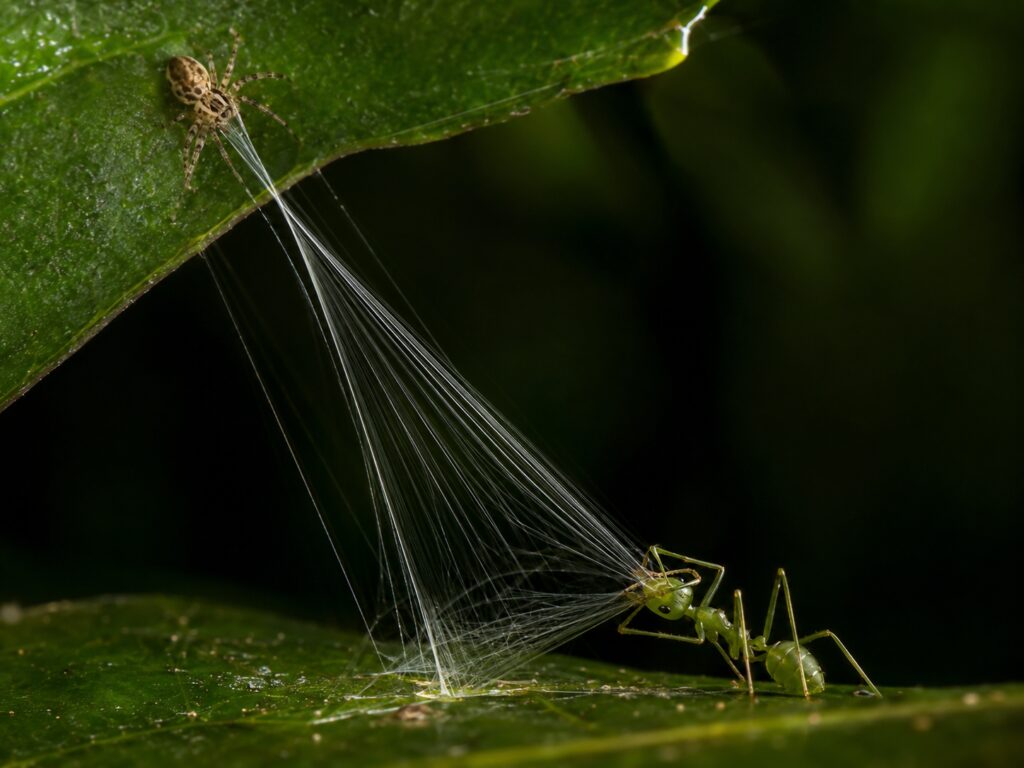
That makes the ballista spider’s strategy unlike most familiar web hunting. The spider does not rush forward or pull the trap. It waits for the ant to make the final move.
To me, that is what makes the discovery so extraordinary. The trap appears designed for a specific prey, yet one mystery remains: what makes the ants bite it in the first place?
Scientists Suspect the Spider May Use Chemical Bait
Researchers noticed that green tree ants were strongly drawn to the ballista spider’s trap, while other nearby ants showed little interest. One possibility is that the web carries a chemical signal that attracts or provokes the ants into biting it.
The idea is not yet proven, but it could mean the trap uses both engineering and deception: tension to launch the prey, and possibly scent to bring it closer.
That is what fascinates me most.
A spider web may be more than sticky silk. It can combine movement, vibration, chemistry, and behaviour into one remarkably precise hunting system.
Researchers Filmed the Spider in Northern Queensland
Some discoveries begin with a scientist looking through a microscope. This one began because someone noticed a tiny spider doing something strange in the dark.
Researchers spent 10 nights in northern Queensland using infrared equipment and high-speed cameras to capture how the spider built its trap and launched ants into the web.
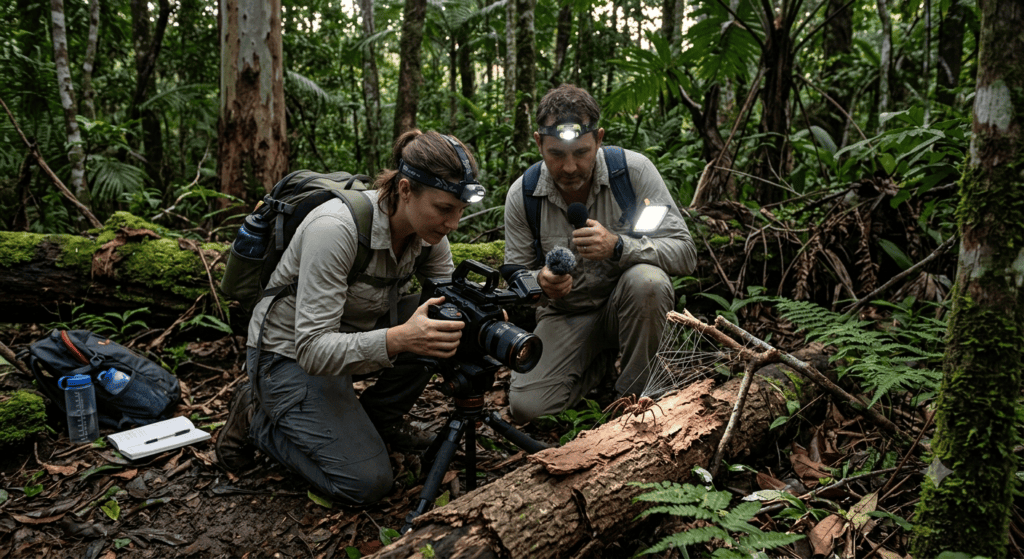
The species, linked to the genus Propostira, has not yet been formally named, but its unusual behaviour was remarkable enough to reach Current Biology.
What stays with me is how the discovery began. One careful observation turned a nearly invisible rainforest moment into an entirely new chapter of spider science.
What This Discovery Teaches Us About Spider Webs?
This web does not simply catch prey. It stores energy and waits for the right moment to release it.
The ballista spider adds a remarkable design to the world of spider silk. Its spring-loaded structure uses tension to create sudden movement, turning a lightweight web into a tiny mechanical system.
What fascinates me is the engineering hidden inside it.
Spider silk is already strong, flexible, and light, but this discovery shows how it can also store and release energy with precision.
Practical applications are still far away, but nature has inspired human design before. Sometimes, one unusual web is enough to make scientists rethink what a material can do.
My Tips for Appreciating Spiders Safely
The spider you notice during the day may be only a small part of what comes alive after dark.
I prefer to observe spiders without touching or disturbing them. A phone camera or zoom lens gives me a closer look while keeping a safe distance.
I also leave outdoor webs alone unless they create a real safety issue. Many spiders quietly help control insect populations and support the balance of the garden.
With children, I encourage curiosity without handling.
Look closely, stay respectful, and remember that an entire hidden world may begin moving once the sun goes down.
A Reminder That Nature Still Holds Surprises
The ballista spider does not depend on size or strength. It combines tension, timing, carefully arranged threads, and possibly chemical attraction to capture ants far more dangerous than itself.
What looks like a simple web is actually a highly specialised hunting system.
That is what fascinates me most. After hundreds of millions of years of spider evolution, nature is still revealing strategies we have never seen before.
Until recently, this spring-powered trap was working quietly in the dark, almost completely unnoticed.