London’s newest flood engineers have tails, teeth, and no construction budget.
In west London, a family of beavers is slowing water, rebuilding wetlands, and creating space for wildlife to return. What impressed me most is how naturally they solve a problem that usually demands concrete, machinery, and huge investment.
Their work is a reminder that flood protection does not always need to overpower nature. Sometimes, the smarter solution is to give nature room to work.
A Family of Beavers Is Making a Big Difference
At first, the idea of beavers protecting London from floods sounded almost unbelievable.
But since their return to Paradise Fields in Ealing in 2023, the landscape has begun working differently. Their dams hold water back, spread it across wetlands, and slow the sudden rush downstream.

One result stands out: Greenford Station has reportedly gone three consecutive years without flooding.
What impressed me most is how quietly the change happened. No concrete walls or heavy machinery, just a family of beavers reshaping the flow of water and showing how powerful natural flood management can be.
Nature’s Engineers Are Working Around the Clock
A beaver dam does not stop the rain. It changes what the rain is allowed to do.
Using branches, mud, leaves, and logs, beavers build natural barriers that slow rushing water and spread it across wetlands. The soil absorbs more, ponds hold the excess, and rivers face less pressure during heavy storms.
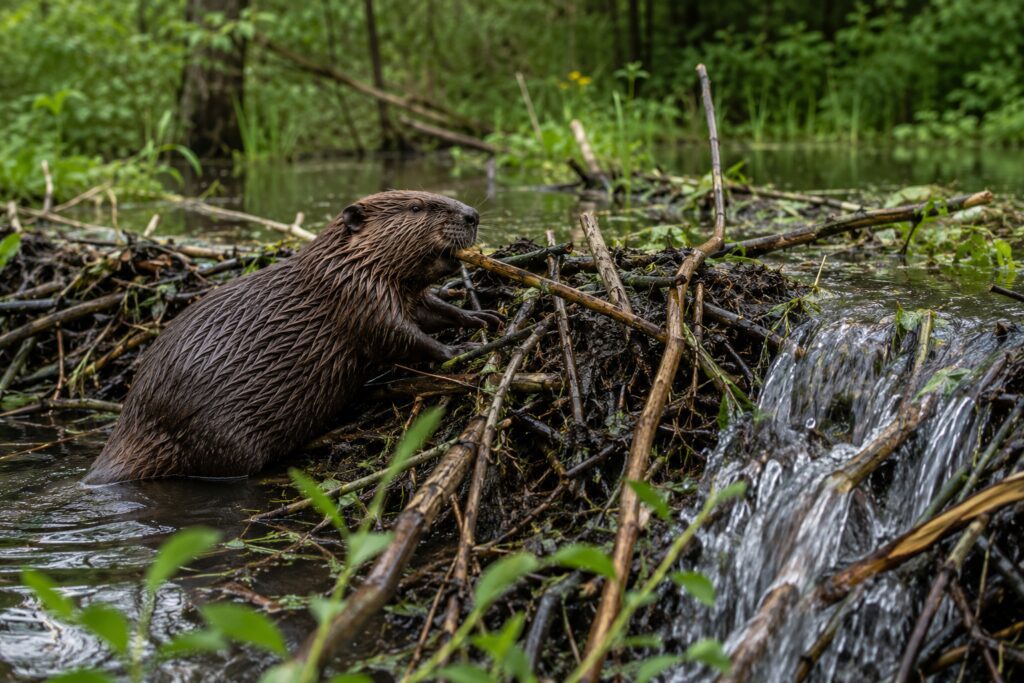
What once raced through the area in minutes can now take hours to move through multiple dams.
That delay may sound small, but during intense rainfall, it can be the difference between water being stored safely and flooding reaching homes, roads, or stations.
Wetlands Act Like Giant Natural Sponges
Wetlands do something concrete drainage often struggles to do: they give floodwater somewhere to wait.
During heavy rain, beaver ponds and channels spread water across the landscape instead of letting it rush downstream all at once. The soil absorbs more, rivers face less pressure, and flood peaks become easier to manage.
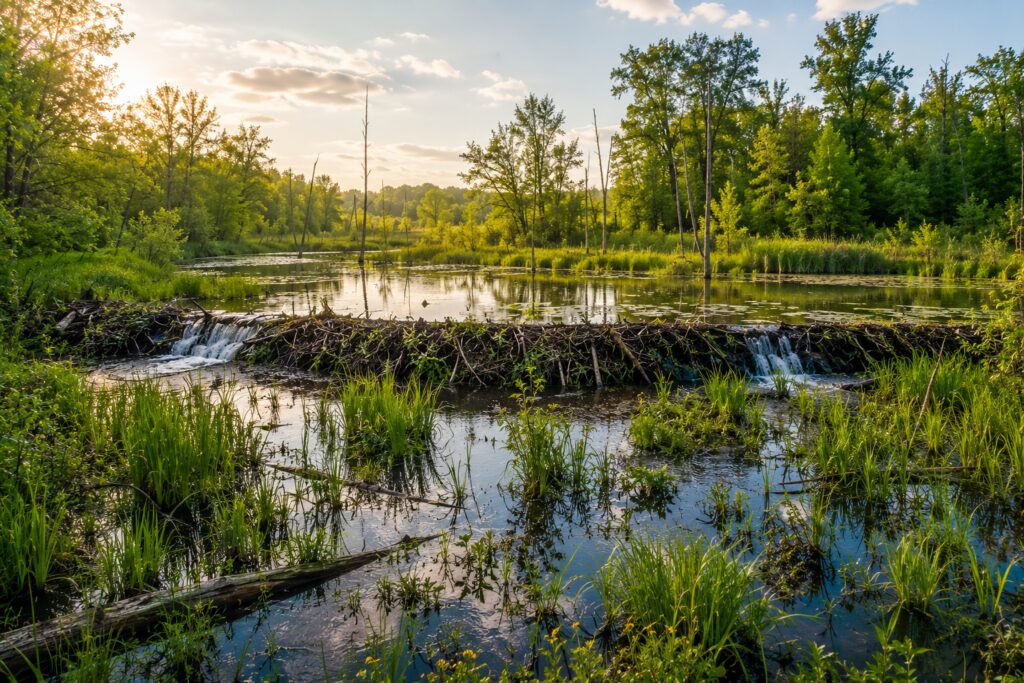
What impresses me most is how quietly this system works. The wetlands store water, release it slowly, and keep the land healthier long after the storm has passed.
Nature has been managing floods for centuries. The problem begins when we remove the places built to hold the water.
The Return of Wildlife Has Been Incredible
The beavers did not just bring water back. They brought life with it.
Since the wetlands at Paradise Fields began recovering, insects have multiplied, more birds have arrived, and at least two new bat species have been recorded in the area.
That is what makes this project so exciting to me. One restored wetland can become food, shelter, and breeding space for an entire community of wildlife.
By simply behaving like beavers, they are rebuilding an ecosystem far bigger than themselves.
New Beaver Kits Bring More Hope
Paradise Fields now has two tiny new engineers.
At least two beaver kits have been spotted exploring the wetlands while their mother stays close. Local residents gather after sunset hoping to catch a glimpse, and for me, those quiet family moments say as much as any scientific report.
Successful conservation is not only measured in flood data or species counts. It is also seen in healthy young animals, thriving habitats, and communities returning to nature.
Each new kit is more than good news. It is another generation ready to keep shaping the wetland.
Why Beavers Were Missing for So Long?
Britain once erased beavers from its rivers. Now, centuries later, it is asking them to help repair the landscape.
Hunted to extinction for their fur, meat, and scent glands, beavers disappeared along with the wetlands they naturally maintained. Their return through carefully managed projects feels like more than conservation.
To me, it is a second chance. Wildlife is coming home, old ecosystems are rebuilding, and an animal once lost is now helping solve modern problems.
What We Can Learn From This Project?
Not every modern problem needs a more complicated machine.
The Ealing Beaver Project shows that protecting people and restoring nature can happen together. Cities still need drainage and flood defenses, but wetlands, forests, grasslands, and wildlife can strengthen those systems in ways concrete alone cannot.
That is what stays with me most. Nature is already cooling air, filtering water, storing carbon, supporting crops, and slowing floods.
Sometimes the smartest innovation is simply learning how to work with the systems that were functioning long before us.
My Personal Thoughts on Nature-Based Solutions
London is enormous, but one small beaver family is still managing to change part of it.
Their dams are slowing floods, restoring wetlands, attracting wildlife, and giving local people a reason to care about the landscape again. That is what makes this story feel so hopeful to me.
Not every community needs beavers, but every community can make room for nature. Protecting rivers, planting native trees, and restoring wetlands may begin as small projects, yet their impact can grow for years.
Sometimes progress starts by stepping back and letting nature return to work.