For more than a century, part of the River Kemp was forced to flow in a straight line, separated from the natural curves that once shaped the surrounding land.
Now, after an ambitious restoration project, water is finally moving through its historic bend again.
This simple change could slow floodwater, create new habitats, support local farming, and bring life back to a landscape that has been waiting generations to recover.
When a River Finally Found Its Natural Path Again?
I find it surprisingly emotional to watch water return to a place where it has not flowed naturally for more than a century.
It may look like a simple change in direction, but restoring a river’s natural curve can completely transform the surrounding landscape.
After 18 months of planning and construction, part of the River Kemp in south Shropshire has finally been reconnected to its historic meander.
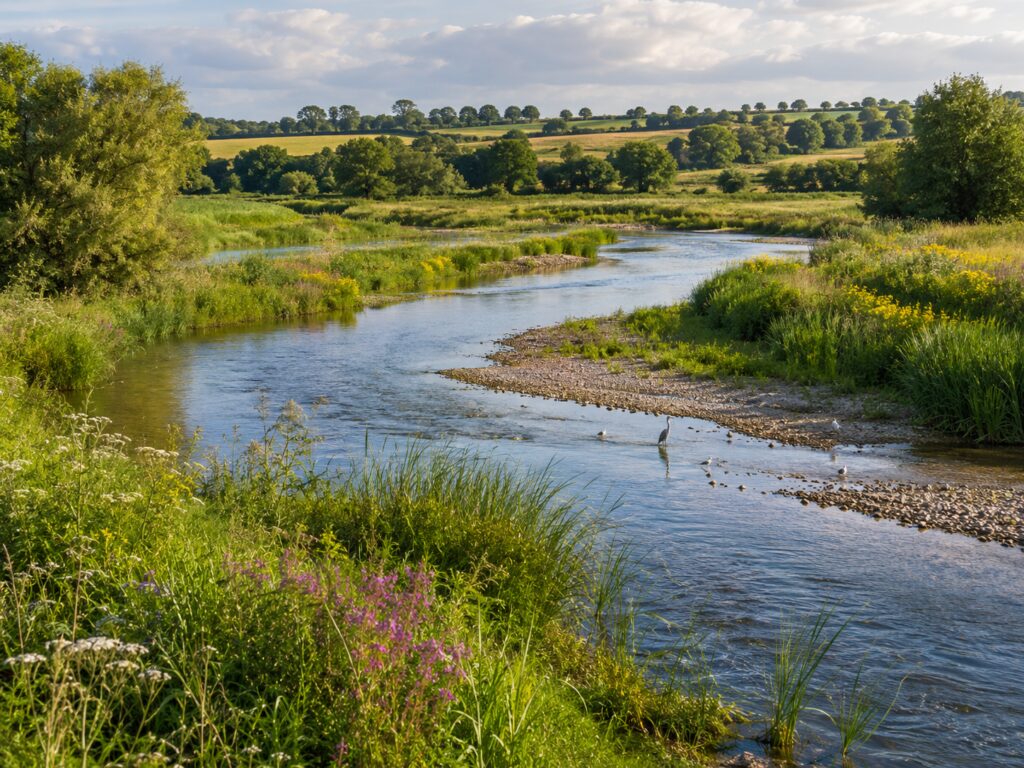
The section had been straightened by landowners during the 1800s, separating the river from its natural floodplain and reducing the variety of plants and animals that could survive there.
When workers removed the final muddy barrier, water rushed into the restored channel for the first time in hundreds of years.
The moment reportedly brought tears, pride, and celebrations among the people involved.
I can understand why.
This was not simply the completion of an engineering project. It was the moment a river was allowed to behave naturally again.
Why Rivers Need Their Natural Bends?
A winding river may look inefficient, but slowing water down is often exactly the point.
When rivers are straightened, rainwater rushes downstream faster, increasing erosion and flood pressure while leaving less space for wildlife.
The restored River Kemp now follows a wider, shallower path, allowing water to spread into the floodplain when levels rise.
To me, it feels like the river has been given room to breathe again.
Instead of forcing water through one narrow channel, the landscape helps hold, slow, and absorb it. That is natural flood management at its best: working with the river rather than trying to overpower it.
A Natural Defense Against Flooding
Flood protection is often discussed as if it requires large, expensive structures. Those defenses can certainly be important, especially in towns and densely populated areas.
However, nature can also become part of the solution.
The new River Kemp meander will allow the surrounding land to hold large amounts of water during wet periods.
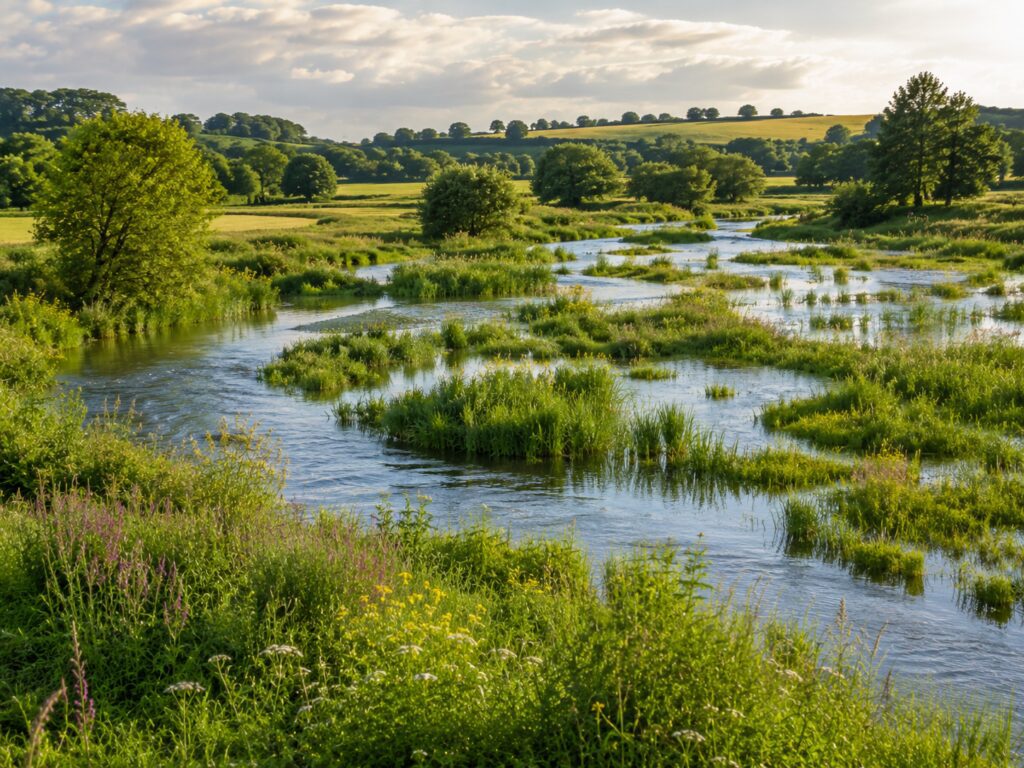
The wider landscape can act like a sponge, temporarily storing water before releasing it more gradually.
This does not mean one restored river bend will prevent every flood. Weather events can be unpredictable, and severe storms may still overwhelm natural systems.
However, projects like this can reduce pressure on downstream areas when combined with other flood-management measures.
One useful lesson I take from the project is that flood prevention should begin upstream whenever possible.
Restoring wetlands, planting trees, improving soil, reconnecting floodplains, and allowing rivers to bend naturally can all help slow the journey of rainwater.
By the time water reaches homes, roads, and businesses, much of the damage may already be difficult to stop.
Managing water earlier in the landscape can be more effective and more sustainable.
Wildlife Could Return Faster Than We Expect
Right now, the restored river looks more like a construction site than a wildlife haven. But nature often begins its best work in mud.
The shallow edges, gravel, pools, and slower water are creating space for insects, plants, fish, wading birds, and other species to return. A healthy river is not uniform.
It needs fast water, quiet corners, wet soil, exposed stones, and sheltered banks.
What gives me hope is that recovery does not need to be forced.
Once the right conditions return, seeds arrive, insects settle, birds follow, and life begins rebuilding itself.
Sometimes restoration is not about adding more. It is about removing what stopped nature from coming back.
Farmers Were Part of the Solution
The strongest part of this restoration is not the river alone. It is the partnership behind it.
The Walcot Farm family can still graze livestock while the restored floodplain slows water and creates new habitat. That balance works because farmers were included, not pushed aside.
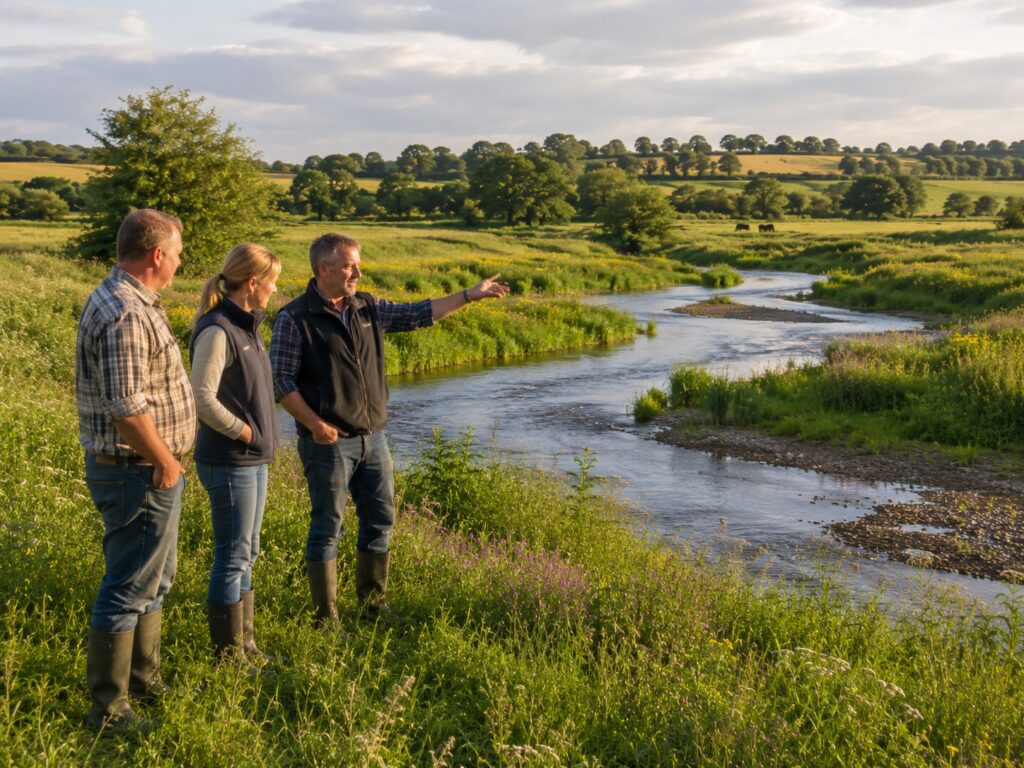
They understand the land through daily experience. Conservation groups bring ecological knowledge, funding, and long-term planning.
When those two perspectives meet, restoration stops feeling idealistic and starts becoming practical.
What Other Communities Can Learn?
A river may be straightened on a map, but the land often remembers where it once flowed.
That is what makes the River Kemp project feel relevant far beyond Shropshire.
Many rivers were reshaped for farming and development, often increasing flood risk and weakening habitats over time.
Full restoration is not possible everywhere, but smaller changes still matter.
Rebuilding selected bends, planting native riverbank vegetation, reconnecting floodplains, creating ponds, and removing unnecessary barriers can help water move more naturally.
I would begin by studying the landscape itself.
Old maps, satellite images, darker soil, and places where water repeatedly gathers can reveal forgotten river paths.
Most importantly, involve farmers, residents, landowners, businesses, and local authorities early. Restoration works best when it respects both nature and the people living alongside it.
Giving Nature Enough Space to Recover
What stayed with me was the moment the river found its old curve again.
For generations, it had been pushed into a straighter, faster channel. Now, water is returning to the shape the land never completely forgot.
The banks are still bare, and wildlife will need time to return. But recovery has already begun.
This project did more than redirect water. It gave the landscape room to heal and allowed the River Kemp to become a living river again.