More than 120 mines reported production in recent quarters, but most of the coal is no longer coming from mountaintops or large surface pits. In 2025, underground mines produced about 97.4 million of the state’s 113.6 million tons, nearly 86% of the total.
The pattern continued into early 2026, when underground operations produced roughly 25.9 million tons compared with only 3.4 million tons from surface mines.
To me, these numbers show a tradition that has changed without disappearing. The methods may be different from those of earlier generations, but much of West Virginia’s coal is still being brought up from deep inside the Appalachian mountains.
West Virginia is Still Producing Coal
It is easy to speak about West Virginia coal as though it belongs only in history books. Old photographs often show crowded mining towns, company stores, railroad cars, and thousands of miners entering the mountains before sunrise.
However, the current data tells a different story.
West Virginia reported approximately 113.6 million tons of coal production in 2025. Underground mines accounted for about 97.4 million tons, while surface operations produced around 16.2 million tons.
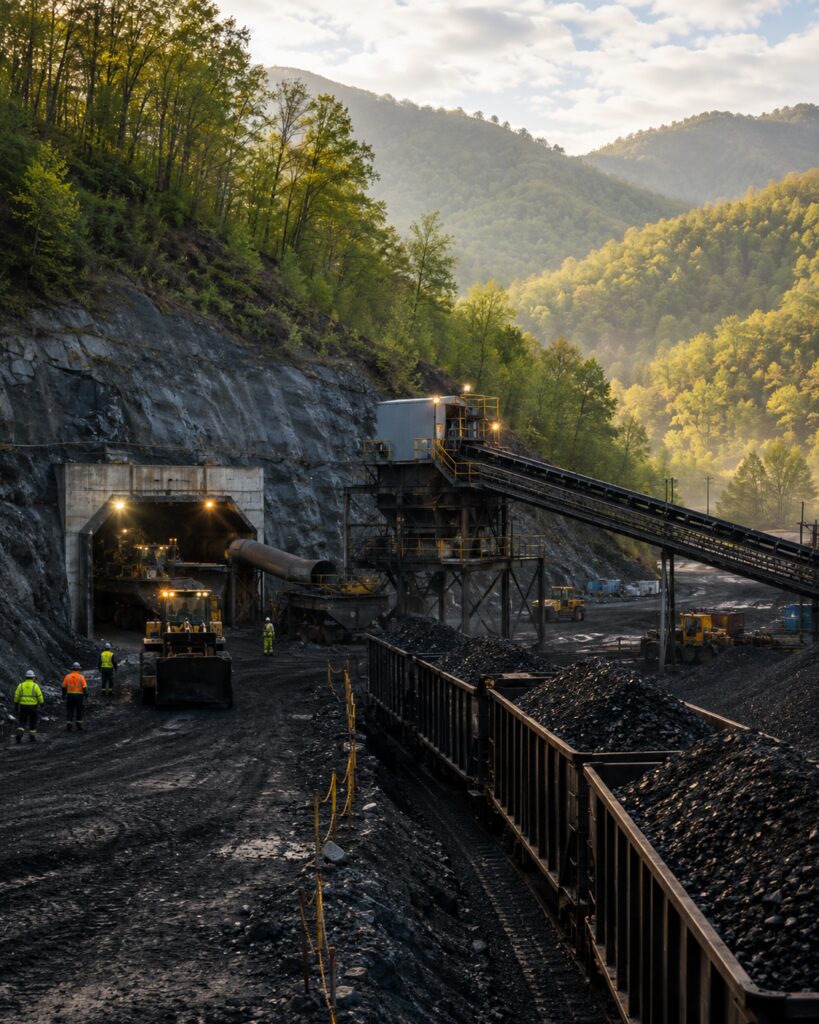
That underground total is important because surface mining produces most coal nationally. Across the United States, large surface operations have often dominated production because coal seams can sometimes be reached using enormous trucks, shovels, and excavation equipment.
West Virginia is different.
Many of its valuable coal seams run beneath steep Appalachian terrain.
Instead of removing everything above the coal, miners often follow those seams through underground networks.
Personally, I think this is one of the most overlooked parts of the state’s modern identity. The coal industry has become smaller, more mechanized, and more complicated, but the image of miners working beneath the mountains is not simply nostalgia.
It remains part of the present.
The first months of 2026 made the underground pattern even clearer. West Virginia reported approximately 29.3 million tons of coal production during the first quarter.
Around 25.9 million tons came from underground mines, while approximately 3.4 million tons came from surface operations. That places the underground share at roughly 88%.
To me, this shows why percentages can sometimes explain a story better than total numbers. Coal production may rise or fall from year to year, but the location of that production tells us what kind of mining industry remains.
West Virginia is not mainly depending on giant open pits. Much of its coal still begins miles beneath hills, forests, roads, and communities.
A useful tip whenever you read mining statistics is to look beyond statewide production.
Ask how much came from underground mines, how much came from surface mines, how many operations reported production, and how many people were employed in each type of mining.
Those details often reveal the real story hiding behind the headline.
Old-School Appalachia with Modern Equipment
Deep underground, coal mining looks less like a worker swinging a pickaxe and more like a moving industrial system.
Continuous miners cut and collect coal. Shuttle cars and conveyor belts move it through the mine.
Roof bolters reinforce the rock above, while ventilation, communication, and monitoring systems help crews work in an environment where every detail matters.
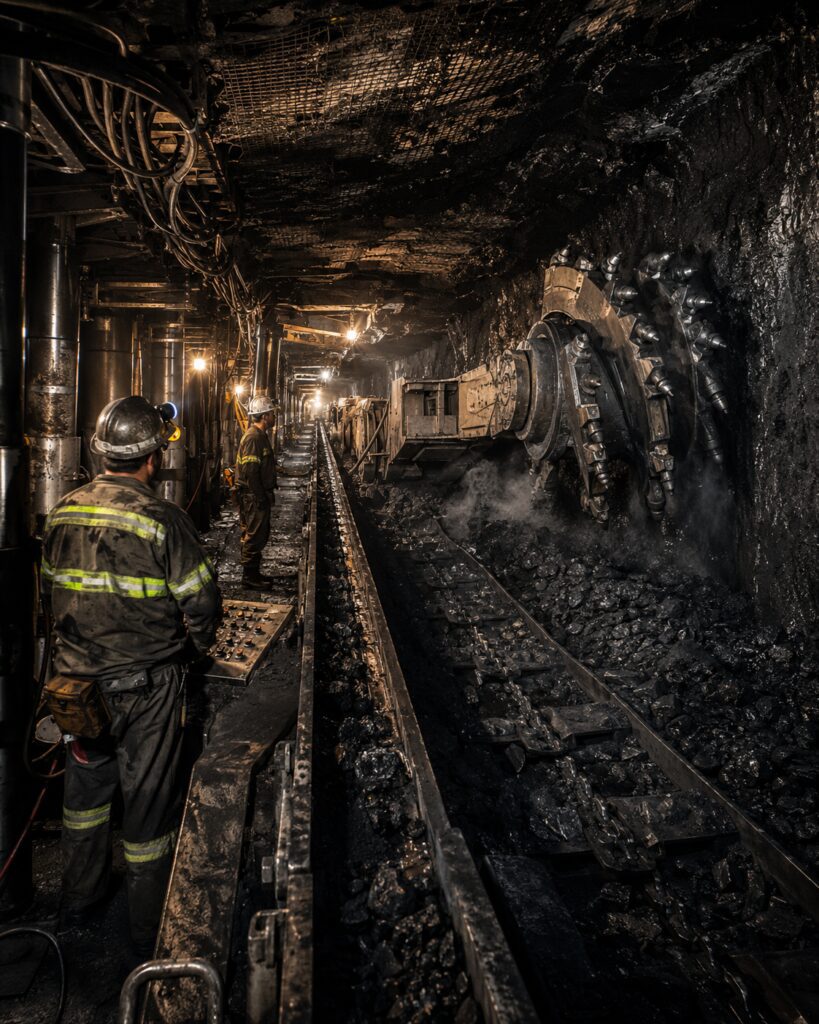
Longwall operations take the scale even further, using massive equipment and powered supports to remove coal across wide sections of a seam.
What stands out to me is the level of coordination behind it all. Modern underground mining is not simply digging rock. It is engineering, transport, maintenance, communication, and safety management working together far from daylight.
The Workforce Tells the Same Story
In 2025, West Virginia reported 9,805 underground coal employees compared with 3,003 surface workers. That pattern reflects where most of the state’s coal is still being produced: deep below ground.
The numbers are far from the industry’s peak, when mine employment reached about 130,000 workers around 1940. Mechanization, changing energy markets, and competition from natural gas and renewables have transformed coal communities for generations.
But decline is not the same as disappearance. Thousands of West Virginians still work underground, operate equipment, process coal, maintain machinery, and keep the industry moving.
To me, these figures show an industry that is smaller than it once was, but still deeply connected to the people and communities around it.
Coal is More Than a Number in Appalachia
Coal is not just pulled from the ground. In many West Virginia families, it is carried through generations.
It has provided jobs, powered industries, and helped build entire communities. It has also brought serious costs involving worker safety, health, environmental damage, and economic dependence.
Both truths belong in the same conversation.
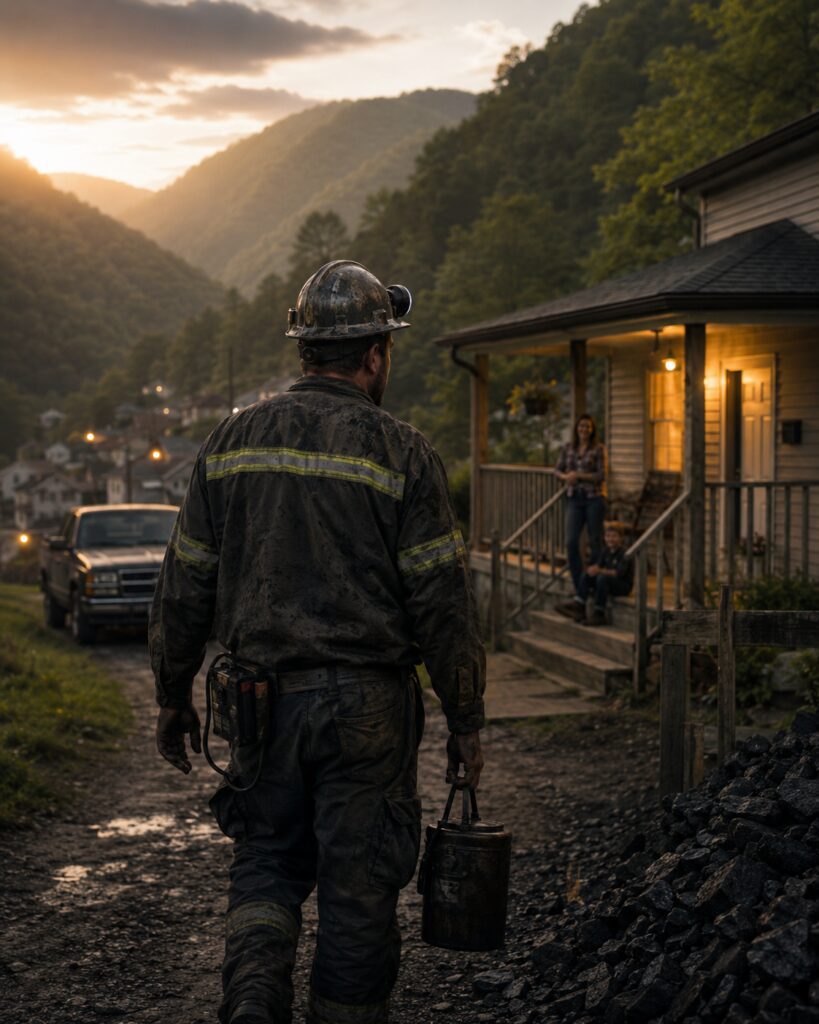
What makes this story personal is the memory attached to it: a grandfather working underground, coal dust on work clothes, mine whistles, shift changes, layoffs, and towns shaped by the industry’s rise and decline.
That is why I believe the future cannot be discussed only in terms of energy. A real transition must also mean reliable jobs, stronger local businesses, protected workers, and opportunities that give young people a reason to stay.
Changing an energy system is difficult. Rebuilding trust and opportunity in the communities behind it may be even harder.
West Virginia is Not Just a Coal Memory
West Virginia’s coal story has not ended. It has simply moved into a smaller, more uncertain chapter.
Coal may never again employ the vast workforce it once did, and changing energy markets continue to reshape the industry. But the state is still producing, with most of its coal still coming from deep underground.
Behind those numbers are miners, mechanics, engineers, operators, safety teams, and machines working far beneath the Appalachian hills.
What stands out to me is the contrast. The technology is more advanced, the workforce is smaller, and the future is less certain. Yet the work continues.
For now, West Virginia’s coal history is