Most people see discarded plastic as waste. Andre Jenkins saw the beginning of a building material.
After three years of experimenting, he developed a non-toxic thermal process that turns unwanted plastic into strong, affordable construction bricks. What once sat in landfills can now become part of schools and other useful structures.
That is what makes this story powerful to me. It is not only about recycling plastic. It is about patience, practical innovation, and finding value in something the world had already thrown away.
A Growing Plastic Waste Problem Needed a New Solution
Plastic became a problem because it was designed to be useful for minutes but can remain in the environment for generations.
Instead of asking how to get rid of discarded plastic, Andre Jenkins asked a better question: what could it become?
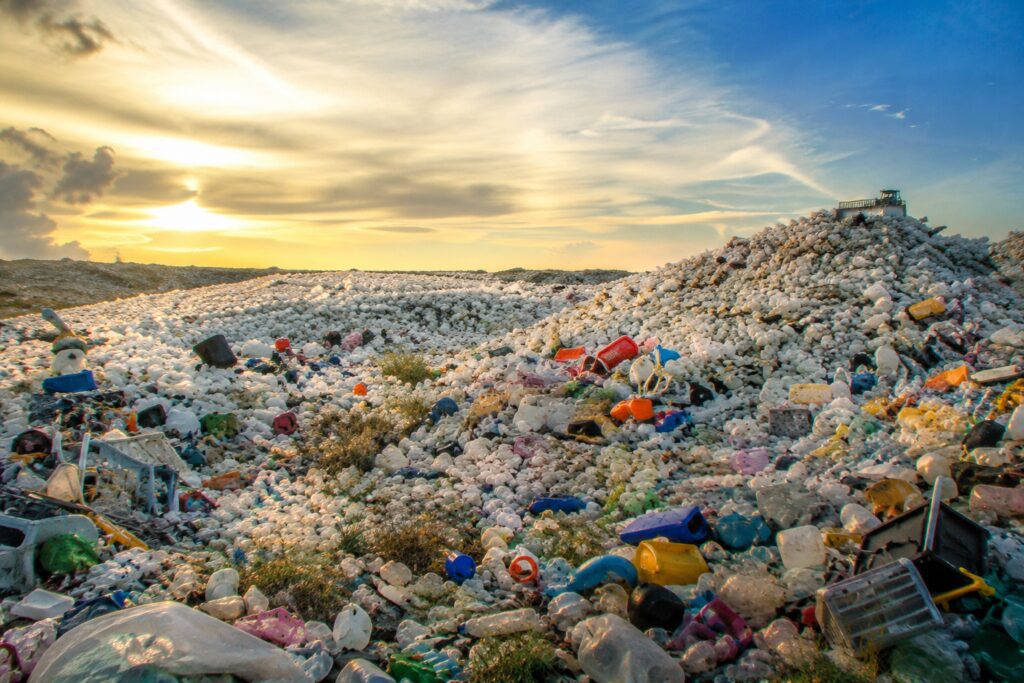
That shift changed waste into possibility.
Plastic headed for landfills could be treated as a raw material for something useful, durable, and valuable.
To me, that is where meaningful innovation often begins. Not by seeing rubbish more clearly, but by seeing potential where others stopped looking.
Three Years of Experimenting Led to a Breakthrough
The finished brick may look simple, but three years of trial and error are hidden inside it.
Andre Jenkins had to do more than melt plastic into a mould. The material needed to be strong, stable, practical, and consistent enough for real construction.
Different plastics respond differently to heat, so every part of the process required careful testing.
His reported non-toxic thermal bonding method turns discarded plastic into durable building material.
What stands out to me is that the idea tackles two problems at once: reducing plastic waste while creating more affordable construction materials. That is when sustainability becomes truly useful.
Turning Plastic Trash Into Durable Building Bricks
It is hard to imagine yesterday’s plastic packaging becoming part of tomorrow’s classroom.
On its own, discarded plastic feels light and temporary. But when processed and bonded correctly, it can become a durable, moisture-resistant, and affordable building material.
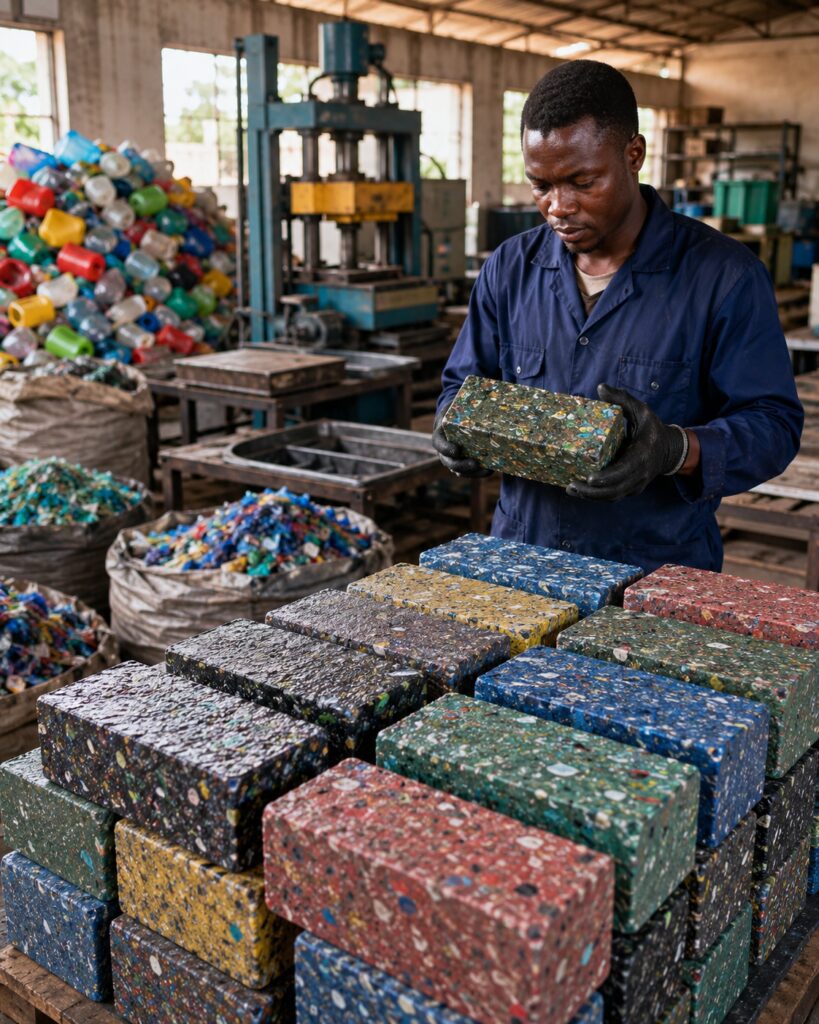
What makes the idea powerful to me is not only the practical benefit. Communities may gain more classrooms while less plastic is sent to landfills.
There is something hopeful about waste becoming part of a school. A material once treated as useless can help build a place where children learn, grow, and prepare for the future.
Affordable Materials Could Help More Schools Be Built
The most powerful part of this idea is where the plastic ends up.
Instead of sitting in a landfill, it can become part of a classroom, library, or school where children learn every day. If recycled bricks can be produced affordably and locally, they may help reduce waste while making important building projects more accessible.
That connection is what makes the project meaningful to me. It does not treat pollution and education as separate problems.
Waste becomes a resource. The resource becomes a school. And the school becomes an investment in the next generation.
Why Sustainable Construction Matters?
A plastic product does not have to reach the end of its story when we throw it away.
Through a circular approach, discarded material can be collected, transformed, and given a new purpose instead of remaining in landfill. Turning plastic waste into construction bricks is one example of how old materials can stay useful for longer.
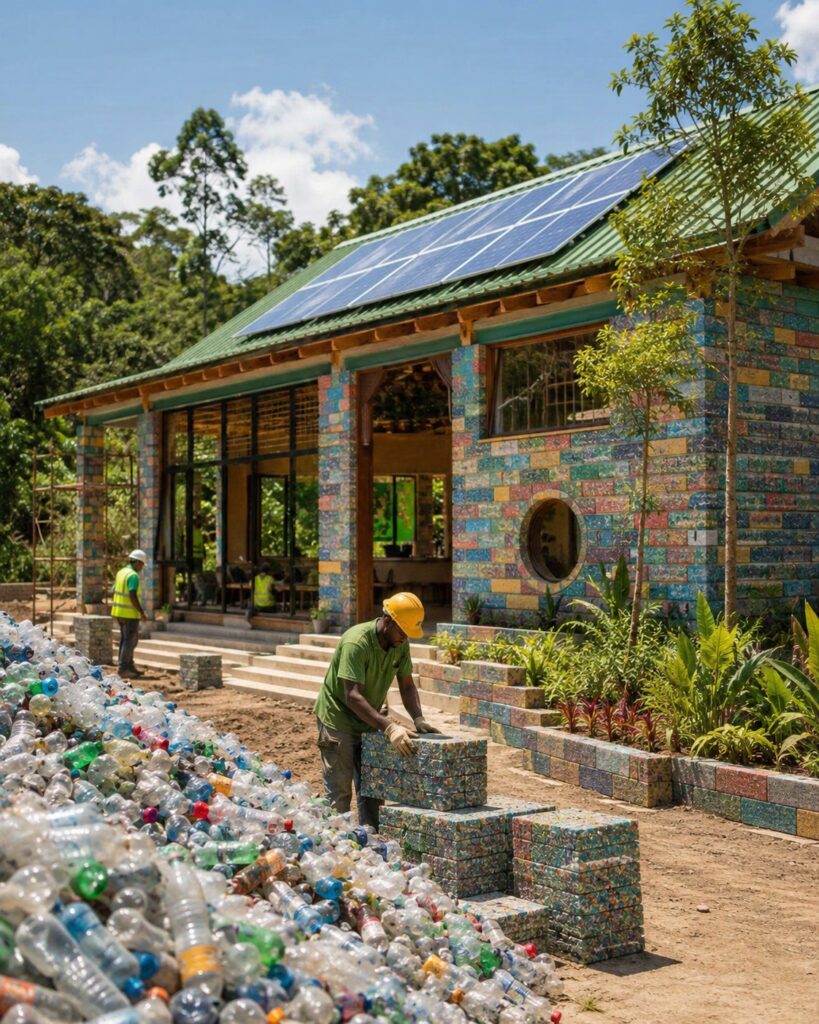
What makes the idea meaningful to me is the balance it requires. Reducing waste matters, but so do strength, durability, fire safety, and proper building standards.
Sustainable construction should not choose between protecting the environment and protecting people. The best solutions are designed to do both.
What This Innovation Can Teach Us?
Big environmental ideas do not always begin in laboratories. Sometimes, they begin in a small workshop with one stubborn question.
Andre reportedly spent three years testing, failing, adjusting, and trying again before finding a workable solution. To me, that persistence matters just as much as the final brick.
Useful innovation rarely arrives fully formed. It grows through patience and repeated experiments.
My lesson is simple: start with one local problem. Study the waste around you, understand why it is difficult to reuse, and ask what else it could become.
Small experiments may not change the world overnight, but they can become the first step toward something much bigger.
Simple Ways We Can Support Plastic Waste Solutions
I may never build a recycling factory, but I still decide what enters the waste stream every day.
I use reusable bottles, bags, and containers when they make sense, sort recyclable materials carefully, and support companies that give old materials a useful second life.
But I have also learned not to trust every “eco-friendly” label at first glance. I look for real details: what the product is made from, how long it lasts, and what happens when it is no longer useful.
Better choices begin with less waste, but they also depend on better information.
From Urban Waste to Places of Opportunity
The most powerful part of this story is not the brick. It is what the brick can become.
Plastic once headed for landfill is transformed into building material. That material becomes a school. And that school becomes a place where children can learn, grow, and imagine a better future.
To me, it proves that waste is sometimes just a resource waiting for a new purpose.
The process may be complex, but the idea is beautifully simple: take a problem, turn it into something useful, and let that solution create value far beyond the material itself.