A cleaner park can begin with a trash bag. Real change begins when people decide the problem is still worth showing up for.
On July 3, nearly 150 volunteers gathered near Dr. Jose Rizal Park and Lewis Park to clean an area connected to Seattle’s long-standing “The Jungle” encampment. They removed discarded foil, used needles, and dozens of bags of waste.
What stayed with me was not only what they cleared away, but who came together to do it.
Community groups, recovery advocates, local leaders, and people with personal experience of homelessness and addiction all chose action over frustration.
They did more than clean public land. They showed what can happen when a community refuses to look away.
A Community Refusing to Look Away
A park can lose more than its cleanliness. It can lose the trust of the people who once felt safe using it.
Homelessness, addiction, illegal dumping, and public safety are complex problems, and one cleanup cannot solve them all. But complexity should never become a reason to stop showing up.
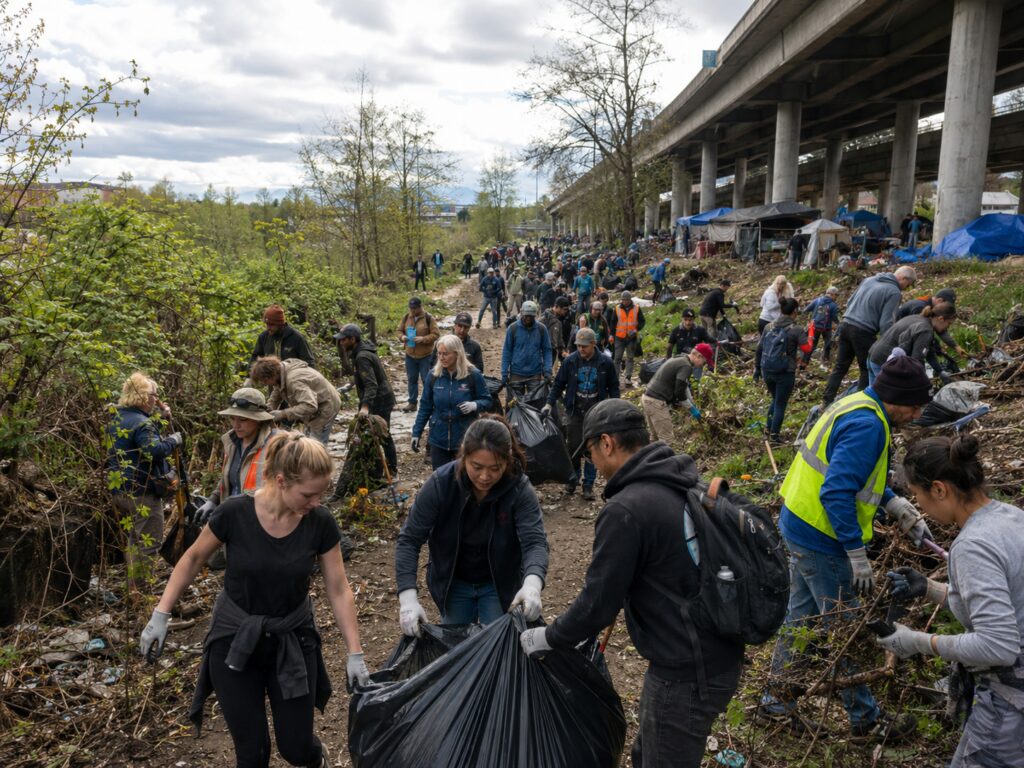
Seattle City Councilmember Eddie Lin joined volunteers on the ground, showing that leadership also means listening, witnessing conditions firsthand, and working beside the community.
For me, this effort was about more than removing waste. It was about reopening public space, protecting the environment, and reminding residents that their parks are still worth caring for.
The Human Story Behind the Trash
Behind every pile of waste, there may be a story far more complicated than what is visible.
Hazardous trash still needs to be removed, but the people connected to it should not be reduced to the damage left behind. Addiction, trauma, poverty, and housing instability can shape lives in ways outsiders may never fully see.
That is why Corey Rattleff’s story stayed with me.
After once contributing to the problems in the area, he returned during his recovery to help repair some of the harm.
His presence carried a powerful message: a person’s lowest chapter does not have to be the final one.
Recovery can become responsibility. Pain can become purpose. And sometimes, the people who once needed help become the ones helping others find their way back.
Cleaning Public Land Safely
A cleanup can help a community, but good intentions should never come before safety.
Food wrappers and plastic bottles are one thing. Used needles, chemicals, human waste, damaged propane tanks, and unstable shelters are something else entirely.
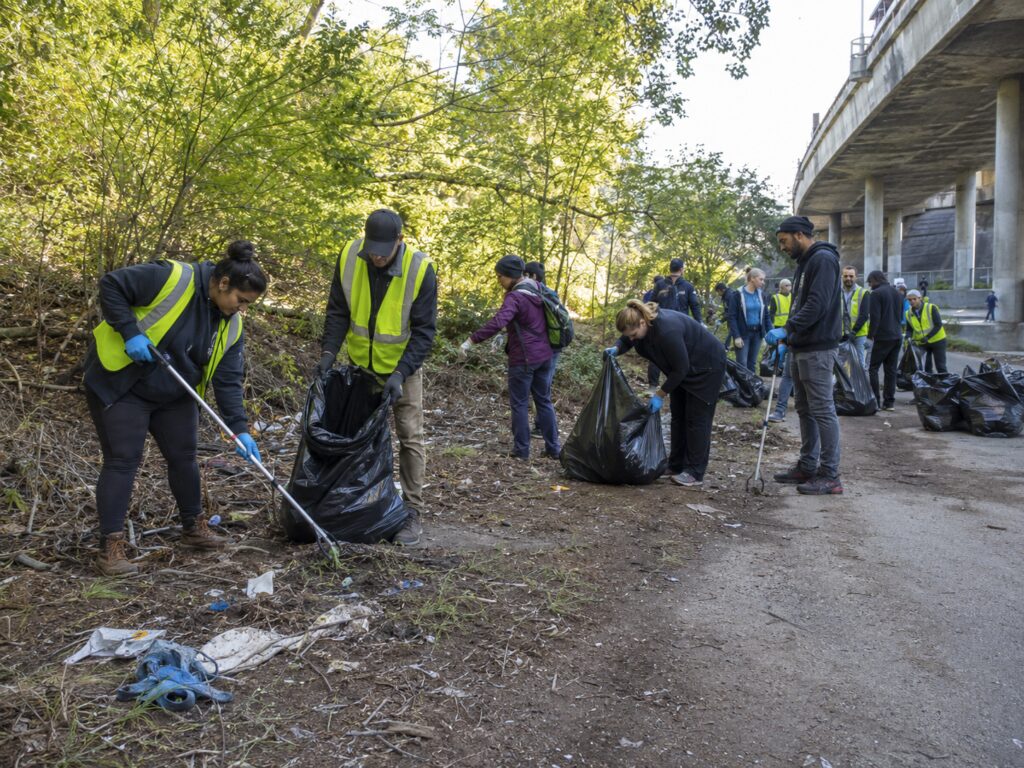
I would never touch an unknown sharp object by hand. Volunteers should follow trained organizers, wear strong gloves and closed shoes, use proper tools, and place needles only in approved sharps containers.
Respect matters too. Personal belongings, shelters, outreach, housing support, and addiction services require careful coordination.
For me, the lesson is simple: helping responsibly means knowing what volunteers can safely handle and when trained professionals need to take over.
More Than Bags of Garbage
A cleanup cannot be measured only by the number of bags removed.
It can reconnect neighbors, bring people back to neglected spaces, and remind a community that visible change is still possible. I also appreciate programs that involve outreach, recovery support, and people rebuilding their lives through meaningful work.
But a cleaner park is not the same as solved homelessness.
Waste can disappear in a day. Housing, treatment, healthcare, employment, and long-term support take much more.
For me, the real value of a cleanup is that it creates momentum. It restores the land while reminding us that lasting change must continue long after the final bag is carried away.
Public Safety and Compassion Can Exist Together
Compassion and public safety should not be treated like opposites.
Communities deserve clean parks, safe trails, and protection from hazardous waste. At the same time, people experiencing homelessness deserve dignity, outreach, and realistic paths toward stability.
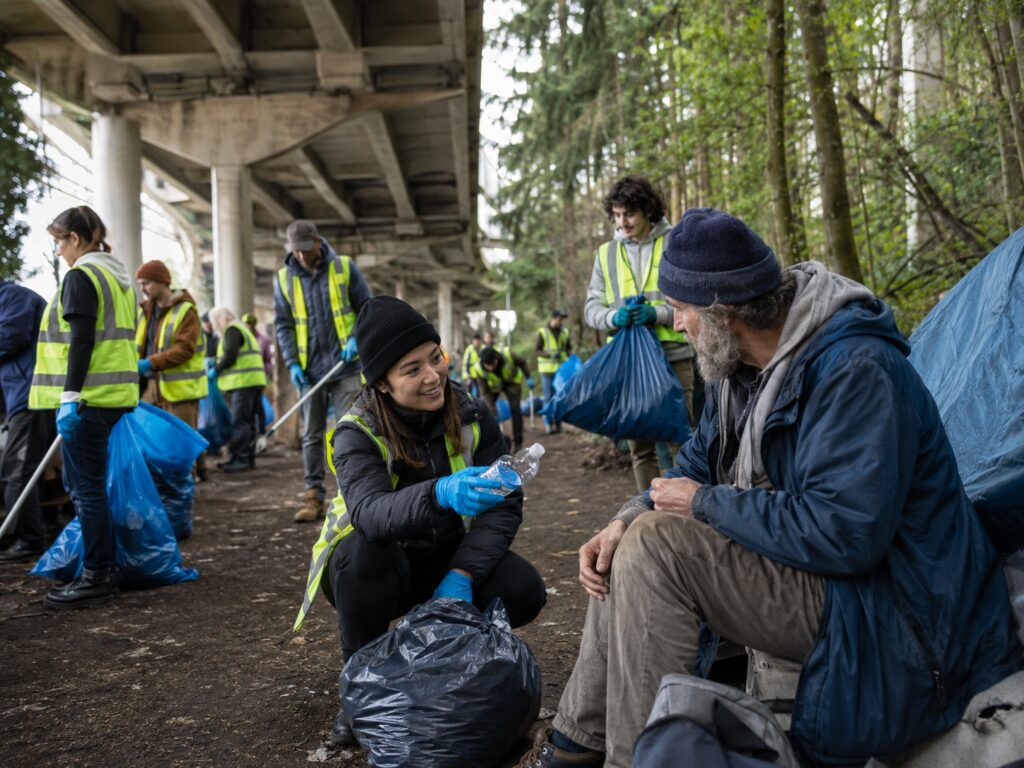
I do not believe we have to choose one concern and ignore the other.
Real compassion does not excuse dangerous conditions, and public safety does not require treating every homeless person as a threat. A stronger response protects shared spaces while helping vulnerable people move toward safer lives.
Both truths can exist at once—and lasting solutions begin when we are willing to hold them together.
Why Local Volunteer Groups Matter?
Big community problems rarely belong to one group, and they are rarely solved by one group either.
Government can provide services and policy. Nonprofits can organize volunteers. Recovery groups bring lived experience. Businesses can donate supplies, while residents help notice problems before they grow.
That is what made the Seattle cleanup powerful.
Different people brought different strengths, but they worked toward the same goal.
My takeaway is simple: start close to home. Join one trusted local group, show up prepared, follow safety guidance, and give a few useful hours.
Small efforts may feel limited alone. Together, they can change an entire public space.
One Cleanup is a Beginning, Not an Ending
A cleanup can transform a park in one day. Keeping it healthy takes people coming back.
Waste can return, trails can be neglected again, and vulnerable people may still need consistent outreach. That is why long-term stewardship matters more than one impressive event.
For me, real progress looks less dramatic but more lasting: regular cleanups, safer access, honest evaluation, and support that continues after the cameras are gone.
Clean. Return. Listen. Support. Improve.
Then keep showing up.
The Power of Becoming Part of the Solution
Hope does not always arrive through a new policy or a major announcement. Sometimes, it shows up wearing gloves and carrying a garbage bag.
Nearly 150 people gave part of their holiday to a place many others had stopped looking at. They did not solve homelessness, addiction, or every problem connected to “The Jungle.” But they proved that caring can still become action.
For me, that is the real meaning of community.
We can demand better systems while still helping protect public spaces. We can support housing and treatment while refusing to ignore unsafe conditions.
The cleanup achieved something simple but powerful. It reminded Seattle that people had not stopped caring—and lasting change often begins with that decision.