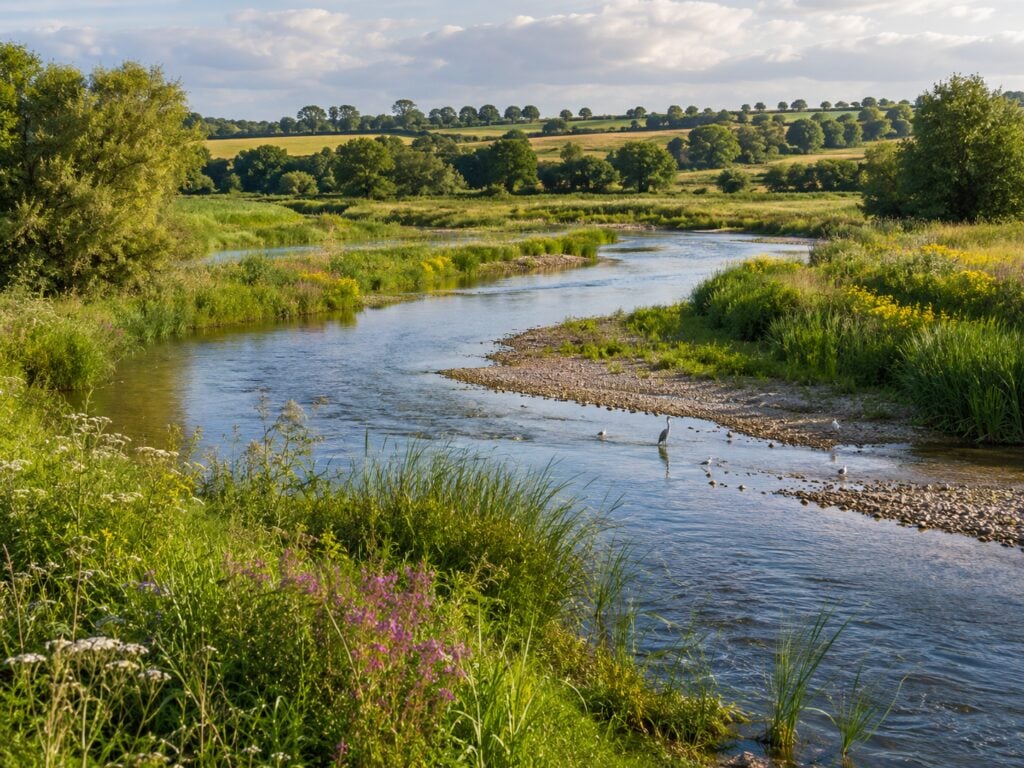
Along the River Perry, conservation is happening one pulled plant at a time.
Local volunteers are removing Himalayan balsam, an invasive plant that may look harmless but can quickly crowd out native species, damage riverbanks, and disrupt the natural balance of the area.
What makes this work powerful is its simplicity.
No big machinery, no dramatic campaign; just people showing up, getting their hands dirty, and protecting the river before the damage spreads further.
A Small Volunteer Effort With a Big Environmental Purpose
Protecting a river does not always begin with a big project. Sometimes, it starts with local people pulling one invasive plant at a time.
Along the River Perry in north Shropshire, volunteers from River Perry Water Watch are removing Himalayan balsam before it spreads further along the banks.
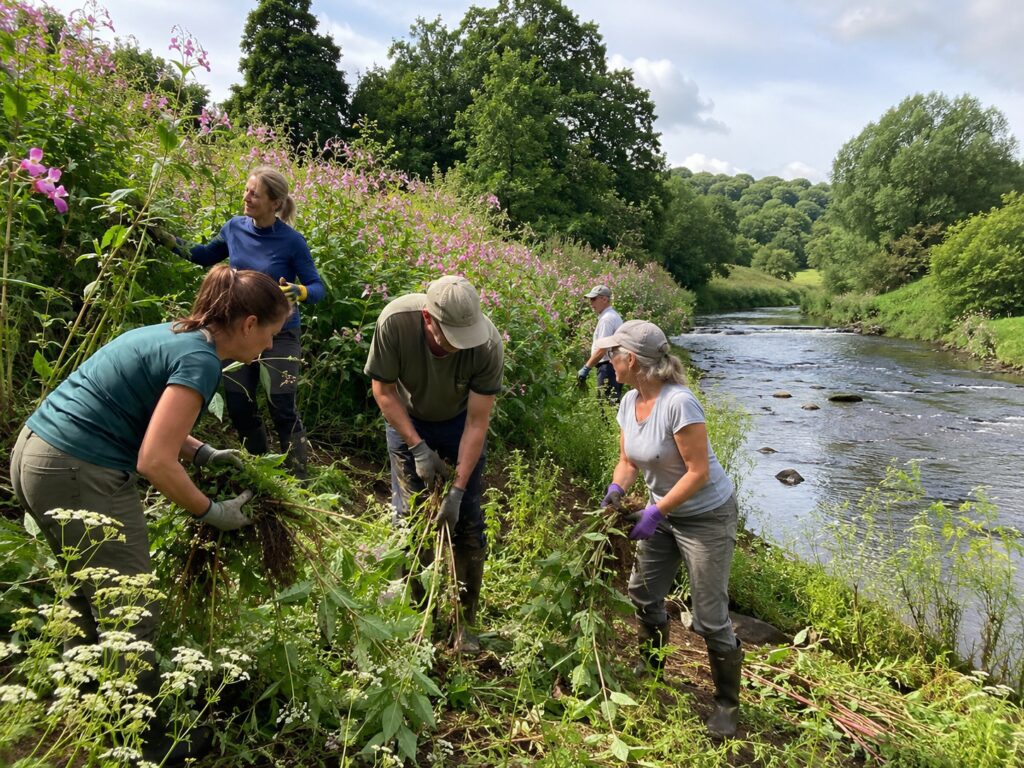
Led by Wendy Lowdon, the group is working to protect the river’s natural balance and prevent biodiversity loss.
What I like about this story is how practical it feels. This is not just weeding. It is giving native plants, insects, birds, and the riverbank itself a better chance to recover.
Why Himalayan Balsam Is a Problem?
Himalayan balsam is the kind of plant that looks beautiful while quietly taking over.
Its flowers may attract insects for a short time, but its fast growth and tall stems can quickly shade out native riverbank plants like grasses, wildflowers, nettles, and thistles.
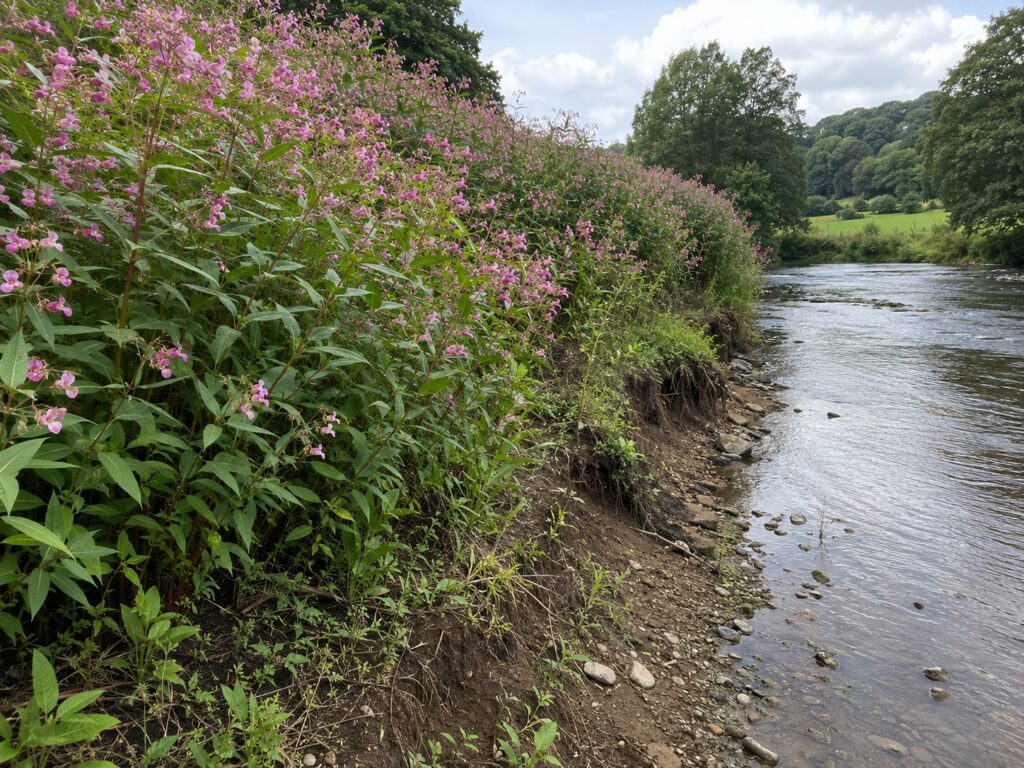
Once those plants disappear, the whole bank becomes less diverse and less stable.
That is why removing it matters. This is not just about controlling a pretty weed. It is about protecting the native plants, insects, birds, and soil that keep the riverbank alive.
The Hidden Danger Beneath the Flowers
The real damage from Himalayan balsam often appears after the flowers are gone.
Once it sets seed, the plant dies back and leaves the riverbank exposed. Unlike deep-rooted native plants, it does not hold the soil together well through heavy rain, flooding, or fast-moving water.
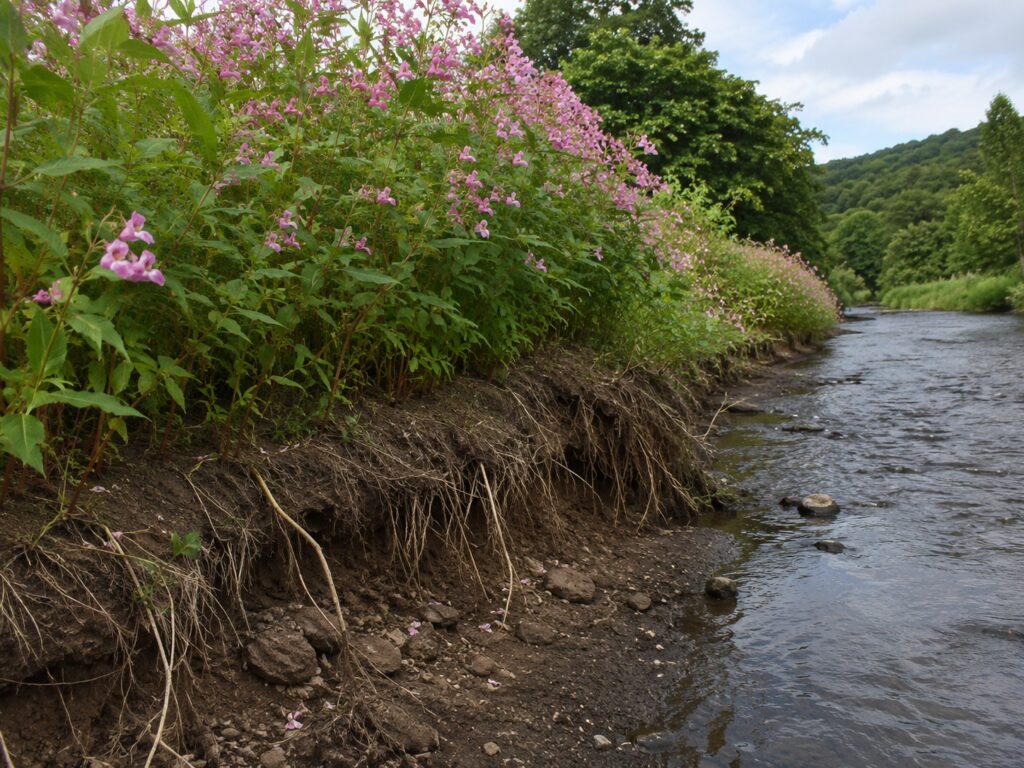
That means a bank covered in balsam can look alive in summer but become fragile later in the year.
For me, that is why this work matters.
Removing it is not about making the riverbank look tidy. It is about protecting the soil, supporting native plants, and keeping the whole riverside ecosystem stronger.
How the Volunteers are Tackling the Problem?
Clearing Himalayan balsam is not a one-time job. It is a race against a plant that spreads quickly along the riverbank.
River Perry Water Watch has begun removing it at Queen Elizabeth Field in Ruyton-XI-Towns, where large patches already show how easily this invasive plant can take over.
The good news is that it pulls up fairly easily, so volunteers can make real progress without heavy machinery.
But the bigger win is community awareness.
Gardens, fields, and riverbanks are all connected, and Himalayan balsam does not respect boundaries.
That is why this work matters. Every patch removed gives native plants more space, the riverbank more strength, and the whole riverside a better chance to recover.
Why Timing Matters So Much?
The best time to remove Himalayan balsam is before it turns into a seed launcher.
Each plant can produce hundreds of seeds, and its pods can burst open, scattering them several metres away. Once that happens, next year’s problem is already planted.
That is why early pulling matters.
Learn to identify it, focus on one section at a time, and return regularly before it reseeds.
With invasive plants, timing is everything. One patch cleared today can prevent hundreds of new plants from taking over tomorrow.
What This Teaches Us About Local Conservation?
Conservation does not always start in a laboratory. Sometimes, it starts with local people noticing a problem and choosing to act.
The River Perry volunteers are protecting more than a riverbank. They are helping keep a living corridor open for native plants, insects, birds, and other wildlife.
That is what makes this story powerful.
Himalayan balsam can look green and harmless while quietly pushing out the species that belong there.
Once people understand the damage, they begin to notice it differently. And once they notice it, they can help protect the places they once simply walked past.
Simple Ways People Can Help
Not everyone can spend a day clearing a riverbank, but everyone can learn what damage looks like.
If you live near a river, stream, or wetland, start by recognizing invasive plants in your area.
If you spot Himalayan balsam, be careful around mature seed pods and ask a local conservation group, council, or landowner for guidance.
For clearing work, gloves, long sleeves, and sturdy footwear matter, especially near water. The goal is to remove the plant before it seeds and follow local advice on what to do with the pulled material.
Small action may look slow at first. But season after season, one cleared patch can help an entire riverbank recover.