The animals famous for surviving the desert are facing a new challenge. Across parts of East and North Africa, herders and veterinarians say rising temperatures are taking a growing toll on camels, animals long known for surviving some of the world’s hottest and driest environments.
Researchers are seeing more cases of heat stress, dehydration, and illness, while some herders say they have lost young camels during recent periods of extreme heat.
I have always thought of camels as almost unbeatable in hot weather. Their bodies are perfectly suited to dry landscapes, long journeys, and limited water.
However, being highly adapted to heat does not mean they can tolerate unlimited temperatures. As heatwaves become more frequent, intense, and longer-lasting, even these famously resilient animals may struggle to recover.
Camels are Built for Desert Survival
Camels have several remarkable physical features that help them live in environments where many other animals would struggle. Their bodies can handle changing temperatures, conserve water, and continue moving across dry land for long periods.
These abilities have made camels essential to communities across Africa, the Middle East, and parts of Asia.
A camel’s body temperature can naturally rise during the day and fall again at night. This reduces the need to sweat, helping the animal preserve water.
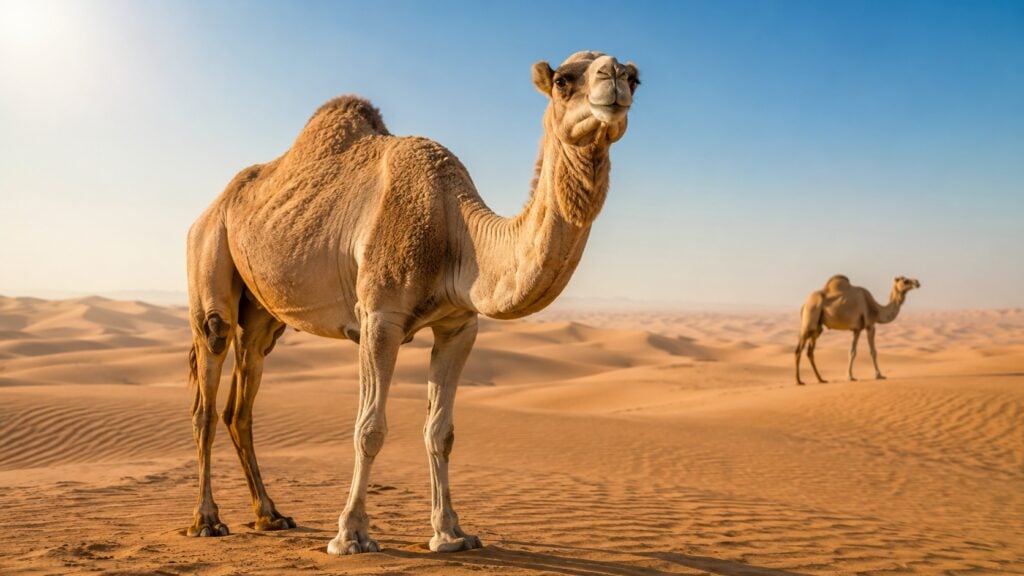
Camels also produce concentrated urine and dry waste, which allows them to lose less moisture than many other mammals. Their thick coats may look uncomfortable in hot weather, but the hair actually protects their skin from direct sunlight.
It acts as insulation, slowing the transfer of heat into the body. Long legs also keep much of the camel’s body farther away from the hot ground.
Their famous humps do not store water.
Instead, they store fat that can be used as energy when food is limited. This allows camels to survive during difficult seasons when vegetation is scarce.
I find these adaptations impressive, but they can sometimes create the wrong impression. Camels are tough, not invincible. Their natural abilities work best within certain environmental conditions.
When heat becomes too intense or lasts too long, their bodies can still become overwhelmed.
Extreme Heat Can Overload Their Natural Defenses
Camels normally cope well with daily temperature changes because desert nights often provide a chance to cool down. The problem becomes more serious when temperatures remain high during both the day and night.
Without a cooler recovery period, heat can gradually build inside the animal’s body. Prolonged heat may cause camels to breathe faster, reduce their movement, lose interest in food, and search constantly for shade.
Some may become weak or confused. In severe cases, heat stress can lead to organ damage, collapse, or death.
Young camels are often more vulnerable because their bodies are still developing. Pregnant females, sick animals, and camels weakened by poor nutrition may also struggle more during extreme heat.
Dehydration adds another layer of danger.
Camels can survive longer without water than many livestock animals, but they still need access to safe drinking water. Their ability to tolerate dehydration should not be mistaken for a lack of need.
I think this distinction is especially important.
Just because an animal can endure difficult conditions does not mean those conditions are harmless. Survival is not the same as comfort, health, or long-term well-being.
Herders are Seeing the Effects Firsthand
For herding communities, changes in camel health are not only an environmental concern. They can affect food supplies, transportation, family income, and traditional ways of life.
Camels may provide milk, meat, wool, and valuable support for moving goods across remote areas.
Herders often recognize changes before formal research fully explains them. They spend every day watching how their animals eat, drink, walk, rest, and respond to weather.
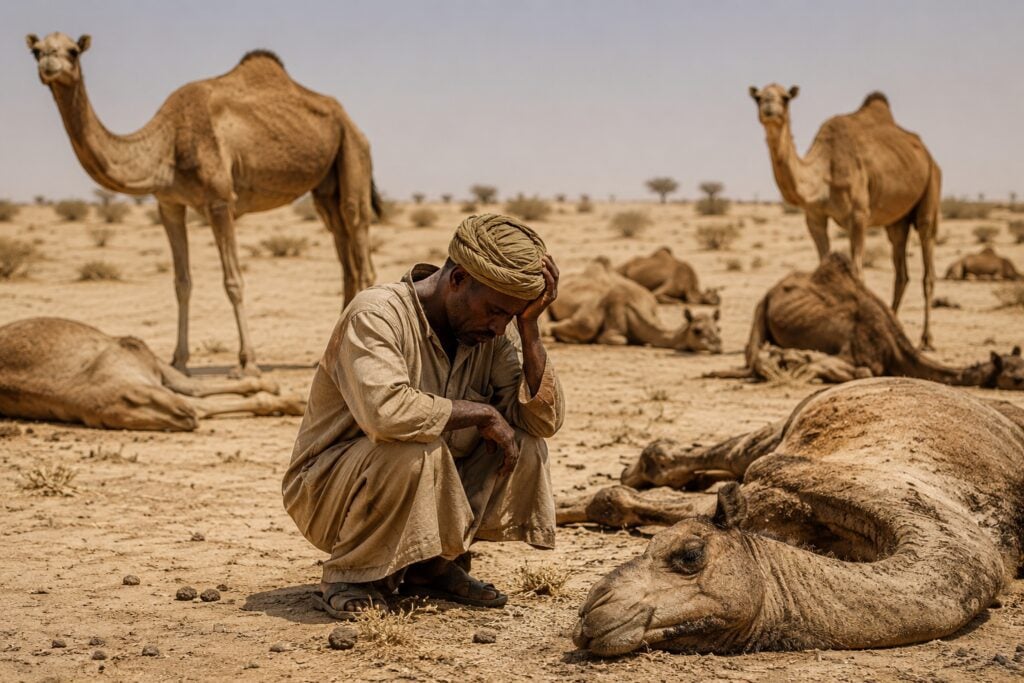
Reports of weaker animals, lower milk production, illness, and deaths among young camels can therefore provide important early warnings.
Extreme heat may also reduce the amount of available grazing land. Plants dry out faster, water sources shrink, and herders may need to travel farther to find suitable pasture.
Longer journeys require more energy from animals that may already be under heat stress. When camels become sick or die, families can lose a major source of stability.
Replacing an animal may be expensive or impossible, especially after droughts have already reduced household income.
I believe local knowledge should be treated as an important part of climate research.
Herders do not always use scientific equipment, but their detailed observations can help researchers understand how changing weather affects animals in real conditions.
Heat Stress is Not Always Easy to Notice
One challenge is that early signs of heat stress can look like ordinary tiredness. A camel may slow down, stand quietly, or eat less. These behaviors can be easy to ignore, especially in places where hot weather is normal.
However, small changes can become serious quickly during a heatwave.
Fast breathing, excessive drooling, weakness, unusual aggression, poor coordination, and refusal to eat or drink may signal that an animal needs immediate attention.
Herders should also watch for reduced milk production, changes in urine, sunken eyes, dry gums, or unusual lying down. These may indicate dehydration or illness.
My practical advice is to compare each animal’s behavior with its normal routine.
A camel that suddenly separates from the herd, stops feeding, or struggles to stand should be checked as soon as possible.
Veterinary help is especially important when an animal shows severe weakness, breathing difficulty, collapse, or continuing dehydration.
Heat stress may exist alongside infection, parasites, or nutritional problems, so treatment should not rely on temperature control alone.
Shade and Water are Becoming More Important
Camels have survived for centuries in open desert environments, but today’s extreme heat may require more active protection. Simple management changes can reduce the amount of heat animals absorb and help them recover more effectively.
roviding access to shade is one of the most useful steps.
Natural trees, shelters, or well-ventilated structures can reduce direct exposure to sunlight. Shade should be large enough to prevent animals from crowding tightly together, since poor airflow can trap heat.
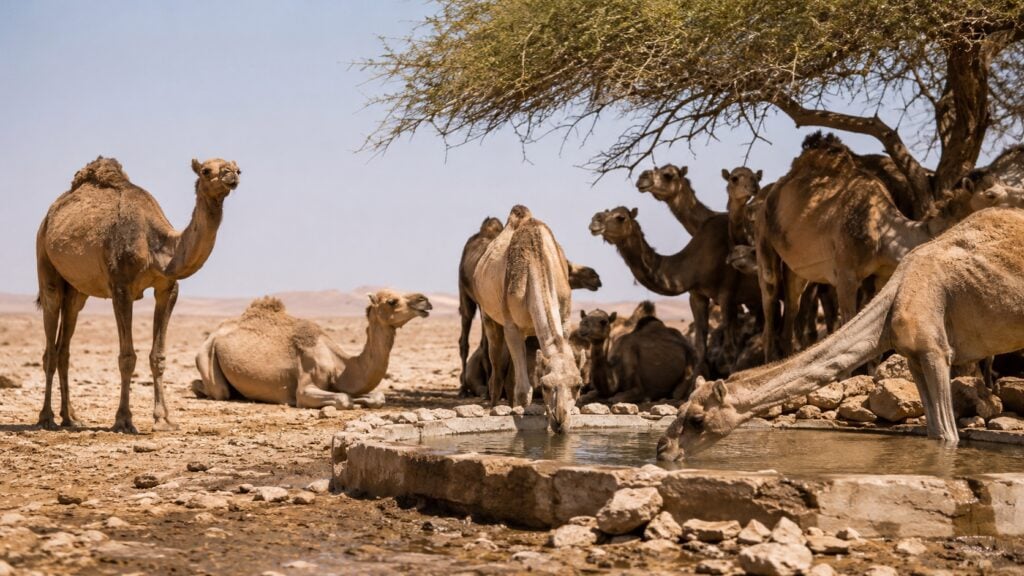
Clean water should be available regularly, particularly during heatwaves. Water containers should be checked often because high temperatures can increase evaporation and contamination.
Animals may also need more frequent opportunities to drink after travel or physical work. Herders can schedule movement, feeding, and transportation during cooler parts of the day.
Early morning and evening are usually safer than the hottest afternoon hours.
I would also avoid forcing an overheated camel to travel long distances unless it is necessary for safety or treatment.
Rest, airflow, water, and professional veterinary support may be more valuable than continued movement.
Better Nutrition Can Improve Heat Resilience
Heat stress often becomes worse when animals are already underfed. A camel needs enough energy, minerals, and protein to maintain its body, produce milk, support pregnancy, and recover from difficult weather.
During drought, natural grazing may lose much of its nutritional value.
Even when vegetation is available, it may not provide everything an animal needs. Supplemental feed may therefore become necessary in some regions.
Salt and mineral balance also matters. Animals lose essential substances through sweat and other body processes.
Veterinarians or livestock specialists can advise herders about appropriate mineral supplements based on local conditions.
Poor-quality feed should not be given simply because other food is scarce. Moldy or contaminated material can cause additional illness and weaken animals further.
I see nutrition as part of climate protection.
Shade and water help animals manage the immediate heat, while good nutrition gives their bodies more strength to handle stress and recover afterward.
Climate Change is Redefining Desert Survival
Camels will probably remain among the world’s most heat-tolerant livestock animals. Their biology gives them advantages that cattle, sheep, and goats may not have in extremely dry regions.
Still, those advantages have limits.
Climate change is not only raising average temperatures. In many places, it is contributing to longer heatwaves, unpredictable rainfall, harsher droughts, and changing patterns of disease.
These pressures can happen at the same time, making survival more difficult.
A camel may be able to tolerate high heat for a short period.
It may struggle when the heat continues for weeks while water, food, and shade become harder to find. This is why I believe the story is bigger than whether camels can survive one hot day.
The real concern is repeated exposure, limited recovery, and the gradual weakening of animals and communities over time.
Protecting Camels Also Protects Communities
Helping camels cope with rising temperatures requires cooperation among herders, veterinarians, researchers, governments, and aid organizations.
No single solution will work in every region, but better preparation can reduce losses.
More shaded water points, mobile veterinary care, heatwave warnings, drought planning, and support for livestock feed can all make a difference. Research should also continue to study how different camel breeds respond to changing conditions.
Herders should be included in these discussions. They understand local landscapes, migration routes, water sources, and animal behavior in ways that outside experts may not.
For those of us living far from camel-herding regions, the issue can still teach an important lesson.
Animals known for resilience may be among the clearest signs that environmental conditions are becoming unusually severe. Camels have spent thousands of years helping people survive harsh landscapes.
Protecting their health now means protecting food security, cultural traditions, and the future of communities that depend on them.
Even the Toughest Animals Need Protection
Camels are powerful symbols of endurance, but endurance should never be confused with endless tolerance. Their bodies can conserve water, handle temperature changes, and survive difficult journeys, yet prolonged extreme heat can still push them beyond their natural limits.
I find that both surprising and concerning.
When an animal so closely associated with desert survival begins showing signs of heat stress, it tells us that environmental conditions are changing in serious ways.
The solution is not to assume camels will simply adapt on their own. They need reliable water, shade, nutrition, veterinary care, and enough time to rest during dangerous heat.
Camels may be among the toughest animals on Earth, but even the toughest animals need support when the climate changes faster than their bodies can comfortably handle.