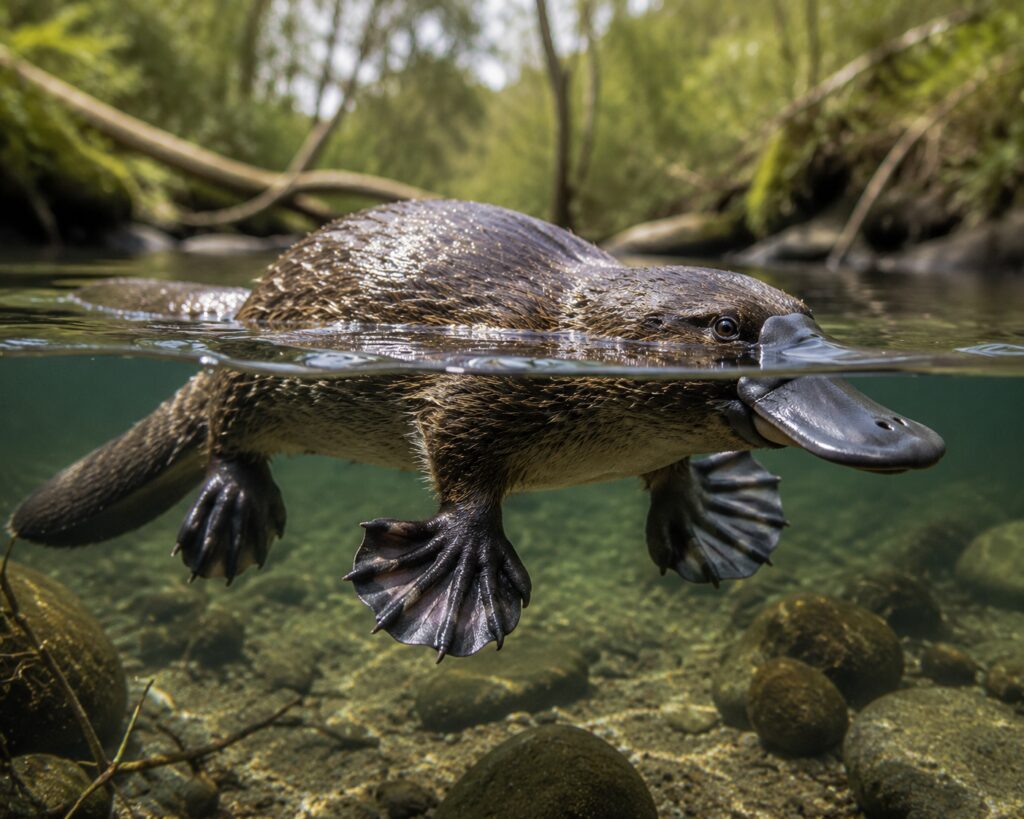
The platypus has always felt like one of nature’s strangest surprises. With a duck-like bill, webbed feet, and a beaver-like tail, this animal already seems impossible. But scientists have now uncovered another detail that makes it even more fascinating.
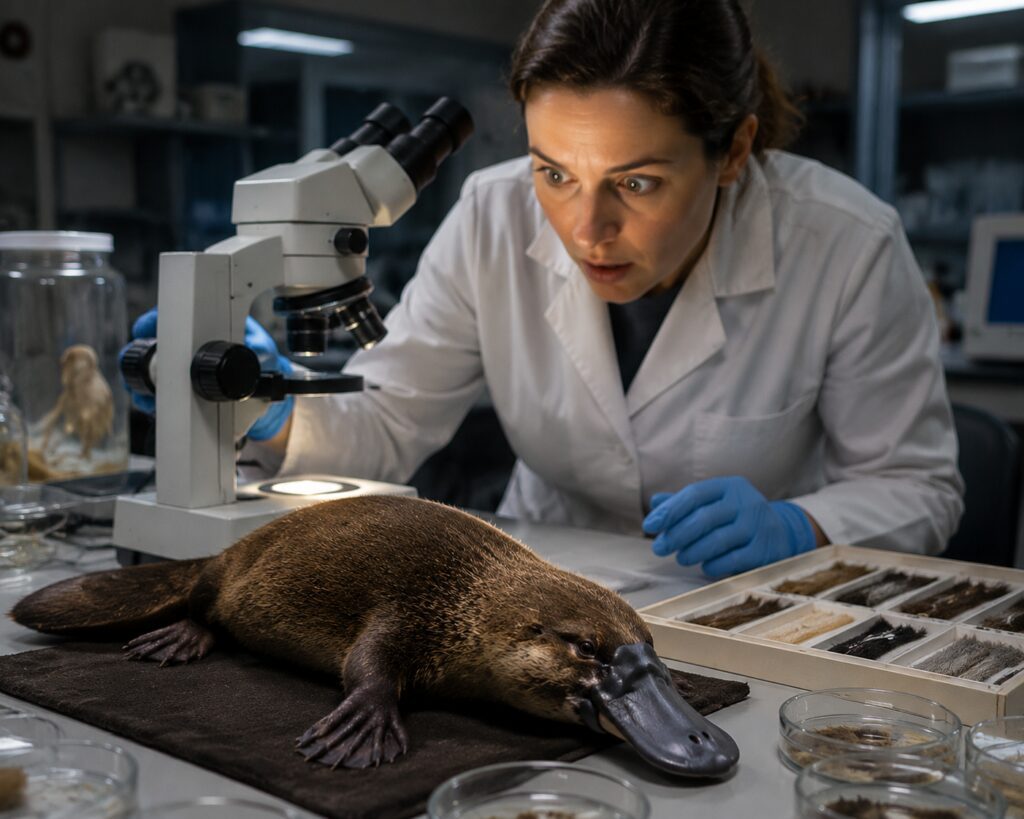
Researchers discovered that the tiny structures responsible for the platypus’s fur color are hollow, a feature previously found only in bird feathers. It is something no other studied mammal appears to have.
What I love about discoveries like this is that they remind me how much we still do not know about the natural world. Even an animal that has fascinated scientists for centuries can still surprise us with something completely unexpected.
A Mammal With a Feature Unlike Any Other
The more I learn about the platypus, the more it feels like nature’s way of breaking the rules. It is a mammal that lays eggs, produces milk without traditional nipples, and even has venomous spurs.
Now, scientists have found another surprising detail hidden in its fur.
Unlike most mammals that rely on pigments for color, platypus fur contains tiny hollow structures that help create its appearance. This feature is rare because similar structures are usually found in bird feathers, not mammalian hair.
To me, this discovery shows how creative evolution can be. Even an animal we have studied for years can still reveal secrets that make it even more extraordinary.
How Hollow Structures Create Unique Colors?
To understand why this discovery matters, it helps to look at how animals produce color. Some colors come directly from pigments. For example, a black feather or brown coat may appear that way because of the molecules inside the material absorbing and reflecting certain wavelengths of light.
Other colors are created structurally. Instead of relying only on pigments, microscopic shapes interact with light to create different visual effects. Bird feathers are famous for this.
Many bright colors in birds are produced by tiny structures inside feathers that scatter light in specific ways.
Scientists previously believed this type of hollow structure was mostly associated with feathers. Finding something similar in platypus fur suggests that mammals may have evolved a comparable strategy.
Researchers are still studying exactly why platypuses developed this feature. It may have a connection to camouflage, communication, protection from sunlight, or simply an evolutionary accident that provided some advantage over time.
The truth is that scientists do not yet have a complete answer. I find that uncertainty fascinating because it shows how science works. Every discovery does not immediately solve a mystery.
Sometimes, it creates even more interesting questions.
Why the Platypus Keeps Surprising Scientists?
The platypus is often described as a “living puzzle” because it combines traits that seem to belong to completely different animals. When European scientists first encountered platypus specimens in the late 1700s, some even believed the animal was a fake creation made by combining different animals together.
Today, we know the platypus is real, but it continues to challenge our understanding of evolution. The animal belongs to a group called monotremes, which are mammals that lay eggs.
Only a few species of monotremes exist today, making them extremely valuable for scientific research.
Because platypuses evolved along a different path from most modern mammals, studying them can provide important information about how mammals developed over millions of years. Their unusual biology can help scientists understand topics such as reproduction, sensory systems, genetics, and adaptation.
The new fur discovery adds another chapter to this fascinating story. It shows that even the smallest details of an animal’s body can reveal important information about how life evolves.
What This Discovery Teaches Us About Nature?
One of the biggest lessons from the platypus discovery is that nature does not follow simple rules. Humans often categorize animals into groups: mammals, birds, reptiles, and fish. These categories help us understand the world, but nature is often much more complex.
The platypus reminds us that evolution can create unexpected combinations of traits.
A feature found in bird feathers appearing in mammalian fur shows that similar solutions can develop in completely different animals. This is called convergent evolution. It happens when unrelated species independently develop similar traits because they face similar challenges.
For example, dolphins and sharks both developed streamlined bodies because they move through water, even though they are not closely related. Bird wings and insect wings are another example of different animals developing similar abilities for flight.
The platypus fur discovery may represent another fascinating example of nature finding multiple ways to solve problems.
Why Protecting Unique Animals Matters?
Discoveries like this also highlight why protecting wildlife is so important. If species disappear before scientists can study them, we lose knowledge that may never be recovered.
The platypus faces several challenges in the wild, including habitat destruction, changes to waterways, pollution, and climate-related impacts.
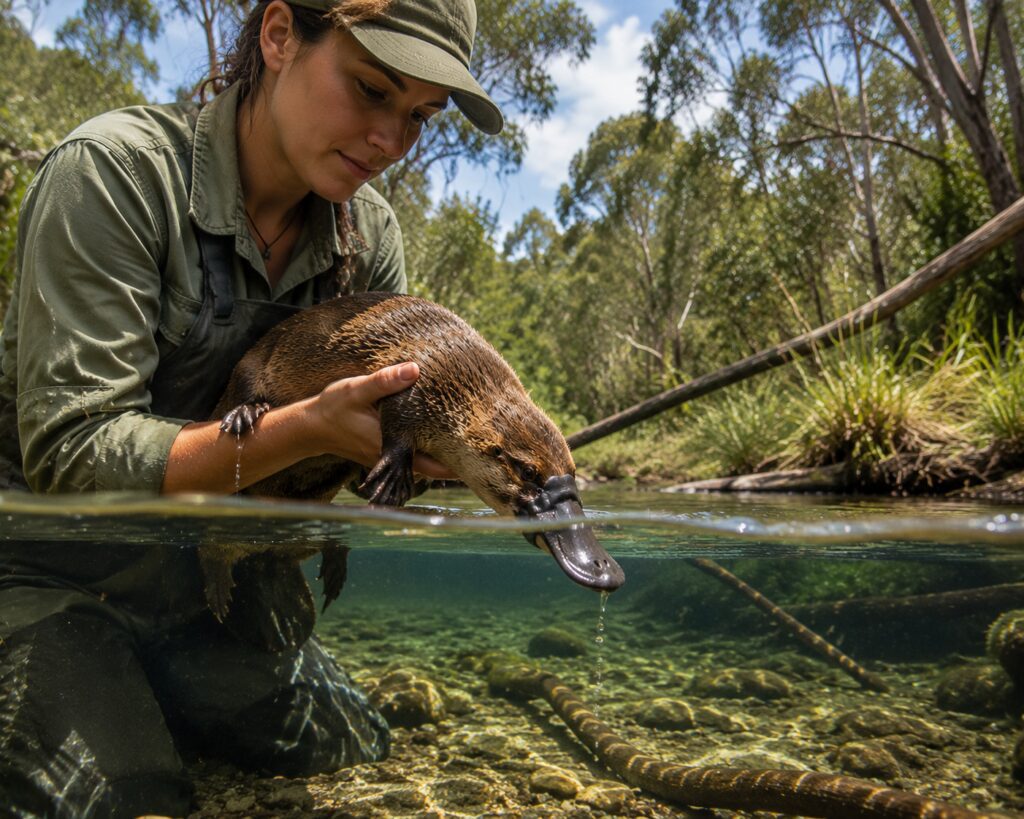
Healthy rivers and wetlands are essential for their survival because platypuses depend on aquatic environments for hunting and shelter.
Protecting these habitats does not only help platypuses. It supports entire ecosystems filled with fish, insects, plants, and other wildlife. For me, this is one of the strongest reasons conservation matters.
Every species carries information about the natural world that we may not fully understand yet. A small animal living quietly in a river could hold clues that help scientists understand evolution, biology, or even future technologies.
Simple Ways We Can Support Wildlife
People often think protecting wildlife requires large actions, but everyday choices can also make a difference. Supporting conservation organizations, reducing pollution, protecting local waterways, and learning about native species are simple ways to contribute.
For those living near rivers or natural areas, keeping waterways clean is especially important.
Avoiding litter, reducing chemical runoff, and respecting wildlife habitats can help protect many species.
Education is another powerful tool.
Sharing stories about unusual animals like the platypus helps more people understand why biodiversity matters. The more people appreciate wildlife, the stronger the support becomes for protecting natural environments.
The Platypus Still Has More Secrets to Reveal
The discovery of hollow structures inside platypus fur is another reminder that the natural world is full of surprises. An animal that already seemed impossible has shown scientists something completely unexpected.
A feature once thought to belong only to bird feathers has now been found in a mammal.
Researchers are still investigating why this unusual trait evolved, but the discovery itself is valuable because it expands our understanding of life on Earth.
For me, the most exciting part is knowing that there are still countless mysteries waiting to be discovered. Somewhere in forests, oceans, rivers, and mountains, animals are carrying secrets we have not uncovered yet.
The platypus proves that nature does not run out of surprises. Sometimes, the smallest details reveal the biggest stories.