A piece of trash may seem harmless to us, but for wildlife, it can become a life-threatening danger.
A young fox cub in Glasgow spent nearly two days trapped inside a plastic bottle before being rescued. The incident shows how animals can mistake human waste for something safe to explore, leading to serious consequences.
For me, this is a reminder that protecting wildlife often starts with small choices. Properly disposing of rubbish and keeping our surroundings clean can make a real difference for the animals that share our environment.
A Fox Cub Trapped by a Simple Piece of Litter
The fox cub’s terrifying experience began with something that many people might overlook: a plastic bottle left in the environment. According to the Scottish SPCA, the young fox was found in Glasgow with its head stuck inside a bottle for almost two days.
During that time, the animal struggled to escape while suffering from injuries caused by the plastic container.
A rescue officer first attempted to help the fox on 26 June, but the frightened cub managed to escape into its den. By then, rescuers believed the animal had already been trapped for at least a day.
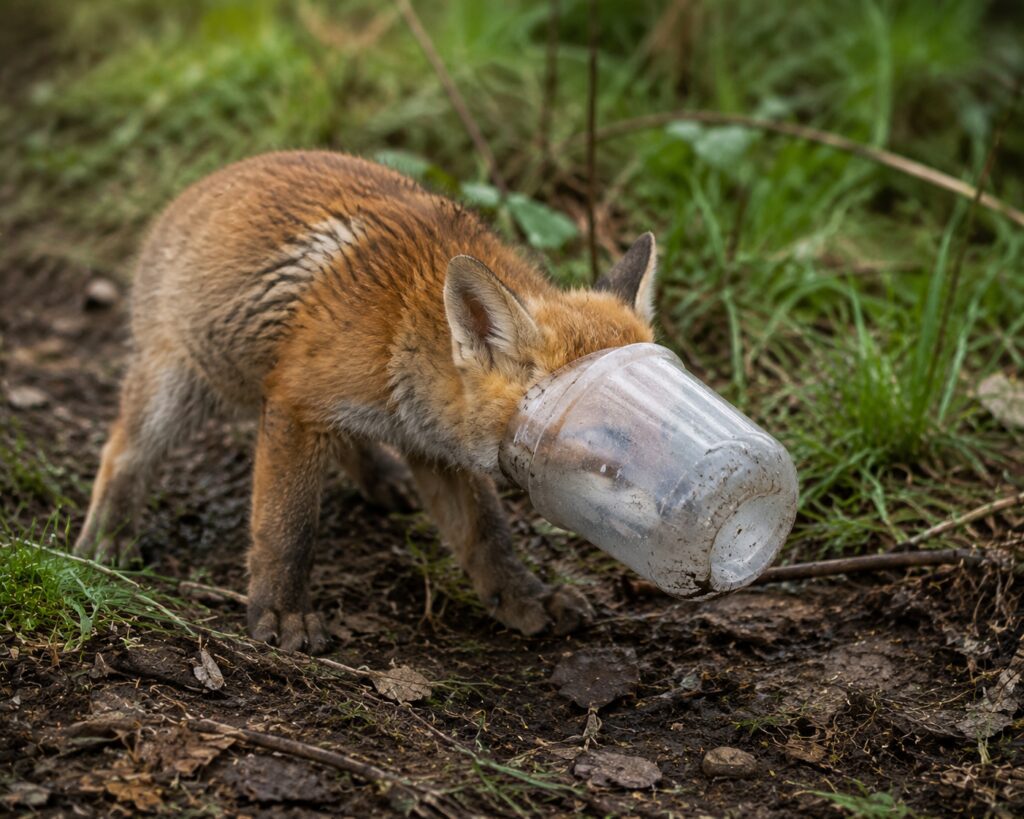
The following day, after a member of the public reported the situation, a rescue team returned and carried out an extended search. After several unsuccessful attempts, the fox finally emerged and was safely captured.
The cub was taken for medical treatment at the University of Glasgow’s small animal hospital. Veterinarians cleaned its wounds and provided pain relief before transferring the fox to the Scottish SPCA’s rescue centre.
The injuries could have become life-threatening if the rescue had failed. This story shows how quickly a harmless-looking object can become dangerous.
A bottle that someone used for only a few minutes created days of suffering for a wild animal simply because it was not disposed of properly.
Why Plastic Waste Is Dangerous for Wildlife?
Plastic pollution is often discussed as an environmental problem affecting oceans and marine animals. However, land animals also face serious risks from discarded waste.
Wild animals explore their surroundings using their senses. They smell, touch, and investigate objects to understand whether they are food, shelter, or something interesting.
Unfortunately, human rubbish can create dangerous situations. Plastic containers can trap the heads, legs, or bodies of animals.
Food packaging can attract wildlife because of leftover smells. Fishing lines, bags, and other waste materials can cause animals to become tangled or injured.
Small animals are especially vulnerable because they may not have the strength or ability to escape once trapped. A fox cub with a bottle around its head cannot eat properly, drink water, breathe comfortably, or protect itself from danger.
A simple piece of litter can quickly become a life-threatening situation.
I think this is why litter awareness is so important.
Many people do not intentionally want to harm animals, but careless disposal can create consequences that happen far away from the moment the trash is thrown away.
Wildlife Rescue Teams See These Problems Every Year
The fox cub’s rescue is not an isolated incident. Wildlife organizations around the world regularly respond to animals injured by human waste. The Scottish SPCA has warned that discarded litter can have devastating consequences for wildlife.
Between 2023 and 2025, the organization responded to almost 109,000 wildlife incidents, with many involving animals affected by human activity.
These numbers are difficult to imagine because most people never see these incidents happen. A bird may become trapped in plastic packaging. A hedgehog may get stuck inside a container.
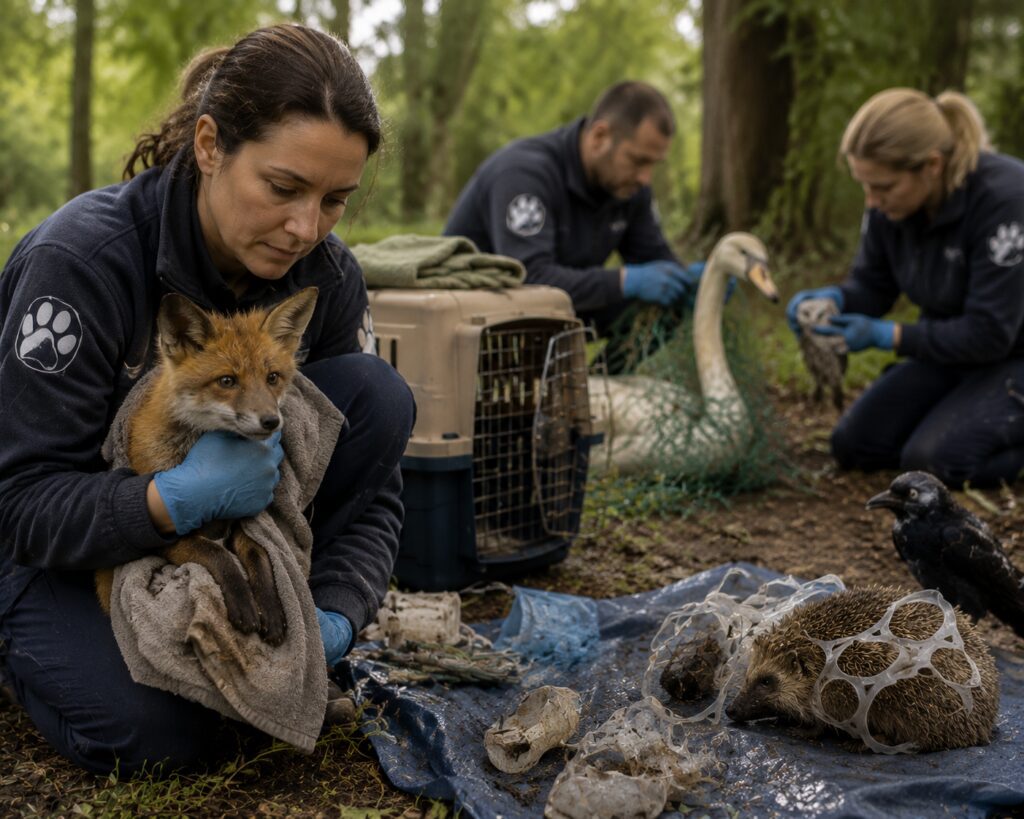
A deer may become tangled in discarded materials. A small animal may suffer silently because nobody notices what happened.
Wildlife rescuers often work under difficult conditions. They must carefully approach frightened animals, provide medical care, and sometimes spend hours searching for animals hidden in difficult locations.
The fox cub’s story also highlights the importance of public involvement. A person noticed the animal and contacted the rescue organization. Without that call, the outcome could have been very different.
This shows that ordinary people can play an important role in protecting wildlife.
Small Actions Can Prevent Big Wildlife Problems
One of the most encouraging parts of this story is that preventing similar situations does not require complicated solutions. Simple daily habits can make a real difference. The first step is properly disposing of rubbish.
Taking a few extra seconds to place bottles, containers, and packaging in the correct bin can prevent animals from becoming trapped.
Before throwing away plastic containers, it can also help to crush or cut them when possible.
Some animals become trapped because they crawl inside containers searching for food or shelter.
Another helpful habit is picking up litter in local parks, walking trails, beaches, and neighborhoods. Even removing one piece of plastic can potentially save an animal’s life.
I personally believe communities become safer for wildlife when people stop thinking of litter as “someone else’s problem.” Every piece of waste belongs to someone, and every person has the ability to prevent harm.
Families can also use stories like this as teaching moments for children. Learning to respect nature from an early age creates habits that last a lifetime.
How to Help Injured Wildlife Safely?
Seeing an injured animal can be emotional, and many people immediately want to help. However, wild animals can become stressed or frightened when approached.
If someone finds an animal trapped or injured, the safest option is usually contacting a local wildlife rescue organization.
Professionals have the experience and equipment needed to handle animals safely. Trying to remove a dangerous object without proper knowledge could accidentally cause more injury.
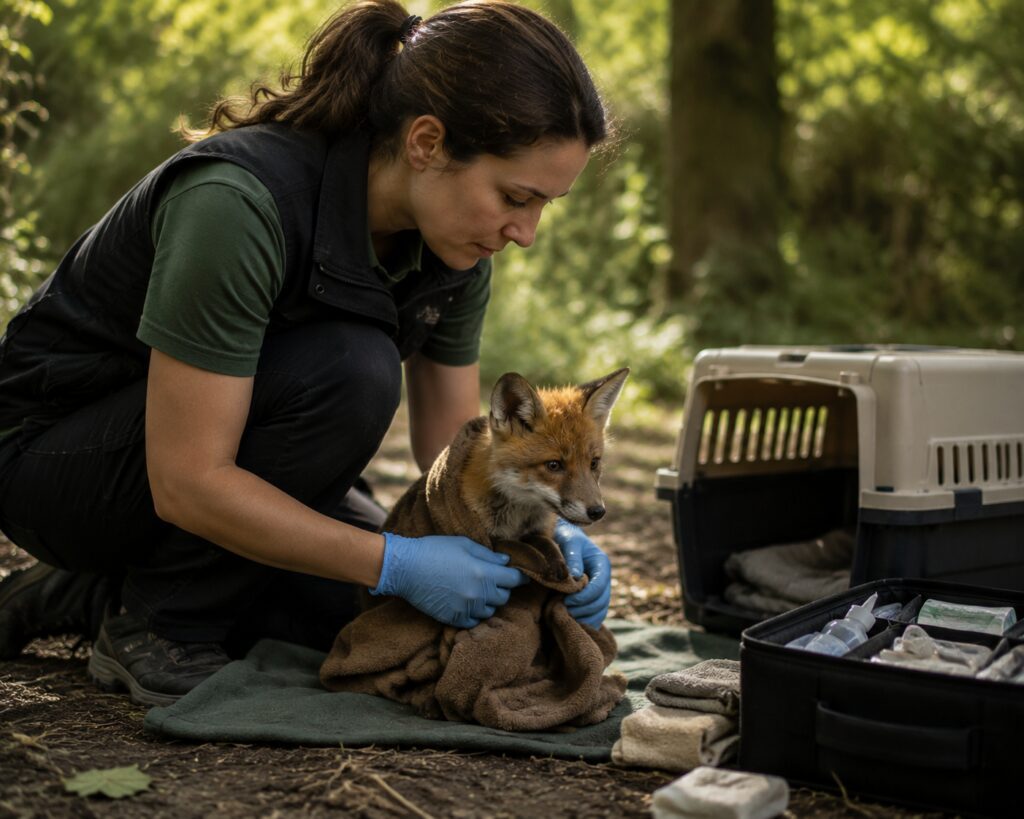
Animals may also react defensively because they are scared or in pain.
The best way to help is often:
- Keep a safe distance.
- Avoid causing additional stress.
- Contact wildlife rescue professionals.
- Provide accurate information about the location and condition of the animal.
Quick reporting can make the difference between recovery and tragedy.
The Fox Cub’s Story Is a Lesson for All of Us
The rescue of this fox cub is more than a story about one animal. It represents a much larger issue about how human actions affect the natural world. Wildlife shares our communities, even when we do not always notice it.
Foxes walk through neighborhoods, birds build nests near homes, and countless small creatures live alongside us every day.
Protecting them does not always require major environmental campaigns. Sometimes it begins with something as simple as throwing away a bottle properly.
For me, the biggest lesson from this story is that convenience should never come at the cost of another living creature’s safety.
That plastic bottle may have been used for only a few minutes, but for the fox cub, it became a dangerous obstacle that lasted for days. Every responsible choice matters.
Every piece of litter removed matters. Every person who chooses to care matters. Wildlife cannot protect itself from every human mistake. But together, we can make the environment safer for the animals that share our world.