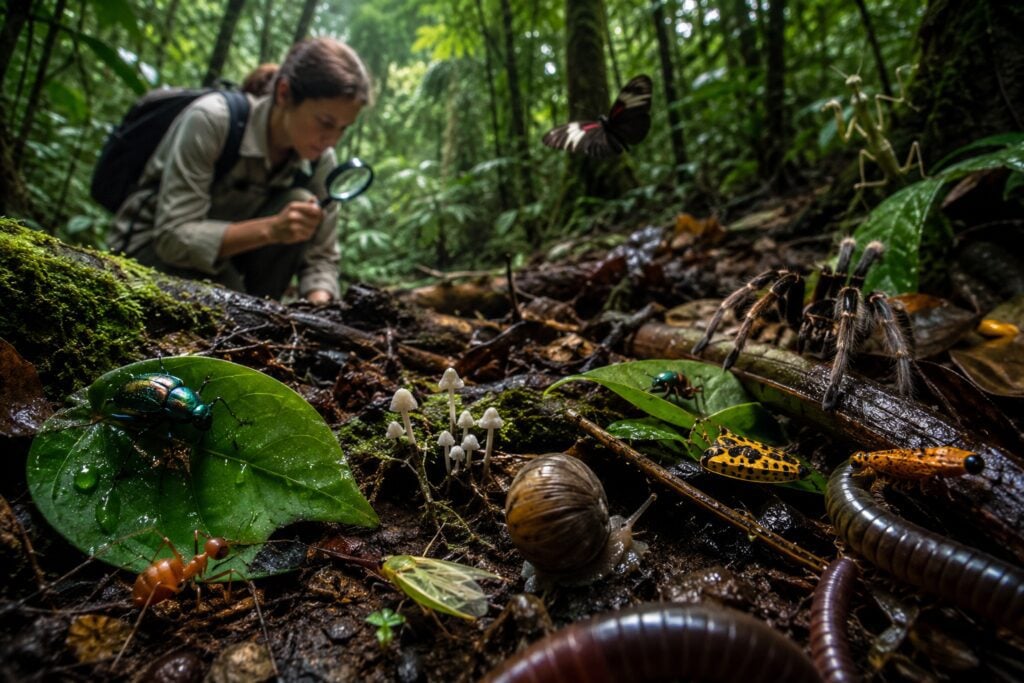
A river carries far more than water. It carries memory, food, culture, wildlife, and the future of the communities growing beside it.
That is why the Stillaguamish Tribe’s work feels bigger than habitat restoration.
By helping parts of the river delta return to wetland, the project can create safer space for floodwater, rebuild habitat for endangered Chinook salmon, and strengthen cultural and fishing traditions.
What moves me most is the wider impact.
This is not only about bringing salmon back. It is about helping a river recover so people, wildlife, and future generations can recover with it.
A River Reshaped Over Generations
The Stillaguamish did not lose its water first. It lost its room to move.
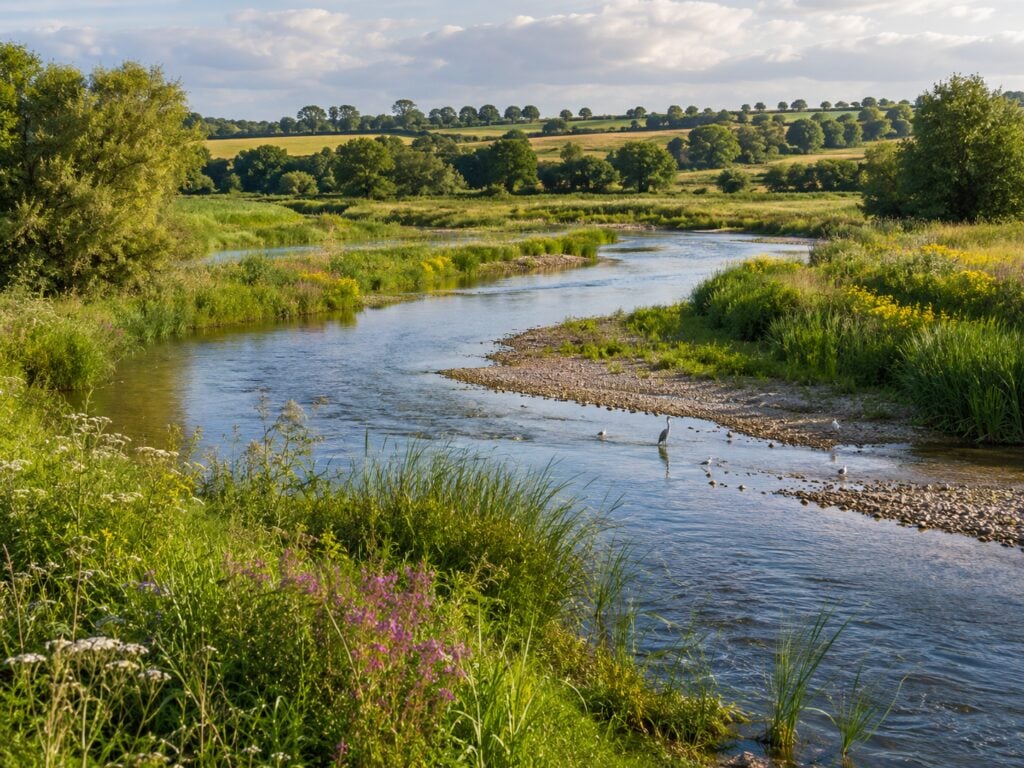
Wetlands, marshes, tidal channels, and floodplains once surrounded the lower river, creating rich habitat for fish and wildlife. Over time, much of that land was drained and protected by levees to support farms, homes, and roads.
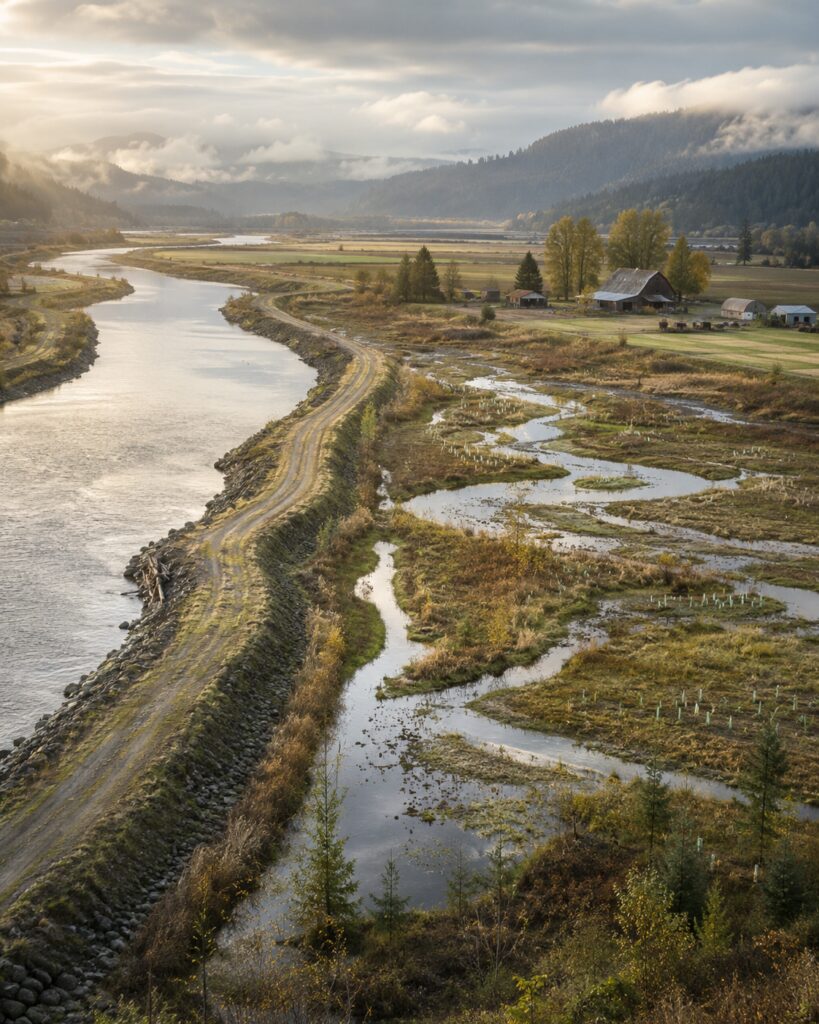
Those changes brought benefits, but they also squeezed the river into a narrower path. Like pinching a garden hose, the same water began moving with more force.
For young Chinook salmon, the loss of slow, sheltered channels was especially damaging. Their decline shows how changing a river’s shape can affect an entire ecosystem for generations.
Giving the River Room to Move Again
The Tribe is not redesigning the Stillaguamish. It is giving the river back some of the space it lost.
By purchasing farmland, removing old barriers, reopening channels, and moving levees farther inland, the project allows selected floodplain areas to become wetlands again while still protecting homes, roads, and working farms.
What I find most powerful is the balance. Salmon habitat, flood safety, and agriculture are not treated as separate problems.
Instead, the project asks a smarter question: how can one landscape make room for the river, wildlife, and people at the same time?
Why Quiet Marsh Channels Matter to Young Salmon?
A muddy tidal channel may not look important, but to a young Chinook salmon, it can be a place to grow stronger before facing the ocean.
Restored marshes create slower, sheltered water where juvenile salmon can rest, feed, and gradually adjust from freshwater to saltwater.
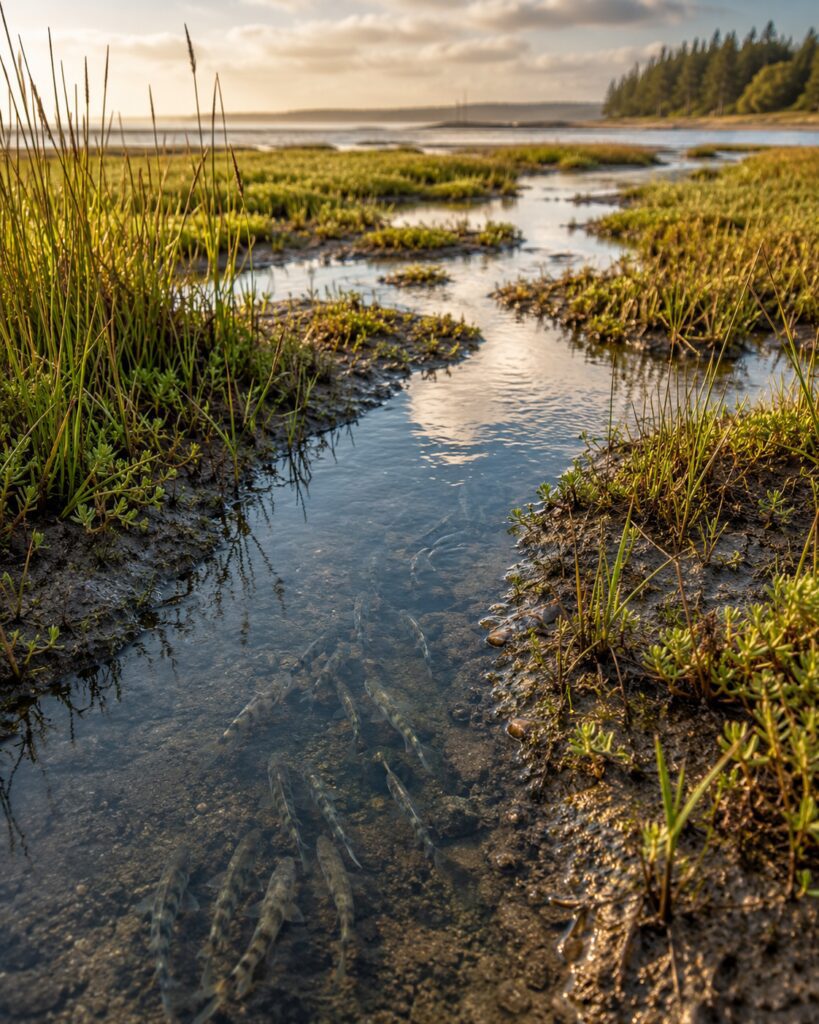
Instead of being pushed downstream too quickly, they gain valuable time to develop.
I think of these wetlands as natural nurseries. They cannot remove every danger, but they give young salmon something just as important: time to grow, prepare, and enter the ocean with a better chance of survival.
The River is Already Responding
A restored wetland can look unfinished long before it starts working.
At the Stillaguamish site, marshland restored in late 2025 was already being used by young salmon by spring 2026, while native plants began returning to the newly opened ground.
The phrase “water has a memory” stays with me. Rivers respond when old pathways are reopened and barriers are removed.
That is why I look beyond mud and bare soil.
Fish entering new channels, slower-moving water, returning plants, and new wildlife activity can reveal recovery long before the landscape looks complete.
Restoring More Than Salmon
Restoring salmon is also about restoring what a community has lost.
For generations, Chinook have provided food, income, tradition, and connection for the Stillaguamish people. But as salmon numbers declined, Tribal fishermen lost more than a harvest.
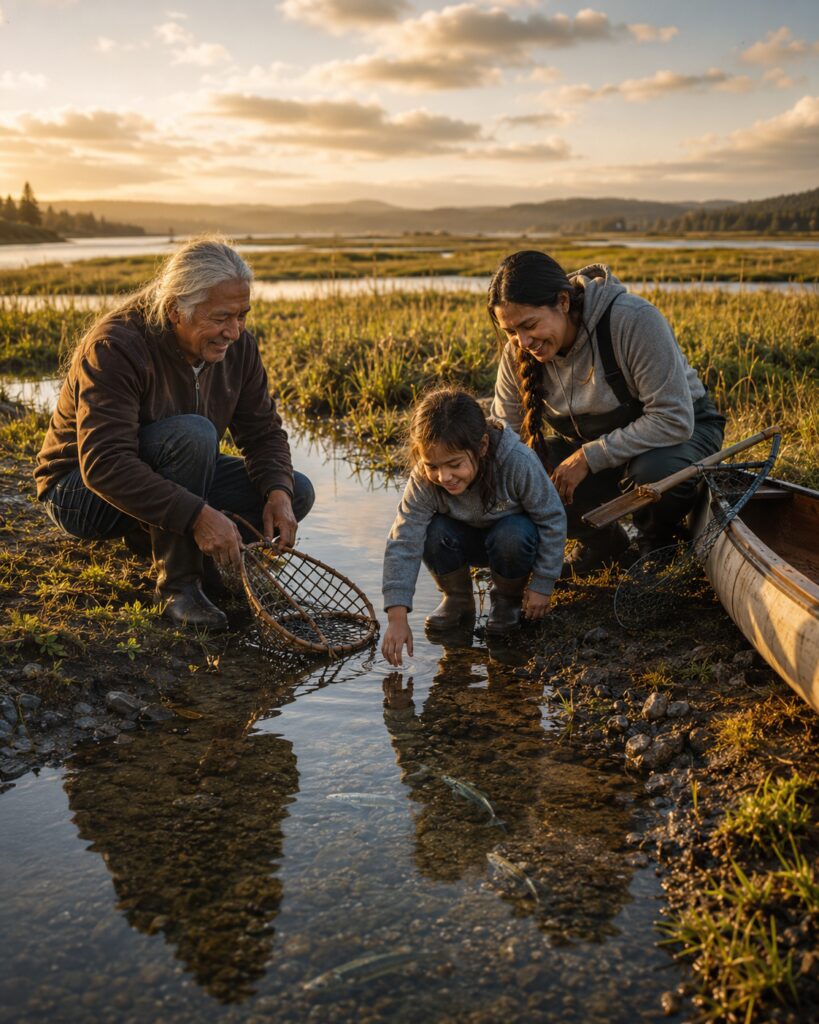
Families lost opportunities to pass knowledge, share food from their homeland, and keep cultural practices active.
That is why this restoration feels so important to me.
A healthier river could bring back more than fish. It could bring back opportunity, strengthen local livelihoods, and help future generations experience traditions that should never exist only in memory.
Making More Space for Floodwater
A wetland may look like empty ground until the river needs somewhere to go.
During major flooding, the restored Stillaguamish marsh held several feet of water, giving the river more room to spread. Nearby farmers reported lower water levels, and one home avoided the access problems it had faced before.
One flood cannot prove every future outcome, but it shows why floodplains matter. When water is trapped between narrow levees, it can become faster and more destructive.
To me, wetlands are not wasted space. They can support salmon, shelter wildlife, improve water quality, and quietly protect communities when storms arrive.
What Other Communities Can Learn?
The Stillaguamish project shows that river restoration works best when no single voice is asked to solve everything.
Indigenous knowledge, local experience, and modern science can reveal how a river once moved and what it needs to recover. Salmon, farms, flood safety, culture, and local livelihoods are connected, so the strongest solutions consider them together.
People can reopen channels, move levees, and restore native plants. Then nature takes over. Water, tides, sediment, fish, and new growth begin shaping the landscape again.
For me, the lesson is simple: learn where your local water flows, support watershed restoration, respect recovering habitats, and understand the wildlife depending on them.
The more connected we feel to a river, the more likely we are to protect it.
A River Recovery That Benefits the Whole Valley
The Stillaguamish is not being restored in one dramatic moment. It is returning piece by piece.
Young salmon are already entering reopened channels. Native plants are coming back. Floodwater has more room to spread, and nearby farms and homes may benefit from the added protection.
What gives me hope is the cooperation behind it.
Tribal leaders, farmers, scientists, engineers, landowners, and local communities are working through difficult choices to create a river system that supports both people and wildlife.
The river may never look exactly as it did 150 years ago, but that is not the goal. The goal is to use the past as a guide for a stronger future.
Perhaps water really does remember. And when we give it room to move again, salmon, culture, communities, and the landscape may begin finding their way back too.