Watching a rocket rise can make me hopeful about the future. Space exploration drives discovery, communication, security, and new technology.
But progress should not turn the ocean into an industrial zone. Whales, sea turtles, seabirds, fish, and coastal communities all depend on these waters.
The United States is now considering offshore areas for rocket launches, re-entry, and recovery operations. No project has been approved yet, which makes this the right time to create strong environmental safeguards before wildlife pays the price.
BOEM Is Exploring a New Use for Federal Waters
This proposal is still at an early stage, and that distinction matters. In July 2026, the Bureau of Ocean Energy Management, or BOEM, opened a Request for Information about the possible use of submerged federal lands and existing offshore facilities for space-related activities.
The agency is examining offshore launch platforms, spacecraft re-entry areas, recovery infrastructure, and the possible reuse of former oil and gas facilities.
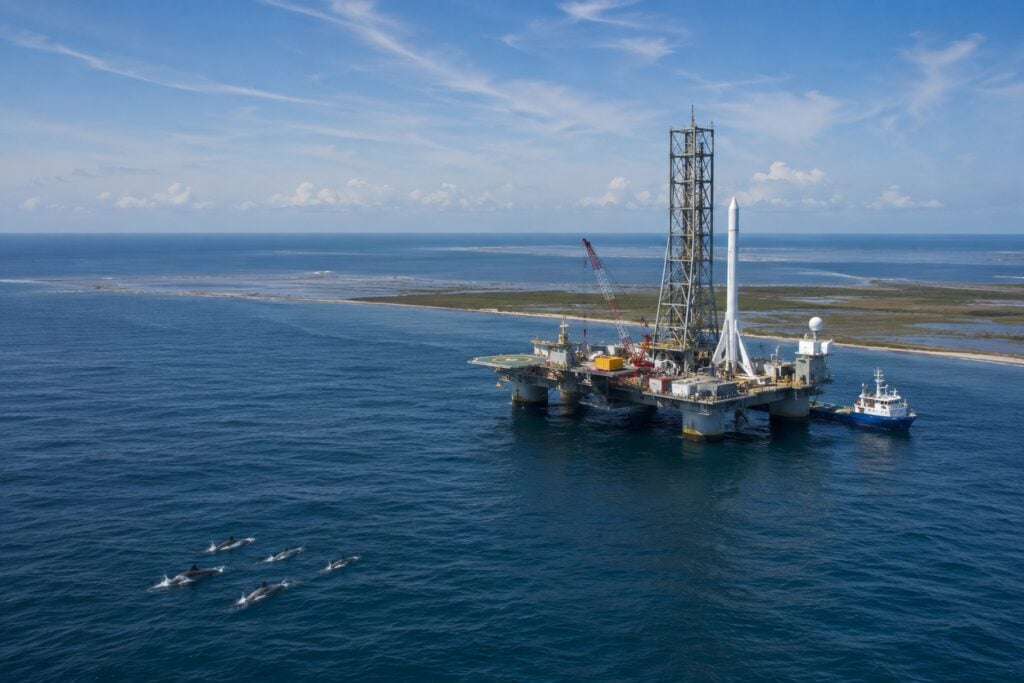
BOEM has clearly stated that the request does not approve a project, lease, platform, or launch site.
Instead, the agency is gathering information about technical requirements, environmental risks, safety standards, legal authority, and conflicts with existing ocean users.
Public comments are being accepted through August 7, 2026, under docket BOEM-2026-0232.
I see this as an important opportunity. It is much easier to create strong rules while an industry is still developing than to repair environmental damage after facilities are operating.
Moving Rockets Offshore Does Not Remove Their Impact
At first, offshore launches may sound like a practical solution. Launching far from populated areas could create more room for safety zones and reduce some conflicts with communities on land.
It could also provide companies with greater flexibility as commercial launch demand grows. But moving an operation away from people does not make its environmental footprint disappear.
An offshore facility would still require construction, workers, fuel, support vessels, lighting, communication systems, safety zones, and recovery operations.
Depending on the location and launch schedule, it could also introduce intense sound, repeated vessel traffic, artificial light, falling material, and emergency-response activity into marine habitats.
BOEM is specifically asking what environmental impacts could result from offshore launch, re-entry, and recovery operations, how those impacts might be reduced, and what research is still missing.
The agency is also considering possible conflicts with fisheries, navigation, military activities, cultural resources, and existing offshore infrastructure.
The ocean may appear open and empty from above, but it is a busy living environment beneath the surface.
Powerful Sound Could Disturb Marine Animals
Sound is one of the first concerns I would want scientists to examine. Whales, dolphins, and other marine mammals depend heavily on sound to communicate, find food, navigate, maintain contact with their young, and recognize danger.
A rocket launch or sonic boom is brief, but it can be extremely powerful.
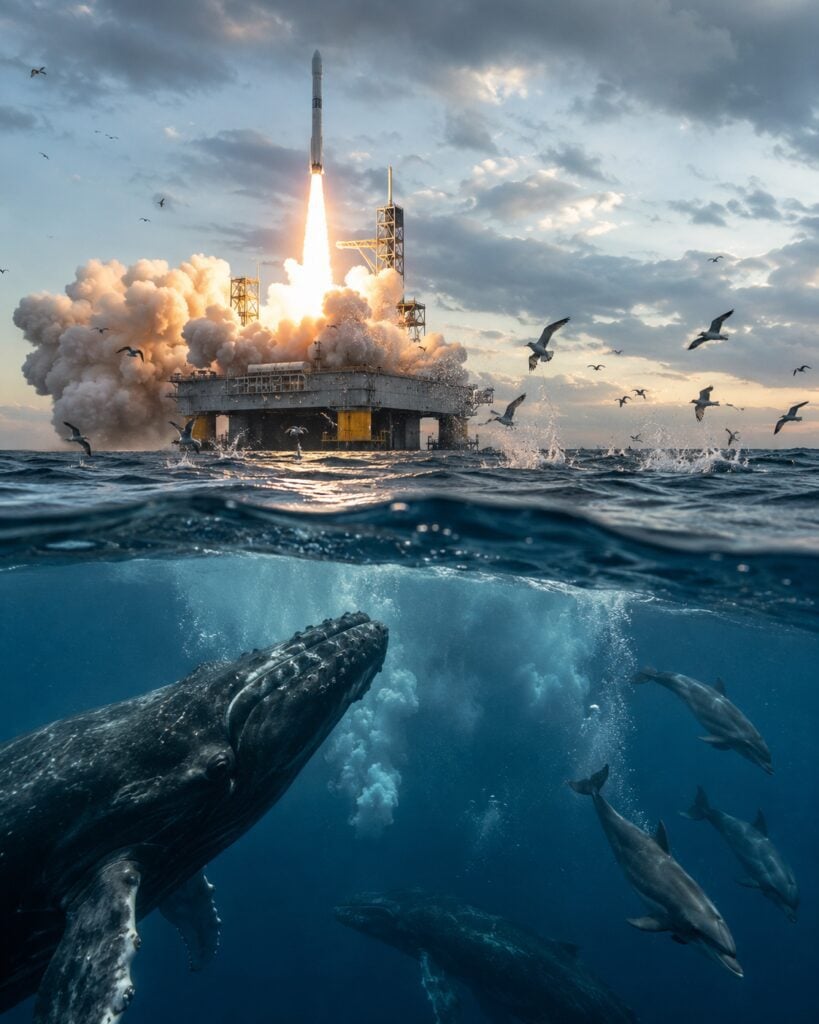
Federal regulators have already recognized that launch and recovery activities can unintentionally disturb marine mammals. NOAA Fisheries previously issued authorization covering marine mammal “take” connected with rocket and missile launches, recovery activities, and aircraft operations at Vandenberg Air Force Base.
In this legal context, take can include behavioral disturbance rather than only injury or death. The authorization included requirements intended to reduce impacts, along with wildlife monitoring and reporting.
This does not prove that every offshore launch would seriously harm whales. Location, sound level, season, species, water depth, and launch frequency would all influence the risk.
It does show why regulators cannot assume the impact will be harmless.
Before approving a site, I believe agencies should map migration routes, breeding areas, feeding grounds, and seasonal wildlife concentrations.
Launches may need to be limited or paused when vulnerable animals are present.
Sea Turtles, Seabirds, and Fish Also Need Protection
Marine mammals may receive the most attention, but they are not the only animals that could be affected. Sea turtles spend much of their lives underwater but regularly surface to breathe.
Seabirds feed, rest, and migrate across offshore areas. Fish, squid, and smaller organisms support the food web that larger animals depend on.
Artificial lighting can change natural behavior, particularly at night. Support vessels can increase collision risks, underwater noise, emissions, and the possibility of fuel spills.
Debris from launch failures or normal operations could also enter the water if recovery and cleanup systems are inadequate.
These risks must be studied for each proposed location rather than discussed only in general terms. A platform near an important migration corridor may create very different concerns from one in a less sensitive area.
Launch frequency matters too. A single test and a busy commercial facility operating regularly do not create the same level of disturbance.
BOEM’s request identifies environmental reviews and consultations under laws including the Endangered Species Act, Marine Mammal Protection Act, Clean Water Act, Clean Air Act, and protections for essential fish habitat.
These reviews should remain meaningful requirements, not paperwork completed after a preferred location has already been selected.
Old Oil Platforms Create Extra Questions
BOEM is also considering whether former or existing oil and gas facilities could be converted into launch, re-entry, or recovery infrastructure.
Reusing an existing structure may sound efficient because it could reduce the need to build an entirely new platform. However, an aging facility can bring old problems into a new industry.
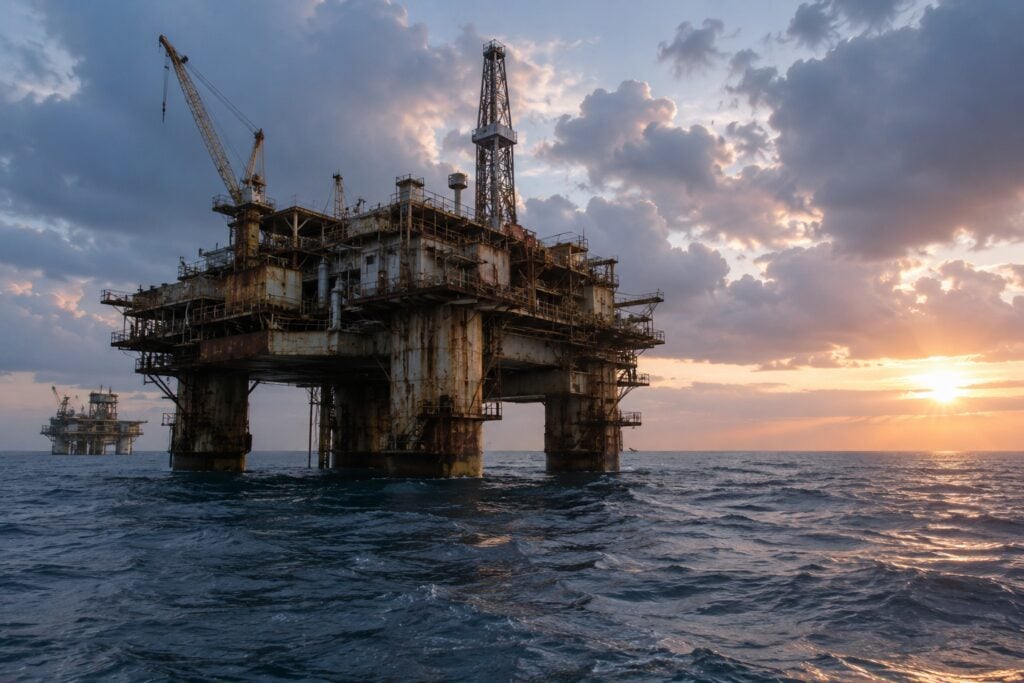
A 2024 Government Accountability Office report found that, as of June 2023, more than 2,700 wells and 500 platforms in the Gulf of Mexico were overdue for decommissioning.
GAO warned that delays increase environmental, safety, and financial risks because offshore structures can deteriorate through corrosion, storms, and years of exposure.
Damaged infrastructure can become more dangerous and expensive to remove.
I do not think converting an old platform should become an easy way for an operator to delay decommissioning.
Before reuse is considered, the structure should receive a complete independent inspection. Regulators should confirm its age, condition, storm resistance, pollution history, remaining lifespan, and eventual removal plan.
A new commercial purpose should never erase an old environmental obligation.
Environmental Review Must Happen Before Approval
Commercial space launches and re-entries generally require authorization from the Federal Aviation Administration.
The FAA treats the issuance or modification of a launch, re-entry, or spaceport license as a major federal action under the National Environmental Policy Act. This means environmental effects must be examined before authorization is granted.
Depending on the expected impacts, the review may involve an Environmental Assessment or a more detailed Environmental Impact Statement. The process can examine alternatives, allow public participation, and identify measures to avoid or reduce environmental harm.
Completing an environmental review does not automatically guarantee that the FAA will issue a license.
For an offshore project, I would expect the review to cover the entire operation, not only the few minutes of launch.
That includes platform construction, fuel delivery, vessel routes, employee transport, lighting, waste, launch noise, re-entry paths, recovery activity, accidents, debris, and eventual decommissioning.
Companies should also be required to publish monitoring results. If wildlife effects are greater than expected, regulators must have the authority to reduce operations, change launch periods, require new safeguards, or stop activity.
What Strong Ocean Safeguards Should Include?
Clear rules can allow innovation while protecting marine life. The goal does not need to be stopping every offshore space idea before it is studied. The goal should be ensuring that commercial speed never becomes more important than environmental responsibility.
At a minimum, I believe every proposed offshore facility should have a site-specific wildlife assessment, seasonal surveys, underwater sound modeling, pollution controls, spill-response plans, debris-recovery procedures, and continuous environmental monitoring.
Operators should explain how they will avoid sensitive habitats and reduce vessel traffic near animals.
Financial responsibility is equally important.
A company should prove that it can pay for cleanup, emergency response, infrastructure maintenance, and final decommissioning. Taxpayers should not inherit an abandoned platform or pollution problem after a commercial operator fails.
Independent scientists, fishing communities, Tribal governments, coastal residents, conservation organizations, and maritime workers should be included early.
These groups may notice risks that engineers or company representatives overlook.
How I Can Speak Up for the Ocean?
Government requests for public information can feel technical, but public participation still matters. I do not need to be a rocket scientist to say that whales, turtles, fisheries, and coastal communities deserve serious consideration.
When submitting a comment, I try to be specific rather than simply saying I oppose environmental damage.
I can ask BOEM to require site-specific wildlife studies, avoid migration routes, establish launch-season restrictions, disclose monitoring data, and prevent platform reuse from delaying legal decommissioning duties.
I also remember that comments submitted to federal dockets may become publicly visible. I avoid including unnecessary personal information and save the confirmation or tracking number after submitting.
Beyond this proposal, I can support organizations that protect marine habitats, reduce my use of disposable plastic, choose responsibly sourced seafood, and share accurate information.
Personal habits will not regulate commercial rockets, but they can strengthen a wider culture that values ocean protection.
Space Progress Should Not Come at the Ocean’s Expense
The commercial space industry may bring important opportunities. Offshore launch systems may eventually become part of that future. But the ocean should never be treated as an experimental zone simply because fewer people can see what happens there.
Whales, sea turtles, seabirds, fish, and coastal communities already face pollution, habitat loss, warming water, fishing pressure, and vessel traffic.
Any new industry entering their environment should be required to prove that its operations can be managed responsibly.
No specific offshore launch project has been authorized through BOEM’s current process. That means there is still time to build protection into the system from the beginning.
I want scientific progress to continue. I also want the ocean to remain alive, productive, and safe. We should not be forced to choose between those goals.
With transparent reviews, enforceable rules, strong monitoring, and real accountability, space exploration can move forward without leaving marine life to absorb the cost.