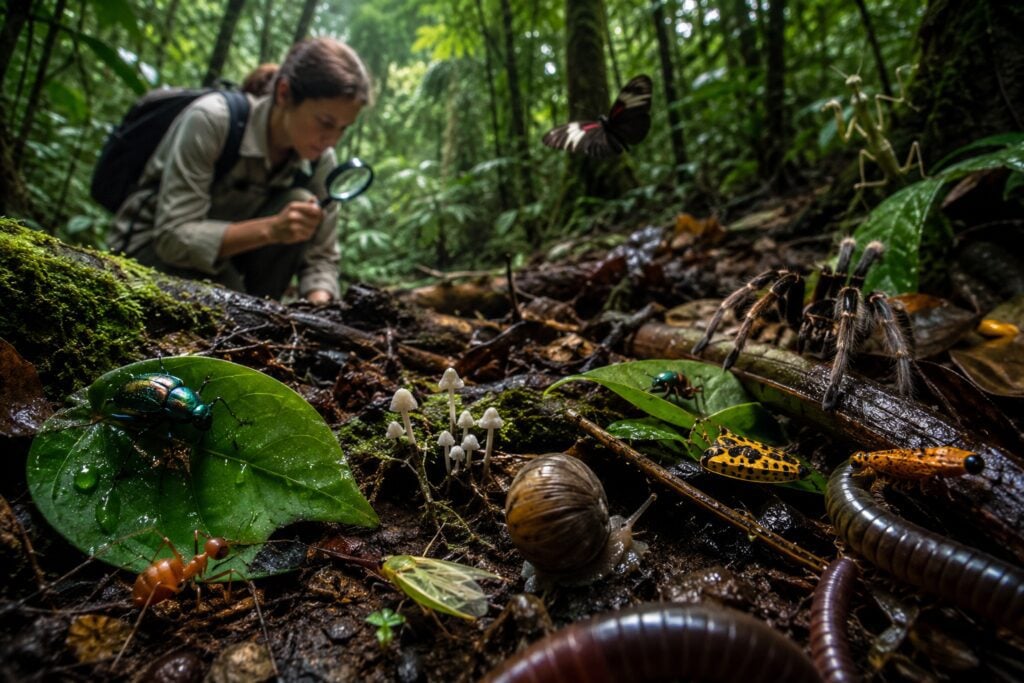
Far from major cities, factories, and crowded coastlines, Midway Atoll appears to be protected from the waste created by modern life. It sits in the central North Pacific, surrounded by open ocean and used as a nesting ground by one of the world’s largest colonies of Laysan albatrosses.
Yet every year, plastic bottle caps, cigarette lighters, fragments of containers, fishing gear, and other human-made objects reach this remote place. Some wash onto its beaches.
Other pieces arrive inside the stomachs of seabirds.
Adult albatrosses searching for squid, fish eggs, and other floating food can accidentally collect plastic and carry it back to their chicks.
A parent simply trying to provide a meal may unknowingly deliver the trash that humans left in the sea.
Why Midway Is So Important to Albatrosses?
Midway Atoll is much more than a distant group of islands. It is one of the most important seabird breeding areas in the Pacific Ocean. Large numbers of Laysan albatrosses return there each year to find partners, lay eggs, and raise their chicks.
The adults may travel thousands of miles across the ocean while searching for enough food to support their young.
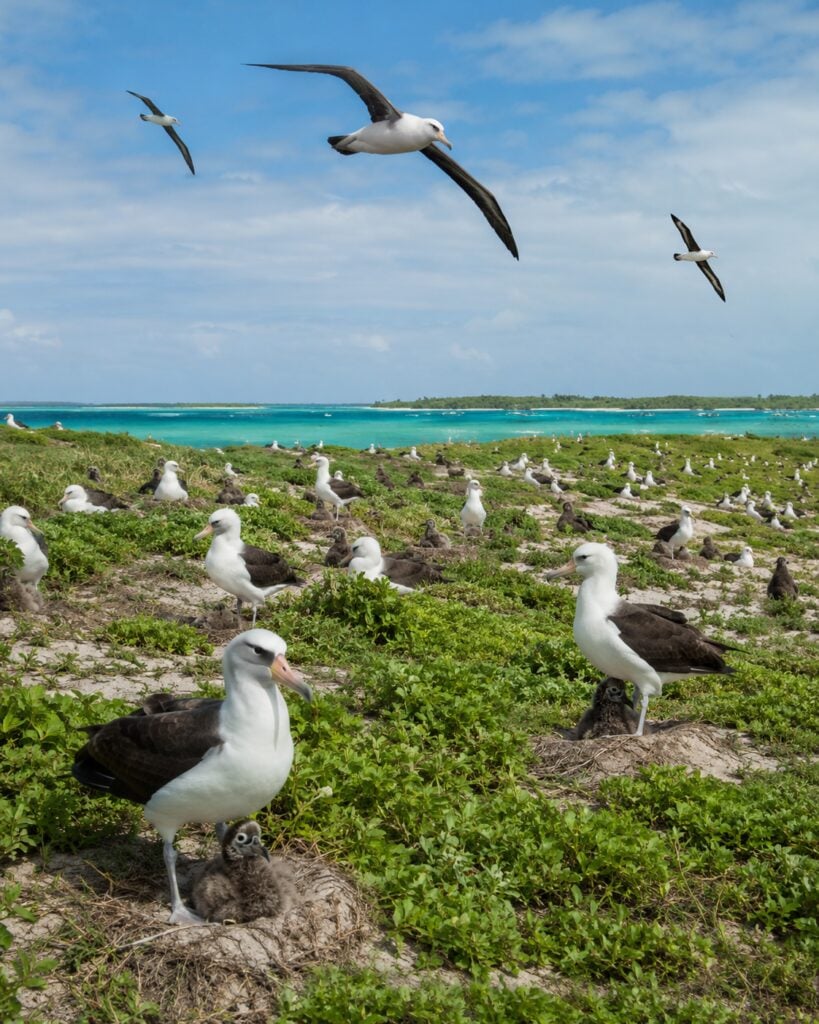
Laysan albatrosses usually raise only one chick during a breeding season. Both parents invest months in incubating the egg and gathering food. A chick remains dependent on its parents until it is ready to fly out to sea, usually about five or six months after hatching.
I find this level of parental effort remarkable. An adult may fly across an enormous area, survive storms, locate prey, and return to the exact nesting site where its chick is waiting.
The tragedy is that plastic pollution has entered this natural feeding system.
How Plastic Becomes Part of a Chick’s Meal?
Albatrosses feed near the ocean’s surface, where they collect squid, fish eggs, crustaceans, and other prey. Unfortunately, many plastic objects also float in the same areas.
Small pieces may resemble food, while fish eggs can attach themselves to floating debris.
The adults swallow what they find and later regurgitate the meal for their chicks. The parent does not understand the difference between a useful floating object and a dangerous human-made fragment.
To the bird, both may look or smell connected to food.
NOAA estimates that adult albatrosses feed around five tons of plastic to chicks at Midway each year.
The agency also reports that more than 90 percent of Laysan albatross chicks hatched within the surrounding marine monument contain plastic in their stomachs.
One study cited by the Smithsonian found plastic in 97.5 percent of examined chicks. That does not mean every chick dies because of plastic, but it shows how deeply the material has entered their food supply.
What Happens Inside a Plastic-Filled Stomach?
A chick needs real food, water, and stored body fat to grow strong enough for its first flight. Plastic provides none of those things. Large amounts can occupy space that should contain nutritious prey and water. Sharp or irregular pieces may also irritate or injure the digestive system.
Earlier research found that chicks carrying larger masses of plastic tended to have lower body weight and less stored fat.
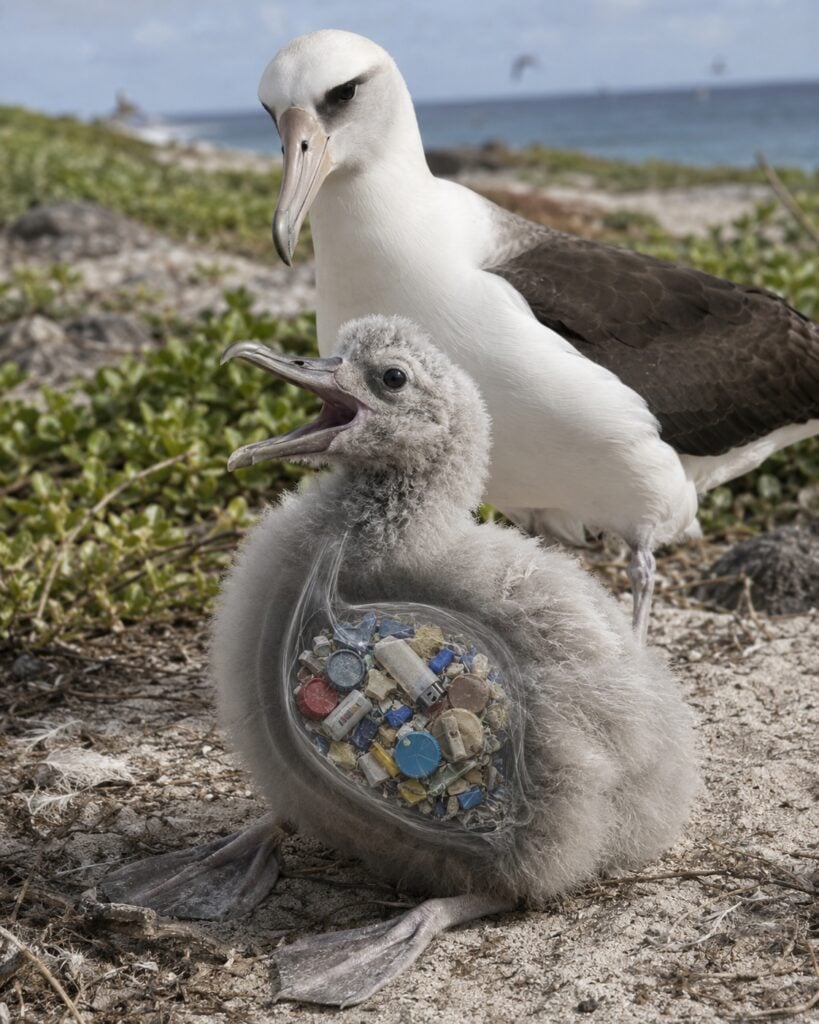
Scientists have also warned that plastic can contribute to false fullness, reduced appetite, slower growth, intestinal obstruction, and poorer physical condition.
Very young chicks may have difficulty removing the debris. As they approach fledging, albatross chicks can cast out compact masses of indigestible material called boluses.
However, this does not guarantee that every piece will be removed before it causes harm.
I think this distinction is important. The birds are not always dying because one plastic object instantly blocks the stomach. The damage can be slower and less visible.
A chick may eat less, receive less water, grow poorly, or begin its first ocean journey without enough energy.
Plastic is Not the Only Cause of Chick Deaths
Images of dead albatross chicks surrounded by plastic are powerful, but they can also encourage overly simple conclusions. Chicks at Midway face several threats, including dehydration, starvation, disease, extreme weather, invasive animals, lead exposure, and plastic ingestion.
Research has not established plastic as the direct cause of every chick death or confirmed that it alone kills roughly 200,000 chicks each year.
A historical mortality study at Midway identified multiple causes of death and did not find evidence that ingested plastic directly caused mortality in the chicks examined during that particular year.
That does not make the plastic problem less serious. It simply means the science should be described accurately.
Plastic may weaken a chick, reduce its food or water intake, and make it less prepared to survive other stresses. Several problems can also affect the same bird at once.
For me, honest explanations make the story more powerful, not less. We do not need to exaggerate the evidence to understand that feeding wild chicks tons of plastic is unacceptable.
The Waste Comes From Far Beyond Midway
Midway’s small human presence does not produce most of the debris found there. Ocean currents transport waste across huge distances before depositing it on beaches or carrying it into seabird feeding areas.
NOAA has estimated that about 20 tons of marine debris are brought to Midway each year. The debris includes everyday consumer items as well as abandoned or lost fishing equipment.

Cleanup teams have removed enormous quantities of nets, buoys, plastic fragments, and other waste from the wider Papahānaumokuākea Marine National Monument.
This is what makes Midway such a strong symbol of the global plastic crisis.
Throwing something away does not mean it disappears. A bottle cap dropped near a city can enter a drain, travel through a river, reach the ocean, and eventually become part of a chick’s meal thousands of miles away.
Midway shows us that there is no truly remote place where our waste cannot reach.
Seabirds Around the World Face the Same Threat
The crisis is not limited to Laysan albatrosses. Seabirds travel across international borders and feed in waters influenced by pollution from many countries.
Plastic bags, packaging, bottle caps, fibers, and tiny fragments have now been found in numerous seabird species.
A major study published in 2015 estimated that plastic was found in fewer than 5 percent of individual seabirds studied in 1960.
By 2010, that estimate had increased to around 80 percent.
The researchers projected that plastic ingestion could affect 99 percent of seabird species by 2050 if existing trends continued. They also emphasized that better waste management could reduce the threat.
The 99 percent figure is a projection, not a guaranteed future. Policies, product design, cleanup efforts, and better waste systems can change the outcome.
That gives me hope because this is a problem created by human behavior, which means human decisions can also reduce it.
What I Can Do in My Everyday Life?
It is easy to look at an island in the middle of the Pacific and feel disconnected from the problem. I try to remember that ocean plastic often begins with ordinary products used for only a few minutes.
My first step is reducing disposable items that I use repeatedly. I carry a reusable water bottle, decline unnecessary plastic cutlery, reuse shopping bags, and avoid products with excessive packaging when practical.
I also secure my household waste properly because litter can travel through drains and waterways even when I live far from the coast.
I pay special attention to small objects such as bottle caps, food wrappers, cigarette lighters, and pieces of thin plastic. These items are easy to lose, difficult to recover, and small enough for wildlife to swallow.
Recycling can help, but it is not a complete answer. Reducing unnecessary plastic, improving product design, preventing waste from escaping collection systems, and holding producers responsible are also essential.
Personal choices matter most when they are supported by stronger community and government action.
A Meal That Should Never Contain Our Trash
An albatross parent does not know what plastic is. It cannot understand packaging labels, recycling symbols, or the consequences of picking up a floating bottle cap. It follows the instincts that have helped its species survive for thousands of years.
We are the ones who understand the danger.
The plastic found inside Midway’s chicks may have come from many different countries, products, and people. That makes the problem difficult, but it also gives all of us a role in the solution.
We can use less disposable plastic, manage waste more carefully, support ocean cleanup, and demand systems that stop trash before it reaches the water.
When I see an albatross chick with a stomach full of plastic, I do not see a failure of nature. I see the final result of human convenience without enough responsibility.
A parent should return from the ocean carrying food, not our garbage.
Protecting these chicks begins long before plastic reaches Midway. It begins with what we produce, what we buy, what we throw away, and what we refuse to leave behind.