These endangered giraffes are getting a fresh start, showing what conservation can achieve when action comes before it is too late.
Ugandan wildlife officials are moving 12 critically endangered Nubian giraffes from Murchison Falls National Park to Ajai Wildlife Reserve as oil drilling, machinery, and other human activity expand near their habitat.
The relocation offers hope by creating a safer population where the giraffes can reproduce and recover. But it is also a reminder that wildlife should not have to lose its home to survive.
Why These Nubian Giraffes Are Being Relocated?
Moving 12 giraffes requires careful coordination between veterinarians, rangers, drivers, researchers, and animal-care teams. These tall, powerful animals must be handled with extreme care throughout the journey.
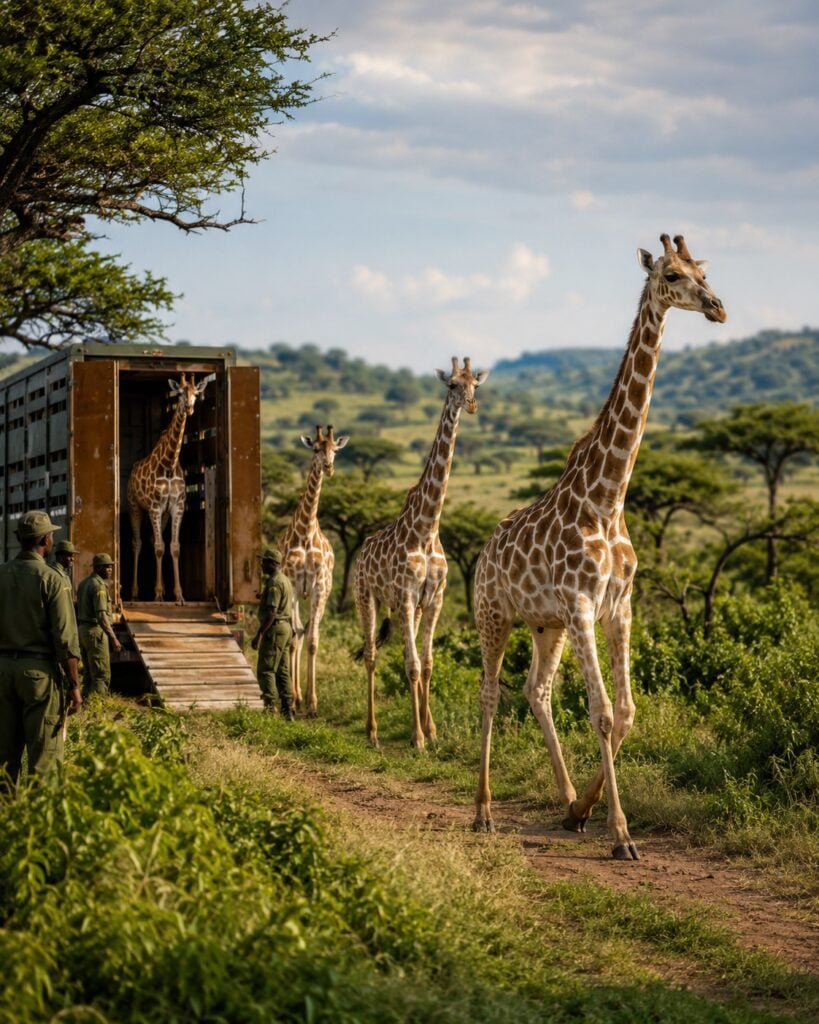
The giraffes are being relocated from Murchison Falls National Park to Ajai Wildlife Reserve as oil development, roads, machinery, noise, and traffic increase around their habitat.
Even without direct injury, industrial activity can reduce access to food, water, breeding areas, and safe movement routes. For me, this shows that wildlife protection is not only about stopping hunting.
Animals also need connected, peaceful, and healthy habitats to survive.
Why Nubian Giraffes Need Extra Protection?
Giraffes may look common in documentaries and zoos, but some populations are in serious danger. Nubian giraffes have declined by about 95 percent in three decades because of habitat loss, poaching, conflict, and human expansion.
Small, isolated groups are especially vulnerable to disease, drought, fire, and development. That is why conservationists create several protected populations instead of relying on one location.
I see it like saving an important file. One copy can be lost, but a secure backup gives the species another chance.
How a Second Population Can Protect the Species?
This relocation is about more than moving giraffes away from danger. Its real goal is to establish a new breeding population that can grow over time.
Similar projects have already helped expand Nubian giraffe populations in Uganda, showing how even a small group can strengthen the species’ future.

But safe arrival is only the beginning. Conservation teams must track the giraffes’ health, movement, feeding, and reproduction. The true success will come when they adapt, produce calves, and build a stable population.
When I follow wildlife relocations, I always look beyond release day. Long-term monitoring is what reveals whether the project truly worked.
Ajai Wildlife Reserve Is Getting a Second Chance Too
The relocation is also an important moment for Ajai Wildlife Reserve. The reserve once supported many wild animals, but severe poaching and instability caused much of its wildlife to disappear during the 1980s.
Now restoration efforts are bringing life back to the area.
Species including rhinos, zebras, buffalo, and Uganda kob have been returned or included in recovery plans. The arrival of Nubian giraffes represents another major step in rebuilding the reserve’s ecosystem.
Restoring a wildlife reserve is much more complicated than releasing several animals. The habitat must provide enough food, water, security, and space.
Rangers must prevent poaching, communities must benefit from conservation, and scientists must continue studying the animals.
Local support is especially important. Conservation projects are stronger when nearby communities receive employment, tourism income, education, and other benefits from protecting wildlife.
In my view, people are more likely to defend a reserve when they feel included in its future. Conservation cannot succeed for long when local residents carry all the costs while receiving none of the benefits.
Moving Giraffes Requires Careful Planning
Relocating a giraffe can be dangerous for both the animal and the conservation team. Giraffes have long legs, heavy bodies, and powerful movements. Stress must be kept as low as possible throughout the process.
Veterinary teams usually examine the animals, select appropriate individuals, and plan the safest route before transportation begins. The giraffes may be temporarily sedated, guided into specialized transport vehicles, and closely monitored during the journey.
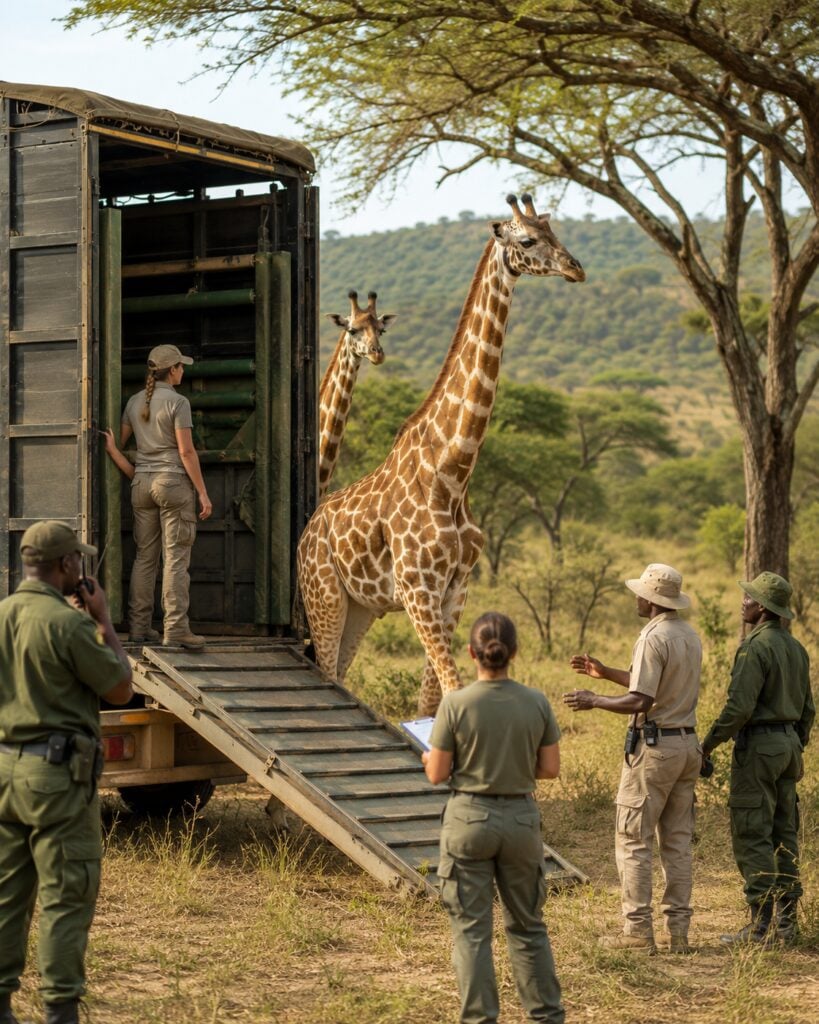
The transport equipment must also be designed around their unusual height. Drivers need to travel carefully, avoid sudden movements, and watch for low branches, power lines, rough roads, or other hazards.
After arrival, the animals require continued observation. Conservationists must check whether they are eating, moving normally, remaining together, and responding well to the new surroundings.
This careful process explains why wildlife relocation should never be viewed as an easy solution. Protecting an animal in its original habitat is usually better than moving it.
Translocation becomes necessary when serious threats make a second location valuable for the population’s survival.
What This Story Teaches Us About Development?
Uganda’s giraffe relocation highlights a difficult global issue: how can countries pursue economic development without destroying irreplaceable natural habitats?
Energy projects, roads, farms, mines, housing, and businesses can create jobs and improve people’s lives. However, poorly planned development can also divide ecosystems, pollute water, increase traffic, and push endangered animals into smaller areas.
I do not believe the conversation should be reduced to choosing between people and wildlife. The better question is how development can be planned responsibly.
Environmental studies should be completed before major projects begin. Wildlife corridors should remain open. Sensitive breeding areas should receive stronger protection.
Noise, pollution, vehicle speed, and construction activity should also be carefully controlled.
Most importantly, conservationists and local communities should be involved early, not after damage has already occurred.
How Ordinary People Can Help Giraffes?
Most of us will never participate directly in a giraffe relocation, but we can still support meaningful conservation.
I recommend learning about organizations before donating. Look for groups that publish clear information about how they use funds, work with local communities, conduct scientific monitoring, and cooperate with wildlife authorities.
Responsible tourism can also help. When visiting wildlife areas, choose operators that respect viewing distances, avoid disturbing animals, employ local guides, and contribute to conservation.
People can also share accurate information. Giraffes often receive less attention than elephants, rhinos, or big cats because their decline has happened quietly.
Helping others understand that some giraffe populations are critically endangered can build wider support for their protection.
Even simple awareness matters when it leads to informed choices, responsible travel, and support for effective conservation programs.
A New Beginning for Uganda’s Giraffes
The journey to Ajai Wildlife Reserve is only the beginning for these 12 Nubian giraffes. Their future will depend on habitat quality, strong protection, scientific monitoring, community involvement, and long-term funding.
However, this relocation gives them something extremely valuable: another opportunity to thrive.
I hope the new herd will grow, produce healthy calves, and help restore Ajai’s wildlife population. I also hope their story encourages governments and industries to consider wildlife before natural habitats become too damaged to protect.
These giraffes are getting a fresh start.
Now people must make sure their new home remains safe enough for that fresh start to become a lasting future.