To the government, they are an overpopulation problem. To a tribe, they are sacred ancestors. That contrast immediately caught my attention because it shows how differently people can look at the same animals and the same land. One side sees numbers, environmental damage, and public-safety risks. The other sees family, history, responsibility, and a living connection to generations who came before them.
Near Mono Lake on the California-Nevada border, federal officials planned to remove around 624 wild horses—roughly 90% of the herd living outside its designated territory. The U.S. Forest Service said the population had grown far beyond what the land could support and was damaging sensitive habitats.
The Utu Utu Gwaitu Paiute Tribe sued to stop the operation. Tribal leaders described the horses as “sacred relatives” connected to their culture and heritage. They argued that the roundup was approved without the meaningful tribal consultation required by law and relied on an outdated population count taken before severe winters killed an unknown number of horses.
The tribe proposed a different solution: co-managing the herd and using fertility control to reduce its growth gradually. However, on July 7, 2026, a federal judge rejected the tribe’s emergency request to stop the operation. The roundup began the following day.
Why the Government Said the Herd Had Become Too Large?
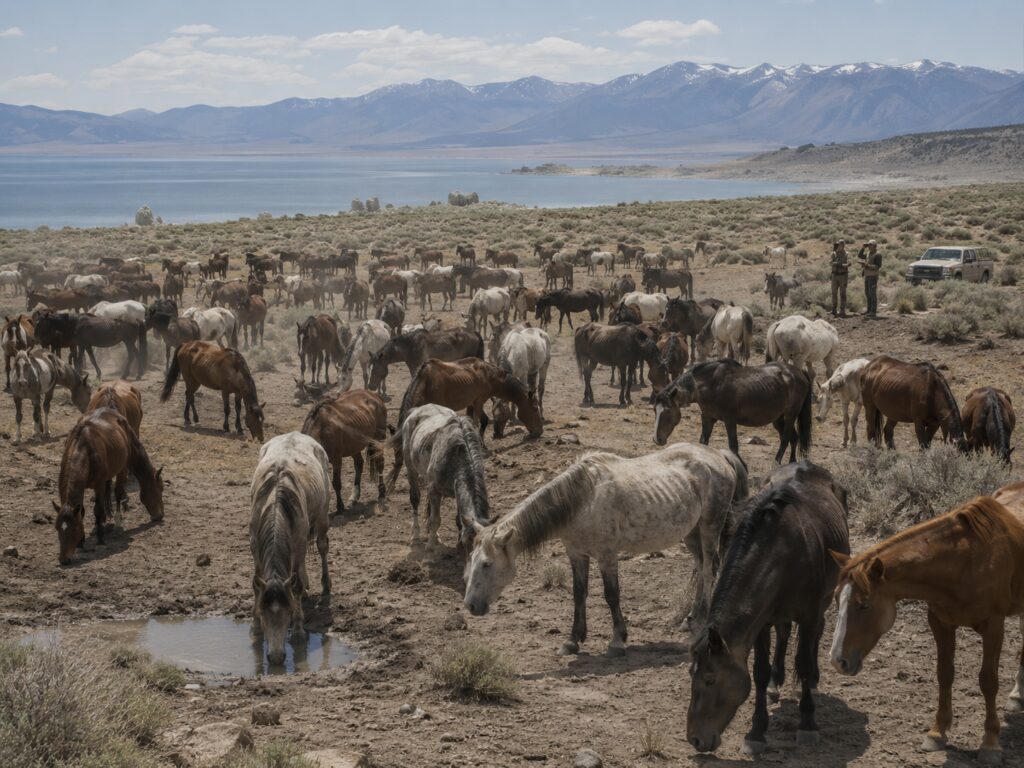
The government’s concerns cannot simply be dismissed. Wild horses need food, water, space, and healthy land to survive. When too many animals depend on a dry and fragile landscape, the result can be damaged vegetation, crowded water sources, poor nutrition, and conflict with people.
The Montgomery Pass Wild Horse Territory covers roughly 200,000 acres near the California-Nevada border. It is officially managed for a population of between 138 and 230 horses. However, a 2024 federal survey estimated that the herd had grown to at least 694 horses, with approximately 624 roaming outside the designated territory.
Federal land managers said the horses were trampling wetlands, natural springs, migratory-bird nesting areas, sage-grouse habitat, and some of Mono Lake’s famous limestone tufa formations. They also pointed to collisions involving horses, bicycles, and vehicles on nearby highways.
I understand why officials felt pressure to act. Ignoring a growing population can eventually harm the horses themselves. If food and water become too scarce, animals may face starvation, dehydration, disease, or dangerous movement toward roads and communities. However, accepting that a problem exists does not automatically mean accepting every proposed solution.
Why These Horses Mean So Much to the Tribe?
This story becomes much deeper when I stop thinking about the horses only as wildlife. For the Utu Utu Gwaitu Paiute Tribe and other Indigenous people in the Mono Basin, the animals are part of a continuing cultural relationship. They are not simply beautiful creatures that recently appeared in the landscape.
Tribal families have lived, traveled, worked, traded, and held gatherings with horses for generations. Horses helped people move through the mountains, reach neighboring communities, gather supplies, prepare for winter, and participate in rodeos and cultural events. That history explains why tribal members refer to the herd as relatives rather than resources.
The tribe’s lawsuit claimed that federal agencies approved the removal without properly identifying sacred places, studying possible harm to cultural resources, or completing meaningful government-to-government consultation. Tribal leaders also challenged the use of the 2024 count, arguing that it did not fully account for deaths caused by later severe winters.
I believe this concern deserves serious attention. Consultation should not be treated as a box that an agency checks before continuing with a decision it has already made. It should provide Indigenous communities with a genuine opportunity to influence what happens on their ancestral lands.
The Court Allowed the Roundup to Continue
The legal decision did not settle every issue in the larger case. It answered a narrower and more urgent question: should the court temporarily stop the roundup while the lawsuit continued?
U.S. District Judge Dale Drozd denied the tribe’s request for a temporary restraining order on July 7. The judge concluded that federal agencies had attempted to contact the tribe and noted that a planned meeting had been canceled. The tribe disputed the idea that those contacts amounted to meaningful consultation and announced that it would continue its legal fight.
The ruling cleared the roundup to move forward, but it did not erase the deeper disagreement. The tribe’s lawsuit remained active, meaning questions about consultation, cultural resources, and federal decision-making could still be examined. This distinction matters. A court refusing to stop an immediate action is not always the same as a court deciding that every part of that action was fair, wise, or respectful.
What Happened During the Roundup?
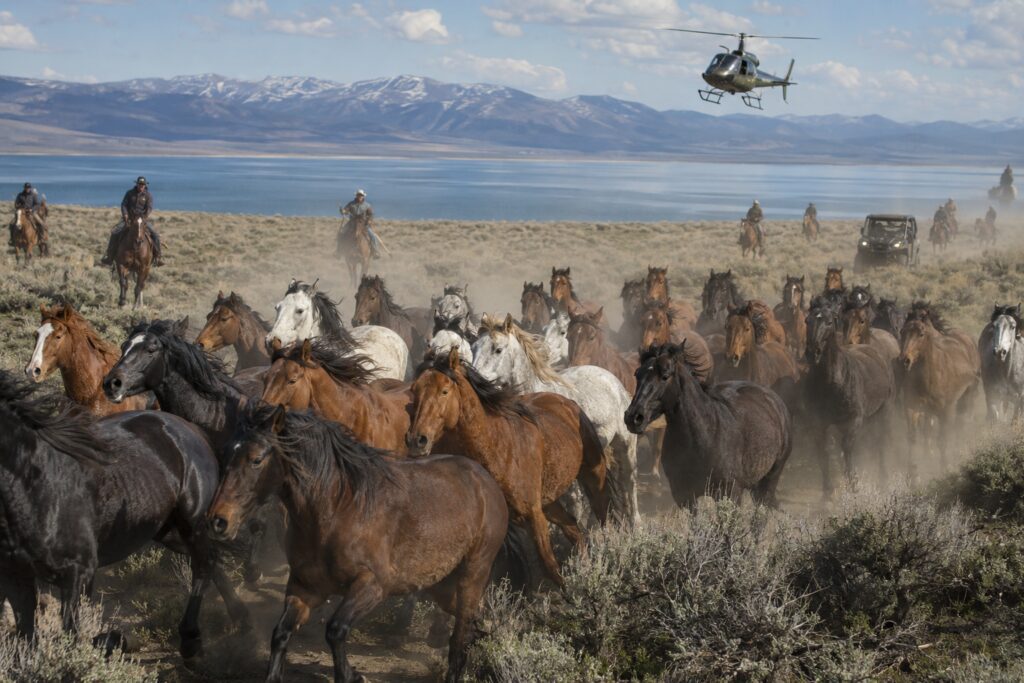
Once the emergency request was denied, the operation moved quickly. Helicopters were used to guide groups of horses toward temporary pens, where they were sorted and prepared for transport. The roundup took place from July 8 through July 10. Federal records show that 461 horses were captured: 219 on the first day, 135 on the second, and 107 on the final day.
Officials later reported that no horses were killed directly during the gathering process, although three were euthanized because of pre-existing health conditions. Some of the captured horses were reportedly malnourished or experiencing hoof problems. They were transported to the Double Devil Wild Horse Corrals in Modoc County, where they would receive care and eventually become available for adoption.
Even with welfare standards in place, I can understand why watching a helicopter push hundreds of frightened animals across the desert would be painful. For tribal observers, it was not simply a management operation. It was the removal of animals connected to their families, homeland, and cultural memory.
Could Birth Control Have Offered a Better Solution?
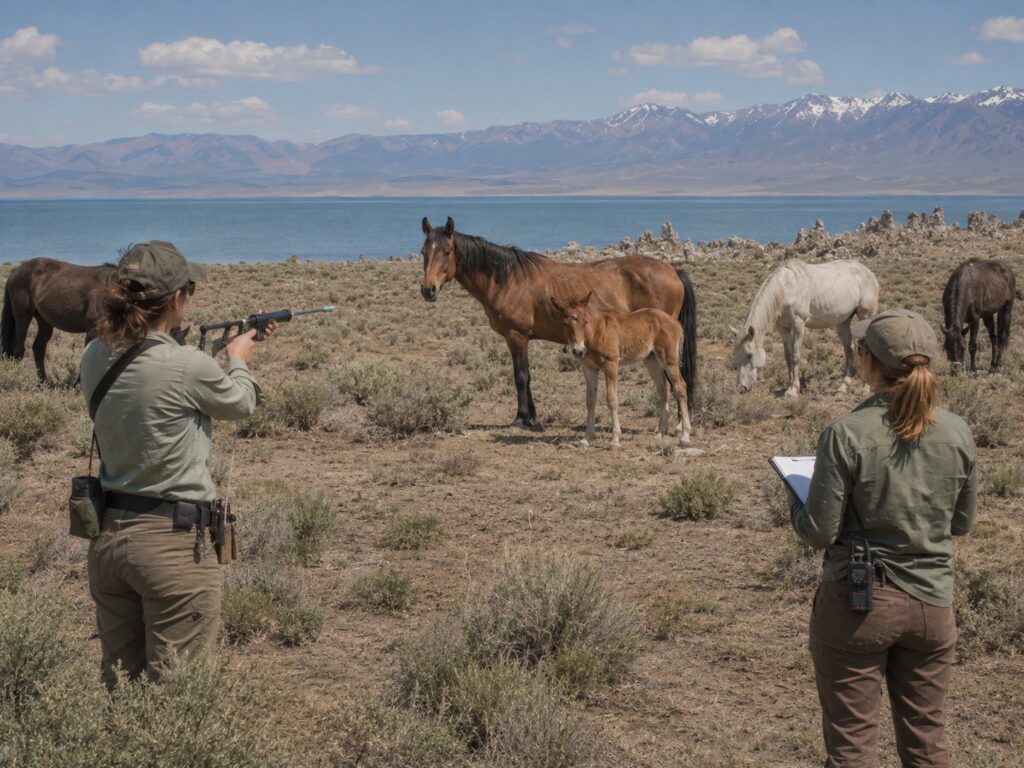
The tribe supported a slower approach based on fertility control and cooperative management. Instead of removing most of the herd at once, trained teams could treat selected mares to reduce future births while continuing to monitor the population.
Fertility control is not an instant solution. Horses must be located, treated, identified, and treated again when necessary. It requires reliable funding, skilled workers, long-term monitoring, and cooperation among agencies, tribal communities, scientists, and local residents.
Still, I believe it should be taken seriously. Removing hundreds of horses may reduce the population quickly, but it does not solve the disagreement over how the surviving herd should be managed. Without a long-term plan, populations may rise again and lead to repeated roundups.
A thoughtful approach could combine several methods: fertility control, protection of water sources, updated population counts, habitat restoration, limited removal when truly necessary, and meaningful tribal co-management.
How I Approach Stories Like This?
My first personal tip is to avoid choosing a side before understanding what each side is trying to protect. The government is focused on habitat, road safety, and population limits. The tribe is focused on culture, sovereignty, humane treatment, and its relationship with the horses.
My second tip is to question the quality and age of the information behind major decisions. If hundreds of animals will be permanently removed, population estimates should be as current and transparent as possible. Known winter deaths and other changes should be carefully considered.
My final tip is to listen closely to people who have lived with the land for generations. Scientific studies and government data are important, but traditional knowledge can reveal relationships that official reports may overlook.
My View: Protection Should Include Partnership
I do not believe the answer is to ignore habitat damage or allow horse populations to grow without limits. Healthy horses need healthy land, and responsible management is necessary.
But I also do not believe Indigenous concerns should be treated as emotional obstacles standing in the way of a technical solution. Cultural knowledge, tribal sovereignty, and historical relationships with the land should be part of the decision from the beginning—not added after the main plan has already been approved.
To me, the strongest solution would have been genuine co-management. The tribe, federal agencies, independent scientists, animal-welfare experts, and local communities could have created a transparent plan using updated counts, fertility control, habitat monitoring, and limited removals only where clearly necessary.
The Mono Lake conflict is about more than whether there are too many horses. It asks who gets to define what belongs on a landscape, whose knowledge is respected, and whether protecting nature must come at the cost of cultural relationships. The roundup may have removed hundreds of horses, but it has not removed those questions. Until governments treat Indigenous communities as real partners, similar conflicts will continue—on different lands, involving different animals, but carrying the same painful history.