I believe new AI data centers can bring progress, innovation, and economic opportunities. But I also believe that development should not come at the cost of community trust, animal welfare, or transparency.
That is why the lawsuit filed by the Greater Birmingham Humane Society caught my attention. On July 10, 2026, GBHS challenged the approval process for the proposed Nebius AI Factory, which would be built near its future campus in Oxmoor Valley.
For me, this case raises an important question: How can we welcome new technology while still protecting the people, animals, and organizations already in the community?
Why the Humane Society Is Challenging the Data Center Approval?
This lawsuit is not about rejecting technology or stopping economic development. It is about seeking transparency and understanding whether the proper process was followed before approving such a major project.
While hyperscale data centers can bring jobs, investment, and innovation, they can also create concerns about traffic, noise, energy use, water consumption, and their impact on nearby communities.

What stands out to me is that GBHS has spent nearly a decade planning a future campus dedicated to animal care and community services. With the proposed AI facility planned nearby, the organization believes the approval process deserves careful review.
To me, this raises an important question: when a community invests years creating a resource that helps people and animals, shouldn’t nearby developments receive extra consideration before moving forward?
What Makes Data Centers a Growing Community Concern?
AI is growing quickly, but behind every AI system are massive data centers that require powerful servers, large amounts of electricity, and advanced cooling systems.
These facilities can bring jobs, investment, and economic growth, but they also raise questions about energy use, environmental impact, and whether they are being built in the right locations.
What makes the Birmingham case stand out to me is that the concerns go beyond technology. The proposed data center would be near residential areas, Oxmoor Elementary School, and United Ability, showing how development decisions can affect entire communities.
For me, this is a reminder that progress should consider not only businesses and innovation, but also the people, organizations, and neighborhoods already there.
Why Location Matters More Than Ever?
A project can be beneficial in one location and problematic in another. That is why careful planning is so important. A hyperscale data center is not like a small office building. Its size, infrastructure needs, and long-term impact make location decisions extremely important.
The Greater Birmingham Humane Society believes the court should examine whether the project fits within existing zoning rules and whether all necessary procedures were properly followed.
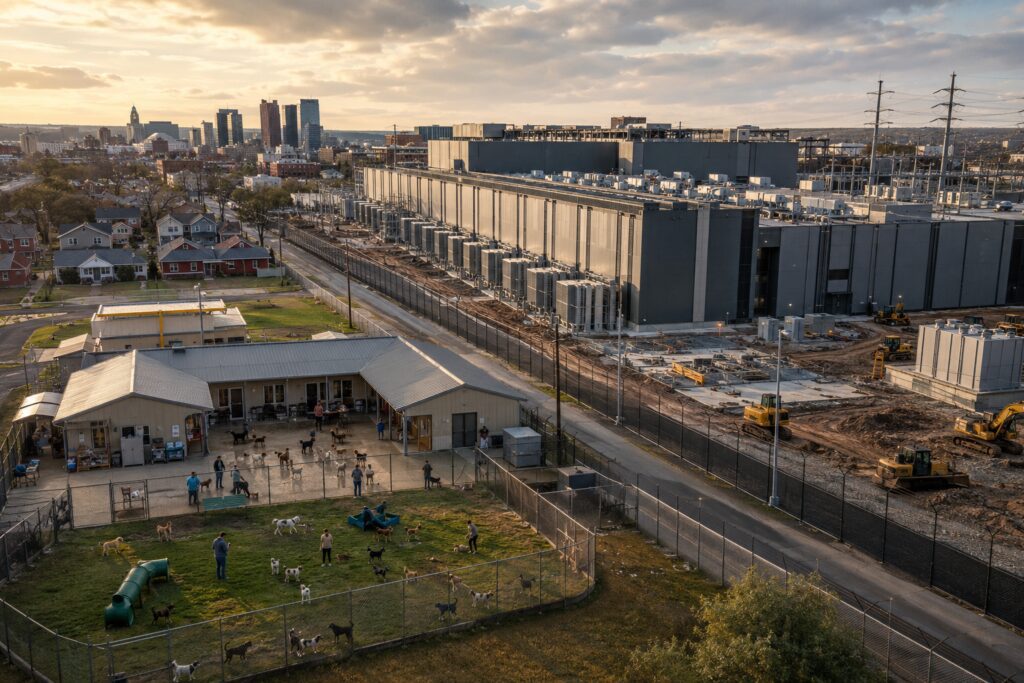
The organization’s argument is not that technology should stop growing. Instead, it wants confidence that growth happens responsibly.
I believe this is a conversation many cities will continue having in the future. As artificial intelligence expands, more communities will need to decide how to balance innovation with quality of life.
The goal should not be choosing between technology and nature, or between business and community. The goal should be finding ways where progress does not come at the expense of the people and organizations already serving the area.
The Humane Society’s Role in Protecting Those Without a Voice
One of the most powerful parts of this story is the reason GBHS gave for taking action. “The animals we serve cannot speak for themselves,” Allison Black Cornelius said. “That has always been our responsibility.” That statement reflects the organization’s broader mission.
Humane societies exist to protect animals that cannot advocate for themselves, whether they are abandoned pets, injured animals, or those needing shelter and care.
For many animal welfare organizations, their facilities are not just buildings.
They are places where lives are saved, communities are educated, and people build connections with animals. That is why the organization sees the future campus as something worth protecting.
Personally, I think this highlights an important lesson: every community has places that carry deeper meaning than their physical size. A shelter, school, park, or nonprofit center may represent years of dedication and the hopes of many people.
What Communities Can Learn From This Conflict?
Stories like this offer lessons that apply far beyond Birmingham. My first tip is to pay attention to the planning process, not just the final decision. Many conflicts happen because residents feel they were informed too late or that their concerns were not fully considered.
My second tip is to look at both sides. New development is not automatically harmful, and opposition is not automatically against progress.
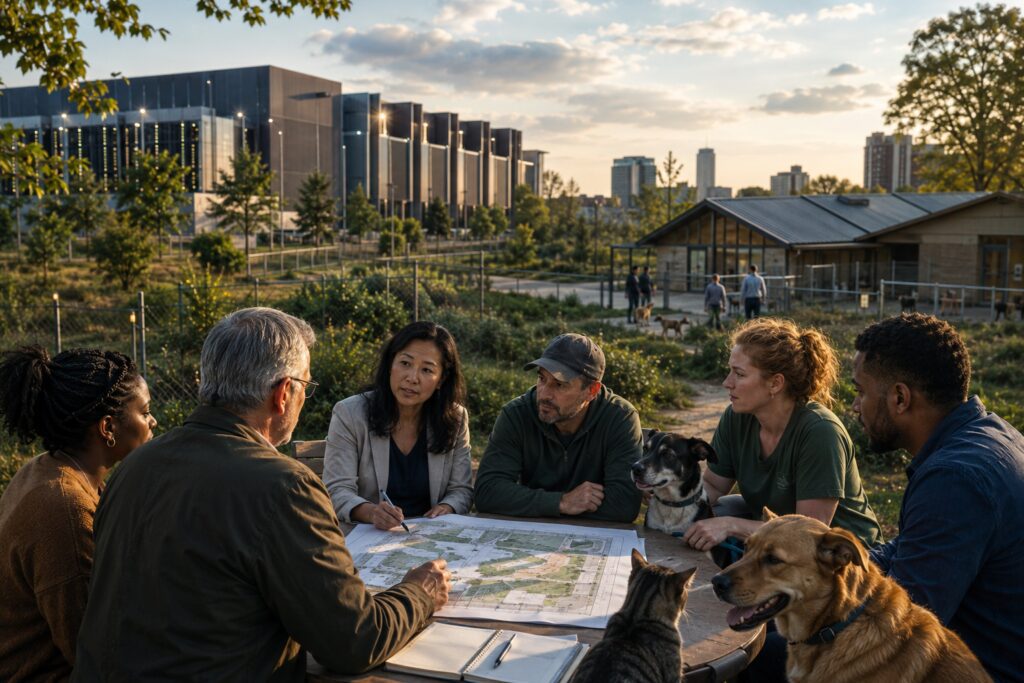
Often, the real issue is whether the project was designed and approved responsibly. My third tip is to ask long-term questions. A project may create benefits today, but communities must also consider what happens five, ten, or twenty years later.
Will the infrastructure support it? Will nearby residents remain comfortable? Will local organizations still be able to operate effectively?
These questions help communities make smarter decisions.
A Bigger Conversation About AI and the Future
The Birmingham lawsuit comes at a time when artificial intelligence is changing how people live and work. AI development is accelerating, and companies are investing billions of dollars into the infrastructure needed to support it.
But every new technology has consequences.
The future of AI should not only be measured by faster computers, bigger companies, or more investment. It should also be measured by how responsibly communities handle the changes that come with it.
A successful future requires listening to different voices: businesses, residents, nonprofits, environmental experts, and community leaders.
The Greater Birmingham Humane Society’s lawsuit does not ask whether AI should exist. It asks whether a project of this size and impact should move forward in this specific location without resolving questions about approval and planning.
My Final Thoughts
I believe communities should welcome innovation, but innovation should always come with responsibility. Technology can improve lives, create opportunities, and solve major problems.
At the same time, progress should not ignore the voices of those who may be affected along the way.
The Birmingham case is a reminder that development is not only about what we build. It is also about how we build it. The strongest communities are not the ones that avoid change.
They are the ones that know how to grow while protecting the values, people, and places that make them special.