After Hurricane Helene devastated western North Carolina in September 2024, many mountain wetlands were buried under sediment, debris, and fallen trees. These fragile habitats are home to the bog turtle, the smallest turtle in the United States.
The storm added even more pressure to a species already threatened by habitat loss, illegal collection, invasive plants, roads, and disrupted water flow.
Now, scientists, landowners, volunteers, and conservation groups are working together to restore wetlands, protect nests, raise vulnerable hatchlings, and find new places where these tiny turtles can recover.
Meet the Smallest Turtle in the United States
Bog turtles may be tiny, but they are easy to recognize once you know what to look for.
Adults are usually only about four inches long and have a bright orange, yellow, or reddish patch on each side of the head. Their dark shells help them blend into the mud and thick vegetation of their wetland homes.
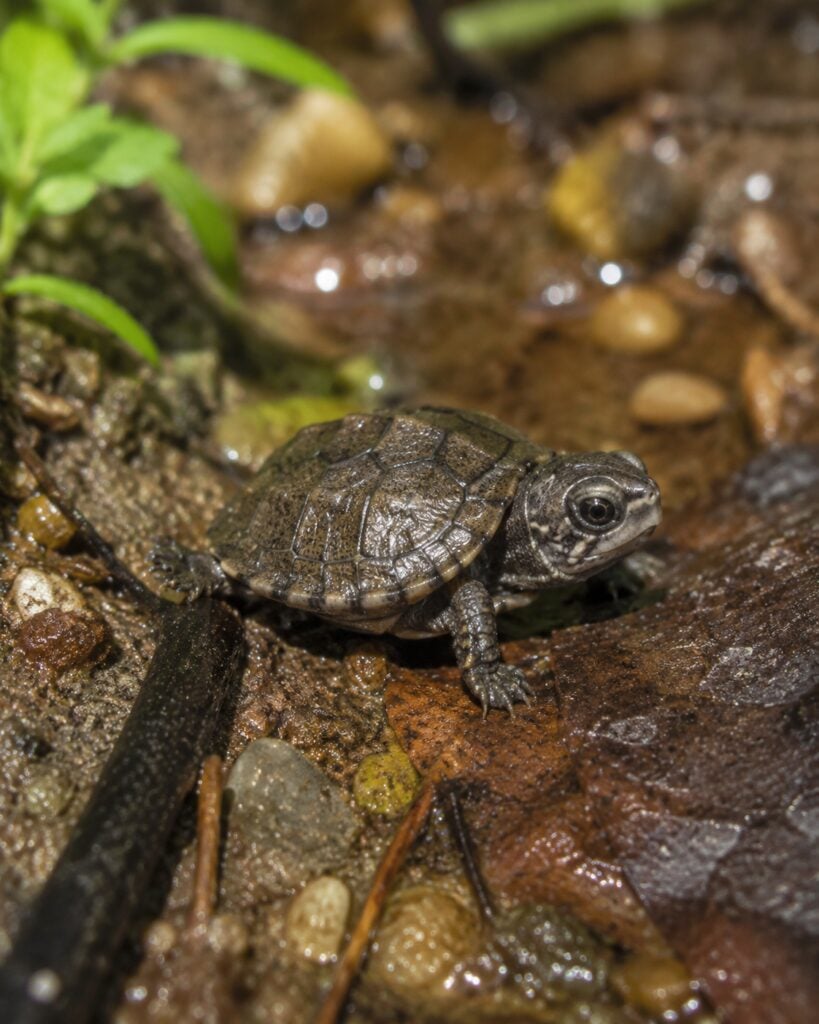
The bog turtle is considered the smallest turtle in North America. It spends much of its life hidden in soft mud, underground burrows, shallow water, and dense plants.
During winter, it may remain underground for months before becoming active again in warmer weather.
I think their size makes their struggle easy to overlook. Larger animals often receive more attention because they are dramatic and highly visible. Bog turtles quietly disappear when their wetlands are drained, filled, polluted, shaded, or buried.
Hurricane Helene Changed Their Wetlands
Mountain bogs are naturally wet, soft, and full of low-growing vegetation. They may look messy to us, but they provide bog turtles with nearly everything they need, including shallow water, mud for hiding, sunny areas for warming their bodies, nesting ground, and places to spend the winter.
Hurricane Helene brought extreme rain, flooding, erosion, and landslides to western North Carolina.
Early assessments by the North Carolina Wildlife Resources Commission found that bog turtle habitats and other wetlands had been affected by the storm. Some areas were buried under sediment and woody debris, while others experienced major changes to water movement.
For a bog turtle, a layer of storm debris can completely change a familiar home. Nesting areas may disappear. Soft mud may be replaced by rocks and heavy sediment. Water may become too deep, too fast, or redirected away from the wetland.
The immediate damage is only part of the problem. Storms can also create conditions that allow invasive plants to spread or trees and shrubs to take over open wetland areas.
Bog turtles need a careful balance. Their habitat must remain wet, but it also needs enough sunlight and open vegetation.
When tall woody plants create too much shade, the wetland may no longer provide the warm conditions turtles need.
The Storm Added to Existing Threats
Hurricane Helene did not create every problem facing the bog turtle. Instead, it placed more pressure on populations that were already vulnerable.
Habitat loss is one of the greatest threats.
Mountain wetlands have been drained, filled, divided, or altered for roads, farming, housing, and other development. Changes to nearby streams and groundwater can also cause a bog to become too dry or too deeply flooded.
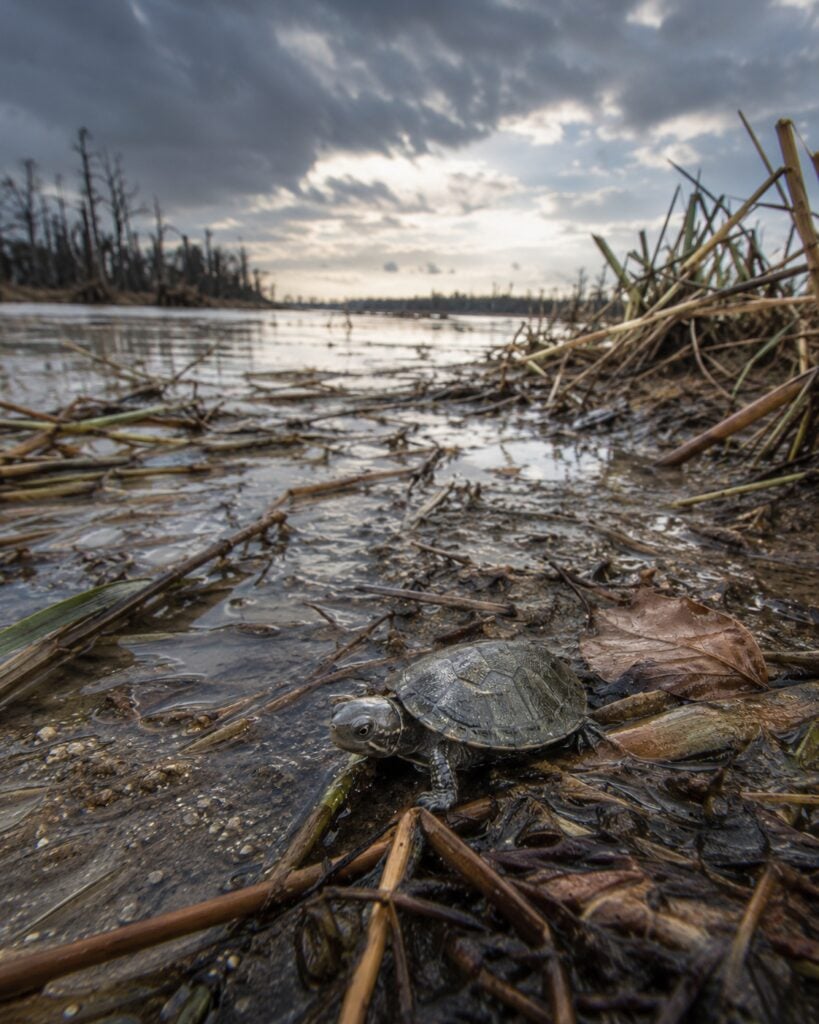
Federal wildlife officials identify habitat loss, habitat fragmentation, altered water flow, invasive plants, roads, and illegal collection as major threats to bog turtles.
Poaching is especially damaging because bog turtles mature slowly and produce only a small number of eggs. Removing even a few breeding adults from a small population can have consequences that last for years.
Wild turtles may be taken and sold through the illegal pet trade.
The U.S. Fish and Wildlife Service warns that poaching often ends a turtle’s natural life, even when the animal is later recovered from traffickers.
Rebuilding Wetlands by Hand
Restoring a mountain bog is not as simple as cleaning up visible debris. Conservationists must understand how water previously moved through the landscape and what conditions the turtles need throughout the year.
Teams may remove fallen trees, sediment, invasive vegetation, and dense shrubs. They may reopen blocked water channels, create shallow pools, repair damaged streambanks, or restore the natural flow of groundwater.
Some of this work is completed with tools and machinery, but sensitive areas may require careful work by hand.
Heavy equipment could crush hidden turtles or cause additional damage to soft wetland soil.
Restoration also requires patience.
A wetland may look better after several weeks of work, but scientists must continue monitoring its water levels, vegetation, soil, and wildlife for years.
Protecting Nests and Raising Hatchlings
Bog turtle eggs and hatchlings face many natural dangers. Eggs may be eaten by predators, exposed by flooding, buried by sediment, or damaged when nesting areas are disturbed.

In some conservation programs, specialists protect nests or collect eggs when the risk of loss is extremely high. Hatchlings may then be raised in controlled conditions until they are larger and better able to survive in the wild.
This approach is sometimes called head-starting.
It does not remove every danger, but it allows very young turtles to pass through one of the most vulnerable stages of their lives.
Once they reach an appropriate size, the turtles may be returned to protected habitat. Scientists can then monitor them to learn whether they survive, move normally, and eventually reproduce.
Why Healthy Bogs Matter to People Too?
Saving bog turtles is not only about protecting one rare reptile. Their wetlands provide benefits that extend far beyond the turtle population.
Healthy wetlands can absorb and temporarily hold rainwater, slow runoff, trap sediment, improve water quality, and provide habitat for many plants, insects, birds, and amphibians.
Wetland restoration can also improve local hydrology and help protect nearby waterways.
In a region affected by intense rainfall and flooding, those benefits matter.
I often think of wetlands as natural sponges. That explanation is not perfect, but it makes their value easy to understand. They collect water, release it more slowly, and reduce some of the pressure placed on rivers and communities downstream.
When wetlands are filled or disconnected from their natural water sources, people may lose some of those protections without realizing it.
Finding New Places for the Turtles to Recover
Some damaged wetlands may be restored successfully, while others may no longer offer reliable habitat. This is why scientists are also searching for additional places where southern bog turtles could survive.
A suitable site must have the right water conditions, soil, vegetation, sunlight, protection, and connection to the surrounding landscape.
It must also be secure from development and illegal collection.
Scientists cannot simply place turtles in the nearest marsh.
Bog turtles require specialized mountain wetlands, and the wrong location could expose them to predators, disease, flooding, or unsuitable temperatures.
Researchers may study water levels, plant communities, surrounding land use, and historical records before deciding whether a location could support turtles.
How We Can Help Bog Turtles?
Most people will never handle a bog turtle or enter one of its protected wetlands. In fact, keeping the exact locations of rare turtles private is an important part of protecting them from poachers.
However, there are still responsible ways to help.
If you own land containing a wet area, my personal advice is not to drain, fill, mow, or dig before asking a local conservation expert to examine it. What looks like an unimportant muddy patch could be a valuable habitat for rare wildlife.
We should also share conservation stories carefully.
Raising awareness is helpful, but posting an exact location or map of a rare turtle population can place the animals in danger.
A Small Turtle With a Big Chance
The southern bog turtle has survived floods, habitat loss, poaching, and decades of environmental change. Its future is uncertain, but it is not without hope.
Across western North Carolina, people are repairing wetlands, protecting nests, raising hatchlings, monitoring wild turtles, and searching for safe places where populations can grow.
I admire this work because it shows what conservation really looks like. It is muddy, slow, detailed, and often physically exhausting.
Success may be measured by a few surviving hatchlings, a restored patch of wetland, or the discovery of one healthy adult turtle. Those achievements may seem small, but for a vulnerable species, they can mean everything.
This tiny turtle is fighting for its future.
With healthy wetlands, careful science, and long-term human support, it may continue hiding in North Carolina’s mountain bogs for generations to come.