City birds may know more about us than we think.
In a study across five European countries, birds tended to fly away sooner when approached by women, while men were able to get about one metre closer on average. The pattern appeared across 37 species.
Scientists still do not know why. Movement, body shape, scent, or other subtle signals may play a role, but nothing has been proven.
What fascinates me is not the idea that birds “prefer” men. The study does not show that. It suggests something far more interesting: birds may notice details about individual humans that we barely notice ourselves.
Researchers Measured When Birds Decided to Escape
A bird’s decision to fly can reveal the exact moment caution takes over.
Researchers measure this using flight initiation distance, or FID: the space between a bird and an approaching person when the bird decides to leave. Flying early suggests greater caution.
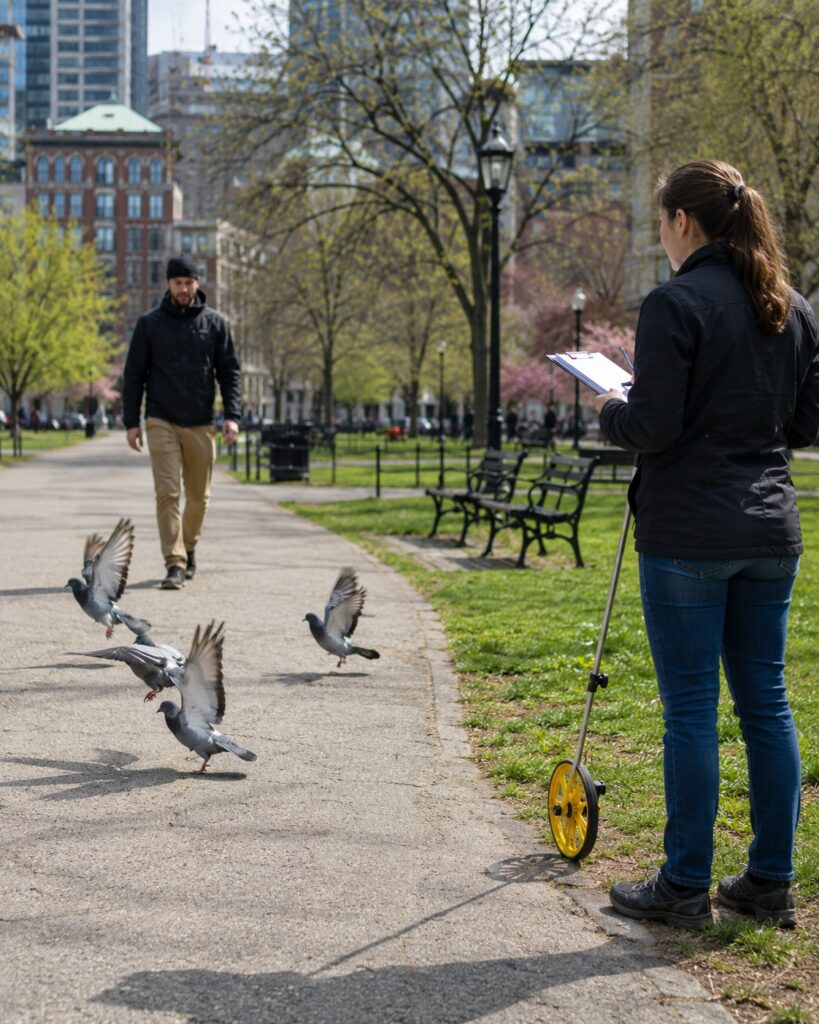
Allowing someone closer suggests more tolerance.
In the study, participants simply walked toward birds in urban parks while researchers recorded the distance.
What fascinates me is how much information can hide inside such a small moment. One quick flight can reveal how a bird is quietly judging risk.
The Pattern Appeared Across Five European Countries
One bird flying away means very little. Thousands making similar choices begin to tell a story.
Across five European countries, researchers recorded 2,701 encounters involving 37 urban bird species. Pigeons often tolerated people nearby, while magpies tended to leave sooner.
Yet the difference between approaches by women and men remained noticeable across species and locations.
That consistency makes the result difficult to dismiss, but it is not the final answer.
For me, the most interesting part is the mystery. The pattern is real enough to investigate, yet science still needs more studies in other places before we can understand what birds are actually responding to.
Scientists Tried to Make the Comparison Fair
The researchers tried to remove the obvious differences. The birds still noticed something.
Male and female ornithologists were matched by height, wore similar clothing, and approached birds in the same way. Yet the birds still allowed men to come about one metre closer before flying.
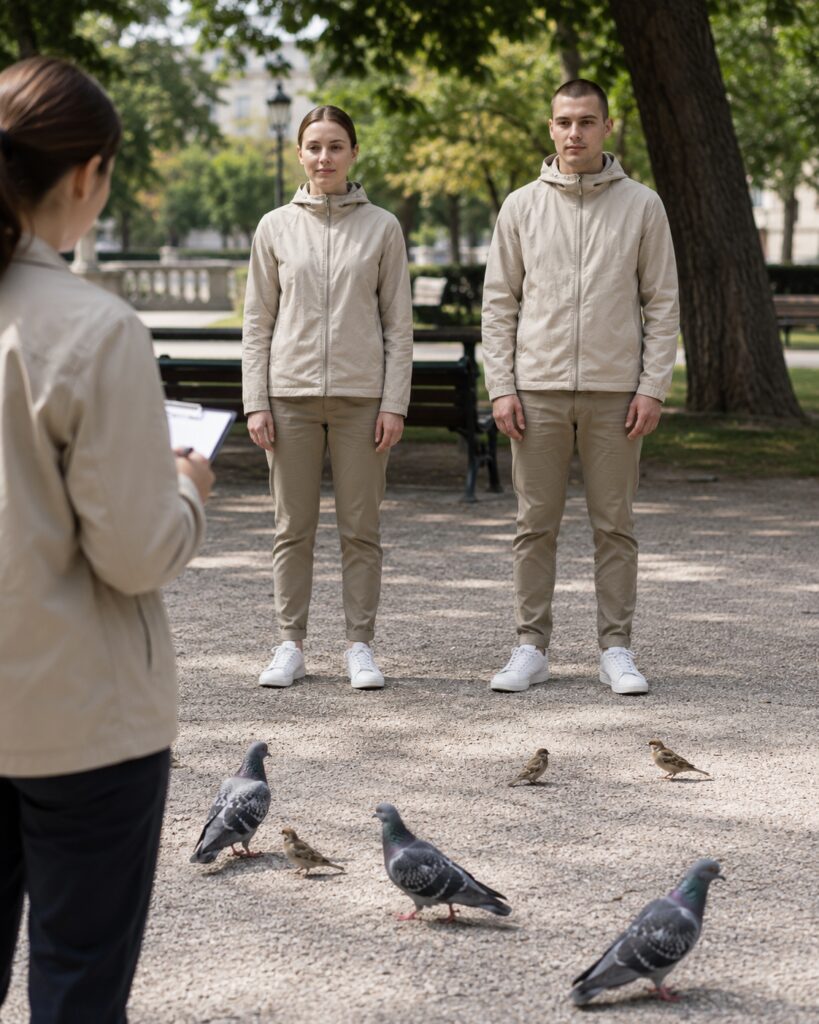
That is where the mystery becomes fascinating to me.
If height, clothing, and approach were controlled, what signal remained? Movement, scent, posture, or something humans barely notice?
The study found a pattern. The birds may be the only ones who know what caused it.
Could Birds Recognize Differences in the Way People Walk?
Maybe the birds were not noticing who approached them, but how they moved.
Researchers have suggested that gait, the subtle rhythm of posture, stride, and body movement, could be one clue. Birds are highly sensitive to motion, so details we barely notice may still influence how safe or predictable a person appears.
The idea is still unproven, but it has changed how I observe birds. I move slowly, avoid sudden gestures, and stop approaching when they begin to look uneasy.
Sometimes giving wildlife space is the best way to see more of it.
Could Scent Be Part of the Explanation?
Birds may be reading a version of us that we cannot sense ourselves.
Scent is one possible clue. Although birds were once thought to have a weak sense of smell, some species use it more than scientists previously realized.
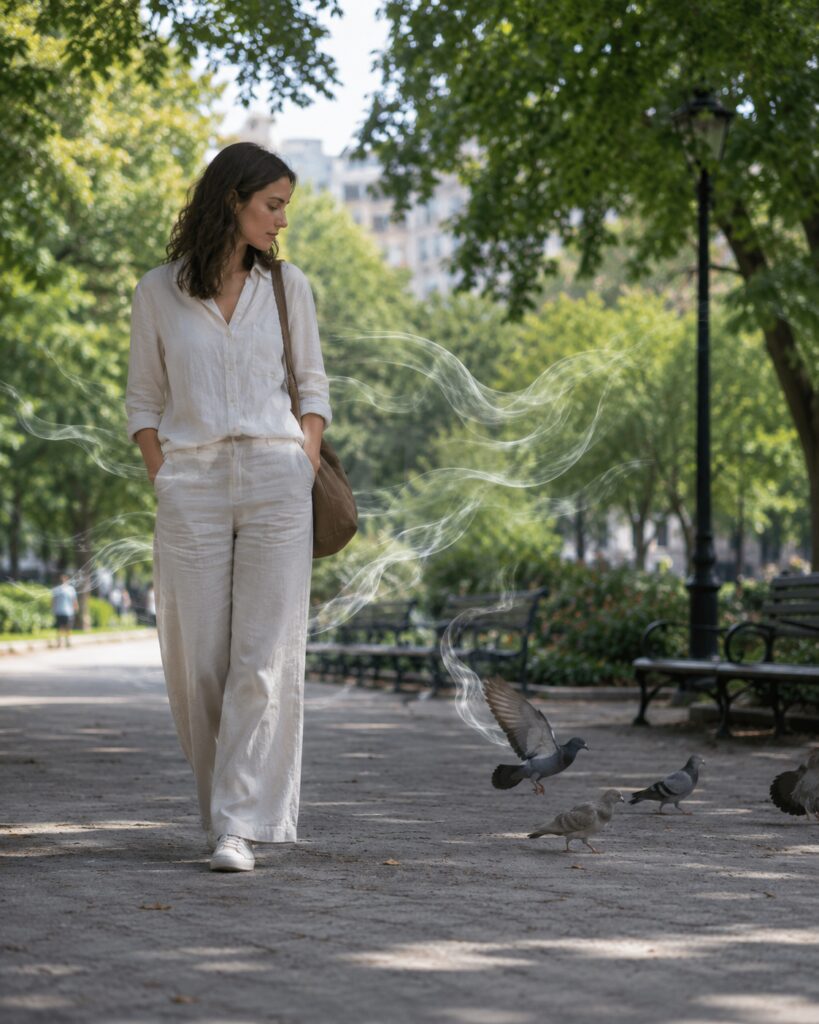
Still, this study did not prove that scent explains the difference.
The answer may be more complex. Birds could combine movement, posture, voice, facial cues, clothing, scent, and past experience before deciding whether to stay or fly.
That idea fascinates me because animals do not experience the world the way we do. A detail invisible to us may be perfectly clear to them.
City Birds May Know More About Us Than We Think
To me, a pigeon may be just another bird in the park. To the pigeon, I may be a collection of clues.
City birds spend their lives reading people: who moves quickly, who stares, who feeds them, who brings dogs, and who has caused trouble before. Over time, they may learn which signals feel safe and which mean it is time to leave.
That does not mean birds understand us the way humans understand one another. But they may notice movement, gaze, familiarity, and other details we barely think about.
This study made ordinary encounters feel different to me. While I am watching the bird, the bird may be studying me too.
The Study Raises Questions about Wildlife Research
The observer may not be outside the experiment.
They may be part of it.
Scientists often treat the person collecting data as neutral, but this study suggests birds may respond differently depending on who approaches them and how that person looks or moves.
That does not make earlier research wrong. It reveals another variable worth noticing.
What I find most valuable is the question behind the result: what if animals have been reacting to researchers in ways science never thought to measure?
Sometimes an unexpected finding does more than answer a question. It exposes one nobody knew to ask.
How to Observe Birds without Making Them Uncomfortable?
The best birdwatching moments happen when the bird forgets I am there.
Instead of walking closer, I slow down, stay still, and let the bird choose the distance. If it stops feeding, watches me repeatedly, or shifts as though preparing to leave, I take that as my cue to step back.
Binoculars and camera zoom are better than disturbing nests, young birds, or feeding areas.
For me, birdwatching is not about getting as close as possible. It is about giving wildlife enough space to behave naturally. Patience often reveals more than pursuit ever will.