A strawberry pyramid planter is one of the smartest ways to grow a lot of fruit in a small area. Instead of letting plants spread across a flat bed, this design stacks planting space upward in tiers. That makes it ideal for small gardens, patios, courtyards, and cozy backyard corners where every square foot matters.
This matters now more than ever because small space gardening keeps growing in popularity, especially as more households look for productive, attractive ways to grow food at home.
Extension services continue to recommend strawberries for home gardens because they can be harvested in a year or less and can be grown successfully in small spaces, raised beds, and containers.
Recent seasonal gardening guidance for 2026 also continues to highlight berry planting as an important spring task in many regions.
Why Strawberries Work Well in a Pyramid Planter?
Strawberries are especially well suited to raised and container style growing when drainage is good. Extension guidance consistently warns that strawberries struggle in wet, poorly drained soil and are vulnerable to crown and root diseases in those conditions.
Raised systems help by moving roots above heavy ground and improving soil aeration. That is the main reason pyramid planters are so appealing. Each tier acts like a small raised bed.
Water can move through the soil more freely, which helps reduce the soggy conditions associated with crown rot. This is especially important because poorly drained and overirrigated conditions are strongly linked with Phytophthora crown rot in strawberries.
There is also a practical advantage. Strawberries have a shallow, fibrous root system, so they respond well to carefully managed container or raised bed conditions, as long as the soil does not swing too far toward drought.
Step 1: Choose the Right Location
The success of the whole planter begins with placement. Strawberries need a sunny site.
Utah State University notes that strawberries perform best with at least eight hours of full sun during the growing season, while the University of Maryland also recommends a location with full summer sun.
Pick a level area that is easy to water and easy to access from all sides. Because a pyramid planter is meant to make harvesting simple, do not tuck it into a cramped corner where you cannot reach the fruit.
If you live in a hotter climate, a site with strong morning sun and a little relief from intense late afternoon heat can help reduce stress, especially in containers that warm up faster than in ground beds.
Step 2: Build the Tiered Wooden Frames
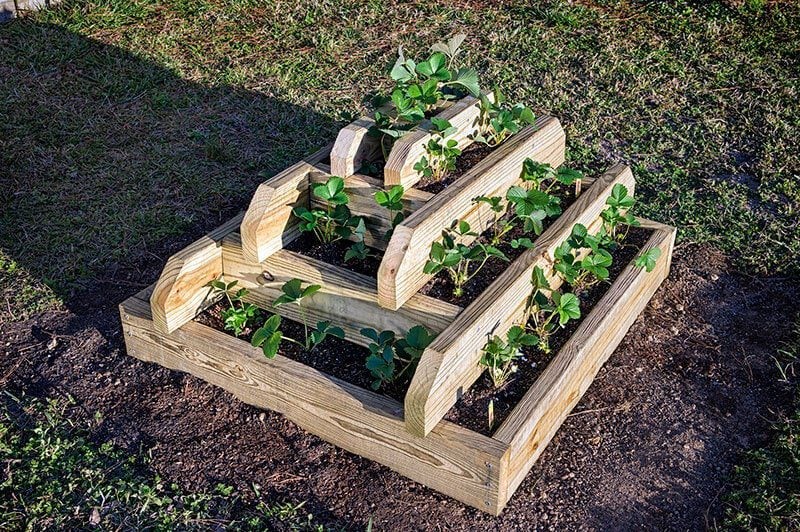
The basic structure usually consists of stacked square frames, each one smaller than the one below it. This creates the pyramid effect and leaves planting space exposed around every level.

Use untreated or food safe materials whenever possible so the planter is more suitable for edible gardening. The bottom tier should be the widest and strongest because it supports the weight above it.
Each higher level should be centered carefully to distribute weight evenly.
The reason this shape works so well is simple. It turns one footprint into multiple planting tiers. That gives you more growing space without needing a wide garden bed.
It also lets strawberry runners and fruit spill over the sides, which improves airflow and creates the cascading look many gardeners want.
Step 3: Fill with High Quality, Well Drained Soil
Soil is where many home strawberry projects succeed or fail. Strawberries grow best in loamy or sandy, well drained soil. Heavy clay is associated with poorer growth and higher disease risk unless drainage is improved.
In a pyramid planter, use a loose, rich growing mix with compost blended in, but avoid making it overly dense.
The goal is to hold moisture without trapping too much water. Because raised structures drain faster, the soil should be moisture retentive enough to support shallow rooted plants between waterings.
This step is not glamorous, but it is one of the most important. A beautiful wooden planter will not compensate for poor soil.
Step 4: Plant Healthy Strawberry Starts at the Correct Depth
Once the planter is filled, place healthy strawberry plants around the outer edge of each tier, leaving enough room for the crowns to sit above the soil line. Planting depth matters a lot.
Oregon State warns that if plants are set too low, the growing tip at the top of the crown can be smothered and rot.

This is one of the biggest mistakes beginners make. Set the roots into the soil, firm the mix around them, then water to settle everything in place. After watering, check the crown again. It should not be buried too deeply.
In a pyramid design, edge planting also allows fruit to hang off the sides instead of resting on damp soil, which can help keep berries cleaner.
Step 5: Water Carefully and Consistently
A pyramid planter drains better, but that also means it can dry out faster than a flat bed. The University of Maryland notes that strawberries are vulnerable to both very dry and very wet soil conditions because of their shallow root system.
This is why watering needs to be steady rather than excessive. The soil should stay evenly moist, especially during establishment, flowering, and fruiting.
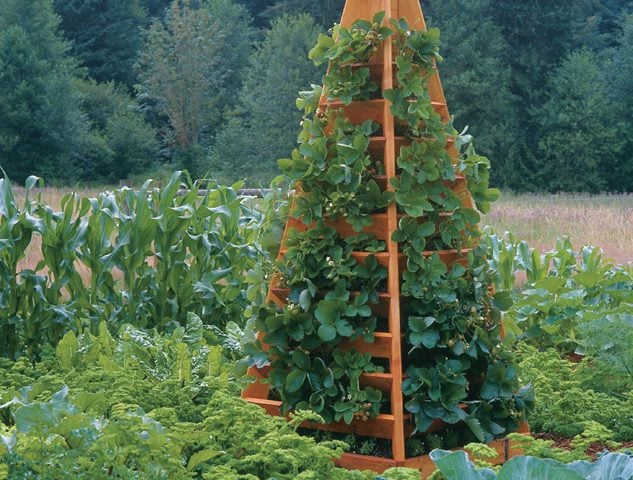
In hot weather, upper tiers may dry first because they are more exposed to wind and sun. That means the top of the pyramid may need closer monitoring than the bottom.
From a supportive perspective, many gardeners love this system because moisture problems are easier to observe and correct than in a sprawling ground bed. From a critical perspective, it does demand more attention, especially during heat waves or dry spells.
Step 6: Support Pollination and Fruit Quality
Strawberries can partially self pollinate, but better pollination usually means better berries. University of Maryland and University of Minnesota resources both note that strawberries benefit from pollinators and often produce bigger, better fruit when pollinated by flying insects.

That gives the pyramid planter another advantage. Because it is compact and visible, it can easily be surrounded with pollinator friendly flowers in nearby pots or beds.
Research and extension guidance on urban pollinator habitat also show that clustered flowering plants can support pollinators in home landscapes.
In the real world, this means your strawberry planter can become more than a food growing project. It can also function as a small biodiversity feature in a backyard or urban garden.
Step 7: Watch for Disease, Slugs, and Rot
No growing system eliminates every problem. Strawberries can still face fruit rot, slug damage, sap beetles, and spotted wing drosophila. University of Minnesota guidance recommends removing infected or overripe fruit promptly to reduce spread and pest issues.

A pyramid planter may help by improving airflow and reducing contact with muddy ground, but it is not disease proof. In fact, if planted too densely, it can trap humidity between tiers.
That is why spacing, pruning dead leaves, and harvesting frequently are still important.
This is where the balanced view matters. Supporters are right that a tiered planter can improve drainage and make fruit easier to pick. Critics are also right that container style systems can demand more watering and closer management. Both perspectives are true.
Real World Impact for Homes and Communities
For individuals, a strawberry pyramid planter can make edible gardening more accessible. People with small yards, patios, or limited mobility may find a raised vertical system easier to reach and maintain than a low, spreading bed.
For communities, compact edible structures fit well into the broader movement toward urban gardening, neighborhood food growing, and pollinator friendly landscapes.
Small projects like this will not solve food insecurity on their own, but they do help people build gardening skills, produce fresh fruit at home, and make productive use of small residential spaces.
Environmentally, the impact is modest but real. A well managed home planter can reduce lawn area, encourage pollinators, and support more diverse planting in urban environments.
Conclusion
A strawberry pyramid planter is a practical and attractive way to grow strawberries in small spaces. Its biggest strengths are efficient use of space, improved drainage, easier harvests, and strong visual appeal.
Research based gardening guidance supports many of those benefits, especially the importance of drainage, correct planting depth, and pollinator activity for good fruit production.
Still, success depends on good execution. The planter needs full sun, loose well drained soil, careful watering, healthy plants, and regular maintenance.
The future of home gardening is likely to include more vertical, compact, and multipurpose growing systems like this one, especially as more people look for ways to grow food beautifully in limited space.