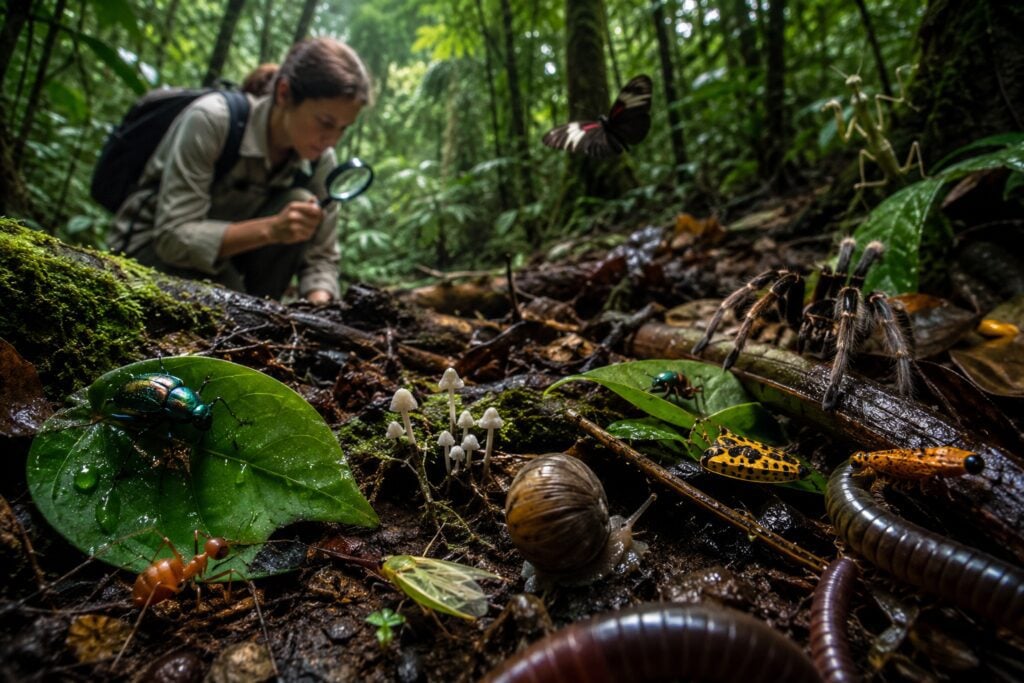
A forest in New Zealand can seem to turn into a galaxy the moment the sun disappears. As darkness settles over the trees, tiny blue-green lights begin glowing from damp banks, rocky overhangs, cave walls, and sheltered corners. From a distance, they resemble stars scattered across the landscape. It looks like stardust, but it is alive.
The source of this natural light is Arachnocampa luminosa, commonly called the New Zealand glowworm. Despite its name, it is not actually a worm. It is the larval stage of a small fungus gnat and is found throughout New Zealand. These larvae use their glow as part of a carefully designed hunting system, turning some of the country’s darkest places into unforgettable natural light displays. Standing in that darkness, surrounded by living light, feels as though the forest is sharing a secret meant only for me. Nature rarely announces its magic. Sometimes, I have to slow down, step away from bright places, and look carefully enough to notice it.
The Tiny Creature Behind the Blue-Green Light
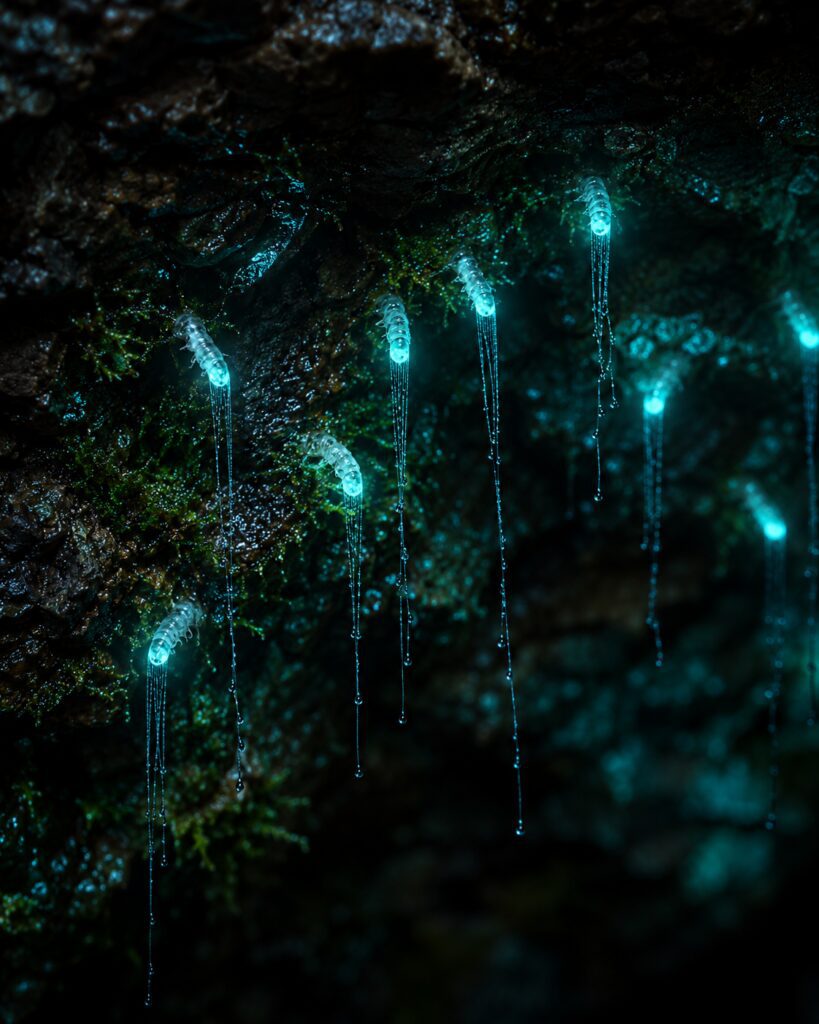
The first time I learned what creates this glow, I was surprised. The beautiful lights do not come from stars, crystals, plants, or fireflies. Each point of light belongs to a small insect larva attached to a damp surface.
Arachnocampa luminosa lives in dark, humid environments where the air remains moist and small flying insects are available. Caves provide ideal conditions, but glowworms can also live beneath forest banks, beside streams, under fallen trees, and along sheltered rock faces. Hundreds may live close together when the habitat is suitable.
Their Māori name, titiwai, is often interpreted as “lights reflected in water.” I think that name captures the experience beautifully. Their glow can appear soft and distant, almost as though light from another world is being reflected across a dark ceiling. However, the peaceful appearance hides a practical purpose. The glowworm is producing light because it is hungry.
A Beautiful Light With a Deadly Purpose
The opening view may feel magical, but for small insects, it is a trap. Glowworm larvae shine to attract flying prey, especially insects that naturally move toward light. Beneath each larva hang thin silk threads covered with sticky droplets. These threads work like fishing lines. A small fly, mosquito, moth, or other insect sees the blue-green glow and moves toward it. Once it touches one of the hanging lines, it becomes trapped. The glowworm then pulls the thread upward and eats its catch.
The larva can make several threads, creating a curtain of nearly invisible traps beneath its body. In large colonies, thousands of these lines may hang together. The lights above attract prey, while the sticky threads below prevent it from escaping. I find this combination fascinating. What looks peaceful to us is actually part of a highly effective survival strategy. Nature does not separate beauty from function. The same light that inspires visitors also helps a tiny predator find its next meal.
How Glowworms Produce Their Light?
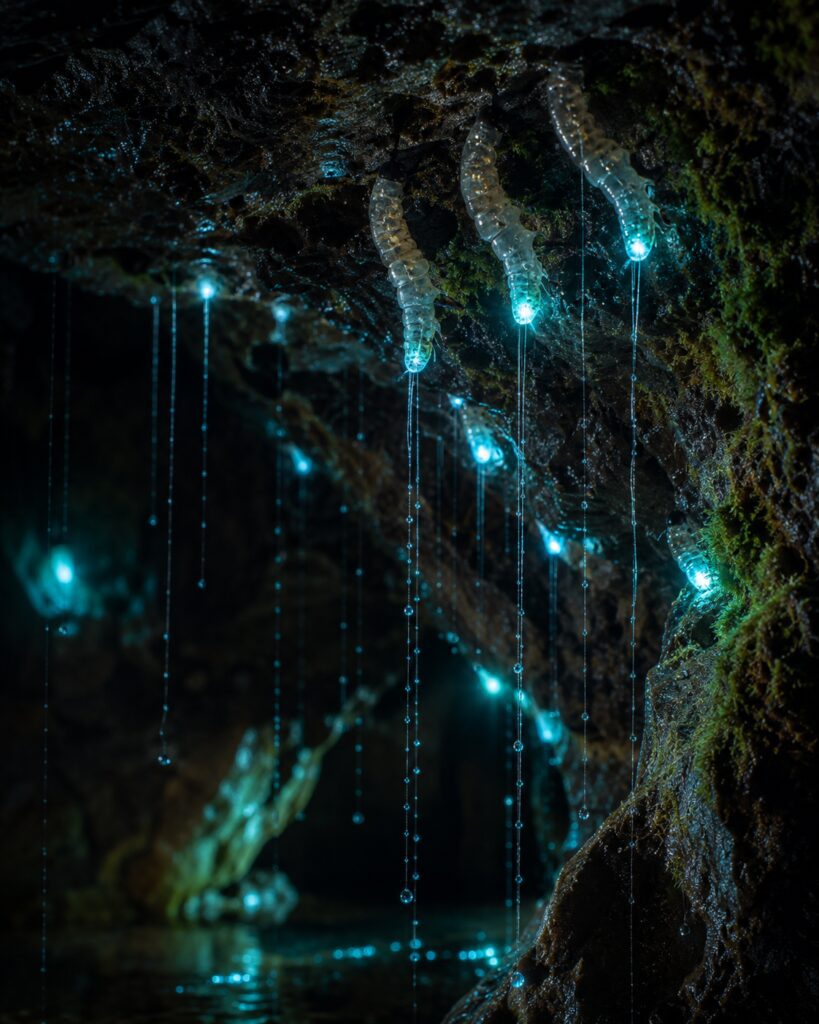
Glowworms create light through bioluminescence, a chemical process that allows a living organism to produce visible light. The light comes from a special organ near the end of the larva’s body. Unlike a lamp or flame, bioluminescence creates very little heat. Most of the energy becomes light instead of being wasted as warmth. That efficiency allows the glowworm to shine for long periods without burning itself or damaging its damp surroundings.
The intensity of the light may change depending on the larva’s condition. A hungry glowworm may glow more strongly because brighter light can improve its chances of attracting prey. Environmental conditions, disturbance, life stage, and competition may also influence its glow. When I see images of an entire cave ceiling covered in blue-green points, I have to remind myself that every light represents a living animal responding to its environment. It is not a fixed decoration. It is an active community of hunters.
Why New Zealand Is Famous for Glowworms?
New Zealand has become closely associated with glowworms because the species Arachnocampa luminosa is endemic to the country. Other members of the Arachnocampa genus live in Australia, but this particular species belongs to New Zealand.
The Waitomo Glowworm Caves on the North Island are the country’s most famous place to experience them. Inside the cave system, large numbers of larvae glow across the ceilings and walls. Visitors can travel quietly through parts of the caves while looking upward at a scene that resembles a star-filled night sky. Waitomo’s glowworm displays have attracted visitors since the late nineteenth century.
Glowworms can also be found in other dark and damp parts of New Zealand, including forest environments and areas such as Paparoa National Park. They do not need a huge limestone cave to survive. A shaded bank beside a forest path may provide enough moisture, darkness, and prey to support a small colony. That makes the experience even more exciting to me. One of New Zealand’s most remarkable creatures may be glowing beside an ordinary trail, hidden until daylight disappears.
What It Feels Like to Stand Beneath Them?
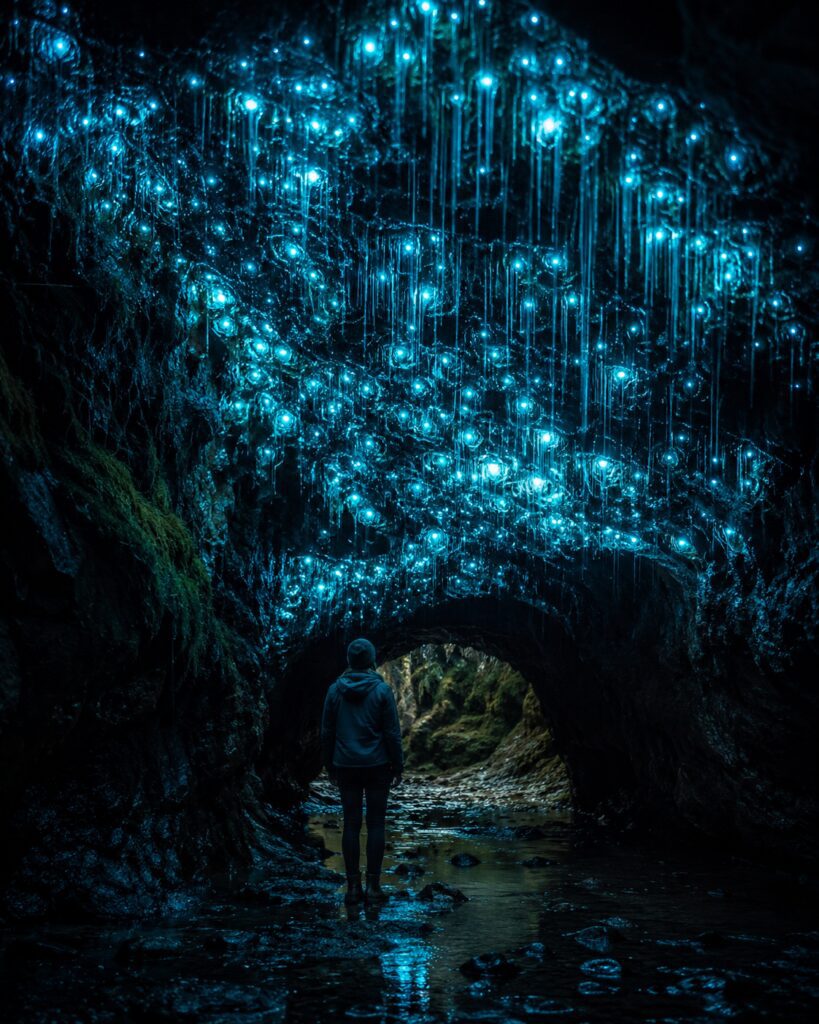
Photographs can show the color and scale of a glowworm colony, but they cannot fully reproduce the silence. In person, the experience is shaped by darkness, dripping water, cool air, and the need to remain still. At first, I might see almost nothing. My eyes need time to adjust after leaving a bright entrance or switching off a flashlight. Then one light becomes visible, followed by another. Gradually, an entire ceiling or bank begins to appear.
The darkness is part of the experience. Without it, the glow would be difficult to see. That creates an unusual lesson: sometimes I must lose the bright distractions around me before quieter forms of beauty become visible. I also like knowing that this display is not being performed for human visitors. The larvae would continue glowing whether anyone came to admire them or not. We are simply being allowed to observe a natural process that has been happening long before modern tourism existed.
My Tips for Seeing Glowworms Responsibly
When visiting a glowworm habitat, I believe the best approach is to observe without interfering. These creatures depend on stable, damp conditions, and their silk lines are delicate. I recommend following all instructions given by guides or conservation staff. Flash photography may be restricted in some caves, and bright lights should not be pointed directly at the larvae. In natural forest areas, I would stay on established paths rather than climbing toward a glowing bank.
Quiet movement also improves the experience. I would give my eyes several minutes to adjust instead of repeatedly turning on a bright phone screen. Once my night vision develops, I may notice far more lights than I saw at first.
For a cave visit, comfortable shoes and a warm layer are helpful because underground conditions can be cool and damp. Official Waitomo visitor guidance recommends suitable footwear and a warm jacket for its cave tours. Most importantly, I would avoid touching the threads, larvae, cave walls, or surrounding vegetation. A beautiful photograph is never worth damaging the habitat that made the moment possible.
Why These Living Lights Matter?
Glowworms remind me that even small species can create an enormous emotional response. Each larva is only trying to survive, yet thousands together can transform a dark space into one of the most memorable scenes in nature. They also show why damp forests, clean waterways, caves, and sheltered banks deserve protection. Glowworms rely on moisture and a healthy supply of small insects. If their habitats dry out, become polluted, or are heavily disturbed, the conditions supporting these colonies can disappear.
Protecting glowworms therefore means protecting more than a single unusual insect. It means caring for the surrounding ecosystem that provides water, darkness, shelter, and prey. When I think about standing beneath those living lights, I do not only see a tourist attraction. I see a reminder that many natural wonders survive quietly outside our daily attention.
Nature rarely announces its magic. We have to go looking for it, and we have to be careful once we find it. New Zealand’s glowworms may illuminate caves and forests with tiny points of blue-green light, but their deeper message is even brighter: extraordinary things are often happening in the darkness, waiting for someone patient enough to notice.