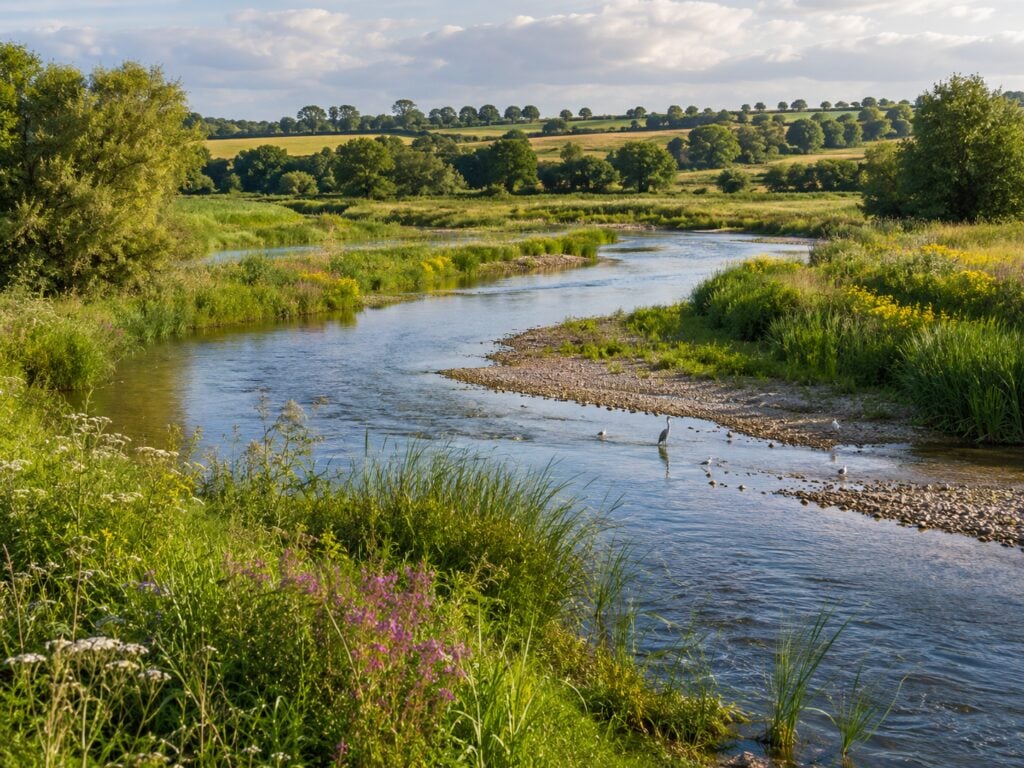
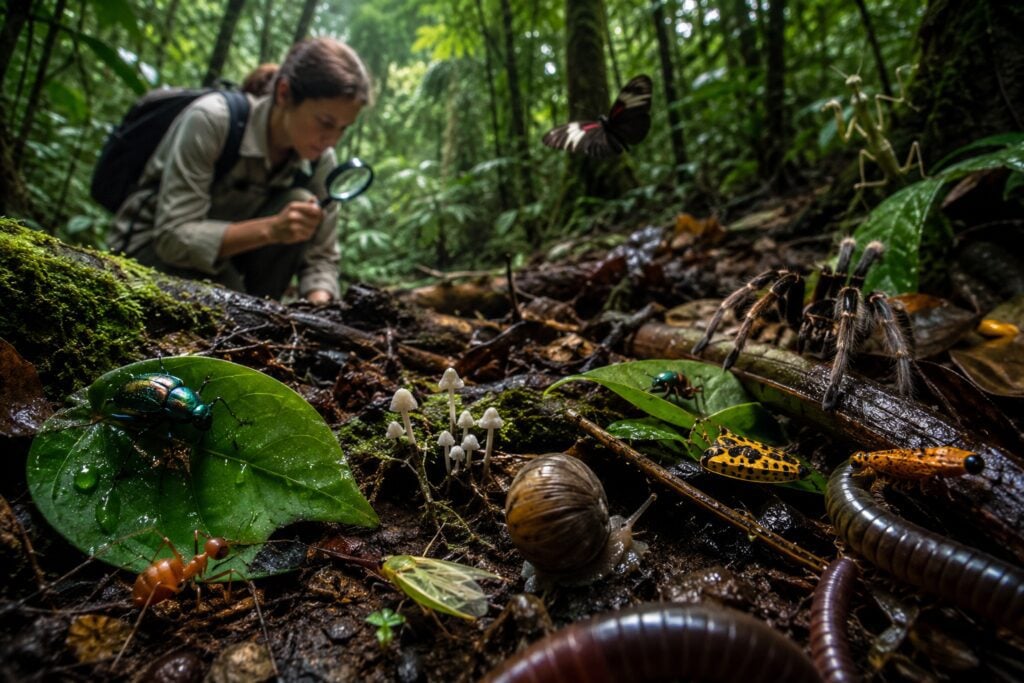
Sometimes the first sign of a disappearing ecosystem is not something we see. It is something we stop hearing.
Birdsong can make an ordinary morning feel alive, but in many places, those familiar sounds are becoming quieter and less diverse. When birds, frogs, insects, and other wildlife decline, the natural soundscape fades with them.
Researchers are now using recordings to make biodiversity loss easier to understand. Numbers can feel distant, but the difference between a thriving forest and a silent one is immediate.
To me, that silence is more than an absence of sound. It is a warning that the life around us is disappearing, one voice at a time.
Nature Is Losing Its Voice
A healthy habitat is filled with layers: birds calling from the trees, insects humming, frogs near the water, and animals moving through leaves. As biodiversity declines, those layers slowly disappear.
The silence is rarely complete. Instead, nature becomes simpler. A few common species remain, while sensitive local species vanish.
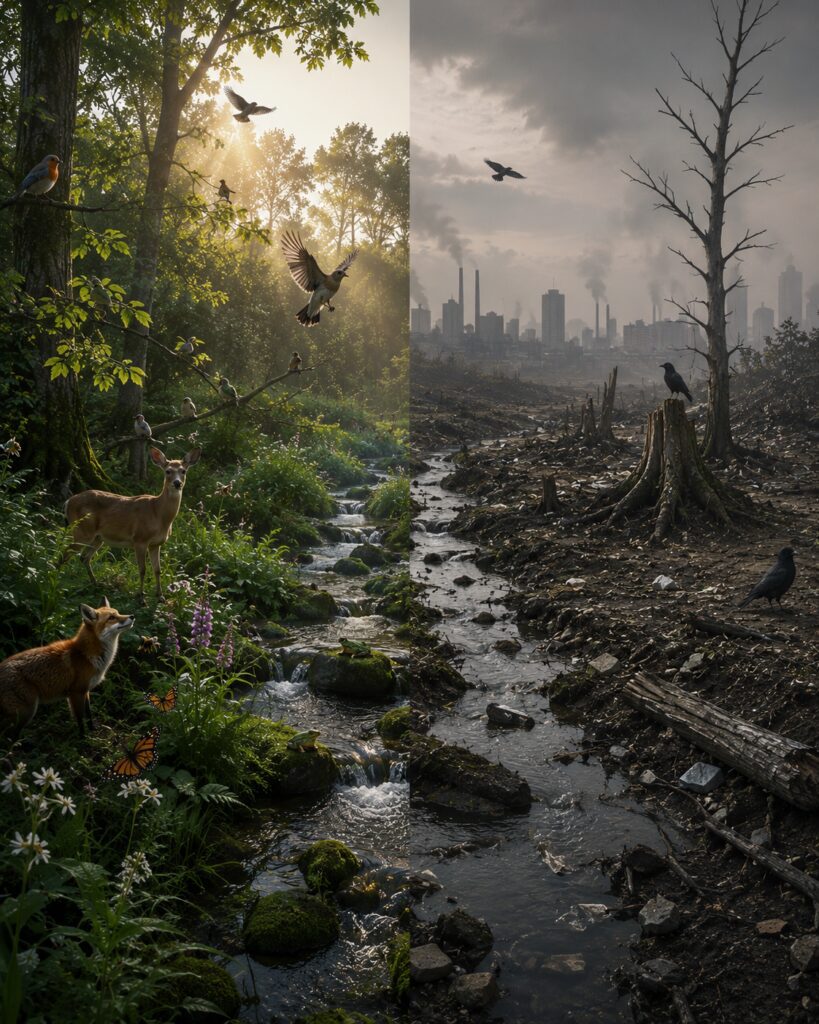
Parks may still look green and sound busy, but their ecosystems can already be much poorer.
To me, that is what makes ecological homogenization so troubling. We may not notice the loss because the world is not silent. It is simply repeating the same few sounds while countless others disappear.
Why We Often Fail to Notice the Silence?
Each generation grows up believing the nature around them is normal. Fewer birds, quieter forests, and disappearing insects slowly become accepted, even when the landscape was once far richer. This is known as a shifting baseline.
Long-term sound recordings help preserve what memory cannot. They reveal how a place once filled with overlapping calls can gradually fade into traffic, wind, and only a few common species.
To me, the first step is simple: stop and listen.
Spend one quiet minute in a park, garden, or forest and notice every sound you can hear. Awareness may not restore biodiversity by itself, but we cannot protect what we no longer notice.
When Spring Becomes Silent?
For decades, soundscape recordist Bernie Krause returned to the same place in California, capturing spring mornings filled with birdsong, animal movement, and the layered chorus of a healthy ecosystem. Then one year, he recorded almost nothing.
On paper, an hour of silence may not seem dramatic. But in a season that should be alive with breeding calls and wildlife activity, that silence becomes a warning.
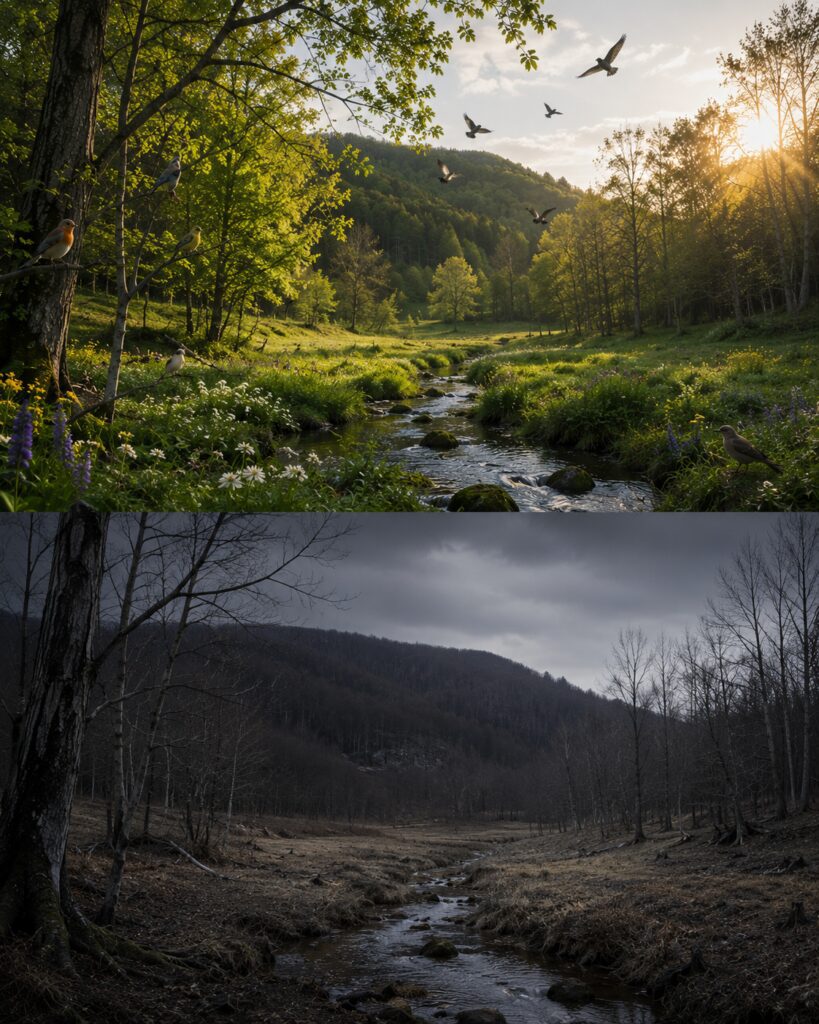
To me, this is why sound can reveal biodiversity loss so powerfully. Statistics help us understand the scale, but silence makes us feel what has disappeared.
It turns an environmental issue from something distant into a personal question: are we creating a world where future generations will know nature mainly by the voices that are no longer there?
Agriculture and Habitat Loss are Major Causes
The biggest reason natural soundscapes are fading is habitat destruction. Wildlife cannot survive without suitable places to feed, breed, shelter, and migrate. Agricultural expansion has replaced large areas of forests, wetlands, grasslands, and other natural habitats. Many endangered species cannot survive in heavily modified farmland, especially when the landscape contains few trees, hedges, ponds, or wild areas.
Large animals and highly specialized species are particularly vulnerable. They often require specific food sources, nesting sites, or environmental conditions. Habitat fragmentation makes the problem worse. Even when small natural areas remain, roads, fences, cities, and fields can isolate wildlife populations from one another.
A small woodland surrounded by development may look protected, but animals may be unable to move safely between habitats. One practical action I recommend is supporting farming systems that leave room for nature. Hedgerows, native trees, flower strips, wetlands, and uncultivated field edges can provide important shelter and food for wildlife.
Consumers can also reduce pressure on land by wasting less food. When food is thrown away, the land, water, fertilizer, fuel, and habitat used to produce it are also wasted.
Climate Change is Making Good Habitats Unlivable
Habitat destruction is one of the main reasons natural soundscapes are fading. Forests, wetlands, and grasslands are being replaced or divided by farms, roads, fences, and cities.
Even small protected areas may not be enough when animals cannot safely move, feed, breed, or find shelter.
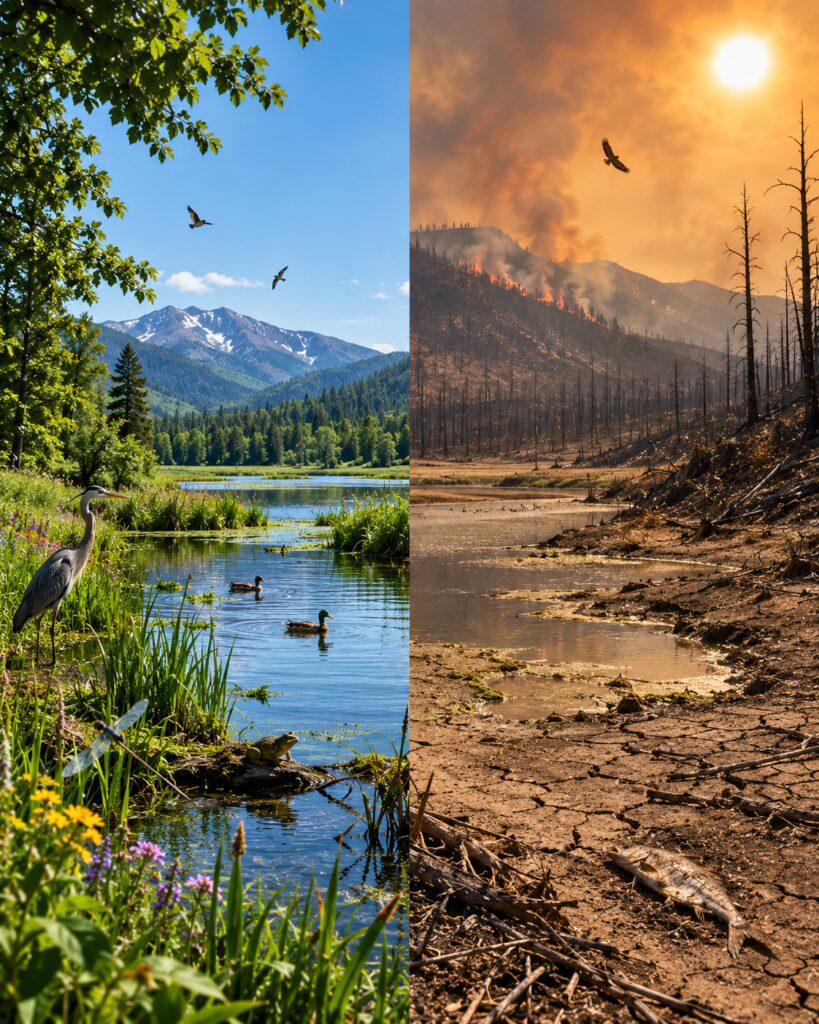
To me, protecting nature does not always require removing people from the land. Farms can support wildlife by keeping hedgerows, native trees, ponds, flower strips, and uncultivated field edges.
Reducing food waste matters too.
Every discarded meal also wastes the land, water, fuel, and habitat used to produce it. If we want nature’s voices to remain, we must protect the places that allow them to survive.
Noise Pollution Can Also Drown Out Nature
Natural sounds are disappearing not only because animals are gone, but also because human noise can overwhelm them. Traffic, aircraft, construction, machinery, shipping, and industrial activity can mask the calls animals use to communicate.
Birds may struggle to attract mates or defend territory. Frogs may not hear one another. Marine animals can be disturbed by ship engines and underwater noise.
Some species change the pitch, timing, or volume of their calls to compete with human noise. Others simply leave. This matters because animal communication is essential for reproduction and survival.
At home, we can help by reducing unnecessary outdoor noise, especially at night. Using quieter garden equipment, lowering music, and avoiding excessive lighting can make residential areas friendlier to wildlife.
Even small pockets of calm can become valuable refuges in busy towns and cities.
Nature Can Return When We Give It a Chance
The decline of nature is serious, but it is not always permanent. Wildlife can recover surprisingly quickly when the right conditions are restored. In Wellington, New Zealand, local conservation programs reduced invasive predators and improved habitat conditions.
Native bird populations began to return, and the city’s natural soundscape became richer again.
Stories like this matter because they show that recovery is possible. Nature often does not need us to control every detail. Sometimes it needs us to remove the pressures preventing it from healing. This may mean restoring native plants, protecting nesting areas, reconnecting fragmented habitats, reducing pesticides, or cleaning polluted waterways.
In my own surroundings, I would begin with native plants. They usually provide better food and shelter for local insects and birds than many ornamental species.
A small yard, balcony, school garden, or community space can still contribute.
One patch of habitat may seem insignificant, but connected patches can form a network through which wildlife can move.
How You Can Help Bring Back the Sound?
The scale of biodiversity loss can feel overwhelming, so I prefer to focus on actions that are realistic and repeatable. Plant native flowers, shrubs, and trees. Avoid pesticides unless they are truly necessary.
Provide clean water for birds and insects. Keep cats indoors or supervised, especially during nesting season. Reduce plastic waste and support local conservation projects.
You can also participate in citizen-science programs that record bird, frog, or insect sounds. These projects help researchers monitor changes across large areas.
Another useful habit is recording the sound of a local natural space once or twice a year.
A simple phone recording can become a personal record of how that place changes over time. Most importantly, talk about what you notice. People protect what they understand, and they understand what they learn to pay attention to.
A Quiet World is Not a Healthy World
The fading sounds of nature are more than a sad background story. They are an early warning that ecosystems are losing species and becoming less resilient. A forest without birdsong may still contain trees, but it is not the same forest.
A wetland without frogs may still hold water, but an important part of its living system has vanished.
I do not believe we should accept this quieter world as inevitable. The sound of nature can return when habitats are restored, pollution is reduced, and wildlife is given space to recover.
We have already seen examples of this in communities that choose conservation over continued decline.
For me, the first step is listening. When we truly hear the natural world, we become more aware of its beauty, complexity, and vulnerability. And once we recognize what is being lost, we may become more willing to protect what remains.
The silence is an alarm, but it is not yet the end of the story.