Climate change can sometimes feel like a distant problem measured in degrees, emissions, and projections for the end of the century. But when I look at what is already happening on farms, the issue becomes much more immediate. Heat and drought are reducing harvests, draining farmers’ income, and placing more pressure on the crops that feed people and animals around the world.
New research presented at the European Geosciences Union General Assembly 2026 estimates that climate-related heat and drought caused roughly $400 billion in losses to maize, wheat, and soybean production between 2000 and 2019. That works out to more than $20 billion every year on average. Importantly, the estimate covers only three crops and two climate hazards, so it does not represent the full financial cost of climate change across agriculture.
A yearly loss of $20 billion can sound like an abstract global statistic. Yet behind that figure are farmers harvesting fewer tonnes, families facing less reliable incomes, governments spending more to stabilize food supplies, and consumers becoming more vulnerable to price increases. For me, the central message is simple: global warming is no longer merely threatening future agriculture. It is already appearing in farm accounts, damaged fields, and smaller harvests.
How Heat and Drought Turn Into Financial Losses?
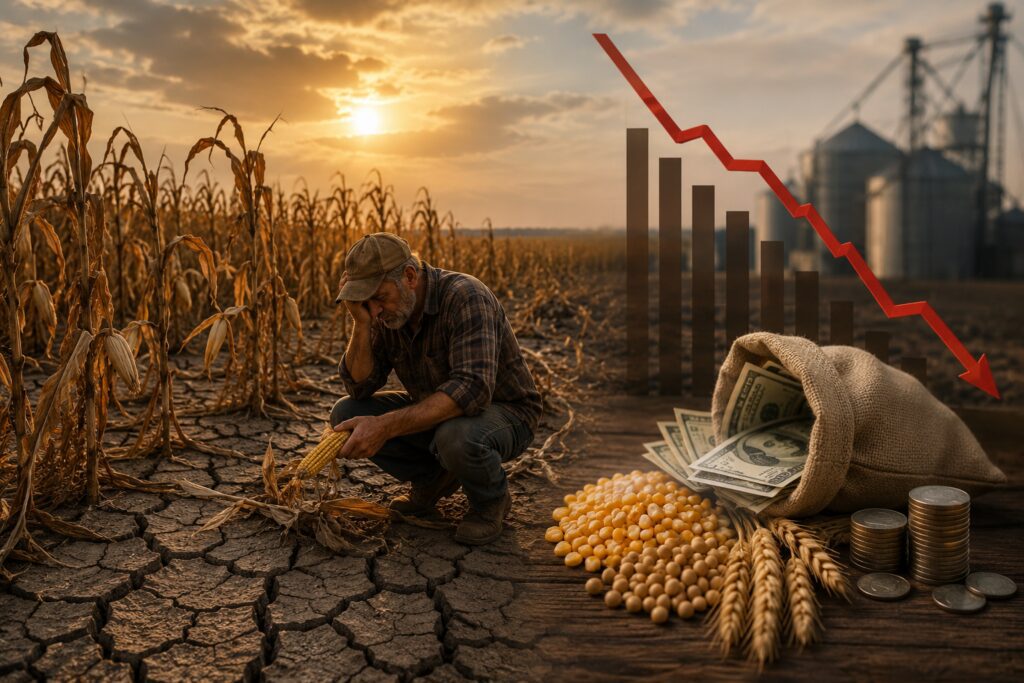
Crops cannot move indoors when temperatures become dangerous. They remain rooted in the soil, exposed to whatever conditions arrive during their most sensitive stages. A few extremely hot days at the wrong moment can interfere with flowering, pollination, and grain formation. When drought occurs at the same time, the damage can become even worse.
The researchers examined national yield records for maize, wheat, and soybeans and compared them with historical patterns of extreme heat and moisture stress. They used statistical models to estimate how crop yields responded to climate conditions and then translated lost production into economic value. According to the research abstract, climate-driven yield impacts between 2000 and 2019 produced about $400 billion in worldwide losses.
This approach matters because percentages alone can hide the scale of the problem. A yield decline of a few percent may not sound catastrophic, but agriculture operates across millions of hectares. When a small decline affects a major crop across many countries, billions of dollars and millions of tonnes of food can disappear.
Maize, for example, is not used only for food eaten directly by people. It is also a major livestock feed and an ingredient in many industrial products. Soybeans are important for cooking oil, protein, livestock feed, and food manufacturing. Wheat remains one of the foundations of diets around the world. A decline in these crops therefore does not stay inside the farm gate. It can move through feed costs, meat and dairy production, food manufacturing, international trade, and household grocery bills.
Why a 3.5 Percent Decline Is More Serious Than It Sounds?
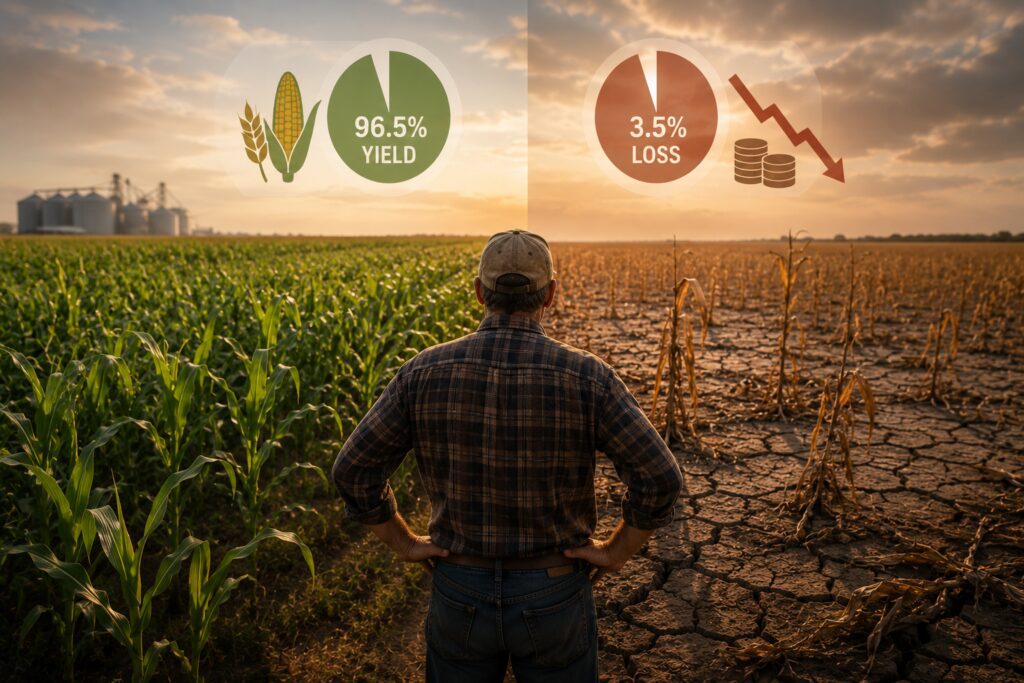
Whenever I hear that crop yields have fallen by only a few percent, I try not to dismiss the number. Global agriculture is so large that even a modest percentage can represent an enormous amount of food and money. The more useful question is not whether 3.5 percent sounds small, but how many farms, markets, and families depend on the production that has been lost. The analysis described in the source article estimates that increasing heat extremes and drought reduced yields by about 3.5 percent compared with an earlier climate baseline. That percentage was then connected to agricultural prices to estimate the financial damage.
Three and a half percent may seem manageable in a single year or a single field. But repeated across major producing regions and over many growing seasons, it becomes a persistent drain on the food system. Farmers must still pay for seeds, fertilizer, equipment, fuel, labor, land, and loans even when extreme weather reduces their harvest. A smaller crop therefore does not simply mean less revenue. It can mean that farmers have fewer resources available to prepare for the next season.
This creates a difficult cycle. Climate stress reduces income, but adapting to climate stress often requires new investment. Farmers may need more efficient irrigation, improved drainage, different seed varieties, better soil management, shade systems, insurance, or new machinery. Those solutions can be expensive, especially for small farms.
One practical lesson I take from this is to avoid thinking of climate adaptation as something farmers should finance entirely on their own. Governments, lenders, insurers, researchers, food companies, and consumers all benefit from a stable food supply. They also share responsibility for helping agriculture become more resilient.
Poorer Countries Carry a Heavier Burden
Climate damage is not distributed equally. The same loss can be an inconvenience in one economy and a crisis in another. Countries with fewer financial resources often have less irrigation, weaker insurance systems, limited access to improved seeds, and less public funding to help farmers recover.
The researchers estimated that least-developed countries experienced losses equal to around 0.10 percent of their gross domestic product, compared with approximately 0.04 percent in wealthy countries. In GDP terms, the burden on the least-developed countries was therefore about 2.5 times greater.
That inequality is one of the most troubling parts of the study. Farmers in poorer countries may have contributed relatively little to the emissions driving global warming, yet they can face some of the greatest agricultural and financial consequences. A failed harvest may affect not only income but also the amount of food available to the farmer’s own family.
This is why climate finance should include practical agricultural support. Funding can help expand weather forecasting, drought monitoring, water storage, farmer training, crop insurance, local seed research, and access to affordable credit. My personal tip for understanding global climate statistics is to compare them with local capacity. Do not look only at the size of a disaster. Ask how much protection people had before it happened and how many resources they have to recover afterward.
Future Losses Could Grow Dramatically
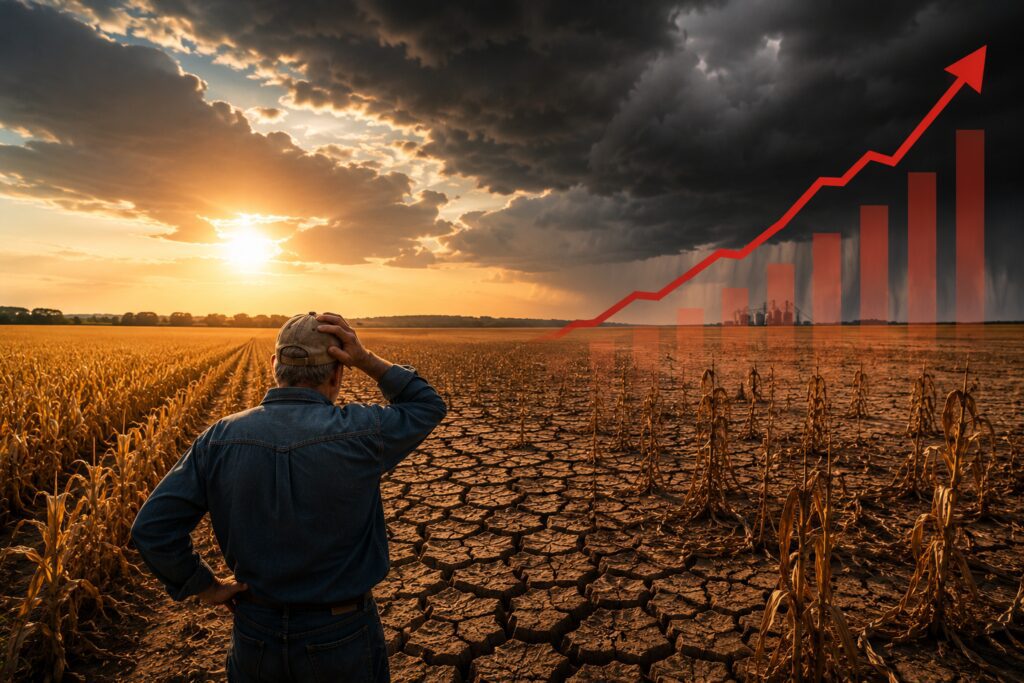
The damage recorded so far may be only the beginning. If greenhouse gas emissions remain high, extreme heat is expected to become more frequent and severe in many agricultural regions. Drought patterns may also intensify or become more unpredictable, making planting and harvesting decisions increasingly difficult.
The official research abstract projects that annual losses could quadruple between 2019 and 2070 under the high-emissions SSP3-7.0 pathway. It also estimates that following a more sustainable development pathway could avoid around $40 billion in damages.
Extended projections discussed in reports about the research suggest that annual losses could rise far higher by 2100, potentially reaching more than $160 billion. However, long-term figures should be treated as scenarios rather than guaranteed outcomes. Many things can change before 2100. Farmers may adopt heat-resistant crops, alter planting dates, improve irrigation, switch crops, restore soils, or use better forecasting. Governments may also cut emissions more quickly than expected.
At the same time, future projections may miss some additional damage. This analysis focuses on maize, wheat, and soybeans and mainly considers heat and drought. It does not fully include rice, fruits, vegetables, livestock, floods, storms, wildfires, changing pests, plant diseases, or damage to roads and storage facilities. The exact future cost is therefore uncertain, but the direction of risk is clear: allowing warming to continue increases the likelihood of larger agricultural losses.
Why Three Crops Matter to the Whole Food System?
The global food system depends heavily on a surprisingly small number of crops. This creates efficiency, but it also creates vulnerability. When one major crop struggles across several producing regions at once, the consequences can travel rapidly through international markets. FAO statistics show that maize, wheat, and rice together represented 91 percent of global cereal production in 2023. Although soybeans are not classified as a cereal, they are another vital commodity because of their importance to vegetable oil and animal feed.
This concentration helps explain why climate stress affecting maize and wheat deserves attention even from people who do not work in agriculture. A weak maize harvest can make animal feed more expensive. That can raise costs for poultry, eggs, dairy products, and meat. A poor wheat harvest can affect bread, flour, pasta, and other basic foods. Reduced soybean production can influence cooking oil and livestock feed prices.
The effects are rarely simple or immediate. Food prices are also shaped by energy costs, trade restrictions, currency values, transportation, conflict, inventories, and consumer demand. Climate change is not the only factor, but it adds another layer of instability.
For households, my practical advice is not to panic or begin stockpiling food. A more useful response is to reduce food waste, plan meals, store food properly, choose seasonal products when possible, and support a wider variety of locally grown crops. Diversity in our diets can also encourage diversity in agriculture.
Farmers Are Already Adapting
It is important not to describe farmers as passive victims. Farmers have always adapted to changing weather, markets, pests, and technology. Many are already testing new planting dates, conserving soil moisture, rotating crops, improving drainage, changing varieties, and using more precise weather information.
Healthy soil can hold more water and reduce erosion. Crop rotation can improve soil structure and interrupt pest cycles. Cover crops may protect bare soil and help retain moisture. Efficient irrigation can reduce water use, while improved forecasting can help farmers make better decisions about planting and harvesting.
However, no adaptation method is universal. A solution that works for a large mechanized farm may be unsuitable for a small rain-fed farm. New seeds may perform well in one region and poorly in another. Irrigation can protect crops from drought, but it is not sustainable where groundwater is already being depleted.
The best adaptation plans are usually local. They combine scientific research with farmers’ practical knowledge of their own land. Consumers can help by supporting policies and businesses that invest in resilient agriculture rather than demanding the lowest possible food price at every stage. Cheap food can carry hidden costs when farmers are underpaid, soils are degraded, or water resources are exhausted.
What I Believe We Should Do Now?
When I read about hundreds of billions of dollars in crop losses, the scale can feel overwhelming. But I do not think the lesson is that nothing can be done. The research actually shows that today’s choices can influence how severe tomorrow’s losses become. Cutting greenhouse gas emissions remains essential because adaptation has limits. A crop can tolerate only so much heat. Irrigation can help only where water is available. Insurance can replace part of a farmer’s income, but it cannot replace lost food.
At the same time, adaptation cannot wait until emissions fall. Farmers need support now through stronger weather services, accessible research, affordable financing, crop diversity, soil restoration, water management, and safety nets after extreme events. Personally, I try to remember that food does not begin in a supermarket. Every loaf of bread, container of cooking oil, packet of flour, and serving of animal protein is connected to land, water, weather, labor, and someone’s financial risk.
The estimated $20 billion in annual losses is not only an agricultural problem. It is a warning about the growing cost of delaying climate action. We cannot control every drought or prevent every hot day. But we can reduce future warming, help farmers prepare, waste less food, protect water and soil, and build a food system that does not depend so heavily on a few crops and vulnerable regions.
The question is no longer whether climate change will affect agriculture. It already does. The more important question is how much damage we are willing to accept before we treat resilient farming and climate action as essential investments in our shared future.