Squid have always amazed me. They are fast, intelligent hunters that can change their appearance, learn from their surroundings, and adapt in ways that feel surprisingly advanced for a marine animal.
That is why new research on young bigfin reef squid caught my attention. Scientists found early evidence that higher carbon dioxide levels in seawater may affect how their brains develop.
The study is still ongoing, but it raises a fascinating concern. If the ocean changes too quickly, will intelligent creatures like squid be able to adapt in time?
Squid are Smarter Than Many People Realize
What fascinates me about squid is that their intelligence is not just a unique trait. It is a vital part of how they survive. As cephalopods, squid use their advanced brains to hunt, avoid predators, navigate the ocean, and respond to changes around them.
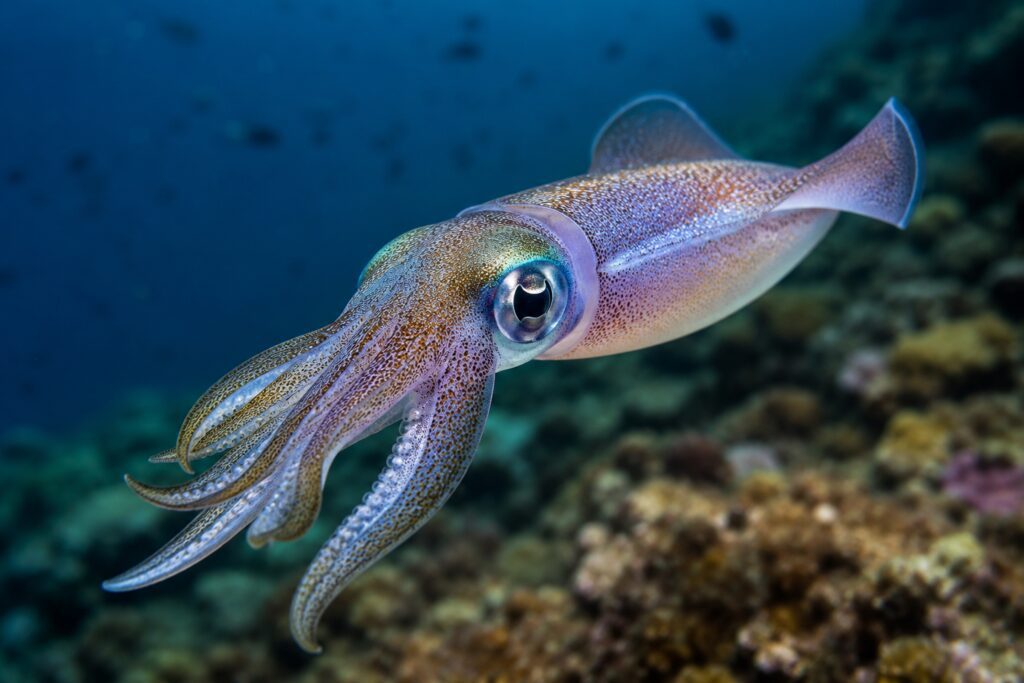
Bigfin reef squid can even learn patterns and adjust their decisions based on different situations. Their ability to process visual information helps them choose prey, judge distance, and react quickly.
That is why changes to their brain development matter. A squid may look healthy on the outside, but even small changes in how its brain works could affect its ability to survive in the wild.
What the New Squid Brain Study Found?
The research behind this discovery is both fascinating and surprising. Scientists raised young bigfin reef squid in two different ocean conditions, comparing today’s seawater with a future environment expected to have higher carbon dioxide levels.
After 90 days, the squid exposed to the higher CO₂ conditions showed much smaller brain structures, especially in areas linked to vision. Their bodies developed normally, which suggests the changes were more specific to brain development.
What stands out to me is that this does not mean every squid will face the same future.
The research is still ongoing, but it gives us an important warning about how quickly changing oceans could affect even the most intelligent creatures beneath the surface.
How Carbon Dioxide Changes the Ocean?
Ocean acidification does not mean the ocean is becoming a dangerous acid bath. It means the water’s chemistry is slowly changing as it absorbs more carbon dioxide from the atmosphere.
This shift can affect many marine species, especially those that depend on stable ocean conditions.
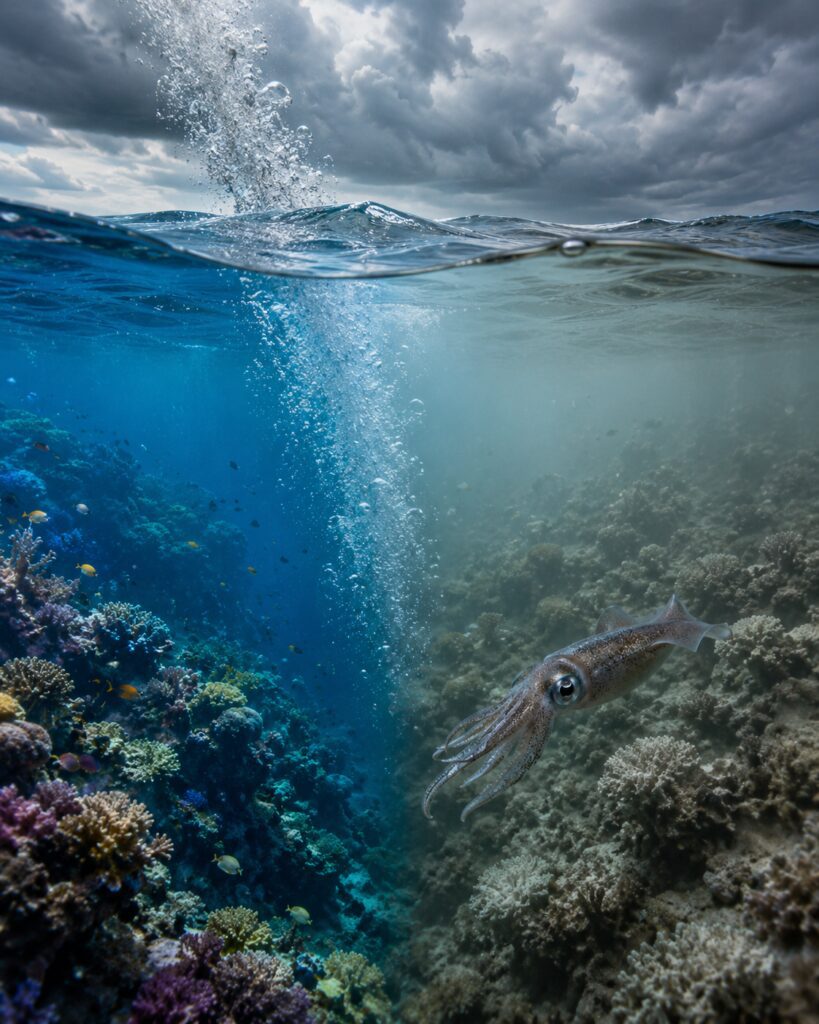
While coral reefs and shell-building animals are often the focus, new research suggests even soft-bodied creatures like squid may feel the effects through their brains, behavior, and development.
What surprises me is that climate change can impact life in ways we do not always see. A change in ocean chemistry may seem small, but it can influence some of the most fascinating creatures beneath the waves.
Why Smaller Visual Areas Could Affect Feeding?
What worries me most about this research is not just the changes inside squid brains, but what those changes could mean in everyday survival.
Squid rely on sharp vision to find prey, judge distance, and react quickly. If ocean changes affect the parts of their brains responsible for vision, they may struggle to hunt, avoid predators, or adapt to their environment.
Earlier studies have already linked higher carbon dioxide levels to changes in squid behavior, including reduced hunting activity. The effects may seem small at first, but in the wild, even small disadvantages can make survival much harder.
For me, this is a reminder that climate change does not always appear as sudden disasters. Sometimes, it quietly changes the abilities animals need to survive.
The Impact Could Reach Beyond Squid
What I find fascinating about squid is how connected they are to the rest of the ocean. They are hunters that help control smaller species, but they are also an important food source for larger animals like fish, seabirds, and marine mammals.
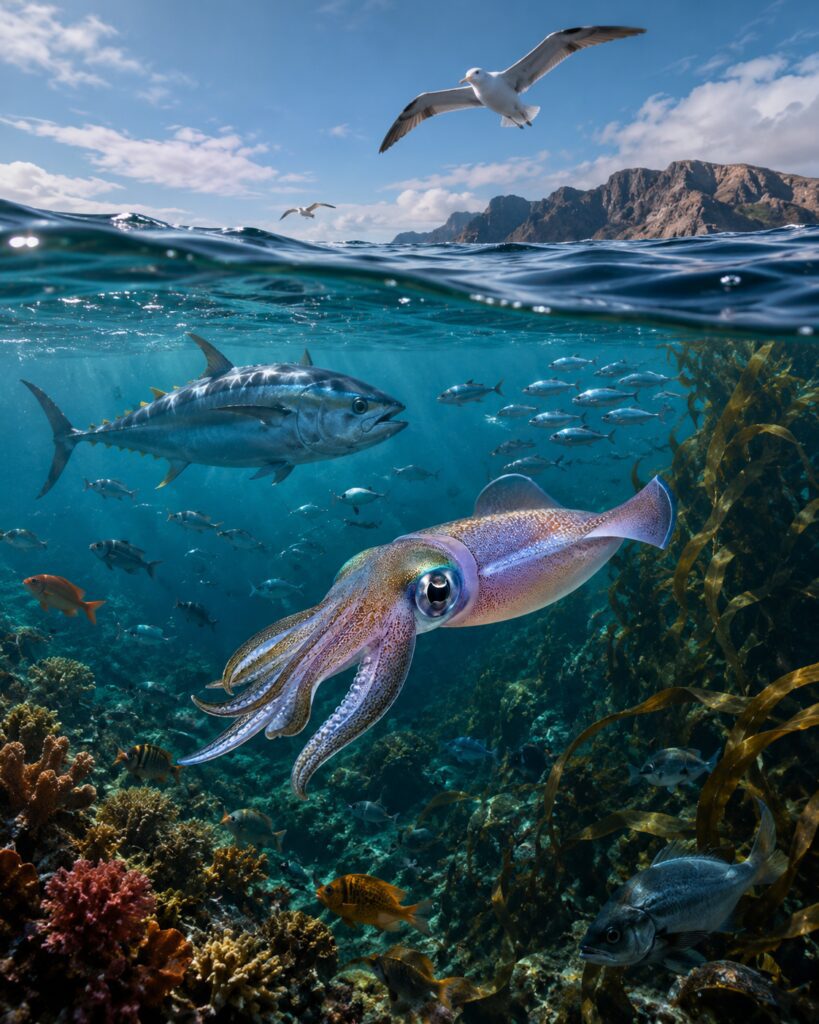
I do not think changing ocean conditions will immediately wipe out squid. They are resilient creatures that can adapt in many ways. But what concerns me is that they are not dealing with just one challenge.
Warmer oceans, lower oxygen levels, pollution, and acidification are all happening together.
To me, this is why understanding ocean changes matters. A small shift in one species can quietly affect the balance of an entire ecosystem.
What I Personally Take From This Research?
My first takeaway is not panic. It is attention. This is an early warning that deserves more investigation, not proof that every squid will have a brain half its normal size by 2100.
My second takeaway is that climate change can affect wildlife in ways that are easy to miss. We often look for visible damage such as dead coral, shrinking ice, or stranded animals.
Changes inside a developing brain are much harder to see. A squid may look normal from the outside while experiencing major changes in how it processes information.
I also try to focus on practical actions instead of feeling powerless.
I can reduce unnecessary energy use, waste less food, support cleaner transportation when possible, and choose businesses that take emissions seriously.
When buying seafood, I can look for responsibly managed sources instead of assuming every option has the same environmental impact. I can also support marine research organizations and share accurate information without exaggerating preliminary findings.
Individual habits cannot replace stronger environmental policies or industry-wide changes.
Still, personal choices, public awareness, scientific funding, and effective policy can work together. The most useful step is to stay informed and support solutions that reduce carbon dioxide emissions before the ocean absorbs even more of them.
A Warning Worth Taking Seriously
The thought of an intelligent animal developing a smaller brain because of changing seawater is difficult to ignore. Squid rely on their nervous systems to interpret a fast-moving world filled with predators, prey, rivals, and constantly changing conditions.
Even a small disruption could matter. A reduction approaching 50 percent would be far more serious.
Researchers still need to confirm the findings, understand the biological mechanism, and determine whether similar effects appear in wild squid or other cephalopods. The outcome may vary between species, populations, life stages, and locations.
Science rarely gives us the complete answer after one experiment.
Still, I believe this study gives us a valuable reason to pay closer attention. Ocean acidification is not only a problem for shells and coral skeletons. It may also influence behavior, sensory processing, energy use, and brain development.
The more we learn about these hidden effects, the clearer one message becomes: protecting the ocean means protecting the complex lives developing beneath its surface.