Extreme heat is changing the way I think about cooling. An air conditioner may seem like a basic household appliance, but during a dangerous heatwave, it can become essential protection.
Cooling also keeps food fresh, protects medicines and vaccines, and helps people work and study safely.
The difficult part is that the world needs more cooling while conventional cooling systems can increase electricity demand and greenhouse gas emissions.
UNEP’s Global Cooling Watch 2025, launched at COP30 in Belém, Brazil, on November 11, 2025, explains how we can meet this growing need without making the climate crisis worse.
Cooling is No Longer Just a Luxury
Cooling is often described as a comfort, but that idea is becoming outdated. In many regions, extreme heat can make homes, hospitals, schools, and workplaces unsafe.
Refrigeration is also essential for food, health care, farming, and local businesses. Reliable cooling can now mean the difference between safety and serious health risks.
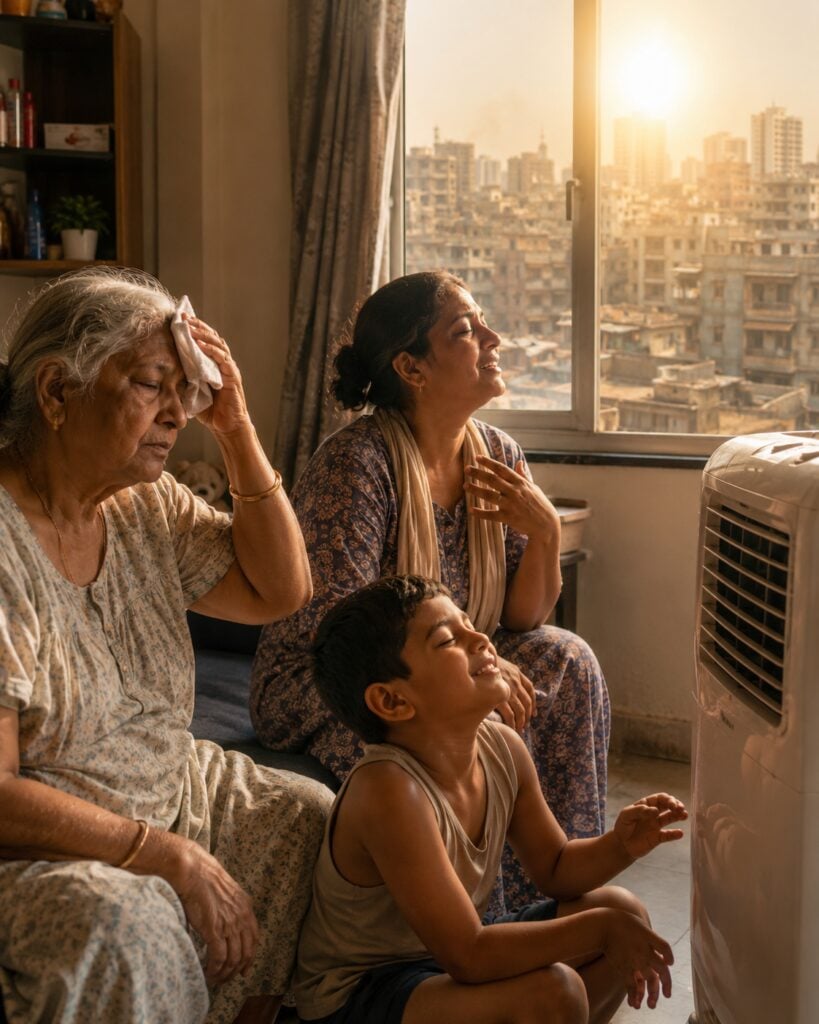
More than one billion people already lack adequate access to cooling, according to UNEP. Without stronger action, three billion people could need cooling but still be unable to access it by 2050.
UNEP argues that cooling should be treated as essential infrastructure, alongside water, electricity, and sanitation.
I believe fairness must be part of this conversation.
A wealthy family may be able to buy an efficient air conditioner and pay the electricity bill. A low-income household may live in a poorly ventilated building with little shade and unreliable power.
Sustainable cooling must protect people facing the greatest heat risks, not only those who can afford the newest equipment.
Cooling Demand Could More Than Triple by 2050
The projected growth in cooling is enormous. Population growth, expanding cities, rising incomes, and stronger heatwaves will all increase demand. Greater access to cooling is positive because it can protect lives and livelihoods.
The problem begins when that demand is met with inefficient appliances, carbon-intensive electricity, and climate-warming refrigerants.
Under a business-as-usual scenario, global cooling capacity could rise from 22 terawatts in 2022 to 68 terawatts in 2050.
Cooling-related emissions could grow from 4.1 billion tons to 7.2 billion tons of carbon dioxide equivalent during the same period. That would be close to double 2022 levels, even with some improvements in efficiency and refrigerant policies.
The pressure on electricity grids could also become severe.
During a heatwave, millions of air conditioners may operate at the same time. This creates peak demand, raises electricity costs, and increases the risk of blackouts exactly when people need cooling most.
Why More Air Conditioning Can Increase Warming?
I see this problem as a cooling paradox. A warmer planet creates greater demand for air conditioning. If those systems run on electricity generated from fossil fuels or use inefficient technology, they produce more emissions.
Those emissions contribute to additional warming, which then creates even more demand for cooling.

Refrigerants are another part of the problem. Many cooling systems use hydrofluorocarbons, commonly called HFCs, which can strongly warm the atmosphere when they leak.
International efforts are working to reduce their use, but equipment choice, maintenance, and proper disposal still matter.
This does not mean people should avoid using air conditioning during dangerous heat. Health and safety must come first.
The better goal is to reduce how much mechanical cooling a building needs, improve equipment efficiency, use lower-impact refrigerants, and power cooling with cleaner energy.
UNEP Offers a More Sustainable Path
The encouraging message is that the future is not fixed. UNEP’s Sustainable Cooling Pathway combines passive building design, low-energy and hybrid cooling, efficient appliances, and a faster reduction of high-warming refrigerants.
It does not depend on one perfect invention. Instead, it addresses both the amount of cooling we need and the environmental impact of providing it.
Following this pathway could reduce expected cooling emissions by 64 percent in 2050.
Emissions could fall from the business-as-usual estimate of 7.2 billion tons to about 2.6 billion tons of carbon dioxide equivalent. If global electricity systems also decarbonize rapidly, cooling emissions could fall as much as 97 percent below the business-as-usual level.
The financial benefits are equally important.
UNEP estimates that sustainable cooling could create around $17 trillion in cumulative energy savings and avoid up to $26 trillion in electricity-grid investment by 2050.
Sustainable cooling is therefore not only an environmental goal. It can also reduce long-term costs for households, businesses, utilities, and governments.
Passive Cooling Should Come First
Passive cooling means keeping a building comfortable before switching on powered equipment. It includes insulation, reflective roofs, external shading, trees, cross-ventilation, and windows positioned to reduce direct sunlight.
These solutions work quietly throughout the day. They can also make air conditioning more effective when it is needed.

UNEP says passive measures can lower indoor temperatures by about 0.5°C to 8°C, depending on the building and local climate.
Nearly two-thirds of the emissions reductions available under its sustainable cooling pathway come from passive and low-energy solutions.
This is the part I can apply most easily in everyday life. I close curtains before strong sunlight enters, ventilate rooms during cooler hours, and seal gaps that allow cooled air to escape.
Shade from an awning, balcony plant, or tree can also reduce indoor heat.
For anyone building or renovating a home, I would think about heat management before decorative details. Roof color, insulation, ventilation, window direction, and outdoor shade can affect comfort and electricity bills for many years.
Fans and Air Conditioners Can Work Together
Sustainable cooling does not require choosing between having no air conditioning and running it all day. Fans and air conditioners can work together because moving air helps the body feel cooler.
This allows us to use a higher air-conditioner temperature while remaining comfortable. Small changes can create meaningful energy savings.
UNEP reports that hybrid systems combining fans and air conditioning can reduce energy consumption by around 30 percent.
Solar-powered fans, efficient refrigerators, evaporative coolers in suitable climates, and off-grid appliances can also provide cooling in communities with limited electricity access.
My personal rule is to cool the room rather than turn it into a refrigerator.
I keep doors and windows closed while the air conditioner is operating, clean the filters regularly, and avoid setting the temperature unnecessarily low.
When replacing equipment, I also check energy-efficiency labels. A cheaper appliance may save money on the day I buy it, but it can become much more expensive after years of higher electricity bills.
Cooling Access Must Be Fair
The people most exposed to dangerous heat are often the least able to pay for protection. Older adults, outdoor workers, low-income households, people living in poorly designed housing, and small farmers can face greater risks.
A strategy focused only on selling more air conditioners would leave many of these people behind. Sustainable cooling must be affordable, reliable, and designed around local needs.
Cities can help by planting and protecting trees, creating shaded public spaces, improving building codes, and opening cooling centers during heat emergencies.
Governments can strengthen appliance-efficiency standards, support affordable high-efficiency equipment, and require passive cooling features in new buildings.
Progress is growing, but it remains uneven. By mid-2025, 29 countries had specific cooling-emissions targets, while 134 mentioned cooling in at least one national climate or energy strategy.
However, only 54 countries had policies addressing passive cooling, equipment-efficiency standards, and refrigerant transition together.
A Cooler Future Requires Smarter Choices
The main lesson I take from Global Cooling Watch 2025 is that cooling itself is not the enemy. Cooling saves lives and supports health care, food systems, education, farming, and economic activity.
The real problem is meeting a rapidly growing need with inefficient buildings, outdated appliances, polluting refrigerants, and dirty electricity.
I can improve efficiency at home, maintain my appliances, use fans wisely, and choose better equipment. However, personal habits are only one part of the answer.
Governments, builders, manufacturers, electricity providers, and city leaders must make sustainable cooling affordable and normal.
The world will need much more protection from heat by 2050. We can respond by simply installing more inefficient machines, or we can design cooler buildings, greener cities, cleaner power grids, and better technology.
UNEP’s report shows that the second path could protect billions of people while sharply reducing emissions and saving trillions of dollars. To me, that is not only a climate solution.
It is a smarter way to build a safer, healthier, and more comfortable future.