Some of the strongest environmental movements begin with ordinary people who refuse to ignore what is being lost.
That is what inspires me about the women protecting Nigeria’s Afi Mountain Wildlife Sanctuary. They patrol forests, protect rivers, challenge harmful actions, and stand up for endangered gorillas, chimpanzees, and the ecosystems their communities depend on.
What stands out to me is that they are not waiting for someone else to save nature. They are protecting the home they share with wildlife every day.
A Forest Filled With Rare Wildlife
Afi Mountain Wildlife Sanctuary is more than just a forest. It is one of Nigeria’s most important remaining habitats, protecting rare species like the Cross River gorilla, chimpanzees, and other wildlife.

What concerns me most is the fragile future of the Cross River gorilla. With fewer than 300 believed to remain in the wild, habitat loss and hunting continue to put them at risk.
For me, protecting these animals is not only about saving a single species. It is about protecting the entire forest system that gives them food, shelter, and a chance to survive.
The Threats Are Closer Than They Seem
Protected status does not automatically make a forest safe. Rules can exist on paper while illegal activity continues on the ground. Afi Mountain faces pressure from hunting, logging, farming, deliberately started fires, and pollution.
Wildlife Conservation Society reports that illegal cocoa and banana farms have also reduced available habitat inside the sanctuary.
Fire is another serious problem. Some fires are started to clear land for farming, while others are used to force animals from hiding places so they can be hunted.
Once a fire escapes control, it can destroy farms, wildlife habitat, and vegetation that protects the soil.
River pollution creates a different kind of danger.
Communities rely on local rivers for daily needs, while fish and other wildlife depend on clean water. When logging, illegal fishing, or careless land use damages a river, the effects can reach far beyond the original activity.
I think this is an important reminder that environmental protection is also community protection. A damaged forest can mean less clean water, poorer soil, fewer natural resources, and greater hardship for families living nearby.
Women Decided to Organize
In 2023, women from the village of Ulom formed the Ulom Women’s Conservation Collective. The group was founded by Ofre Mary and originally focused on fighting illegal fishing in local rivers.
It soon became involved in wider efforts to protect the sanctuary from logging, hunting, fire, and other environmental threats.
The women meet regularly to plan their activities. They also patrol with local authorities, report suspected violations, investigate environmental damage, and push community leaders to enforce conservation rules.
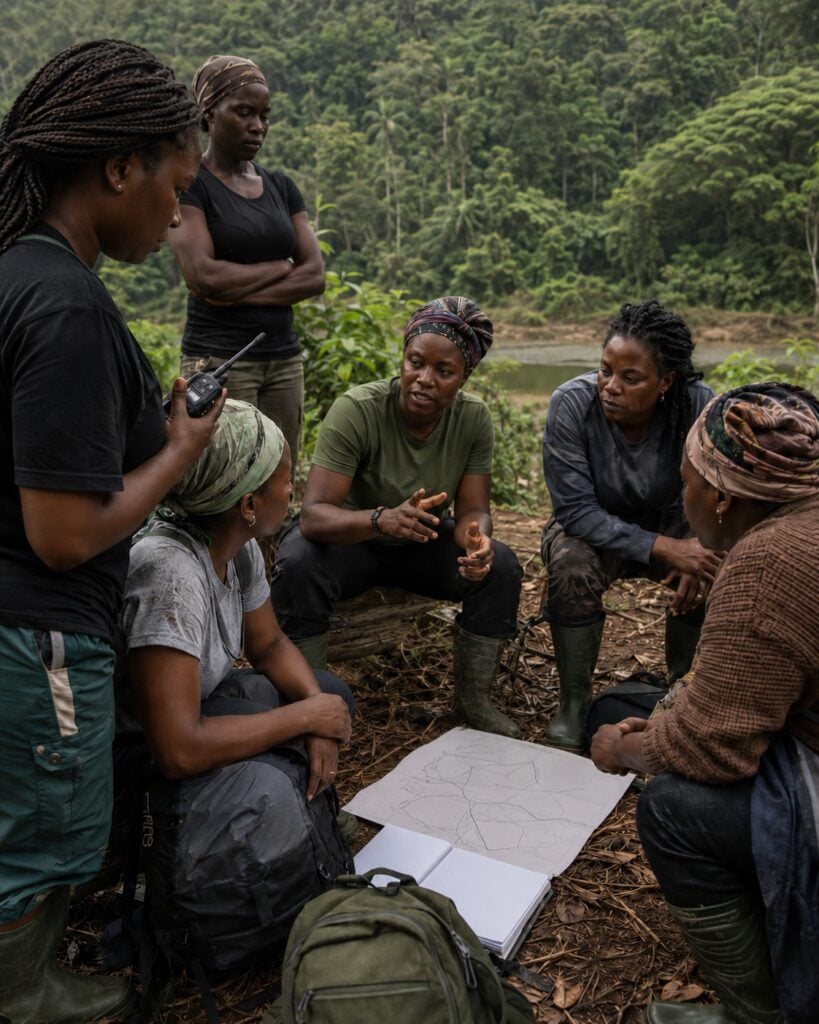
Their involvement is especially meaningful because many environmental decisions in the area have traditionally been controlled by men. By organizing as a group, the women have created a stronger voice than they might have had individually.
One member, Akan Grace, became involved after a human-caused wildfire destroyed her family’s farm.
Her experience shows why local conservation is rarely an abstract issue. For people living beside the sanctuary, environmental damage can affect food, income, water, safety, and the future of their children.
They are Already Producing Results
The women are not only raising awareness. Their actions have influenced real decisions. In 2024, women in Ulom helped pressure local authorities to stop a timber agreement that could have exposed the sanctuary to damaging logging.
Women from the community had also resisted another logging arrangement in 2021, before the collective was formally established.
Their work also includes monitoring rivers, discouraging illegal fishing, discussing conservation with residents, and bringing suspected violations to community leaders.
These actions may appear small when viewed separately, but together they create accountability.
A person considering illegal logging may think differently after learning that residents are patrolling the area. A leader may reconsider a timber agreement when an organized group demands answers.
A family may stop polluting a river after understanding how the damage affects drinking water and fishing.
This is one reason grassroots conservation can be so effective. Local people are present every day. They understand the landscape, recognize unusual activity, and know who has the power to stop it.
The Movement Is Spreading to Other Villages
A successful local idea becomes even more powerful when others can copy it. Women from neighboring communities have visited Ulom to learn how the group organizes meetings, works with leaders, and responds to environmental violations.
Similar groups have since appeared in villages including Buanchor and Katabang.
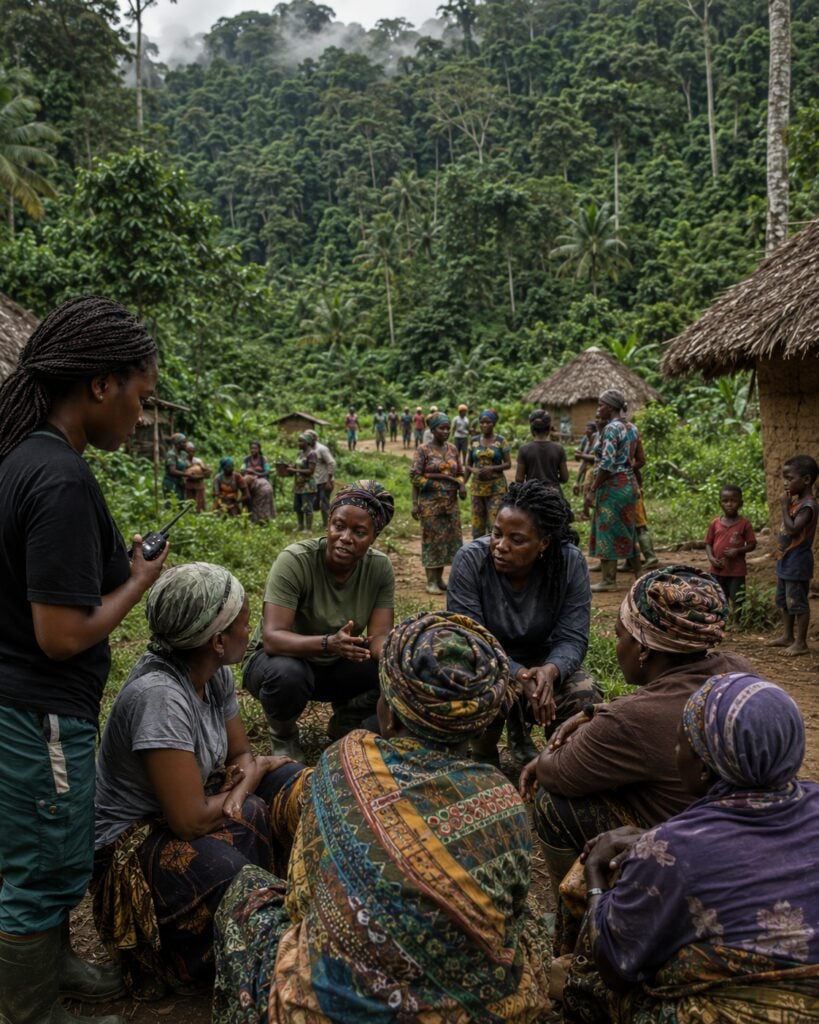
In Buanchor, women reportedly helped block another logging agreement in 2024. This shows that the movement is no longer limited to one village. It is becoming a network of women who share knowledge and support one another.
Afi Mountain is surrounded by 16 communities with a combined population of about 27,000 people. Protecting the sanctuary therefore requires cooperation across several villages rather than action from only one group.
To me, this is one of the most hopeful parts of the story.
The women did not keep their approach to themselves. They allowed others to learn from it, improve it, and use it in their own communities.
Conservation Works Better with Local Leadership
Outside organizations can provide training, equipment, funding, and scientific knowledge. Rangers can conduct official patrols, while researchers can study gorilla populations and identify important habitats.
However, long-term protection is difficult without support from the people who live near the forest.
Wildlife Conservation Society already works with communities around Afi through ranger patrols, conservation clubs, gorilla guardians, and alternative livelihood training.
Its programs have supported school conservation clubs and taught some farmers activities such as beekeeping and raising giant African snails, reducing dependence on hunting and forest resources.
The women’s groups add something equally valuable: local trust, daily observation, personal experience, and the courage to challenge harmful decisions.
Good conservation should not treat residents as obstacles. It should treat them as partners.
People are more likely to protect wildlife when conservation also respects their needs, supports their livelihoods, and gives them a meaningful role in decision-making.
Practical Ways I Can Support Community Conservation
Stories like Afi Mountain remind me that conservation is not only about protecting distant places. It also makes me think about the choices I make every day.
I believe the best support starts with listening to local communities. The people closest to the problem often understand what nature needs, yet their voices are not always heard.
I can also make more responsible choices by supporting ethical products and sharing conservation stories in a way that respects local leaders. These women are not waiting to be saved. They are already protecting their own environment.
Protecting Gorillas Means Protecting People Too
What inspires me most about the women near Afi Mountain is that they are protecting more than a single species. They are defending forests, rivers, farms, and the many forms of life that depend on them.
Their story reminds me that conservation does not always begin with large organizations. Sometimes, real change starts with local people who care enough to stand up and act.
The Cross River gorilla still faces serious threats, but these women prove that hope is possible. They are not waiting for someone else to protect their home.
They are becoming the guardians their forest needs.