Bananas are one of the easiest fruits to buy, but they can also be frustratingly quick to ripen. One day they are firm and bright yellow, and a few days later they are covered in brown spots and becoming too soft. I have often bought a bunch with good intentions, only to realize that they were ripening faster than I could eat them.
One simple kitchen trick is to wrap the banana stems in plastic. The idea is that covering the stem can slow moisture loss and reduce the release and spread of ethylene, the natural plant hormone that helps trigger ripening.
This method will not keep bananas fresh forever, and the effect is usually modest. Still, it may help delay the ripening process enough to give you a little more time. When combined with proper storage, it can be a useful and inexpensive way to reduce food waste at home.
Why Bananas Ripen So Quickly?
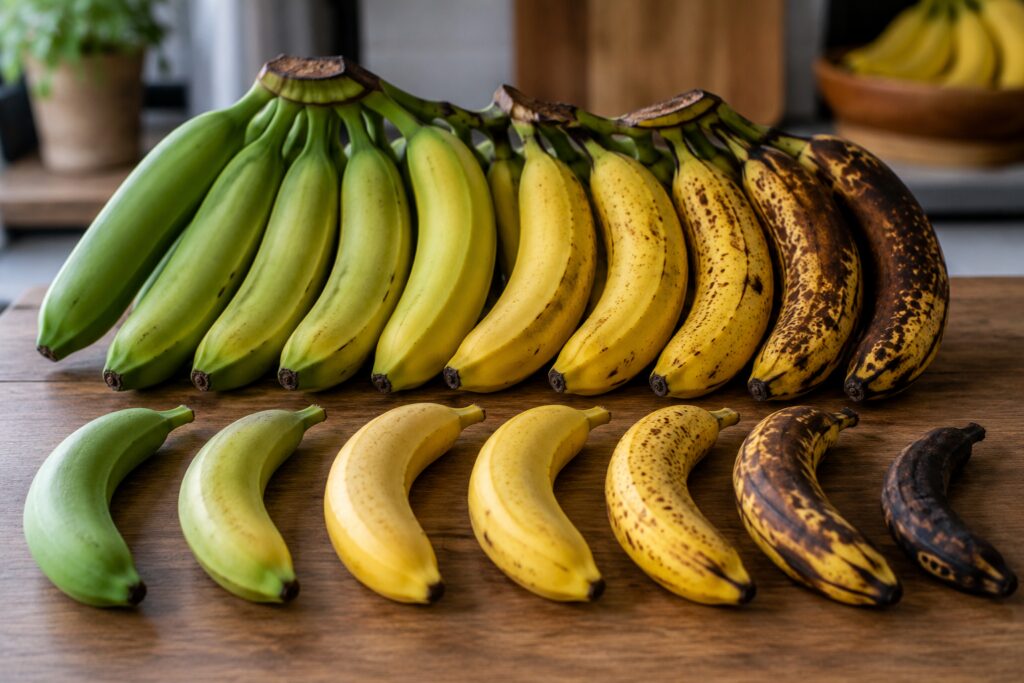
Bananas continue to change after they are harvested. Unlike some fruits that stay nearly the same once picked, bananas keep ripening because of natural chemical processes inside the fruit. This is why a green banana can gradually become yellow, sweeter, softer, and eventually brown.
The main driver of this process is a plant hormone called ethylene.
Ethylene is a natural gas produced by many fruits. It sends signals that encourage ripening. As bananas produce more ethylene, their starches begin turning into sugars. Their texture softens, their color changes, and their aroma becomes stronger.
I notice this most clearly when I place bananas near other ripe fruit. The whole group often seems to ripen faster. That is because ethylene released by one fruit can influence the others nearby.
Bananas are especially sensitive to ethylene, which is why they can change so quickly once the ripening process begins.
My personal tip is to check bananas every day once they turn yellow. At that stage, even a small change in room temperature or airflow can affect how quickly they soften.
Why the Stem Matters?
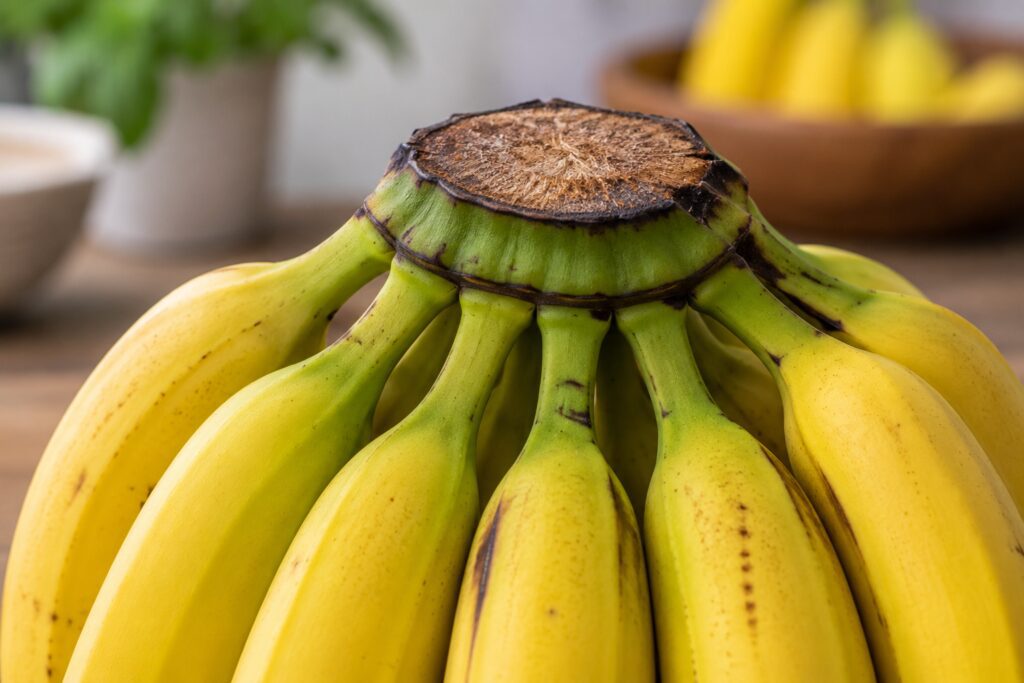
The stem is the part where the bananas are connected to the bunch. It may look unimportant, but it plays a role in how moisture and gases move around the fruit.
Wrapping the stem is believed to help in two ways. First, it may reduce moisture loss from the cut area. Second, it may slow the release and spread of ethylene from the stem region.
The result is not dramatic, but the bananas may stay firmer and fresher for slightly longer.
I like this method because it is simple. It does not require special containers, expensive products, or extra equipment. A small piece of plastic wrap can be placed tightly around the crown of the bunch.
Some people prefer to separate the bananas and wrap each individual stem. This may provide better coverage because each banana is isolated from the others.
Personally, I find that wrapping individual stems is more useful when I know I will eat the bananas slowly over several days. Wrapping the whole crown is faster, but individual wrapping may give more consistent results.
How Plastic Wrapping May Slow Ripening?
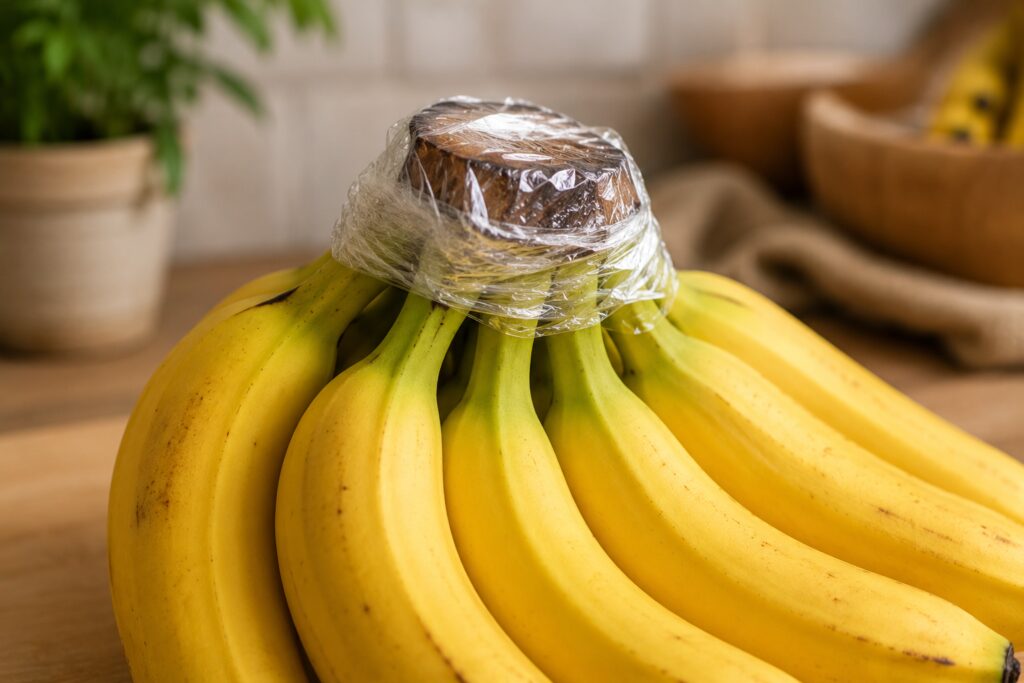
Plastic creates a small barrier around the stem. This barrier may help reduce the movement of moisture and ethylene between the banana and the surrounding air.
Ethylene is still produced inside the fruit, so the process does not stop completely. The plastic simply limits how quickly some of the gas escapes and spreads.
This is important because bananas in the same bunch can influence one another. As one banana becomes very ripe, the ethylene it releases may speed up ripening in nearby bananas.
By covering the stems, you may slightly reduce that effect.
However, I would not describe this as a perfect preservation method. It is better to think of it as a small delay rather than a complete solution.
In my experience, simple food storage tricks work best when several good habits are combined. Stem wrapping may help, but room temperature, sunlight, airflow, and the ripeness of nearby fruit also matter.
The Effect Is Helpful but Usually Modest
It is important to keep expectations realistic. Wrapping banana stems in plastic may extend freshness, but it will not make ripe bananas last for weeks.
The improvement may only be a day or two, depending on the condition of the fruit and the environment. In a warm kitchen, bananas will usually ripen more quickly than they would in a cooler room.
The bananas may also have already been exposed to large amounts of ethylene before you brought them home. In that case, the ripening process may already be well underway.
I think this is why some people are impressed by the method while others see very little difference. The result depends on many factors.
For the best chance of success, I wrap the stems as soon as I bring the bananas home. Waiting until they are already very soft will not reverse the ripening process.
Should You Separate the Bananas?
Keeping bananas together is convenient, but separating them may help slow ripening. Bananas in a bunch are close enough to expose one another to more ethylene.
When separated, each banana has more airflow around it and may be less affected by the others.
I usually separate only the bananas I want to save for later. I leave one or two together for immediate eating and wrap the stems of the remaining fruit.
This creates a simple ripening schedule. The unwrapped bananas soften first, while the wrapped ones may stay firm slightly longer.
It is also helpful to avoid placing bananas beside apples, pears, avocados, tomatoes, or other fruits that produce ethylene. These fruits can speed up ripening.
If you want bananas to ripen faster, placing them near those fruits can be useful. If you want them to last longer, keeping them apart is usually better.
The Best Place to Store Bananas
Storage location can make a bigger difference than stem wrapping alone. Bananas should be kept away from direct sunlight, heaters, stoves, and other warm areas.
A cool, shaded place with good airflow is usually best.
I avoid placing bananas inside a closed cabinet because trapped heat and poor ventilation may speed up spoilage. I also avoid leaving them near a sunny window.
A banana hanger can help by preventing pressure marks and bruising. When bananas rest on a hard surface, the bottom side may become damaged and soften more quickly.
Once bananas are fully ripe, they can be moved to the refrigerator. The peel may turn dark or brown, but the fruit inside can remain usable for longer.
This surprises some people, because the bananas may look spoiled from the outside. I always check the inside before throwing them away. A dark peel does not necessarily mean the fruit is bad.
Plastic Wrap Is Not the Only Option
Plastic wrap is common, but it is not the only material that can be used. Reusable silicone covers, beeswax wraps, or small reusable bags may also create a barrier around the stems.
The main goal is to cover the cut area closely.
I prefer reusable options when possible because they reduce single-use plastic waste. A small reusable cover can be washed and used again for future bunches.
Aluminum foil is sometimes suggested as another option. It may provide a similar barrier, although it can be harder to seal tightly around individual stems.
Whatever material you choose, make sure it is clean and secure. Loose wrapping may not make much difference.
Other Ways to Use Bananas Before They Spoil
Even with careful storage, bananas will eventually become soft. Fortunately, overripe bananas are still useful.
I often freeze peeled banana pieces for smoothies. Freezing stops further ripening and keeps the fruit ready for future recipes.
Soft bananas can also be used in banana bread, pancakes, muffins, oatmeal, or homemade ice cream. Their higher sugar content can make them especially good for baking.
Before freezing, I peel the bananas and place them in a sealed container or freezer bag. Freezing them with the peel still attached makes them more difficult to use later.
My personal rule is simple: if a banana becomes too soft for fresh eating but still smells normal and shows no signs of mold, I save it for cooking or freezing.
How to Tell When a Banana Has Gone Bad?
Brown spots and soft texture do not automatically mean a banana is spoiled. They usually mean the banana is very ripe.
A banana may no longer be safe to eat if it has visible mold, leaking liquid, a fermented smell, or an unusually slimy texture.
I always examine the fruit after peeling it. If the inside looks normal and smells sweet, it may still be suitable for baking or blending.
However, if the fruit smells sour or appears discolored in an unusual way, it is safer to discard it.
Understanding the difference between ripe and spoiled fruit can help reduce unnecessary waste.
A Small Trick That Can Make a Useful Difference
Wrapping banana stems in plastic is not a miracle solution, but it is a practical kitchen habit. By slowing moisture loss and limiting some ethylene movement, it may help bananas stay firm and fresh for a little longer.
The biggest advantage is how easy it is. It takes only a few seconds and costs almost nothing.
I get the best results by wrapping the stems early, separating some bananas, storing them in a cool place, and keeping them away from other ethylene-producing fruit.
No single method can stop ripening forever. Bananas are living fruit, and their natural processes continue after harvest.
Still, a small delay can make the difference between eating the last banana and throwing it away. For me, that makes this simple trick worth trying.