When I first heard that more bears were being spotted in towns and cities across Japan, I assumed the main reason was simple: there must be more bears living in the country. But after looking more closely, I realized the situation is much more complicated. The increase in bear encounters is not only about wildlife populations. It is also connected to Japan’s declining population, abandoned rural communities, changing farmland, and shortages of natural food in mountain areas.
As fewer people live and work in the countryside, nature is slowly taking over places that were once actively managed. Empty houses become surrounded by bushes, fields grow wild, and paths between forests and neighborhoods become easier for animals to use. For Asian black bears, these changing areas can act like natural corridors leading directly toward towns.
This does not mean bears are deliberately trying to invade human communities. In many cases, they are simply following food, shelter, and safe travel routes. Understanding that difference is important because it helps us respond more carefully instead of relying only on fear.
Japan’s Changing Countryside Is Creating New Wildlife Corridors
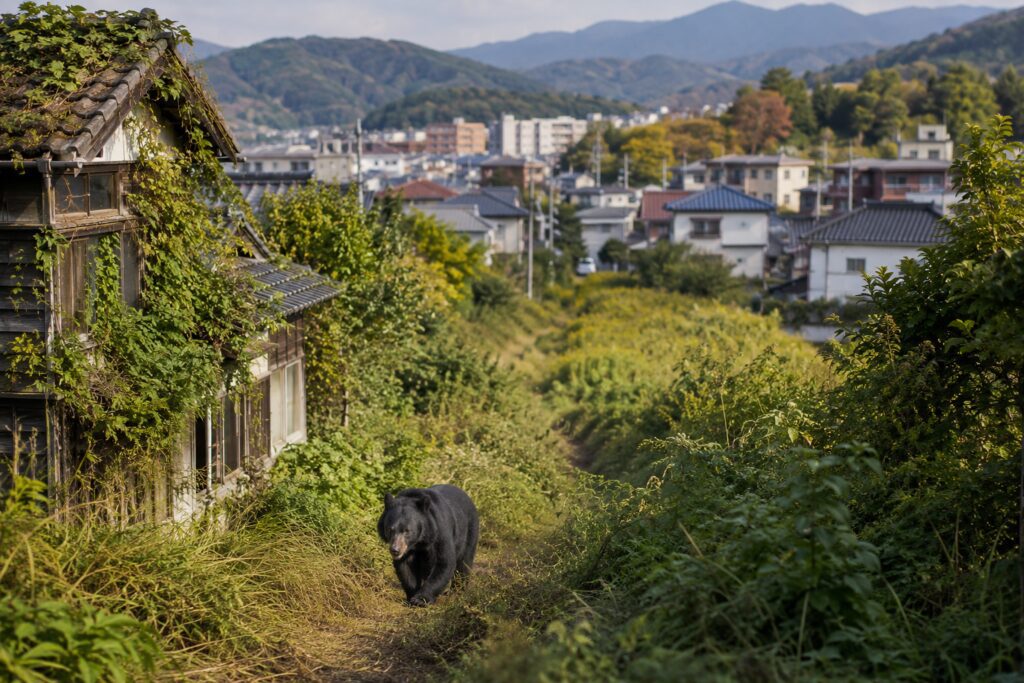
One of the biggest reasons bears are appearing closer to people is the transformation of Japan’s rural landscape. As the country’s population declines, many villages are losing residents. Older farmers retire, younger generations move to cities, and some homes and agricultural areas are left behind. Over time, these abandoned places begin to look less like human settlements and more like extensions of the forest.
I think this is one of the most important parts of the story because it shows how closely human activity affects wildlife movement. A field that is regularly cut, planted, and visited creates a clear boundary between a village and the forest. Once that field becomes overgrown, the boundary begins to disappear.
Tall grass, shrubs, fruit trees, and unused buildings can provide cover for bears. Instead of crossing a wide, open field where they might feel exposed, bears can move through thick vegetation without being easily seen. These green corridors may connect mountain habitats with residential neighborhoods, schools, roads, and shopping areas.
From a bear’s perspective, the route may feel completely natural. From a human perspective, however, it can lead to surprising and sometimes dangerous encounters.
My personal tip for people living near wooded or abandoned areas is to pay attention to changes in the surrounding landscape. Overgrown lots, uncollected fruit, dense bushes, and neglected paths can make it easier for bears to approach unnoticed. Community cleanup programs can therefore become an important part of wildlife safety.
Food Shortages Can Push Bears Out of the Mountains
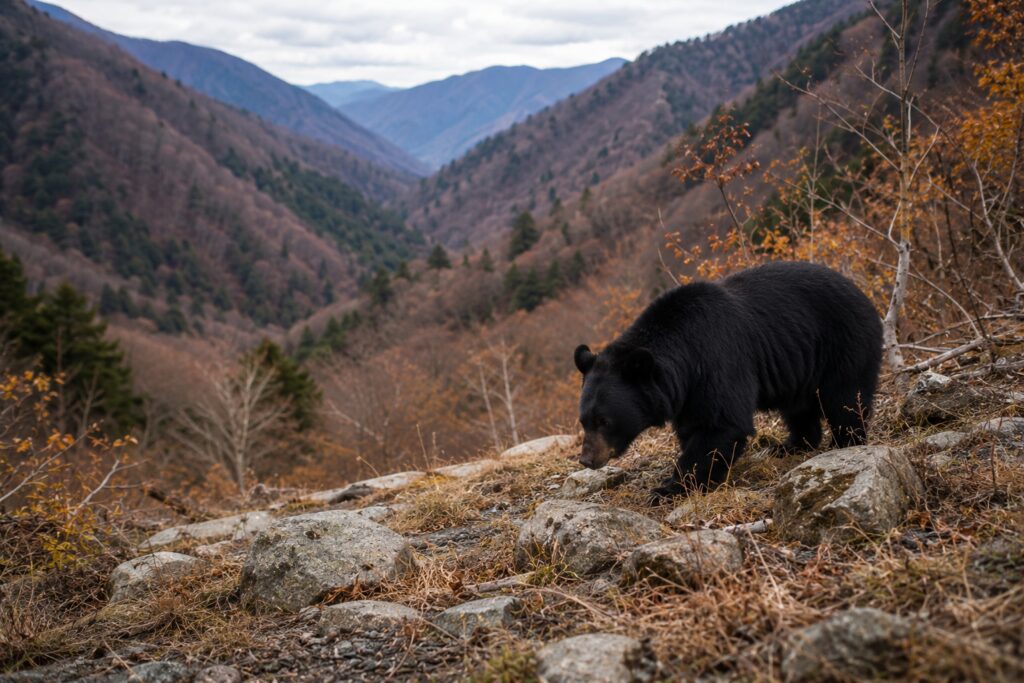
Changes in the landscape are only one part of the problem. Bears also move closer to towns when natural food becomes difficult to find in the mountains. Asian black bears depend on seasonal foods such as nuts, berries, fruits, plants, insects, and other available resources.
In years when acorns, beechnuts, or other forest foods are scarce, bears may travel farther than usual. They need enough energy to survive colder months, and females may also need additional nutrition to support their young. When food is limited, a bear may take greater risks and enter unfamiliar areas.
This is where human communities can become especially attractive. Fruit trees, vegetable gardens, livestock feed, garbage, compost, and pet food can all smell like easy meals. Even food that seems safely hidden to us may be detected by a bear’s powerful sense of smell.
I always remind myself that a bear does not understand the difference between food growing in a forest and food placed outside someone’s home. It simply recognizes a possible source of energy.
For residents in bear-prone regions, one of the most practical steps is to remove anything that could attract wildlife. Garbage should be secured, fallen fruit should be collected, and pet food should not be left outdoors overnight. These actions may sound small, but they can reduce the chance that a bear begins associating residential areas with food.
More Sightings Do Not Always Mean More Bears
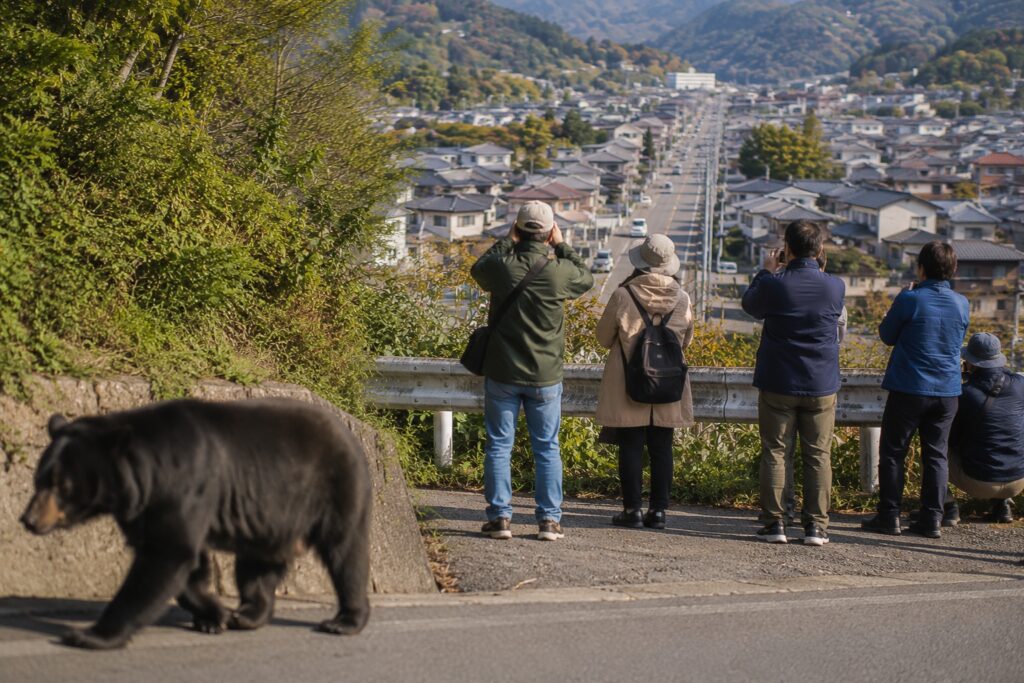
It is easy to assume that more reports automatically mean the bear population is rapidly increasing. However, researchers say the situation is not that simple. More encounters may also happen because bears and humans are using the same spaces more often.
This distinction matters. If the problem were only caused by rising bear numbers, reducing the population might appear to be the most obvious solution. But when the issue is also driven by abandoned land, food shortages, and overlapping habitats, population control alone will not solve everything.
Better information is needed. Researchers can study where bears travel, what they eat, how they respond to human activity, and which areas are most likely to experience encounters. GPS tracking, camera traps, field surveys, and reports from local residents can help create a clearer picture.
In my view, data should guide the response. Decisions based only on panic can lead to short-term actions that fail to address the real causes. When communities understand why bears are entering certain areas, they can focus on prevention instead of waiting until an animal appears in the middle of town.
Abandoned Homes and Farms Can Hide Unexpected Food
An abandoned property may look empty, but it can contain many things that attract bears. Old fruit trees may continue producing persimmons, apples, chestnuts, or other crops long after the residents have left. Unused farm buildings may contain animal feed, food waste, or materials with strong smells.
Overgrown vegetation can also make these food sources harder for people to notice. A bear may visit the area repeatedly without being seen, especially at night. Eventually, it may become comfortable traveling closer to occupied homes.
This is why managing abandoned land is not only an economic or community issue. It is also becoming a wildlife management issue.
Local governments and residents may need to work together to remove unused fruit, clear dense vegetation, seal abandoned buildings, and identify areas where bears are likely to travel. These projects require time and money, but they can prevent more serious problems later.
My advice is to treat signs of bear activity seriously, even when no bear is visible. Tracks, droppings, damaged trees, overturned containers, and missing fruit can indicate that an animal has already discovered the area.
How People Can Respond More Safely?
Seeing a bear can be frightening, especially in a place where people do not expect to encounter one. The most important thing is to avoid making the situation worse.
People should not approach a bear, attempt to feed it, or move closer to take photos. Feeding wildlife can teach animals to associate humans with food, increasing the risk of future encounters. A bear that becomes comfortable around people may be more difficult to manage safely.
Residents should follow local wildlife alerts and learn which agencies handle bear reports. Children should also understand that a bear sighting is not an opportunity to watch or record the animal.
When walking near forests, farmland, or overgrown areas, making normal human noise can help prevent surprise encounters. It is also wise to avoid wearing headphones that block surrounding sounds. Traveling in groups and staying on visible paths may further reduce risk.
I believe preparation is much better than panic. People do not need to live in constant fear, but they should understand that wildlife behavior can change as the environment changes.
Japan’s Bear Encounters Reflect a Bigger Environmental Shift
What is happening in Japan is a reminder that nature responds quickly when human communities change. When villages shrink, farms disappear, and vegetation returns, wildlife may reclaim the space. This can support biodiversity, but it can also create new challenges when large animals begin living closer to people.
The increase in bear sightings is therefore not simply a wildlife story. It is also a story about population decline, rural abandonment, land management, climate conditions, and food availability.
I find this situation both concerning and fascinating. It shows that the boundary between urban life and the natural world is not fixed. It can move as communities grow, shrink, or change.
Japan will likely need a combination of research, education, habitat management, community cleanup, warning systems, and responsible waste control. In some situations, trained wildlife professionals may also need to remove bears that pose an immediate danger.
The goal should not be to ignore the risks or romanticize wild animals. The goal should be to reduce unnecessary conflict while recognizing why these encounters are happening.
Bears are not appearing in towns for one simple reason. They are responding to a landscape that has changed around them. By understanding those changes, people can create safer communities for both humans and wildlife.