For years, I treated dandelions like most homeowners do: pulling them out the moment they appeared in my lawn. I saw them as nothing more than messy weeds that ruined the look of the grass and competed with everything around them.
But one conversation with an experienced gardener completely shifted my thinking.
He suggested that dandelions might actually be one of the most useful plants growing in our yards, which at first sounded hard to believe.
The more I learned, the more I realized their reputation as “just weeds” is far too simple, and the story behind them is much more interesting and valuable than I ever expected.
Why Dandelions Have Such a Bad Reputation?
Most people encounter dandelions in lawns. Their bright yellow flowers appear suddenly, and before long, fluffy seed heads spread across the yard. Since many homeowners prefer perfectly uniform grass, dandelions are often viewed as a nuisance.
I used to think the same thing.
Dandelions grow quickly, survive difficult conditions, and return year after year. Because they are resilient, many people label them as invasive or harmful.
However, being persistent does not automatically make a plant bad.
In reality, many of the characteristics that help dandelions survive are the same characteristics that make them valuable in nature. Understanding this difference completely changed the way I viewed them.
The Incredible Root System Beneath the Surface
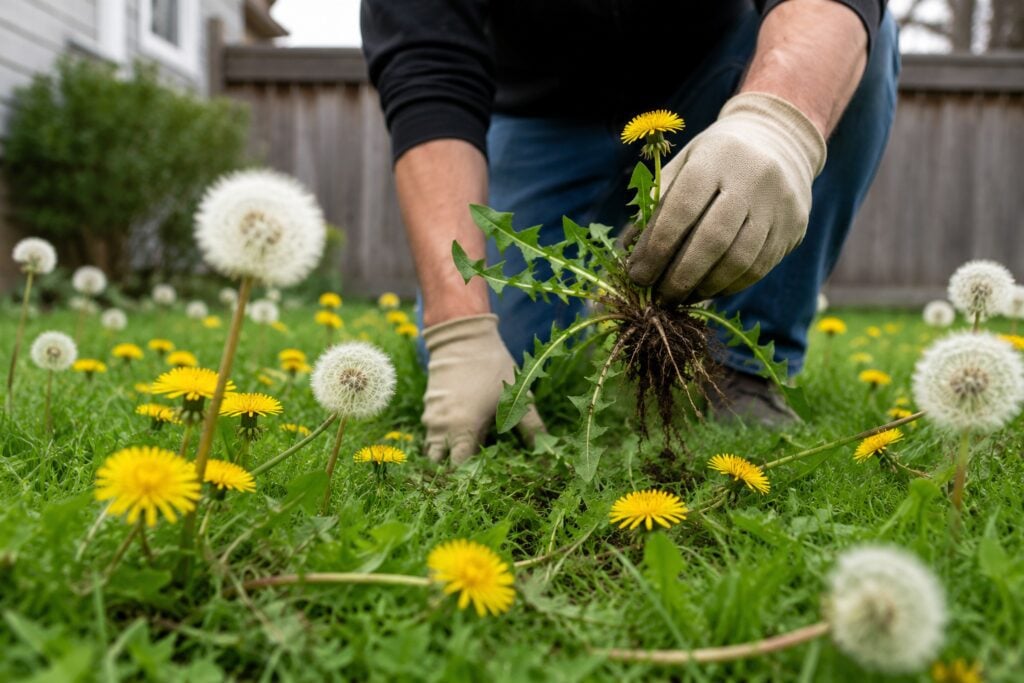
One of the most interesting things I learned about dandelions happens underground, where most people never look. While the flower and leaves are what we see above the soil, a mature dandelion grows a long taproot that can reach deep into the ground.
This root helps break up compacted soil, allowing water and air to move more easily through it.
It also pulls nutrients from deeper layers and brings them closer to the surface, where other plants can benefit.
What once looked like a simple weed turned out to be quietly improving the health of the entire soil ecosystem.
Why Pollinators Love Dandelions?
One spring, I noticed something surprising; the first flowers attracting bees in my yard weren’t ornamental plants, but dandelions. That moment made me curious, so I looked into their role in supporting pollinators.
I learned that dandelions bloom very early in the season, when most other flowers haven’t opened yet. During this time, bees and other insects rely on them for nectar and pollen to recover after winter.
What I once saw as weeds turned out to be an important early food source that helps support pollinators and the wider ecosystem.
The Truth About Dandelions and Human Health
Dandelions are often labeled as supporting liver health because they have a long history of traditional use. For centuries, different parts of the plant (roots, leaves, and flowers), have been used in teas, salads, and natural remedies.

They contain vitamins, minerals, and compounds that continue to interest researchers. However, it’s important to stay balanced: no single plant is a miracle cure, and overall health depends on lifestyle, nutrition, and medical care.
What stood out to me most is how a plant often dismissed as a weed has been valued in traditional practices for generations.
Dandelions Can Improve Soil Quality
The more I observed my garden, the more I noticed that dandelions often appeared in areas where the soil was struggling. At first, I assumed they were the problem, but I later realized they were actually responding to poor soil conditions.
With their deep roots, dandelions can grow in compacted ground where many plants cannot survive.
As they grow and break down, they also add organic matter back into the soil, helping improve it over time.
Instead of seeing them as a nuisance, I began to view dandelions as natural indicators that the soil may need care and improvement.
Why Wildlife Benefits from Dandelions
One aspect of dandelions that is often overlooked is their value to wildlife. Their flowers provide food for many insects, while birds and other animals may eat the seeds.
Even the fluffy seed heads play an important role in spreading the plant and supporting future growth.
Observing this made me realize how interconnected nature really is; what we see as a simple weed can actually be an important resource for many living creatures.
Are Dandelions Ever a Problem?
While dandelions have many benefits, they aren’t perfect for every garden. If left unchecked, they can become abundant and compete with turf grass, especially in neatly maintained lawns.
Some gardeners also prefer a more controlled look, which makes managing their growth completely reasonable. The key lesson I’ve learned is the difference between managing and eliminating.
Removing a few dandelions where needed is very different from assuming all of them are harmful.
In the end, balance is what creates the healthiest garden.
Common Myths About Dandelions
Many people see dandelions as nothing more than stubborn weeds that harm lawns, but that view misses much of their value. A common myth is that they have no purpose, when in fact they provide early-season food for bees and other pollinators.
Others believe they should always be removed, even though their deep roots can help loosen compacted soil and improve soil health.
Some also assume they are purely invasive, despite their role in supporting biodiversity.
The more I learned, the more I realized that these beliefs are often based on tradition rather than the full story of how dandelions contribute to a healthy ecosystem.
Myth 1
One of the most common myths about dandelions is that they have no value and only invade lawns. I used to believe this too, until I learned how they actually function in nature.
Dandelions provide early nectar and pollen for bees and other pollinators when few plants are in bloom.
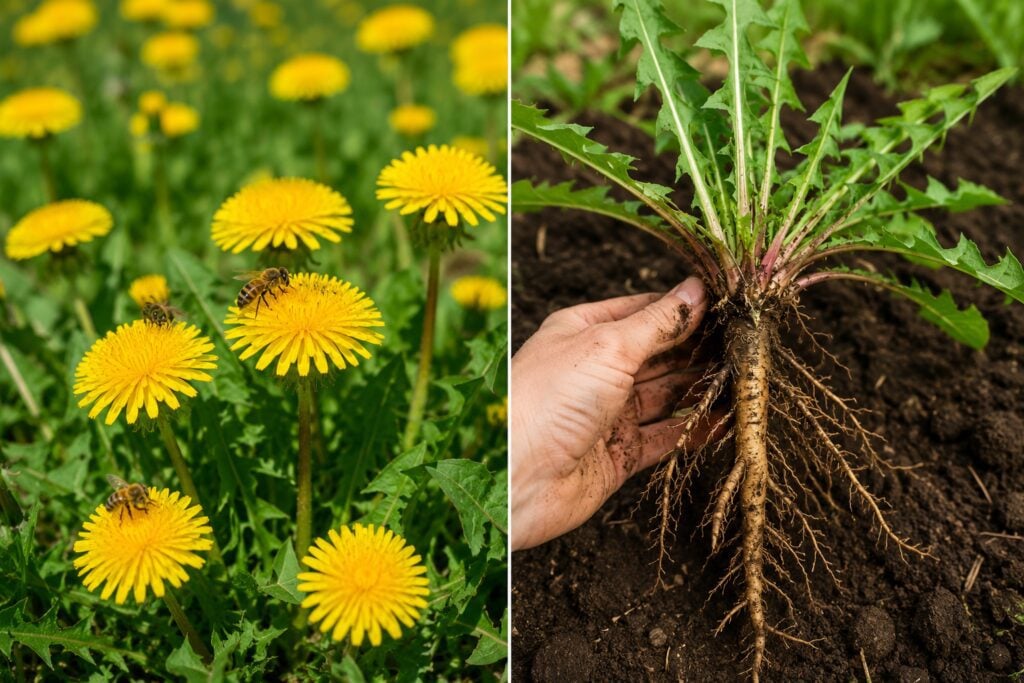
Their deep taproots also help break up compacted soil and bring nutrients closer to the surface, benefiting nearby plants. Even beyond the garden, they have a long history of use in traditional foods and herbal remedies.
Over time, I realized they are not useless weeds, but valuable plants that support a healthier, more balanced ecosystem.
Myth 2
Many people assume dandelions only damage lawns, but I found the reality is more nuanced. While they can compete with grass for space, they also offer benefits that are often overlooked.
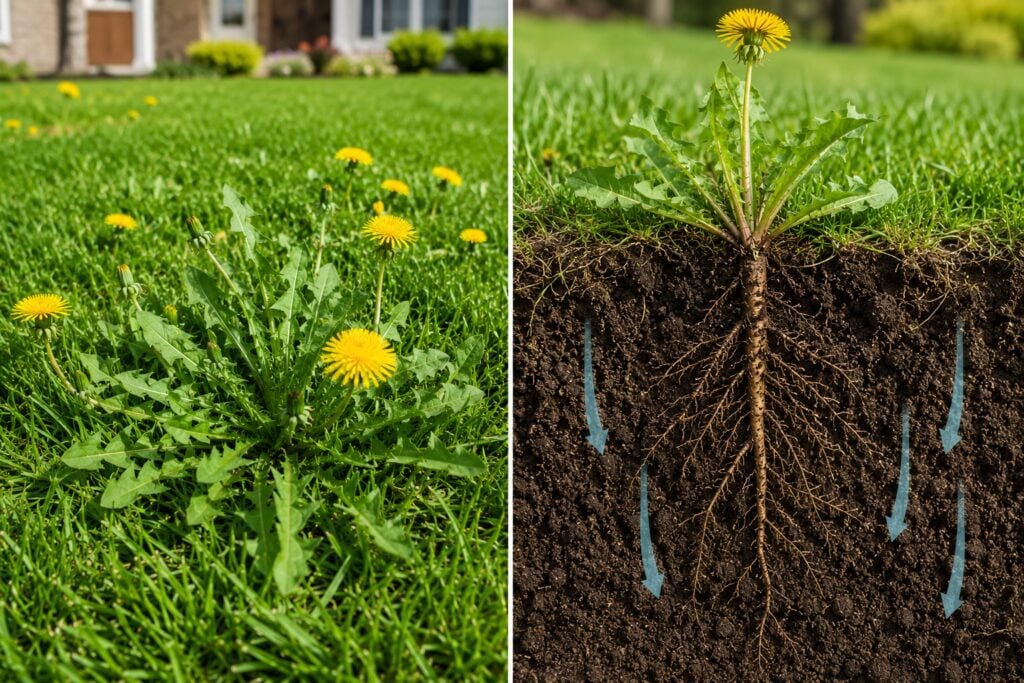
Their deep roots help loosen compacted soil, improve water movement, and bring nutrients from deeper layers to the surface. Sometimes, their presence even signals soil conditions that need attention rather than causing the problem itself.
A lawn with a few dandelions isn’t necessarily unhealthy.
In fact, they can contribute to a more diverse and balanced outdoor environment, challenging the idea that they are only harmful weeds.
Myth 3
One of the biggest misconceptions I used to believe was that every dandelion should be pulled out as soon as it appeared. Over time, I learned that removing all of them is not always necessary or even helpful.
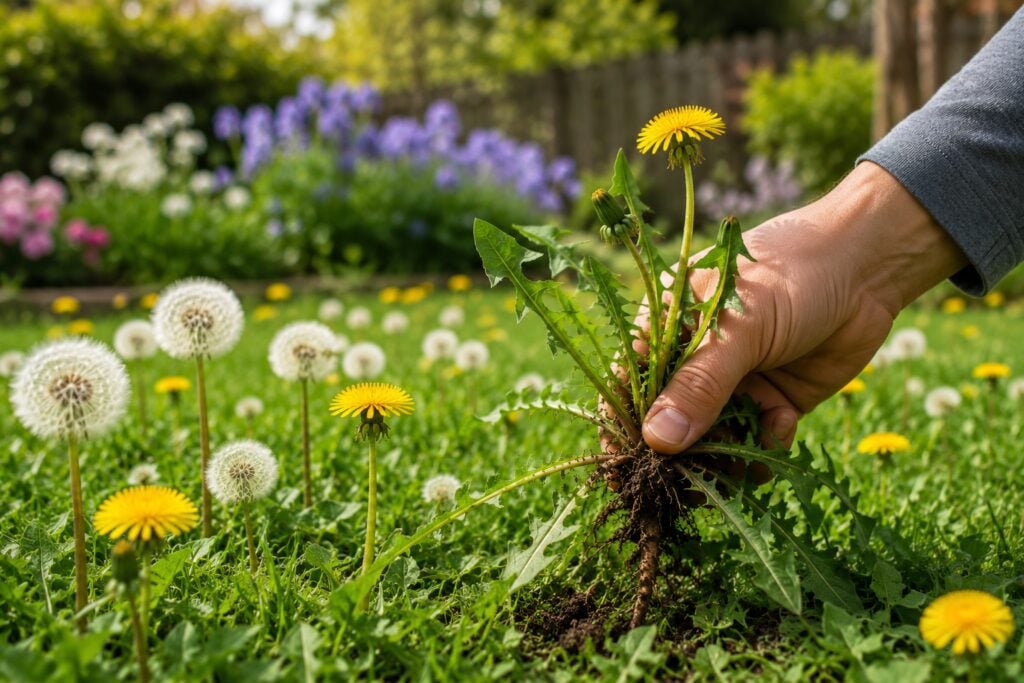
Dandelions provide an early food source for bees and other pollinators when few plants are in bloom, and their deep roots can improve soil structure and bring nutrients closer to the surface.
While some management may be useful, treating every plant as a problem overlooks the important role they play in the ecosystem.
A balanced approach often works better than total removal.
Myth 4
Many people think dandelions are just random weeds, but I learned they actually tell an important story about the environment.
They often grow in compacted or nutrient-poor soil where other plants struggle, and their deep taproots help bring water and minerals from below the surface, improving soil health.
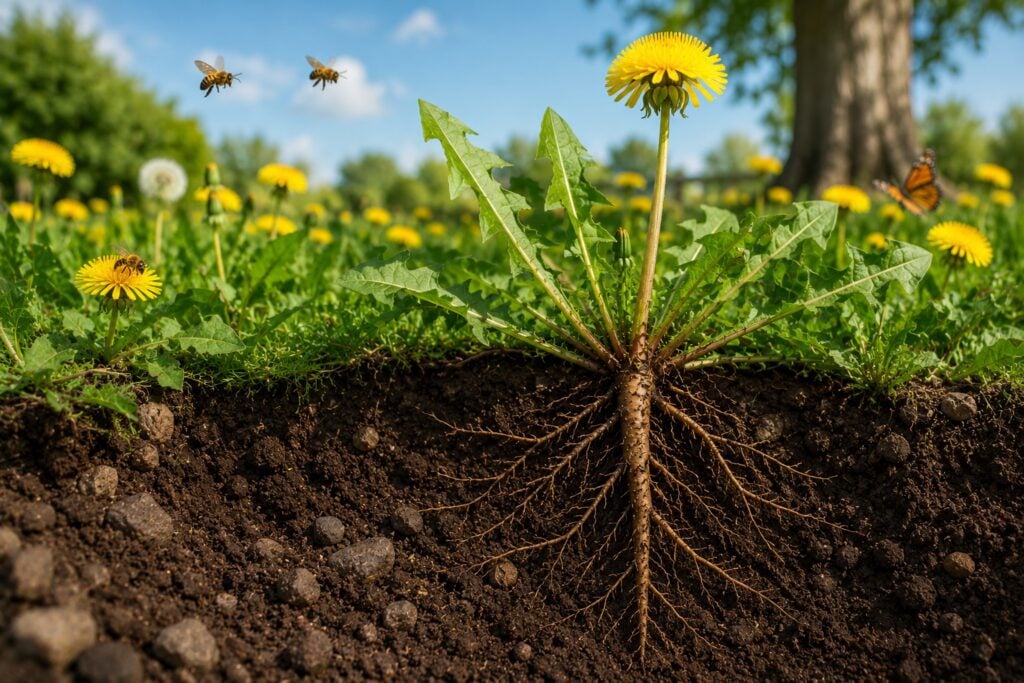
They also support pollinators and local biodiversity.
The more I studied them, the more I realized dandelions aren’t random at all, but resilient plants with clear ecological roles that changed how I see them in the garden.
What Changed My Mind?
Before learning more about dandelions, I viewed them through a very narrow lens. If they appeared in the lawn, they were considered a problem. Now I see them differently.
I still manage them when necessary, but I no longer assume they are worthless weeds.
Instead, I recognize them as resilient plants that contribute to soil health, support pollinators, assist wildlife, and offer a fascinating example of how nature works.
The biggest lesson I learned is that not every plant growing where we do not want it is automatically harmful. Sometimes, the plants we spend the most time fighting are quietly providing benefits we never noticed.
Final Thoughts
The debate over dandelions often comes down to perspective. If your only goal is a perfectly uniform lawn, you may continue seeing them as weeds. But if you take a broader view of ecology, biodiversity, and natural gardening, dandelions begin to look very different.
My experience taught me that these bright yellow flowers are far more than lawn invaders.
They help feed pollinators, improve soil structure, support wildlife, and have been valued by people for centuries.
The next time you see a dandelion growing in your yard, it might be worth pausing before pulling it out. You may be looking at one of nature’s most underestimated plants.