Beneath the Great Plains, the Ogallala Aquifer helps produce much of America’s food, supporting farms, cattle, towns, and families. But in many areas, water is being pumped out far faster than nature can replace it.
To me, that is what makes this crisis so serious. The aquifer is not only a farming resource. It supports food supplies, local economies, communities, and entire ecosystems.
In some places, the water used today may take thousands of years to return. Once it is gone, rainfall alone cannot quickly bring it back. Protecting the Ogallala means protecting the future of both agriculture and the people who depend on it.
The Underground Reservoir Supporting America’s Farms
The Great Plains became an agricultural powerhouse because of water hidden beneath the soil.
The Ogallala Aquifer stretches across eight states and supports millions of acres of farmland, rural drinking supplies, jobs, and small communities. It helped farmers grow wheat, corn, cotton, and livestock feed even when rainfall was unreliable.
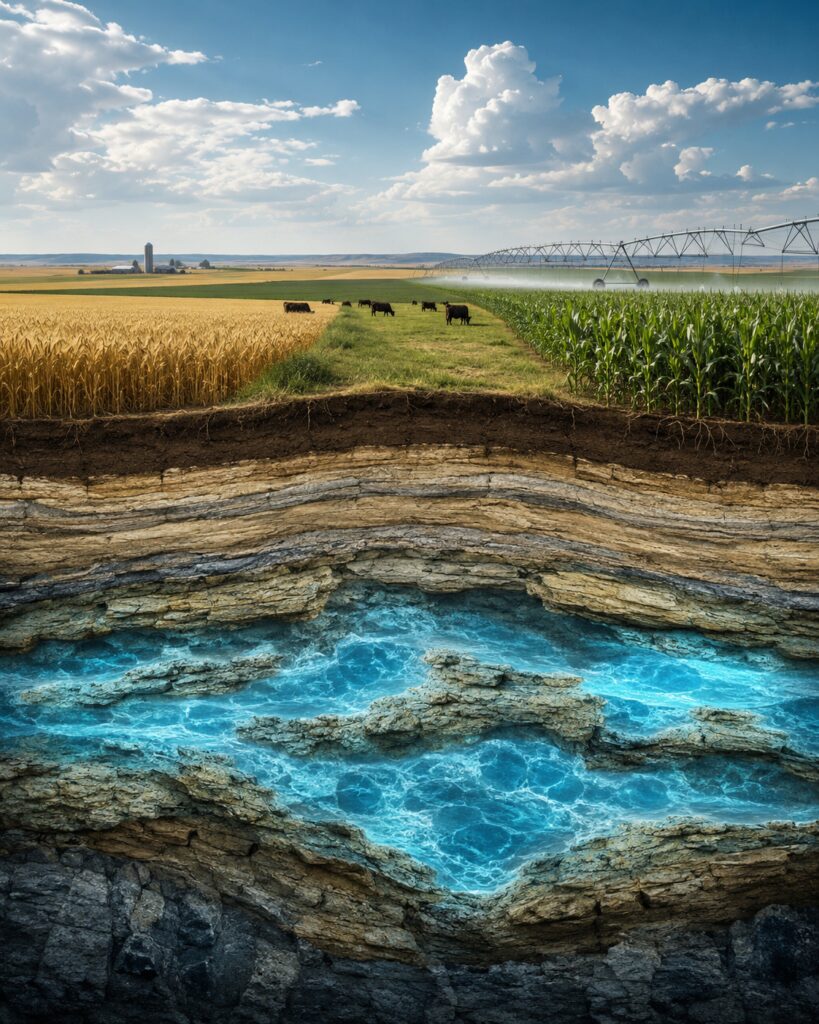
But that success came with a cost. As irrigation expanded, groundwater pumping increased, and the aquifer began supporting more demand than it could naturally replace.
To me, the danger is clear: a resource once treated as endless is now showing its limits. The same water that built the region’s economy could also threaten its future if it is not managed more carefully.
Why the Ogallala Cannot Quickly Refill?
Much of its water accumulated underground over thousands of years, while only a small amount returns through rainfall and snowmelt today. In many areas, farmers pump water far faster than nature can replace it.
To me, that makes the aquifer feel less like a renewable supply and more like a limited inheritance.
Once severely depleted, some areas could take thousands of years to recover.
Climate change increases the pressure through hotter temperatures, longer droughts, and greater irrigation demand. The water beneath the Great Plains may be hidden, but its loss would be impossible to ignore.
How the Water Crisis Developed?
The Ogallala Aquifer did not disappear in a sudden crisis. It was drained quietly, one successful harvest at a time.
After World War II, stronger pumps and center-pivot irrigation transformed the Great Plains. Farmers produced more food, supported local economies, and turned dry land into productive fields.
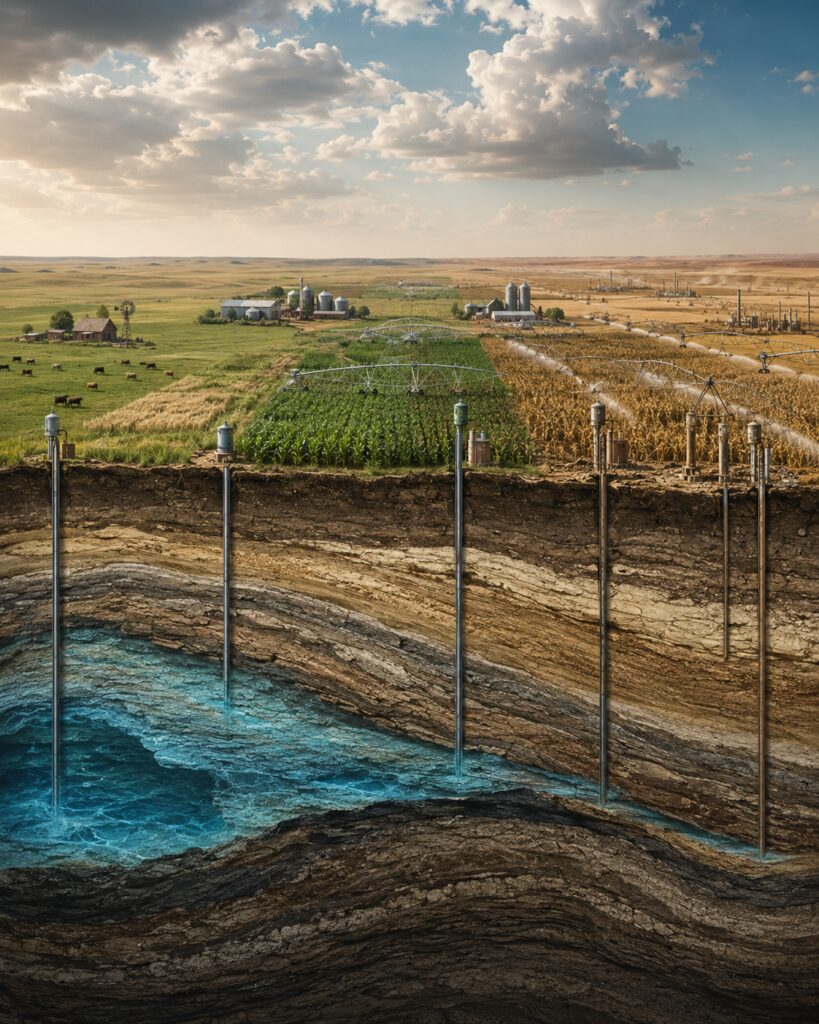
But the cost remained hidden underground. Wells kept flowing, so difficult decisions were delayed.
To me, that is the deeper warning. Environmental damage is easiest to ignore when today still feels normal. By the time the consequences become visible, tomorrow may already have fewer choices.
Why Farmers Cannot Simply Stop Pumping?
Farmers face crop prices, debt, insurance rules, lenders, buyers, and expensive irrigation equipment. Water-intensive crops like corn may use more groundwater, but they also come with established markets and financial support.
Switching crops can mean saving water while risking income.
To me, conservation should not begin with blame. Farmers are responding to the system around them.
Real change will require banks, governments, food companies, insurers, and markets to make water-saving choices financially possible. Protecting the Ogallala must also protect the people whose livelihoods depend on it.
Efficient Irrigation Is Helpful, but Not Enough
Modern irrigation tools (such as soil sensors, low-pressure sprinklers, weather data, and targeted watering), can reduce waste and deliver water more precisely to crops. But efficiency alone may not save the Ogallala Aquifer.
If saved water is used to irrigate more land, total groundwater use may stay the same or even increase. This is known as the rebound effect.
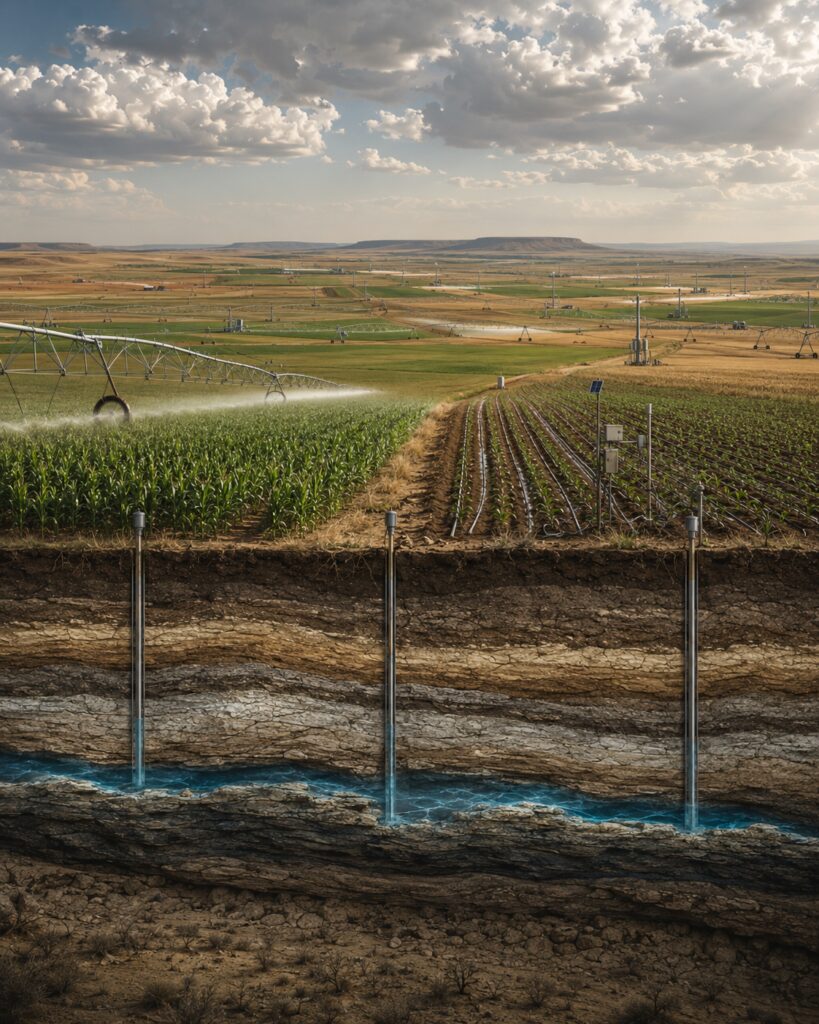
To me, the real goal must go beyond growing more with every gallon.
Technology should support an actual reduction in total pumping. Efficiency helps, but the aquifer will only recover when less water is removed than before.
Farmers are Already Searching for Alternatives
Many farmers are responding to falling water levels by testing drought-tolerant crops, improving soil health, reducing tillage, rotating crops, and using livestock more carefully.
These methods are not perfect, but they can reduce pressure on groundwater and create more resilient farms.
Consumers also have a role.
I try to support water-conscious farming and waste less food, because every discarded meal also wastes the water, land, energy, and labor behind it.
Saving the aquifer will require major change, but that change has already begun.
What Communities and Policymakers Can Do?
The Ogallala cannot be saved one farm or one state at a time. Groundwater ignores political borders.
Real progress will require pumping limits, better monitoring, practical incentives, drought-resistant crops, and financial support for farmers who use less water.
Communities also need measurable goals (not vague promises) so they can track water levels, pumping, and conservation results.
To me, planning for the future matters just as much as saving water today. Some areas may not be able to depend on irrigated farming forever. Preparing early can protect rural families, create new economic opportunities, and prevent a water crisis from becoming a community crisis.
Could Some Farmland Return to Grassland?
Sometimes the smartest way to save farmland is to let part of it become grassland again.
As groundwater declines, some farms may shift to dryland crops, but not every field can remain productive without irrigation. In those places, restoring native grasslands may protect soil, reduce erosion, store carbon, support wildlife, and provide grazing.
To me, restoration is not failure. It is adaptation.
But exhausted land should not simply be abandoned. A successful transition requires native plants, careful grazing, soil protection, community support, and long-term planning.
Done well, grassland restoration can protect both the land and the communities that depend on it.
The End of Easy Water
The Ogallala helped build modern agriculture across the Great Plains, but the era of treating its water as endless is ending.
Sooner or later, groundwater use will decline; either through careful conservation or because wells can no longer provide enough water.
To me, the choice is clear: adaptation should begin before desperation.
Farmers need financial support, communities need honest planning, and policies must reward conservation instead of depletion. The aquifer may be hidden underground, but its loss would reach food prices, jobs, drinking water, wildlife, and rural towns.
There is still time to act. The real question is whether we change while water remains—or wait until empty wells make the decision for us.