
When my indoor Monstera finally grew a flower bud, I was thrilled. I had grown Monsteras for years for their big, glossy leaves, but seeing it bloom felt like a reward.
However, I quickly learned that caring for a Monstera flower bud indoors is different from caring for its leaves.
It needs more attention, patience, and the right environment to bloom successfully. Here’s what I’ve learned after nurturing several Monstera buds inside my home.
Understanding the Flower Bud

The Monstera flower is not like regular houseplant blooms. It’s a white or cream-colored spadix surrounded by a protective spathe that looks like a hood. The bud develops slowly, sometimes taking weeks before it opens.
Many people never see one indoors because Monsteras need perfect conditions to produce it.
My first mistake was treating the bud like a leaf. I didn’t realize it was more sensitive to humidity, light, and air movement. Once I changed my routine, the difference was clear.
Finding the Right Spot
Monsteras love light, but the flower bud burns easily under strong sunlight. I keep mine near a bright but indirect light source, such as a spot about one meter away from a south-facing window.
If sunlight touches the bud directly, it can dry out before opening.

I also noticed that consistent temperature matters more than brightness. I keep the room between 22°C and 27°C (72°F to 80°F).
A sudden cold draft can stop the bud from developing. My first bud shriveled when I placed the pot near a window that got chilly at night. Now, I make sure there’s no cold air blowing nearby, especially from air conditioners or open windows.
Managing Humidity and Airflow
Flower buds need steady humidity. Indoors in winter, air becomes too dry from heaters. I use a small humidifier near my Monstera to keep humidity around 60 percent.
If you don’t have one, placing a bowl of water or a humidity tray next to the pot also helps.
But humidity alone is not enough. The air should move slightly to prevent fungal growth. I keep a small fan on the lowest setting running for a few hours a day. That keeps air circulating without drying the flower.
A tip many people don’t know: avoid misting the flower bud directly. It can trap moisture in the folds and cause brown spots. I mist only the leaves and let the air stay humid instead.
Watering the Right Way
The flower bud is very sensitive to overwatering. Too much water makes the roots soggy, which can slow or stop bud growth. I learned to water only when the top 5 centimeters of soil feel dry.
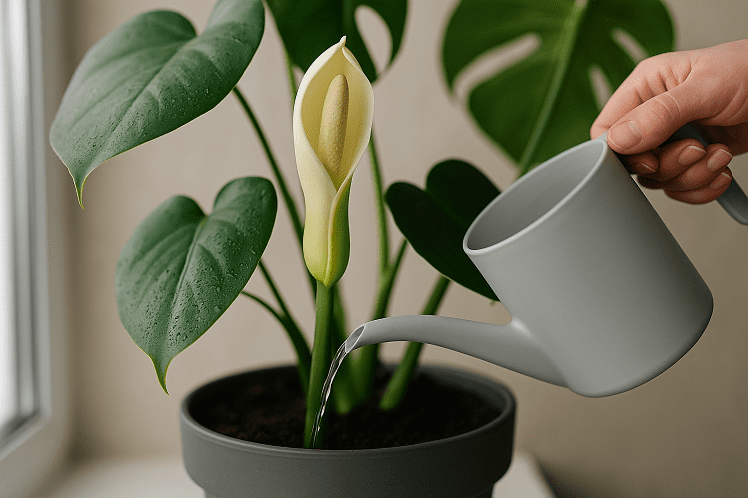
I water deeply until a little drains out of the bottom, then let it dry again. I also check the pot’s weight before and after watering.
Once you get used to the difference, it’s an easy way to know when it needs water.
Another important habit is to use room-temperature water. Cold water can shock the roots. I let tap water sit overnight before using it so chlorine can evaporate and the temperature matches the room.
Soil and Drainage
My biggest improvement came when I changed the soil mix. Regular potting soil stays too wet for Monsteras. I switched to a loose mix that includes one part coco peat, one part perlite, and one part orchid bark.
It drains fast but still keeps enough moisture.
I also added a thin layer of charcoal chips at the bottom of the pot to keep the soil fresh. This helped reduce the musty smell that sometimes appears when humidity is high.
If your Monstera is growing indoors, make sure the pot has drainage holes. Water should never pool at the bottom. Even a small amount of standing water can rot the roots and stop the bud from opening.
Feeding the Plant

I feed my Monstera every three weeks when a bud is forming. I use a balanced liquid fertilizer with equal parts nitrogen, phosphorus, and potassium (10-10-10 or 20-20-20). However, I dilute it to half strength.
Too much fertilizer can make the leaves grow faster than the flower, taking energy away from the bloom.
I also add a small spoon of worm castings on top of the soil once every two months. It releases nutrients slowly and improves soil texture.
Supporting the Flower Bud
As the flower bud grows, it becomes heavier. Indoors, Monsteras often don’t have as much support as they do in nature. I use a moss pole or a bamboo stick to help the stem stay upright. I tie the stem loosely using soft plant ties so it doesn’t bend or snap.
When the bud starts to open, I avoid moving the pot. Even a small change in angle or air circulation can stress it.
I learned this after accidentally rotating my plant during cleaning. The bud stopped opening for days afterward.
If you notice the spathe (the outer part) turning brown early, it usually means humidity dropped too low or the plant was moved too often. Keep the environment steady and let it open naturally.
Cleaning and Monitoring
Dust can block light from reaching the leaves, which affects the plant’s energy and flower development. I wipe the leaves once every two weeks using a soft damp cloth.
I avoid getting water on the bud itself.

I also check regularly for pests. Thrips and spider mites are common indoors during winter. They like hiding near the base of the bud. I inspect the stems with a flashlight and wipe with a cotton pad dipped in diluted neem oil if I see any pests.
A lesser-known tip is to check under the flower spathe once it starts to open. Sometimes tiny aphids hide there because it’s warm and protected. Catching them early prevents damage.
Helping the Flower Last Longer
The Monstera flower doesn’t last forever, but you can extend its life. The key is keeping temperature and moisture consistent. Avoid direct heat or sudden drafts.
I also keep it away from fruit bowls because ripening fruit releases ethylene gas, which makes flowers age faster.
If your Monstera produces multiple buds, let only one or two bloom fully. I once let three open at once, and the plant looked tired for months after. Limiting the number helps it stay strong.
After the flower fades, I cut it off near the base once it starts drying. Leaving old flowers too long can attract pests and use up nutrients.
Small Details That Made a Big Difference

There are a few things I do now that really help my Monstera thrive indoors.
- I use a moisture meter occasionally to double-check the soil. It prevents accidental overwatering.
- I wipe the moss pole with water once a week to keep it slightly damp. The aerial roots attach better when the pole is moist.
- I let the plant rest after blooming. I stop fertilizing for a month and reduce watering. This helps it recover and prepare for new growth.
I also found that Monsteras bloom more often if they get at least 12 hours of light daily for several months. I use a timer on my grow light so it turns on and off automatically.
What I’ve Learned
Caring for a Monstera flower bud indoors taught me patience. The bloom doesn’t happen often, but when it does, it’s worth it. I’ve learned that steady light, humidity, and care matter more than perfection.
If you’re lucky enough to have a Monstera budding indoors, don’t overdo anything.
Give it stable conditions, resist moving it, and watch the process slowly unfold. Once it blooms, it feels like a quiet success that comes from careful attention to detail.


