When winter arrives, my garden slows down, but my cooking doesn’t. I still want fresh herbs for soups, teas, and salads even when it’s freezing outside. So, I started growing herbs indoors.
Over the years, I’ve learned exactly which herbs survive best inside, how to keep them healthy, and what small mistakes can ruin them. This is what I’ve discovered after many winters of trial and error.
Choosing the Right Herbs
Not every herb likes being indoors. I’ve tried many, but the ones that consistently grow well for me are basil, parsley, mint, thyme, oregano, chives, and cilantro. They adjust easily to limited sunlight and warm indoor air.

If you’re starting out, pick two or three herbs first.
Mint and parsley are the easiest because they tolerate irregular watering and lower light. Basil grows fast but needs more attention, especially in winter.
I also learned that some herbs prefer being started from seed while others do better as cuttings. Mint and basil root quickly from stem cuttings in water, while parsley and cilantro should be started from seed for stronger growth.
Light Is the Most Important Thing
The first time I tried to grow herbs indoors, I placed them near my kitchen window. They looked fine for a week, then started leaning toward the glass and growing thin and weak.
I learned that herbs need more light in winter than most people think.
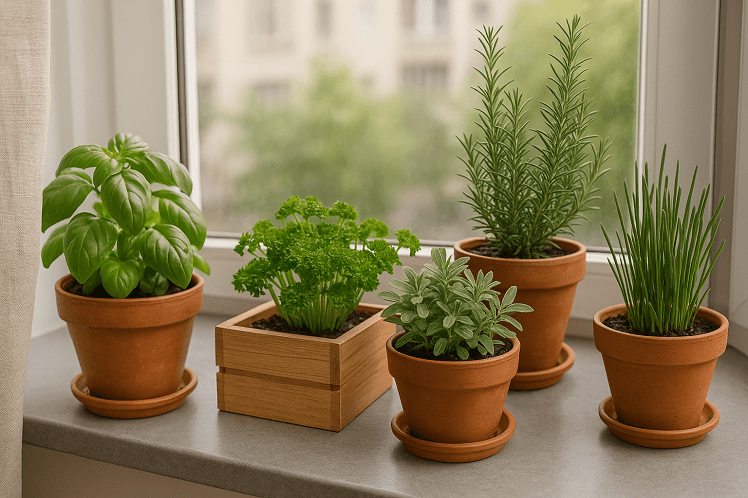
I now keep my herbs near a south-facing window that gets at least 6 hours of sunlight a day. If sunlight is limited, I use a small LED grow light. It doesn’t need to be fancy. A cheap clip-on lamp with a full-spectrum bulb works perfectly.
One little trick that helps is rotating the pots every few days so the herbs grow straight instead of bending toward the light.
The Right Temperature and Airflow
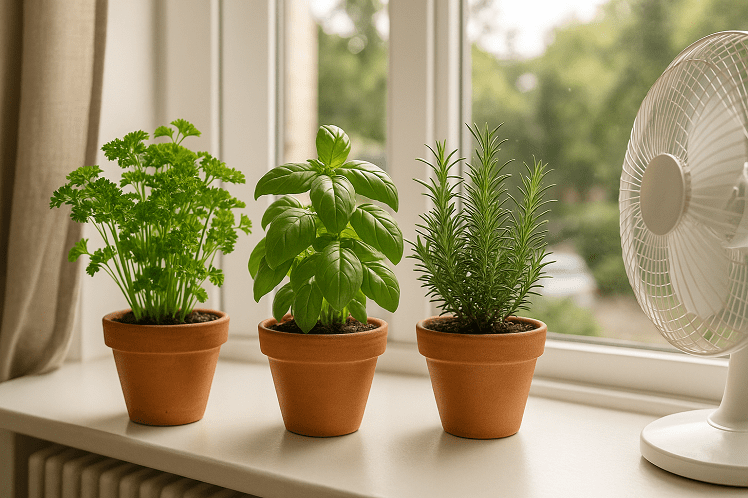
Winter air indoors can be tricky. Too close to a heater and herbs dry out. Too close to a window and they get cold drafts. I keep mine in a spot that stays between 18°C to 22°C (65°F to 72°F).
I also learned that herbs need fresh air. Once a week, I open a window for a few minutes to let air circulate. This prevents mold and keeps the leaves strong.
If your air is too dry, place a small bowl of water near the plants or use a humidity tray. I use a shallow dish with small stones and water so the pots sit above the moisture.
It keeps the air slightly humid without soaking the roots.
Choosing the Right Pots
I used to plant all my herbs in one big container, thinking it would be easier. That was a mistake. Different herbs need different watering levels. Basil likes slightly moist soil, while rosemary and thyme prefer it dry.
Now, I grow each herb in its own small pot with drainage holes.
I use terracotta pots because they breathe and help prevent soggy soil. Plastic pots trap water and often cause root rot.
Every few weeks, I turn the pots slightly or switch their positions to make sure each plant gets equal light exposure.
Soil and Fertilizer
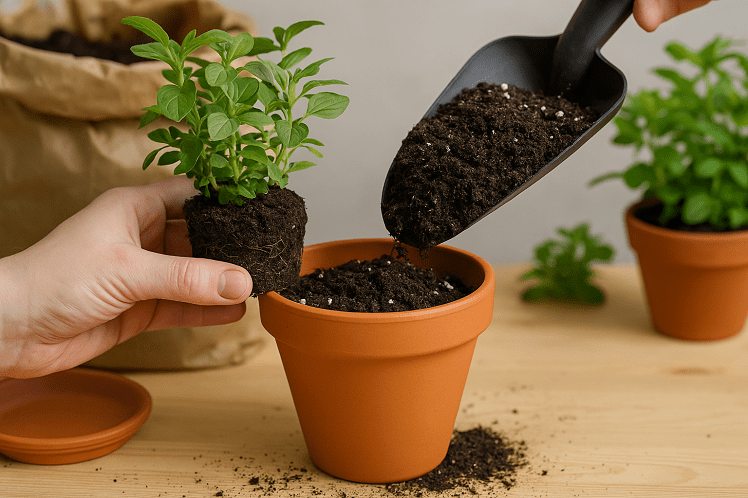
Regular garden soil doesn’t work well indoors. It’s too heavy and often brings pests inside. I use a light potting mix made for vegetables and herbs. It drains well but holds enough moisture for roots.
A helpful trick I learned is to mix in a handful of perlite or coarse sand to keep the soil airy. This stops the roots from sitting in water, especially during winter when plants drink less.
As for fertilizer, less is better. I feed my herbs with a diluted liquid fertilizer once every three to four weeks. In winter, they grow slower, so overfeeding can actually harm them.
Watering the Right Way
Most people overwater indoor herbs in winter. I used to do the same.
The top of the soil would look dry, and I’d water again. But below, the roots were already soaking. This led to yellow leaves and weak stems.
Now I always check the soil before watering. I stick my finger about two centimeters deep. If it feels dry, I water. If it still feels moist, I wait.
Another thing that made a big difference was watering in the morning. This gives the plants time to dry out during the day and reduces mold. I also pour water directly into the soil, not on the leaves.
Wet leaves under low light can cause fungal spots.
Harvesting Properly
The more you pick, the more your herbs grow. I used to be scared of cutting too much, but herbs actually love trimming. I harvest a little at a time, always cutting just above a leaf node so new shoots can form.

Never remove more than one-third of the plant at once. I do small harvests every few days, and it keeps my herbs full and bushy.
When I need basil, I pinch off the top leaves first.
For parsley, I cut the outer stems near the soil so the new ones in the middle keep growing. These small details make a big difference in keeping them productive.
A Few Tricks That Most Gardeners Don’t Know
One trick that really helped me is using reflective surfaces. I placed a small mirror or white board behind the pots to bounce extra light onto the leaves. This helped a lot on cloudy days.
I also sprinkle cinnamon powder lightly on the soil every few weeks. It prevents fungus and tiny bugs from appearing.
If you grow mint indoors, keep it in its own pot. Mint spreads fast and can choke other herbs. But having one or two pots of mint is great because it helps keep pests away from other plants.
I also learned that cutting back woody herbs like thyme or oregano by one-third in late winter helps them regrow thicker when spring comes.
Solving Common Problems
Sometimes herbs drop leaves or stop growing. I found that the most common cause is poor drainage or lack of light. If the soil stays wet for too long, roots can rot.
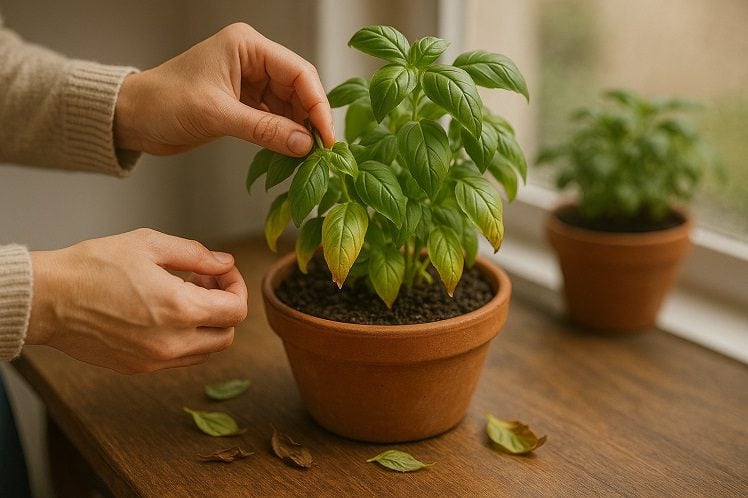
I fix that by gently removing the plant, trimming soft roots, and replanting in fresh dry soil.
If herbs look pale, they need more light or a small feeding. I use a half-strength liquid fertilizer to revive them.
For gnats, which sometimes appear in winter, I let the soil dry longer between watering and sprinkle a bit of sand on top of the soil surface. This stops gnats from laying eggs.
What I Learned After Many Winters
After a few winters of mistakes and experiments, I now have a small green corner in my kitchen that stays alive even when everything outside is frozen. Growing herbs indoors is not difficult once you understand their needs.
The best part is harvesting fresh leaves anytime. I make mint tea in the morning, add fresh basil to pasta at night, and never buy dry herbs anymore.
If you want to try, start small. One sunny window and a few pots are all you need.
Once you get used to the routine, it becomes second nature. And trust me, few things feel better in winter than the smell of fresh herbs in your own home.